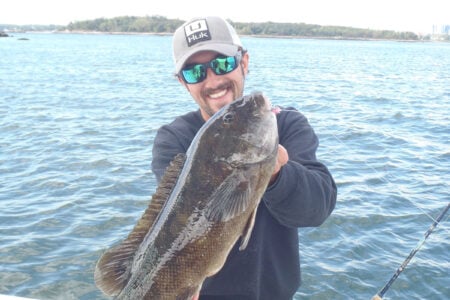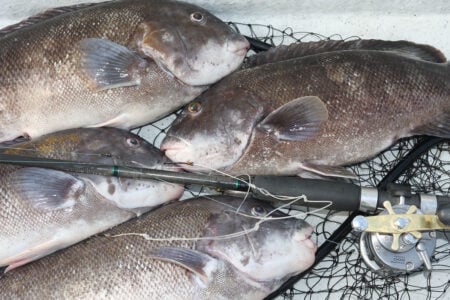
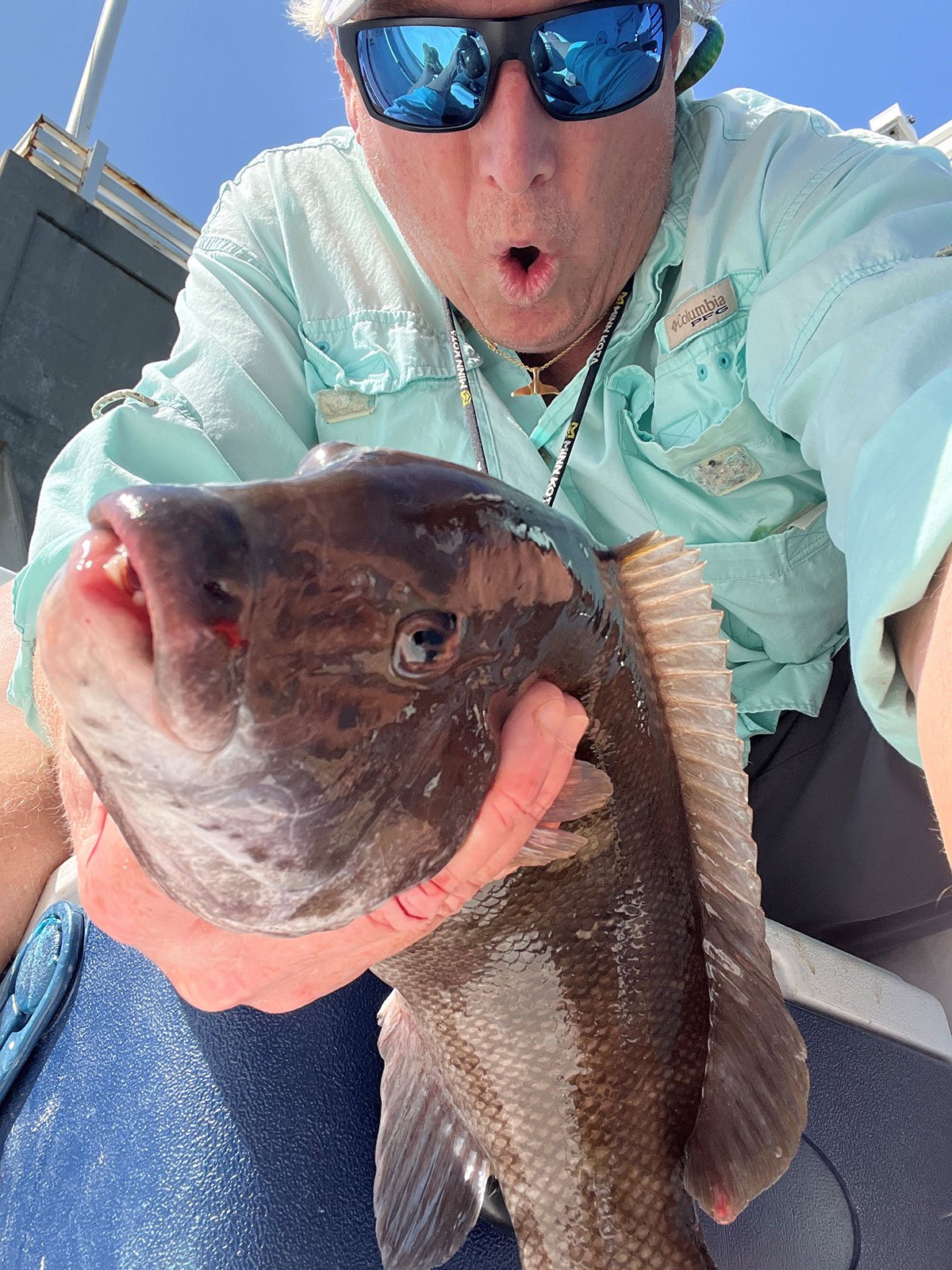
Inlet and back bay tog start biting well before the back to school shopping!
As of August 1, most Jersey Shore toggers are already chomping at the bit to get going. With the season open with a limit of one fish from August first through to the mid-November bag limit increase, this early season gives the inshore and land-based fishermen a shot at some of these fine eating fish.
Just about every inshore jetty, sod bank, wreck and rockpile will have plenty of small and some medium size models at home. But keep in mind that this inshore fishing is a different game entirely.
While fishing from a jetty, or from a boat, inshore tautog can be voracious at times! The bite typically revolves around moon phase and tidal flow much more so than fishing the reefs or offshore does. New and full moon heavy tidal flow usually finds the best action around the slack tide. Lighter current moon phases will often have them chewing while the tide is running, and they slow down during the slack.
Either way, the action will normally change as the tide changes.


Current Events
Inshore inlets, bays and rivers have a tremendous current flow due to the relatively shallow water. Combine this heavy flow with the funneling effect of jetties, sedge banks and sandbars and you have some heavy current in certain places. This generally constricted flow will often find you needing to use a 6-ounce weight to keep the current from dragging your sinker and rig into the rocks repeatedly. Certain spots will offer a bit less current on certain tides.
Sometimes you can hide behind a corner of a sedge island and find some shelter from the heavy current flow. Just do what you must to position your boat, so your baits fish the bottom that you want to. Current be damned, being on productive bottom is everything.
Rock piles around marina sea walls, like the wall at Seaview Harbor in Longport, make a great place to fish, especially if you can sit in the transition zone where the sand meets the rocks. Just stay out of the channel leading into the marina as larger vessels at slow speed are a bit challenging to maneuver when small boats block the channel. These areas are normally near an inlet which seems to give you a chance at some better sized inshore tog.
The rocky areas are often a bit spread out near the edge so there’s no need to get too close to the rocks themselves. If I’m anchoring near a rock wall I always have more than twelve feet of water under my keel or I just can’t relax. I drop my Danforth maybe a hundred feet away and back down toward my spot next to the rocks. While tight on the bow anchor, I get close enough to throw a 12-foot piece of 2 x 4 lumber attached to poly line. This line is cheap, and it floats. The wood scrap will fall between the rocks, and you can adjust the stern close enough while the bow faces into the channel so a wake will not swing your boat toward the rocks. Always play a long scope on your main anchor and make sure it is dug in tight.
Sod banks can hold huge amounts of blackfish as well, but not all sod banks. You need to find spots that have mussels growing on the bank or of the bottom. Nasty looking bottom on your machine between 20 and 30 feet down may be a great place to look. Sometimes the best spot is 30 feet away from where the bank is now, because there may be old pilings with mussels there from a marina that was there long ago. After years of erosion on the mud and it becomes smaller and smaller, this bottom structure in “No Man’s Land” and it’s exactly where you want to be.
Make Your Mark
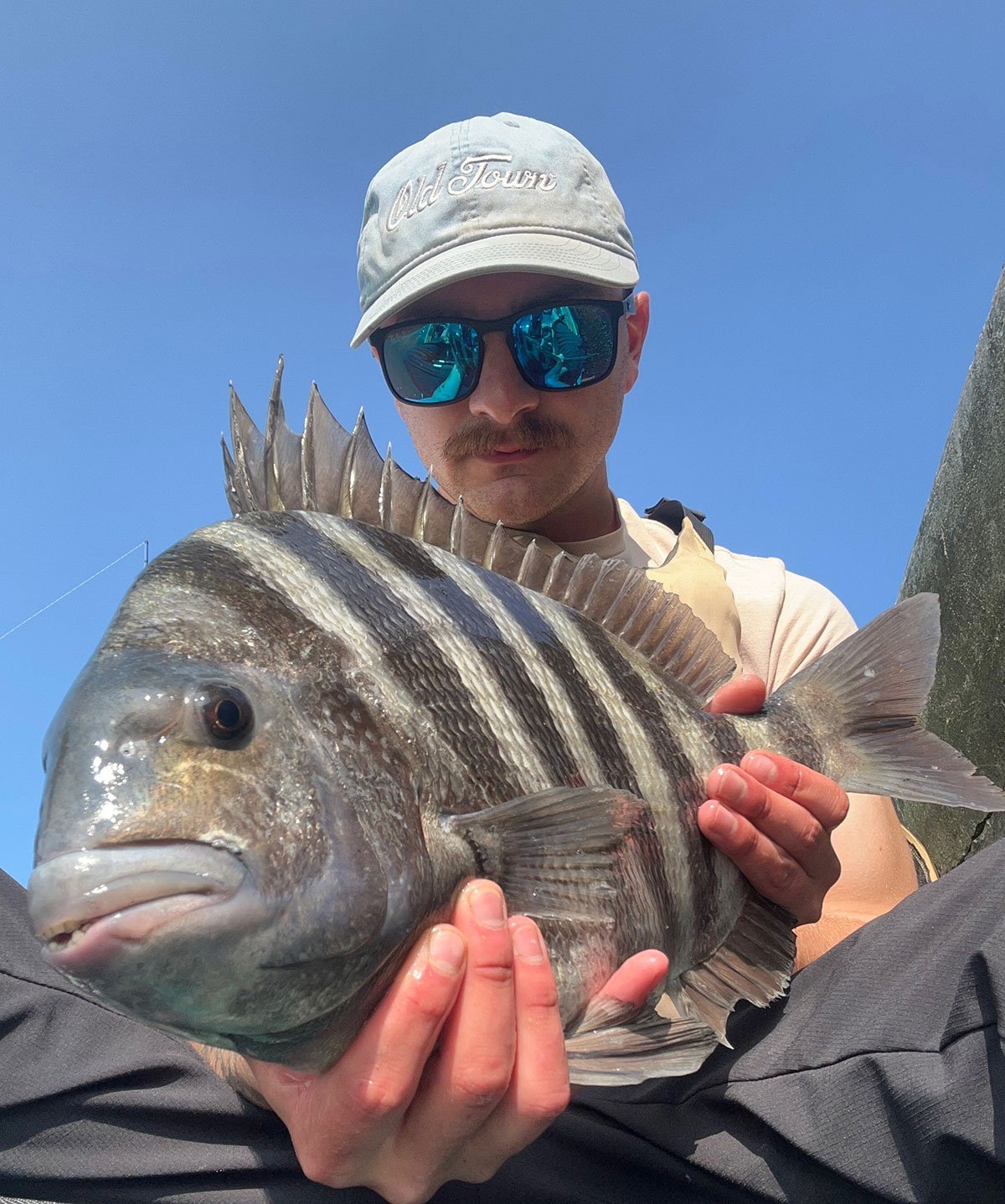
Spend time and learn the bottom structure in your home waters, and make slow passes with your eye on the screen and your finger on the WPT button as you look for nasty bottom! Mussel bottom defiantly looks harder than sand bottom, but not as thick red bottom bar as rock does.
The downcurrent side of bridge abutments always did well for me, especially near the extra pilings the hold the ice breakers. Often, they put in bridge abutments then put broken rock under the bridge for protection. The downside side is a great place to spend time poking around.
Anchor or spot lock? Well now, if you have a Minn Kota, just roll in and push the anchor button and have at it! But if you are actually using an anchor next to a sod bank or a rock wall, some different techniques are required. I would drop my main Danforth anchor and let her come tight and locked in. Turn your motor toward the sod bank until you are close enough to toss a grapple hook onto the bank. Both lines tied off the bow, this grapple hook will let you adjust your distance away from the bank as well as water depth. Your Danforth is providing the holding while you stabilize and adjust with the grapple.
If the current is pushing your boat toward the bank, pull your anchor line down that side of the boat, maybe under a bow rail or through a snap on a separate rope. This will let you use the current to hold you away from the bank while the grapple adjusts your distance.
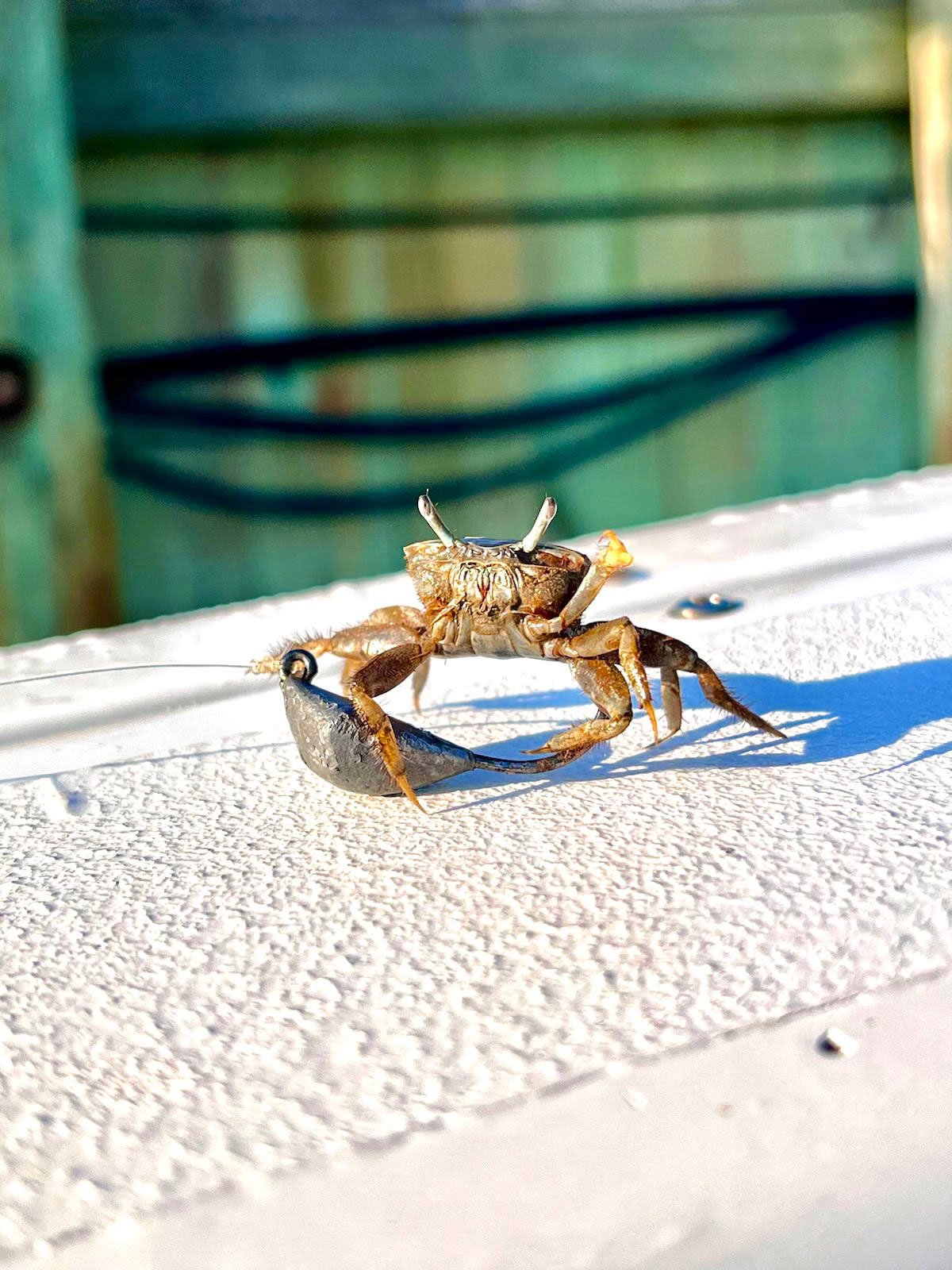
Your tackle and rigging needs to work in this heavy current. A small #1 octopus hook on a dropper loop tied 4 inches above your sinker will do great here. Bait it with a quarter of a green crab with no legs. This will minimize current drag, no tangles, and will handle any fish that you catch in the back.
| TAUTOG REGULATIONS |
| Keep in mind the differing state-by-state regulations; anglers must adhere to the regulations of the state waters in which they’re fishing and transiting, as well as those of your home port.
NEW JERSEY – 15” minimum size, open 8/1-11/15 (one fish), 11/16-12/31 (five fish) and from 1/1-2/28 (four fish) DELAWARE – 16” minimum size, open 7/1-12/31 and 1/1-5/15 (four fish) NEW YORK – 16″ minimum, open 4/1-4/30 (two fish) and 10/15-12/22 (four fish) in NY Bight waters, while it’s 16” on Long Island Sound (two fish) from 4/1-4/30, reopening again 10/11-12/9 (three fish). |
Fishing a jig is great fun on days and time when the current allows. Use 30–pound test leader and a 1-ounce jig baited as earlier described. Fish it as long as the current lets you. When the current starts screaming again, switch back to the rig with a weight that will hold bottom correctly.
If fishing from a rockpile, try to fish a spot that the current will not sweep your jig so as to snag you constantly. Maybe current on the other side of the rockpile is less? Perhaps drop in right behind that huge boulder that will give your bait and that tog a current break! Conditions are best for this game near slack water.
This is a great time to take the kids out once you get the hang of the anchoring. Small hooks will keep everyone busy with small sea bass and some great fighting and tasting blackfish. In the backwater it’s always calm and the breeze is rarely a problem, providing a great way to introduce your family into saltwater fishing.