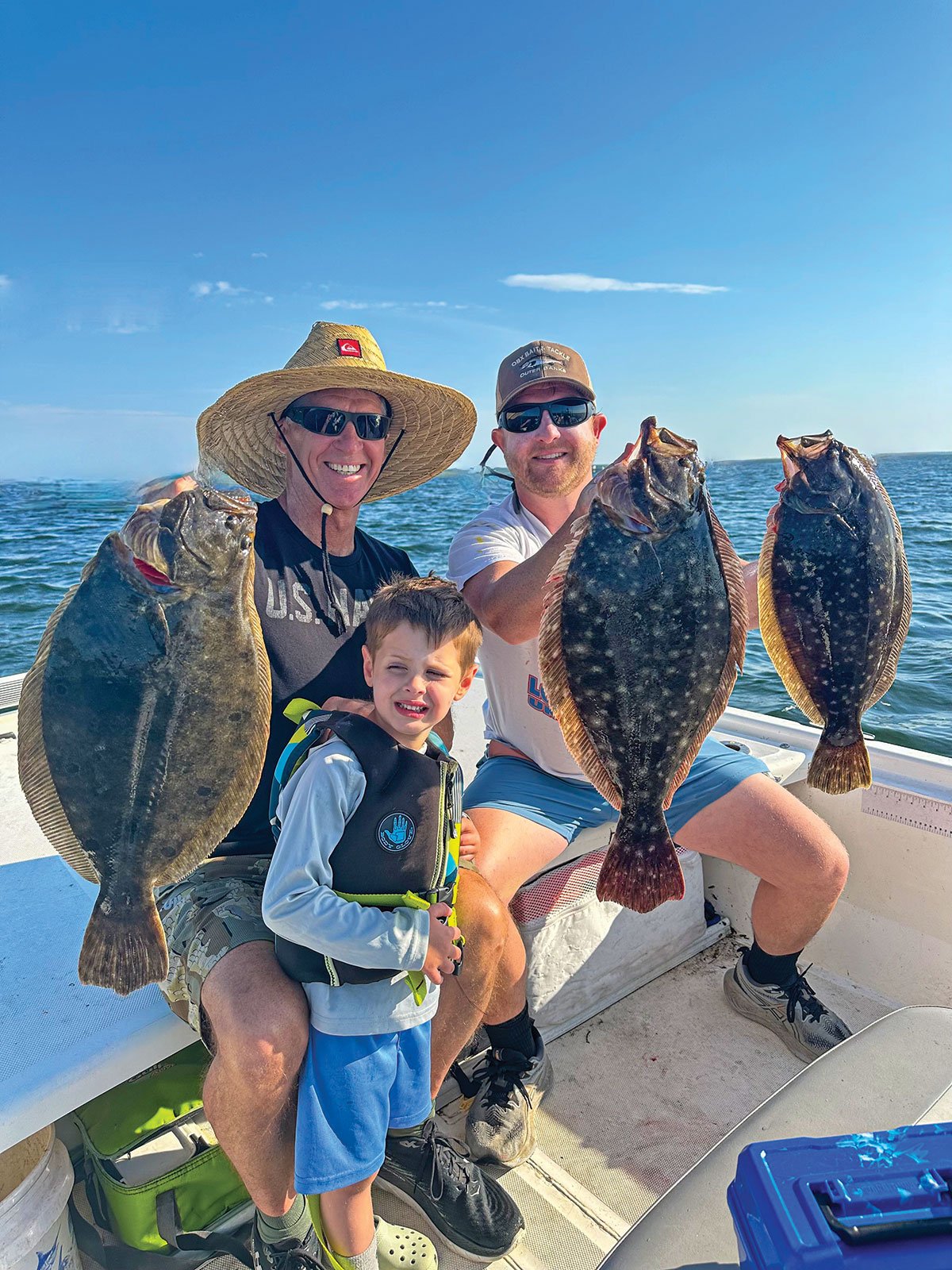
The weekly tackle shops report of fluke was super-slow with boats and surfcasters complaining of very fewer short fish and even less keepers. The heavy surf kept most surfcasters home from working the calmer suds for summer flounder, and the south winds didn’t help the situation much with surf temperatures bottoming out to the mid-50s.
A few savvy anglers were able to make decent fluke catches by working the feeding windows which were made even smaller by the recent moon phase. Every species of fish has its own ideal conditions which promote feeding or foraging. These “conditions” can also be referred to as “feeding windows,” and successful anglers understand how to time the bite and location when the windows are small or seem non-existent by using the right baits and presentation.
Regardless of the inshore species that is targeted, distinct feeding windows present themselves at locations where the variables line up and trigger a particular gamefish to engage in feeding opportunities. Once the variables – current, temperature, baitfish, etc. – line up, the fish get the “green” light in the brain to begin feeding.
Two A Day Tides
A unique factor in saltwater fishing is the presence of tides which are a major influence in temperature swings, bait migrations, and creating feeding stations for gamefish. Depending on your location, your tides can vary from a mere foot or two to upwards of 10 feet the further north you are. The gravitational pull from the moon as well as the earth’s rotation on its own axis creates this cyclical movement of water which we call tides.
But this up and down movement, also creates a tidal current as water fills or drains the coastline, estuaries, and bays. Many anglers get confused between tide and current; tide indicates the vertical rise and fall of the water whereas current indicates the horizontal movement across the body of water.
Each inlet, bay and estuary is unique and the time it takes for water to enter or exit will vary greatly. A slack period at the inlet, which means zero water movement may not occur at a 1- to 3-hour delay depending on the particular area. This is why it is important to understand the body of water you fish in as you can literally time or predict where the next feeding window will occur.

New, Full & Quarter Moons
In a 29.5-day cycle, the moon goes from new to full; during this period our tides and tidal currents are greatly affected due to the gravity and alignment of the earth, moon, and sun. Anglers will also notice that the fishing will vary greatly during a cycle, with some parts being much better for certain species, while others will have fishing at its worst.
The new and full moon periods present the greatest tides and currents due to the celestial alignments of the sun, moon, and earth, whereas the quarter moons present much lower and weaker tides. For example, tidal current is a huge factor when fishing the bay or inlets and current can fluctuate up to 3 knots depending on the moon phase. If you target a species such as striped bass, you will begin to notice the effects of current speed dictating the velocity of the bite. Fish will begin to feed and become increasingly aggressive as the movement of water rises above 1.7 knots.
Striped bass are uniquely evolved to be able to navigate fast moving currents due to their musculature and large broom-like tails. This feature enables bass to forage on helpless baitfish caught up in the pulling currents. Under 1.7 knots and decreasing, anglers will also notice a slowdown in the activity eventually subsiding as the current hits slack and the fish become less active as they favor faster, moving water. This is where moving to a location with better current can result in another batch of feeding fish.
During the full and new moon periods, the bite windows become larger as currents are much stronger due to the moon’s gravitational pull on earth’s water. In comparison to summer flounder which prefer less current speeds, their bite windows will narrow on the full and new moon tides as current speeds in the 0.4 to 1.2 knots will occur for shorter periods of time. Intelligent anglers will take notice of their GPS units as to stay in the “gravy” speed, if the current is too fast or too slow, change tactics or move on.

Wind, Friend Or Foe
Another factor which can greatly influence the feeding windows is the direction and speed of the wind which can also have a direct correlation to water temperatures. Most anglers know the direction of the wind plays a critical role in fishing, but not everyone understands the “why” or “how” of the reason. Some novice anglers may question how can winds at the surface affect a summer flounder that is 80 feet down on the bottom.
Earth’s rotation produces the Coriolis Effect which affects how a ball travels through the air or how water moves on the surface of the earth. Due to this factor, water will move at right angle or 90° to the direction of the wind. A north to a northeast wind will warm up the inshore and beach areas as warmer, as hotter offshore water are pushed in to the shore (down-welling event). The opposite occurs with southerly winds, as these produce upwelling which will quickly drop inshore ocean temperatures. The warmer surface waters move offshore and ice cold bottom water moves in to replace the void.
These events, the dreaded “south” wind, can be a killer for most species inciting periods of “lockjaw” from striped bass to fluke. Striped bass anglers revel in north or northeast winds, but when it turns hard south, the bite will instantly shut down. The effect on bottom species like summer flounder and even sea bass is pretty much the same as the colder water stresses or shocks the fish resulting in an instant drop in hunger.
So where does the bite window come in? Depending on the species, the time the fish are in their optimal temperature range influences the bite. The longer the temperature stays and fish become accustomed to it, the better or more feeding activity will occur. A summer south wind is a sure killer along eastern facing beaches, but as the cold, clean upwelled water works its way through the inlet and some of the backwaters, relatively dormant resident striped bass will come alive with the cold water. If an event like this happens, it’s not uncommon to catch striped bass during the day in the middle of summer. Plugs, soft plastics, and even live baits will work on striped bass on these colder, incoming tides, especially if it’s a sustained upwelling event off the beach.

If you’re targeting flatties, keep a keen eye on your sonar as temperatures will begin moving westward following the distinct temperature break. It’s amazing to see a distinct feeding line on both sides of the “break” from active, aggressive fish to a sluggish, non-existent bite, sometimes within 10 feet of the line. Just as the dreaded south presents increased opportunities for striped bass in the middle of summer, it also has big impact on summer flounder. Areas that have been extremely hot due to their depths and have kept fluke in a lackadaisical haze could suddenly become extremely active with the sudden influx of clean, cold water. The windows may not last long, so it’s important to keep moving or “following” the biting fish.
As a charter captain in business over 15 years, I have become a student of these factors, not by choice, but by necessity and for the success of my clients. As the moon, tide and wind effects vary on different species, they are still one of the most important considerations in fishing from the inlet back to the estuarine waters.
The author runs Reel Reaction Sportfishing out of Waretown, NJ and is also a member of the Beach Haven Charter Fishing Association.