Take the steps to round out your inshore arsenal and you’ll be prepared for anything!
Over the last few seasons, I’ve come to really enjoy launching the boat and not knowing what I’ll be targeting that day. We’re fortunate in southern New England to have seemingly endless options from May through early November on the inshore scene, leaving a wide-open playing field for anglers to explore. For me, it provides a bit more excitement and adds an element adventure, just adapting as the day goes with a bite you wouldn’t have necessarily predicted when you backed out of the driveway.
With this mindset, it leaves tackle junkies like myself with a nagging, recurring question: how do I perfect my inshore tackle system so you can carry the “kitchen sink” without feeling strangled? It begins with the lures, terminal tackle and tools, and ends with organizing all this stuff! The goal is keeping them accessible and tidy for the next bite so none of our valuable fishing time is wasted. You also want to feel full prepared; stocked with the basics but also backed up with enough of the niche stuff that might save the day when an unexpected species or situation changes the game.
Being Adaptable
Just this past fall, I had a day on the water where I spent most of the morning and early afternoon chasing hardtails. That day, the albies were being quite picky about bait profile and as more anglers flooded the area, the traffic had them pretty beat down, especially after the onslaught of jet ski-based anglers who seemed to know nothing but throttle. It had been a semi-successful day, but it still felt lackluster after hours on the water and waking up an hour before sunrise to beat the crowds at the ramp.
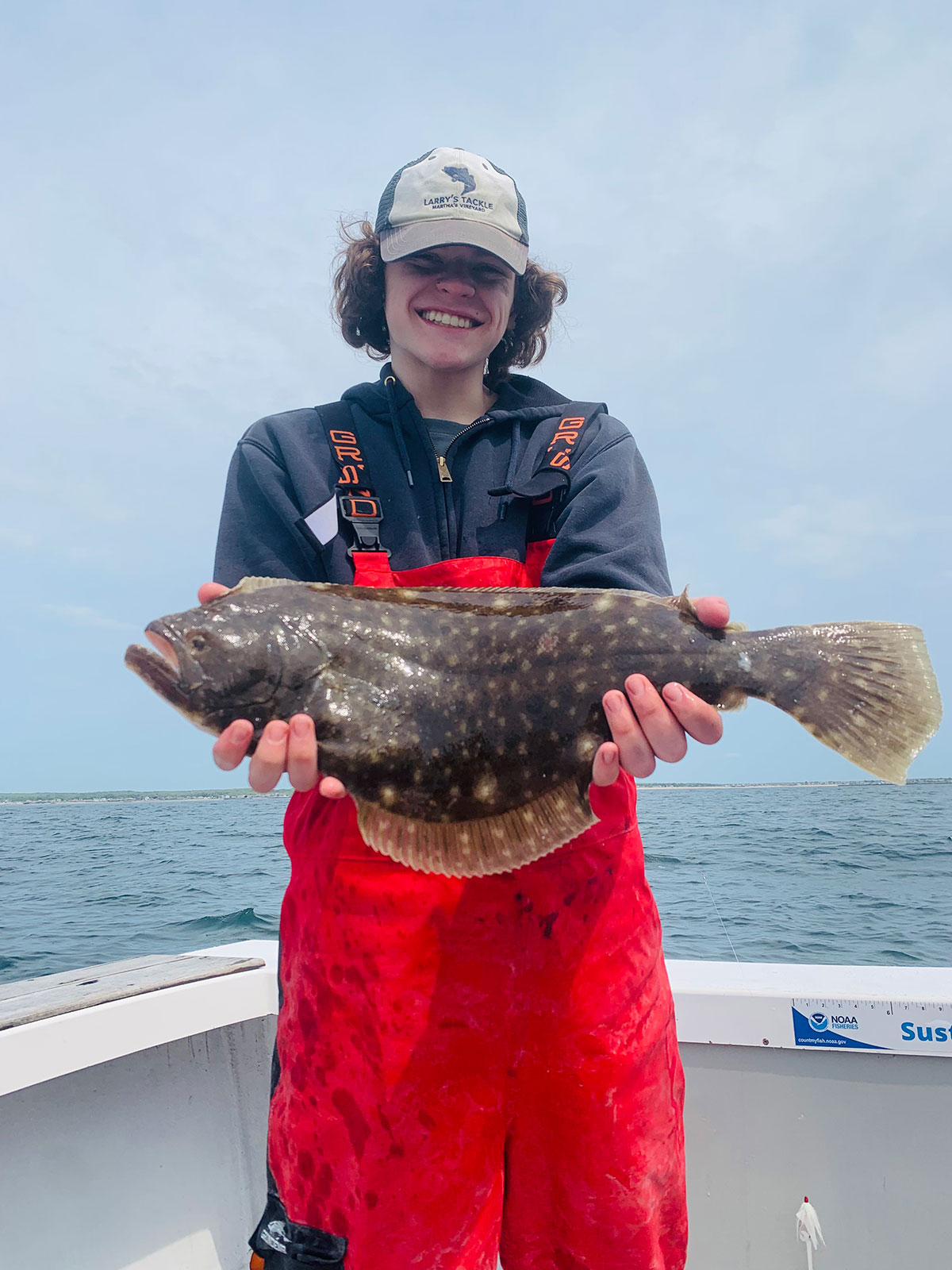
After stopping a few miles south of Newport to take a quick lunch away from buzzing motors and crossing wakes, just minutes into my drift, my Garmin showed serious clouds of baitfish 20 to 80 feet down. I was over the typical summertime fluke grounds that I’ve fished for years, so certainly I was curious to figure out what might be going on. I tied up a simple fluke rig and quickly found some of the healthiest fish I’ve seen in years. On top of that, this would become my best day of fluking all season, with fish up to 8 pounds. These fish were devouring large squid, with several fish spitting them up all over my deck.
Essentially, I took a below-average day of hardtail hunting and turned it into a day I’ll never forget, by being adaptable in the moment, and having everything I needed on hand to make that possible. Normally, September would have been a more of write off month as far as targeting fluke, but after this trip I would say it opened my mind a bit more. And I’ve had things like this happen for various species spanning the entire New England inshore season.
Three Must-Have Lures
Walk into any of the saltwater oriented tackle shops along the Northeast coast and you will find a plethora of plugs, soft baits, jigs and more. There are so many options out there for styles, colors and sizes, it can be daunting, especially for the new angler. Having spent years working at tackle shops prior to joining The Fisherman, I would generally encourage anglers – whether you’re on a boat, fishing from the surf, kayak, or whatever else – to focus their purchases on lures that can be used throughout the season, along with lures that work for many species at the same time.
The Metal Jig. As far as what lives on my boat all season long for inshore angling, by far one of the most versatile lures is the metal jig. While they can be broken down into many categories such as casting jigs, vertical jigs, micro jigs, slow pitch jigs and more, I’ll focus on a broad interpretation of casting jigs. Examples of this include the Shimano Current Sniper Jig, Game On Exo Jig, Point Jude Po-Jee and Hogy Epoxy Jig. They replicate small baitfish and can easily punch into headwinds to reach distant surface feeds, while at the same time, they can be used to work the water column down to the bottom. The usual suspects like black sea bass, albies, bonito, stripers, bluefish and more will fall victim to these, while I’ve also landed tautog, fluke, triggerfish and other species throughout the year on these simple jigs.
Typically, I carry sizes ranging from half-ounce to 2 ounces, both the resin-coated ‘epoxy style’ jigs and straight metal with a painted or plated finish. The straight metal is denser, adding just a bit more distance potential, along with the ability to sink faster and hold depth better. Epoxy jigs will hold their finish much longer and fall slower as they descend through the water column, which certainly has its advantages. I upgrade every jig I buy with a BKK Lone Diablo Inline hook, as it makes releasing fish so much easier and I haven’t seen any reduction in hookup and landing ratios over standard trebles. These jigs can be fished directly off the bottom, skipped on the surface, and everything in between which makes them incredibly versatile and a true workhorse option in my bag.
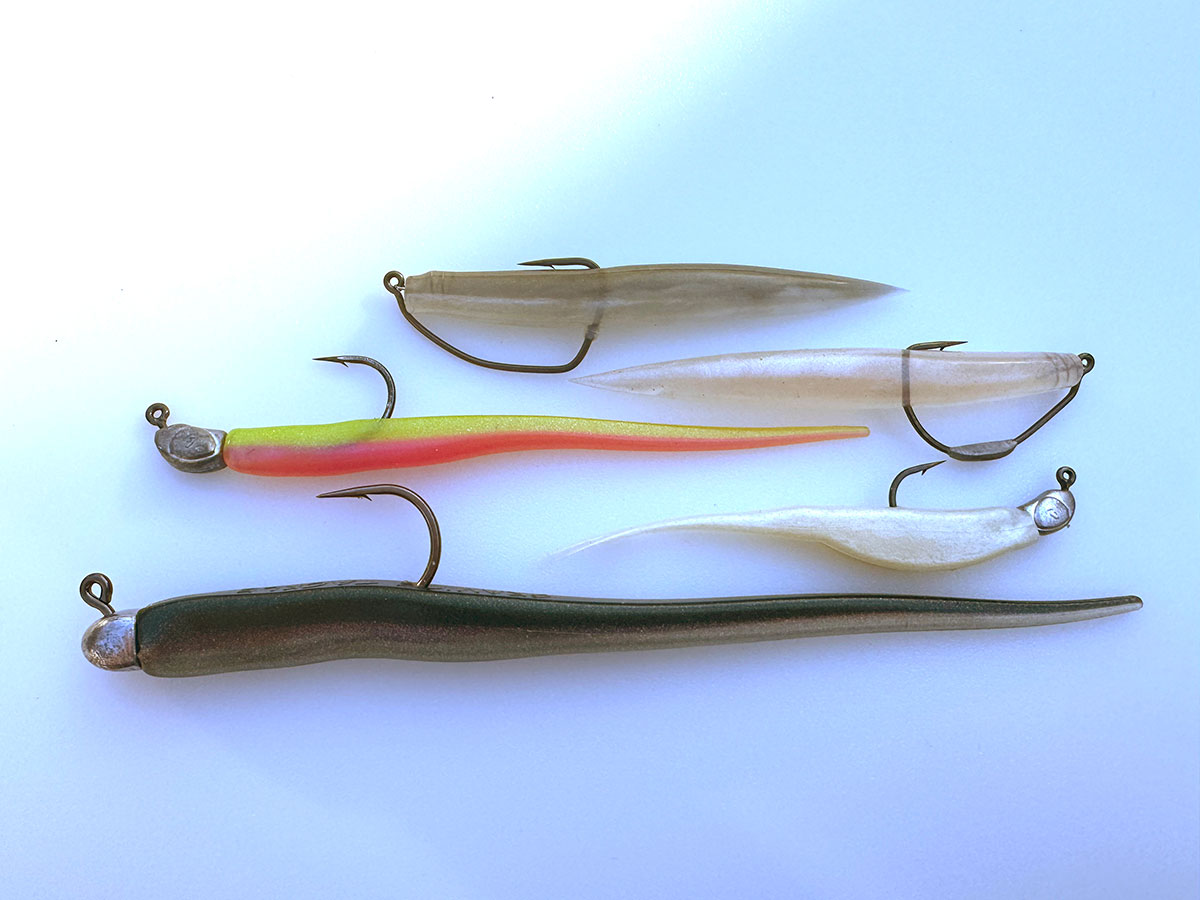
Soft Stickbaits. A close second to something that lives on my boat are soft plastic jerkbaits/stickbaits. Albie Snax, Gravity Tackle Eel’s & Sandeels, or fluke-style baits all fall into in this category. For Northeast saltwater purposes, focus on anything from the 5 inches up to 14 inches. These baits are a very simplistic in appearance, but can imitate squid, herring, mullet, eels, peanut bunker, and many other forage species depending on what size and shape you select.
Anglers here in New England will have to search hard to find a shop that doesn’t have one of the brands mentioned here, as they have become true staples. For Albie Snax, they cast well for a soft plastic and can be used with a fast topwater retrieve, twitched below the surface or completely dead-sticked. I prefer rigging the 5-inch with a 4/0 BKK Titanrider swimbait hook and the 7.5-inch with an 8/0 or with Owner Beast hooks of the same sizes. I tend to shy away from jigheads or weighted hooks for these as it seems that most fish that I’ve caught seem to strike on the slow decent to the bottom.
As for Gravity Tackle Eel’s and Sandeels or fluke-style baits, try to use as little weight as possible, just enough to reach the strike zone. It keeps the bait moving in its most realistic and natural form, with that slow descent that often delivers best results. On shallower flat you can get away with little to no weight, while deeper water you will want something heavier, especially as current factors in. For these baits, I use the Owner Inshore Slam Jigheads or the Gravity Tackle Atlas heads, depending on depth and your desired presentation. You can bounce them along the bottom, fish them with a steady retrieve with stops, starts and pops… or just dead stick them.
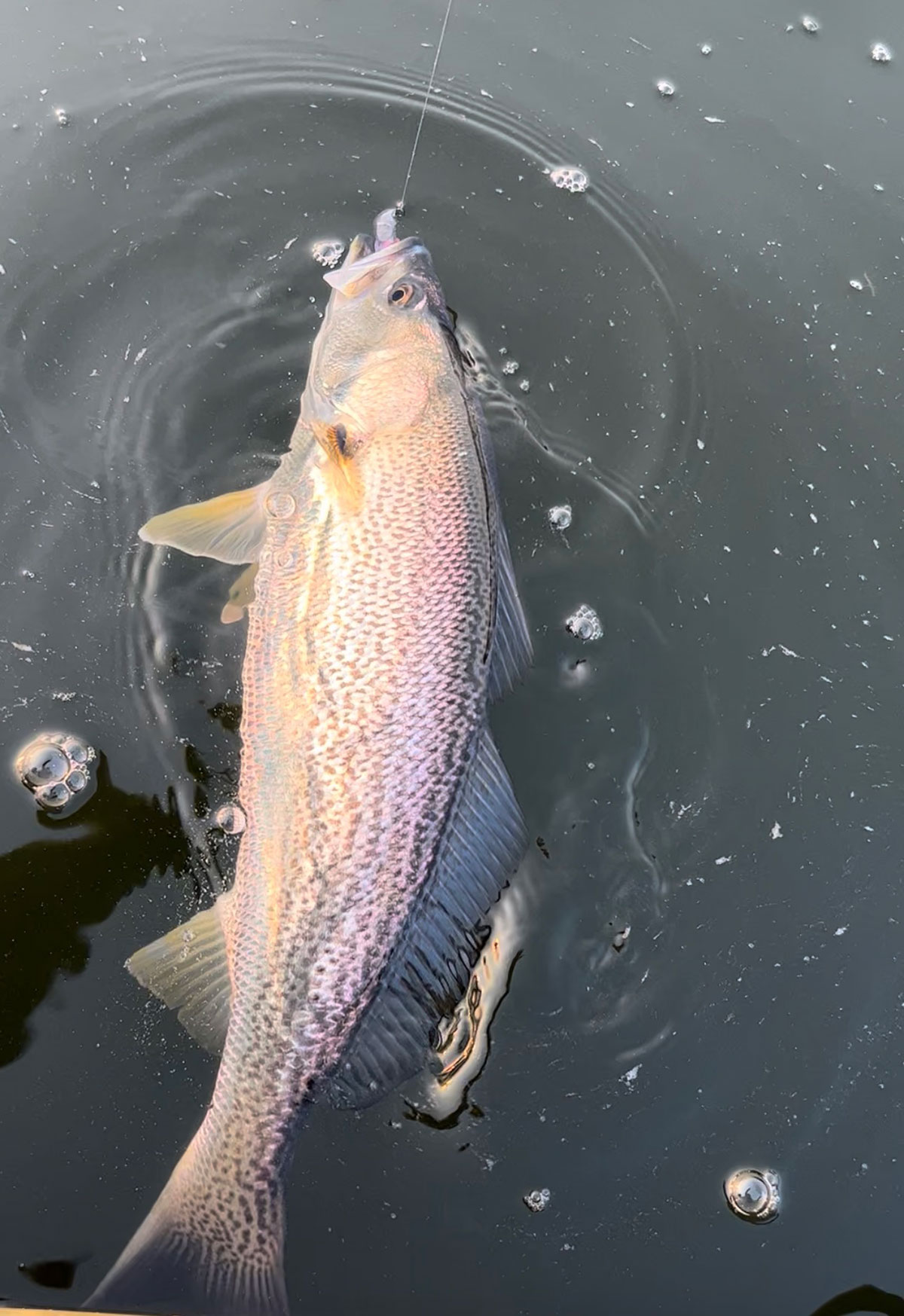
Plastic Swimmers. The third bait category that I think is grossly underappreciated in the Northeast but remains effective throughout the season are plastic swimmers and jerkbaits. While the Daiwa SP Minnow or the Yo-Zuri Hydro Minnow are commonly used and hold high status in the Northeast, there are so many other great options. Baits like the Yo-Zuri Mag Darter, Rapala Saltwater X-Rap, and Yo-Zuri Fingerling are some top-end examples that only scratch the surface.
What’s great about these plugs is that they are simple to fish, can be retrieved at various speeds, and techniques can be applied throughout the retrieve to achieve various looks as actions. I like stop and go retrieves, I look at it as if the fish is reacting to a panicked baitfish that’s just spotted a predator, pausing these baits sometimes results in hookups when a following predatory fish basically ‘bumps into the lure’ when it suddenly stops, prompting a reaction strike. Rapala and Yo-Zuri do a very good job with their varying finishes, featuring solid-color variations along with metallic and prismatic finishes that emit flash, mimicking a dying baitfish.
Staying Organized
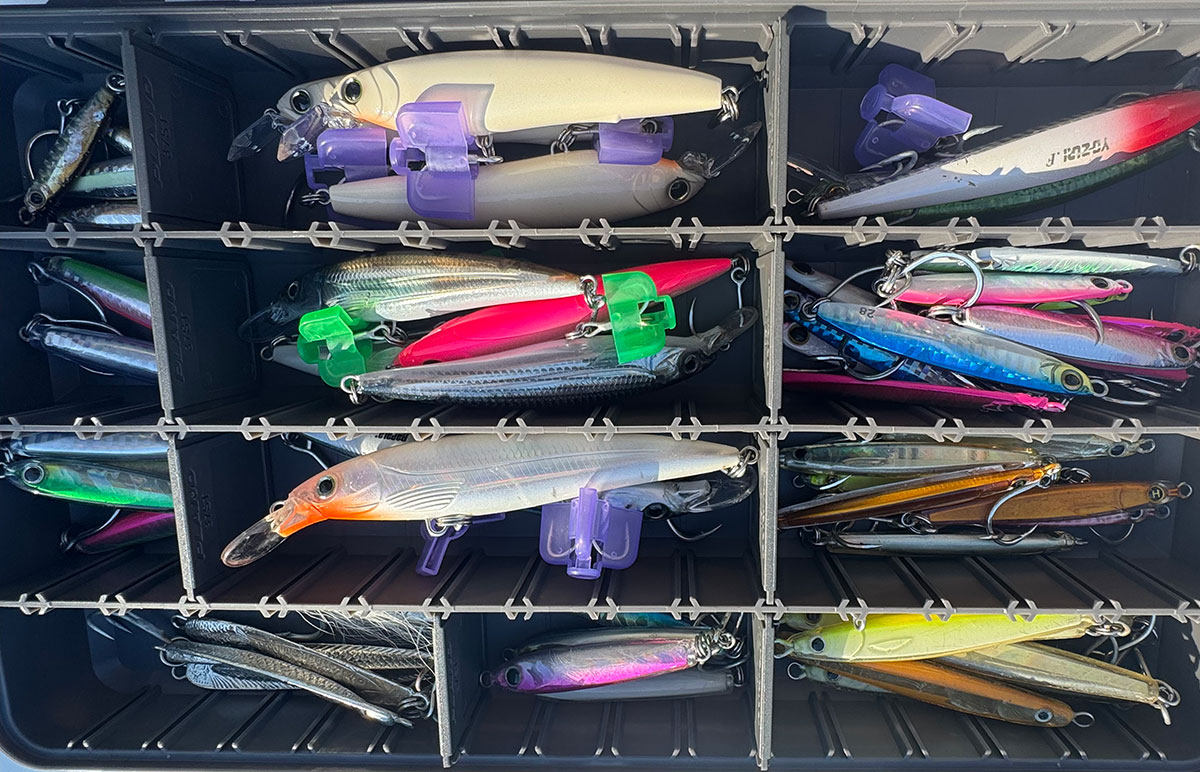
In my tackle bag I use a variety of Plano boxes along with soft bags. Certainly, a Plano 3400 to 3700 size box is perfect to store hardbaits and casting jigs, but after that I go to various soft bag options for storing softbaits, leader material, hooks and more. For larger plugs like the Doc, Yo-Zuri Mag Pencil, and even larger custom glidebaits which have become to be the new rage for 2026, I’ve come to really like the Major Craft Jigbag, designed to carry large pelagic jigs. For me, they are perfect for carrying these large 7- to 9-inch baits that would take up serious space in a normal Plano. Inside the Jigbag is a removable plastic mesh inner liner, making it easy to rinse them all down and let them dry.
| MORE THAN A MOUTHFUL |
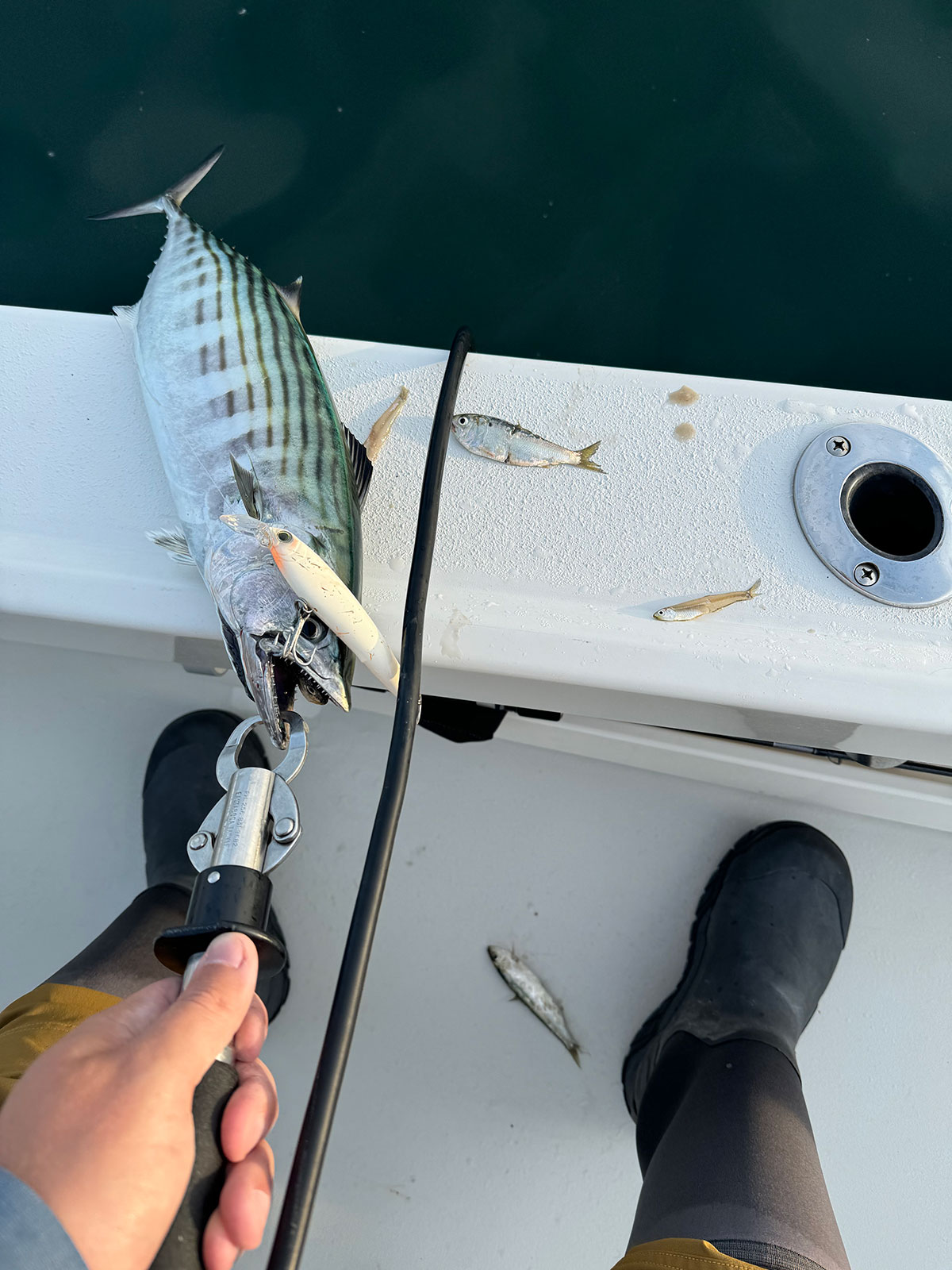
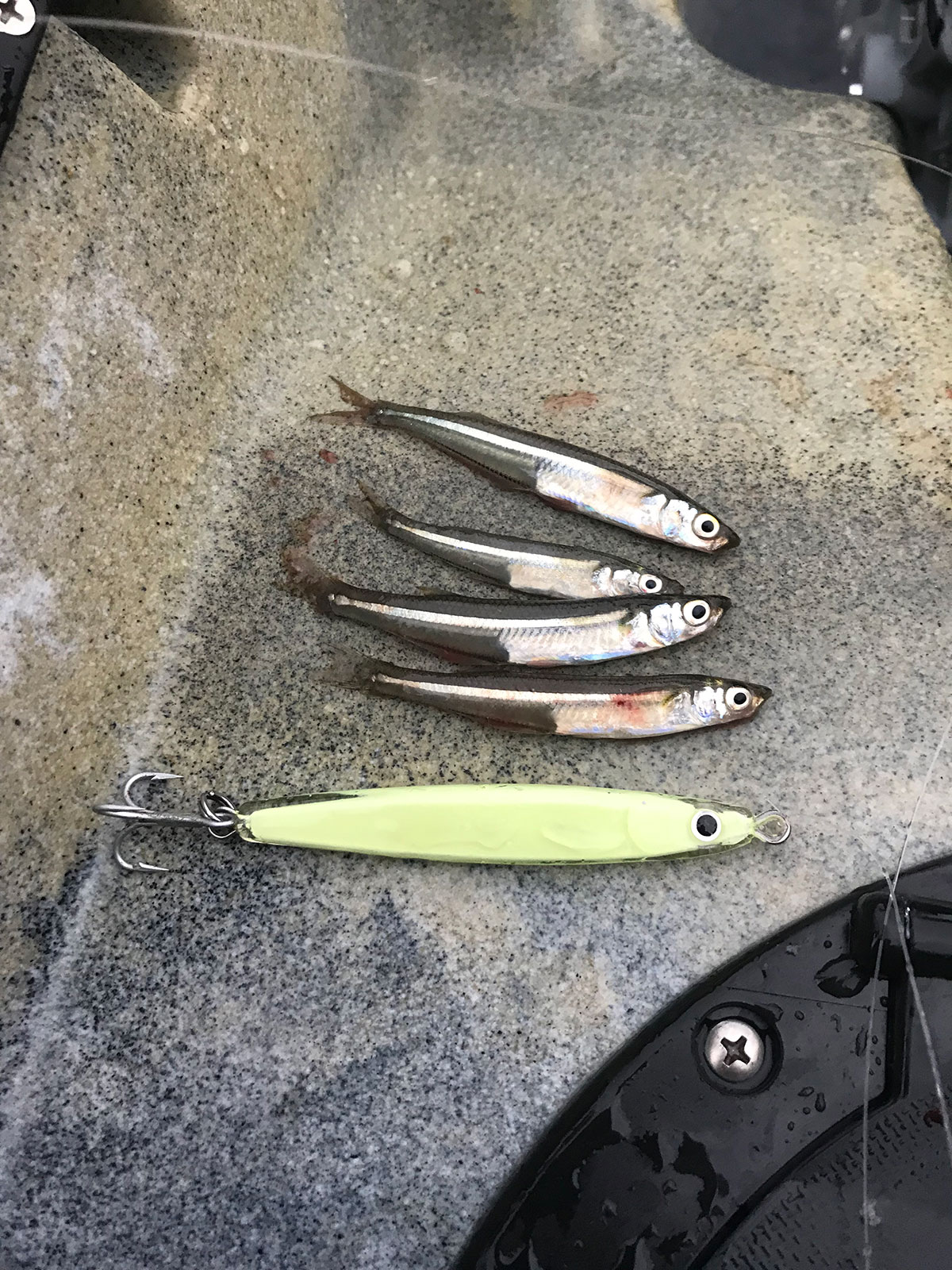
Check out this mouthful! This bonito ate a Yo-Zuri Fingerling and spit up a bay anchovy, a peanut bunker and a juvenile herring! It pays to have options on hand that allow you dial in the size, profile and – in some cases – color of the bait (or baits) the predators are feeding on. When species like hardtails or even stripers are keying in on size, a diversity of size and profile options can save the trip. |
Soft plastics present the biggest storage issues, because you want to keep them straight, so they don’t develop any “kinks” that will ultimately affect their action and appearance. I’ve had good luck storing them inside their original bags, then within Plano StowAll Bags which they make in various sizes. The material of the StowAll bag is very thick, resisting much of the bending you would normally get if they were just thrown around the boat or a tackle bag.
One piece of storage I will never go without is the Baitmule Bait Locker. Constructed of a HDPE material along with a rubber gasket drum lid, this container is bulletproof for storing products like Gulp or FishBites. Unlike everything else I’ve used, the juice stays locked in, preventing your baits from drying out or having the juice spill in the car or on the boat. I’ve never heard of colors bleeding between baits, even when storing with a dozen varieties. On two occasions, I’ve had my Bait Locker come loose in the back of my truck, both times were as a result of having to slam the brakes on and both times it slammed into the front of my truck bed… neither time did it leak or sustain any damage at all.
For small terminal tackle like swivels, split rings, solid rings, clips, hooks, etc., the Spro Waterproof Terminal Tackle Box or the various sizes of the Gamakatsu G-Box Pocket Utility Case work extremely well. Everything required for light inshore fishing to offshore fishing for mahi and recreational tuna can fit into these and when you need them, you’ll be glad you have them.
If you’re like me and you want to feel like you’re prepared for anything the Atlantic might throw your way, take my lead and get yourself organized, so you can find everything and so that all your gear stays in tip-top shape. Further, I find that being well-rounded reduces burnout, while teaching you new things about various species that you can apply to others. And in some cases, like the lack of albies in 2024, being able to adapt to an “off year” can save a whole segment of the season. Opening yourself up to new techniques and species, is never a bad idea.