Tips for catching, and fishing, live spot for doormats!
It’s an early morning ritual, almost as much fun as fishing itself. Southern California anglers call it “making bait,” casting a Sabiki rig for Pacific sardines. A Florida guide starts his charter by throwing a cast net for pilchards or pinfish, often involving clients in the process. Here on the East Coast, catching our own pre-trip bait is not such a hallowed tradition.
Catching spot for bait is fast becoming the exception.
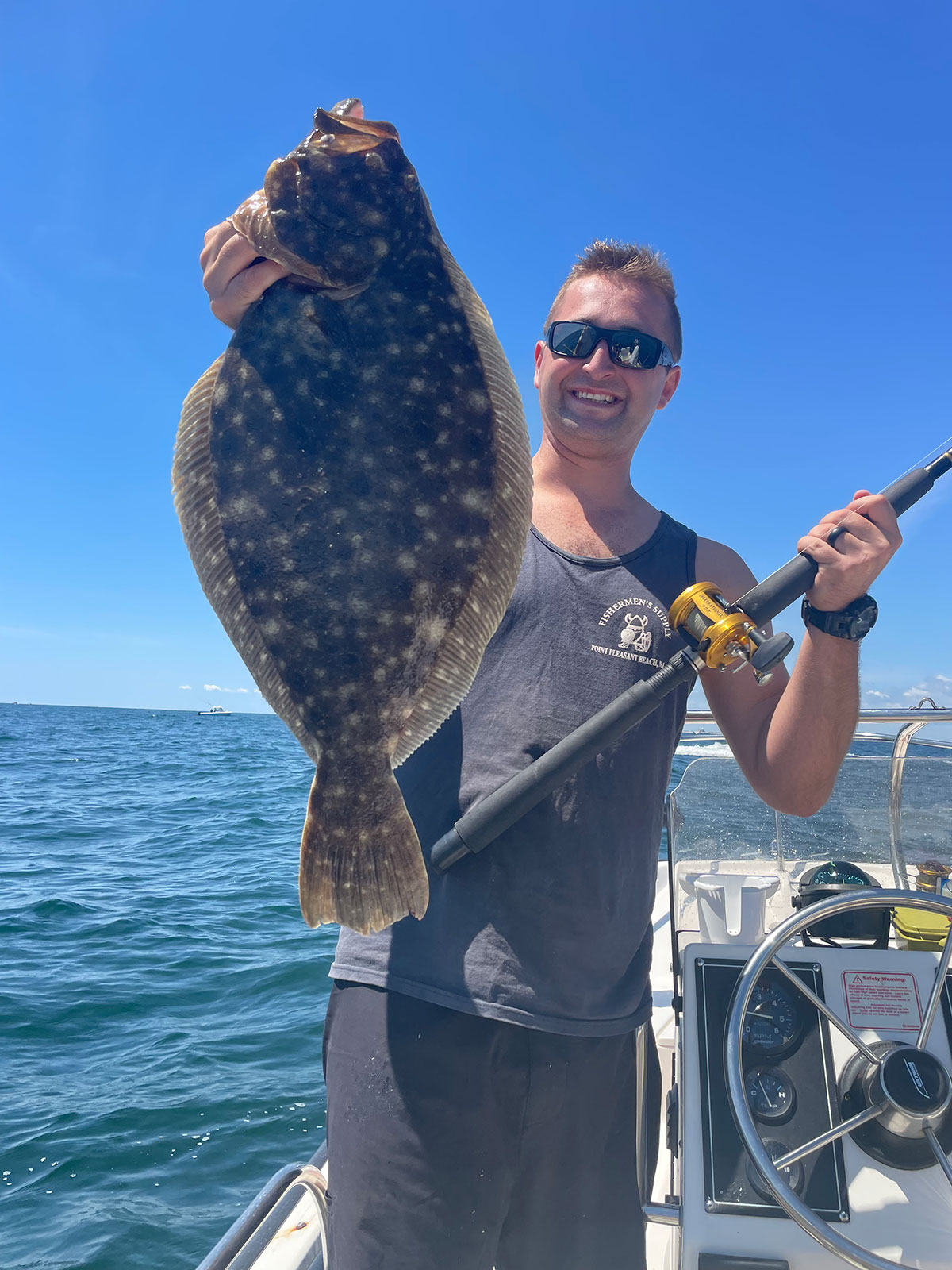
Over the past few seasons, spot, aka Norfolk spot or “Cape May Goodies,” have evolved into a coveted bait for summer flounder and striper fishermen alike, even tuna guys. Historically, it’s always been a popular panfish and bait target in South Jersey and to the south, but as the species range seems to have expanded, so too has its popularity at the other end of the hook.
They’re a hardy bait, and if you’re lucky enough to have a livewell on your boat, you probably already know of their prowess in attracting big fluke and finicky striped bass. If you have a bait pen at your dock, even better! Regardless of price or effort, spot are stellar baits and add an exciting, livelining dimension to your standard fluke outing.
On The Spot
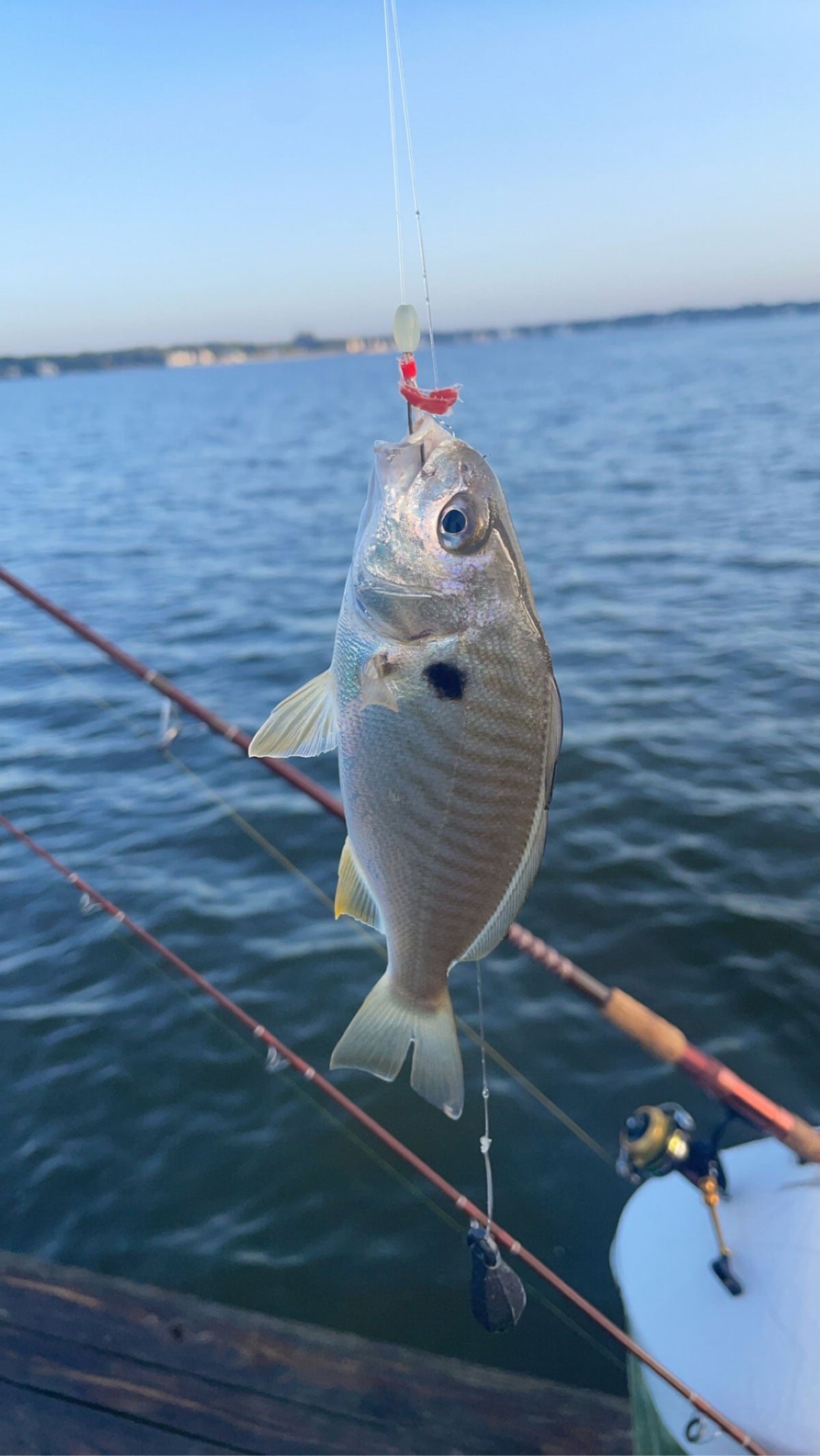
From early summer until the bay waters cool in the fall, New Jersey’s spot are on the feed and seem to be increasingly plentiful each year. In my home waters of Barnegat Bay, the spot run seems to coincide with crabbing season. Cousins to the Atlantic croaker, and about the same panfish-size, Leiostomus Xanthurus will also croak when caught. Their distinguishing feature and namesake is of course a black spot, about the size of their eyes, above their pectoral fins.
Standard tackle choices for spot fishing are no great shakes – any lightweight, trout-size spinning rod and reel rig will do, and terminal choices are equally easy. Tackle shops in the Mid-Atlantic region carry a myriad of spot/perch/croaker rigs, often two-hook affairs, with or without float pills. Hook sizes are typically in the 4-6 sizes to match their relatively small mouths. Bait choices include bits of bloodworm, squid, clam or my hands-down favorite, Fish Bites, in bloodworm favor, please. I’ve also gravitated to Sabiki rigs for my spot fishing. Their multiple-hook design allows me to present four to six pieces of small baits throughout the water column.
Chumming with any leftover clam logs you have in your bait freezer is always a good idea, but frankly, when I’m “making” spot bait in the morning, I don’t have time for the chum pot. I’ll soak my rig in a likely spot for 5 to 10 minutes in one spot before moving to the next. When spot are in season, they’re either thick down there or not.
Standard fishing caveats like early morning, high, moving water, and structure apply, even for spot-on bait fishing. In my neck of the bay, spot favor waters close to piers, groins, pilings and other structures, like bridge abutments and channel markers. Once you’ve located them, spot are easy to load up on, but be cautious not to overload the bucket or livewell. Spot can take a fair amount of abuse, but more than six in a bucket and 12 in a livewell is stretching their endurance.
I’m happy with four prime baits in my bucket/aerator setup. That’s enough for me to fish a good morning tide. If your fishing buddy insists on hopping on the Spot bandwagon, I’d recommend another separate aerator/bucket system.
“How To” For Doormats
Spot baits provide good summer fishing mojo in just about all fluke haunts, from western bayshores to offshore artificial reefs. My favorite areas, though, are bay channels, inlets and inshore ocean structure, like jetty sides and pockets. Open bay bottoms are often too weedy and filled with eel grass or the dreaded snot grass, at least in my home fishing grounds. The fish-finder rig I use easily picks up any grass or weeds, so drifting a flat, sandy bottom is key. But that’s fluke fishing 101 anyway.
Most anglers opt for spinning setups while livelining spot. A baitrunner feature on their reel is a huge advantage, but simply keeping the bail open and holding the line between thumb and finger also works. Me, I go the OG route with a baitcaster and a 6-1/2-or 7-foot graphite rod and braided line. Freespooling and thumbing the line on a baitcasting outfit just works easier for me.
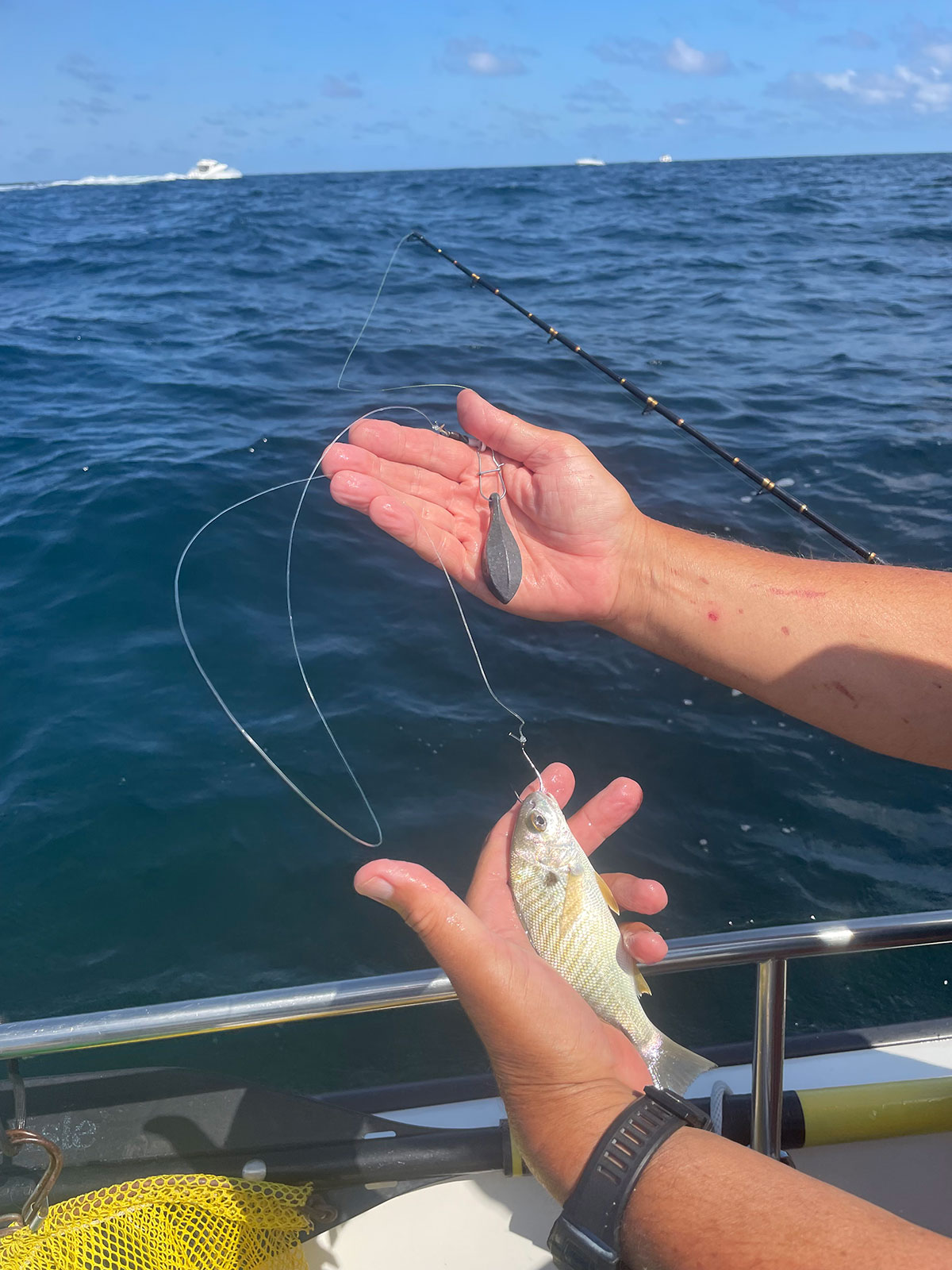
Constant contact with your braided line keeps you connected with what’s going on down there. I use 30-pound test, which is a good compromise between strength and braid. Scott at Grumpys recommends this terminal fish-finder rig progression: thread a fish-finder slide on your running line, add a plastic rigging bead, and then an 80-pound barrel swivel. Now tie on your leader; something like 30- to 50-pound mono or fluorocarbon, 3 to 5 feet long. Snell or tie on a Gamakatsu Octopus hook, 4/0 to 7/0 size. Yes, they’re big hooks, but you’re seeking big (or at least keeper-size) fluke when livelining spot. Bank sinkers from 1 to 6 ounces round out Scott’s terminal tackle recommendations. Use just enough sinker to keep your spot on bottom while drifting for fluke.
When targeting summer flounder with live spot, I run the hook through the roof of the mouth and out the top, through the snout. To me, it’s the most natural drifting presentation, and it keeps the bait from drowning and spinning. Here’s the really fun part about livelining spot – once you hook and deploy your bait, it’s like you’re down there with your baitfish. The spot settles into its own captive rhythm on your drift, but once it starts acting erratically and panicky, concentrate.; chances are an outsized fluke is bearing down on your bait!
When this happens, I free-spool my reel as long as I dare, letting out about 15 to 30 feet of line. My doormat fluke won’t feel any resistance, thanks to the fish-finder slide. Most times, I honestly can’t wait more than 30 seconds; it’s nerve-wracking but exciting at the same time. Then I lock and load my reel, wait for the slack line to tighten, and feel for the weight of a doormat. If so, I jab the hook and let the battle begin!
Eat Your Bait!
Later on in the season, striper fishermen will cash in on the spot’s fish-attracting abilities, often calling them Cape May Goodies, with the wink of an eye that this special bait deserves. The fish-finder setup is the basically the same for livelining stripers. Just remember to use the mandatory circle hooks and appropriate striper tackle.
| NO LIVEWELL? NO PROBLEM! |
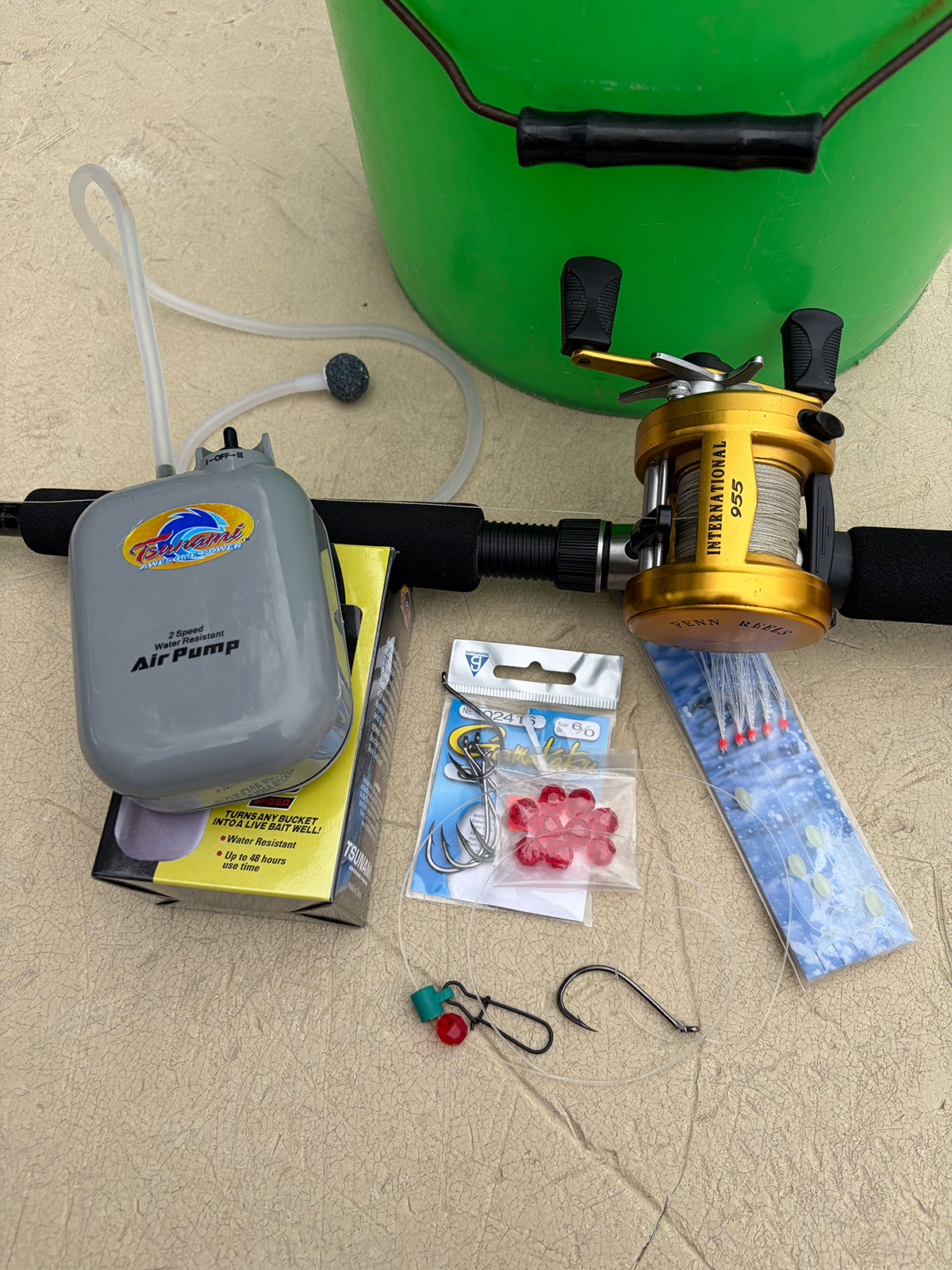
My 17-foot Boston Whaler skiff doesn’t have the luxury of a livewell, but I’ve created a poor man’s version, thanks to Scott Thomas at Grumpys in Seaside Park, one of my go-to tackle shops. For about $10, he turned me on to a portable aerator for my tried-and-true 5-gallon bucket. He also guided me to the proper terminal setup and gave up some spot-on livelining tips. The D-Cell battery on my Tsunami Aerator will last the better part of a day and certainly throughout a couple of tides or morning bites. – E. Mesunas |
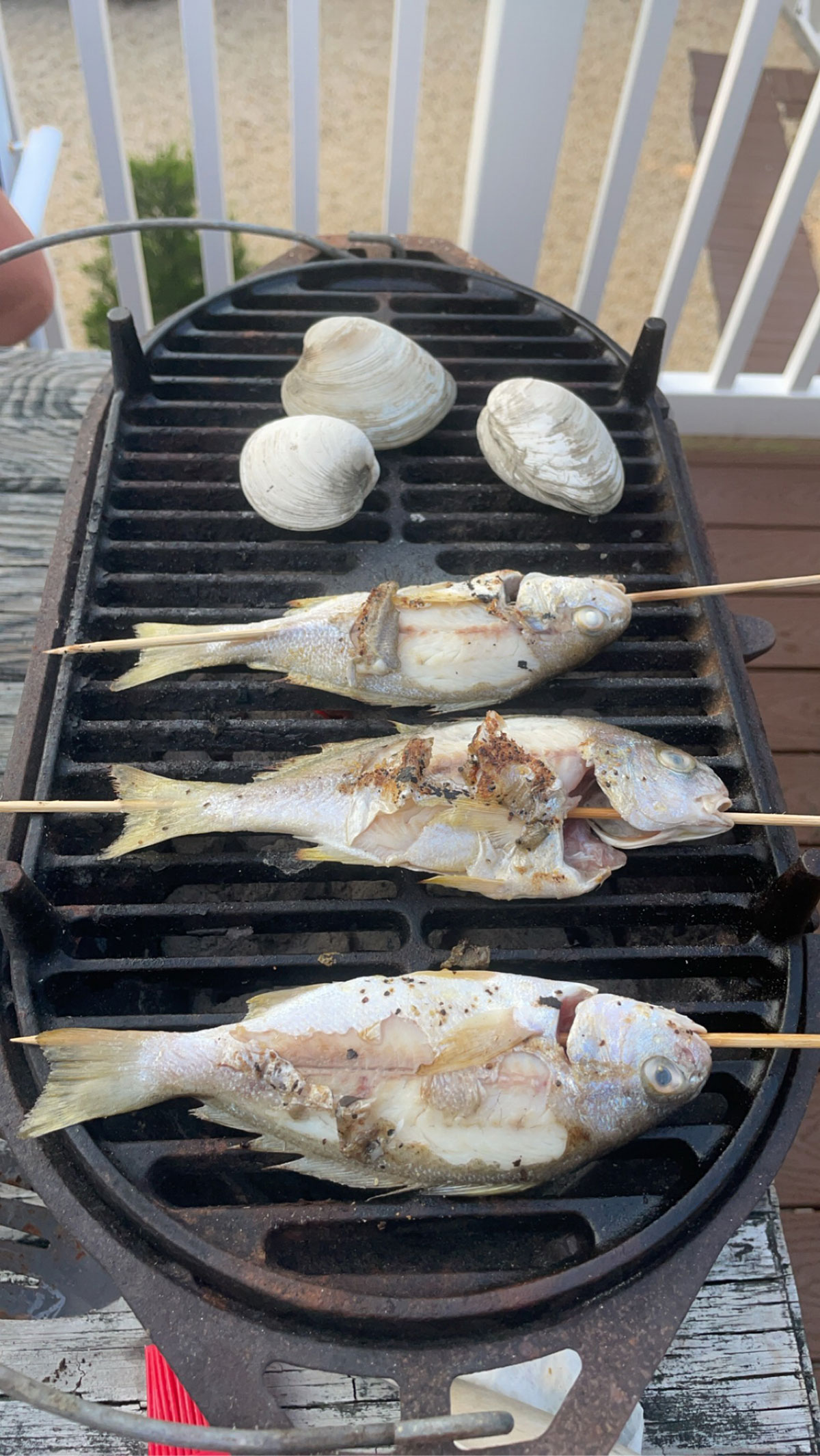
Spot in the 3- to 5-inch range are the ideal size for summer flounder livelining, but I’ll often keep larger ones to cut up as strip baits. I’ve even been known to save some jumbo 6-inchers for the frying pan, or better yet, the charcoal grill. Doormat fluke and resident stripers aren’t the only animals that find the spot’s flesh delectable; I especially like them salt-grilled, shioyaki style. Spot are sweet and mild, and make a great post-trip fish appetizer.
This summer, I’m looking forward to some warm, sunny afternoons, when the tide is low and the south winds are kicking up, and I’m back home, cleaning my boat and tackle after a bang-up livelining trip. Maybe I have the extra chore of filleting up some doormat fluke that couldn’t help but inhaling a feisty spot. And maybe I’ll scale, gut and skewer a few jumbo spot for the grill. I’ll coat them with Kosher salt while waiting for the charcoal to glow hot. The salt firms and sweetens the spot’s flesh. I’ll wash the salt off in cold water, brush their skins with some oil, then place them on the grill, real close to the burning coals.
It only takes a minute or two per side to burn the skin and cook the meat underneath, and the results are fantastic. Shioyaki in Japanese translates into “salt grilled.” I call it absolutely delicious.
Livelining and keeping live spot ramps up summertime fluke fishing in so many ways. Catching them is fun fishing in itself, whether you’re young or young at heart. Sometimes a bragging-size fluke will inhale your spot, other times a bluefish or shark will bite your bait in half, but most times one gamefish or another will attack your spot. They’re that irresistible to big fluke down below, and they’re equally irresistible to us topside predators.