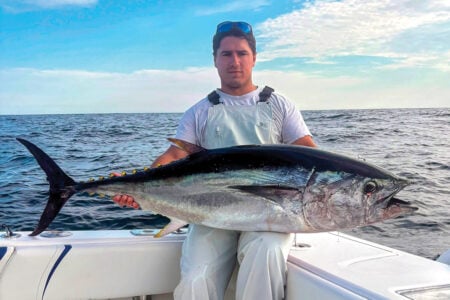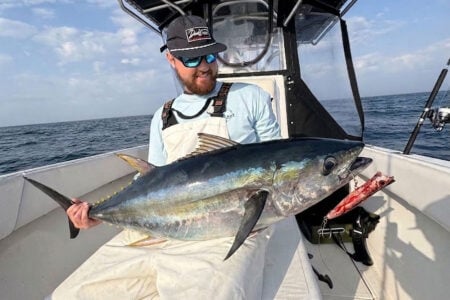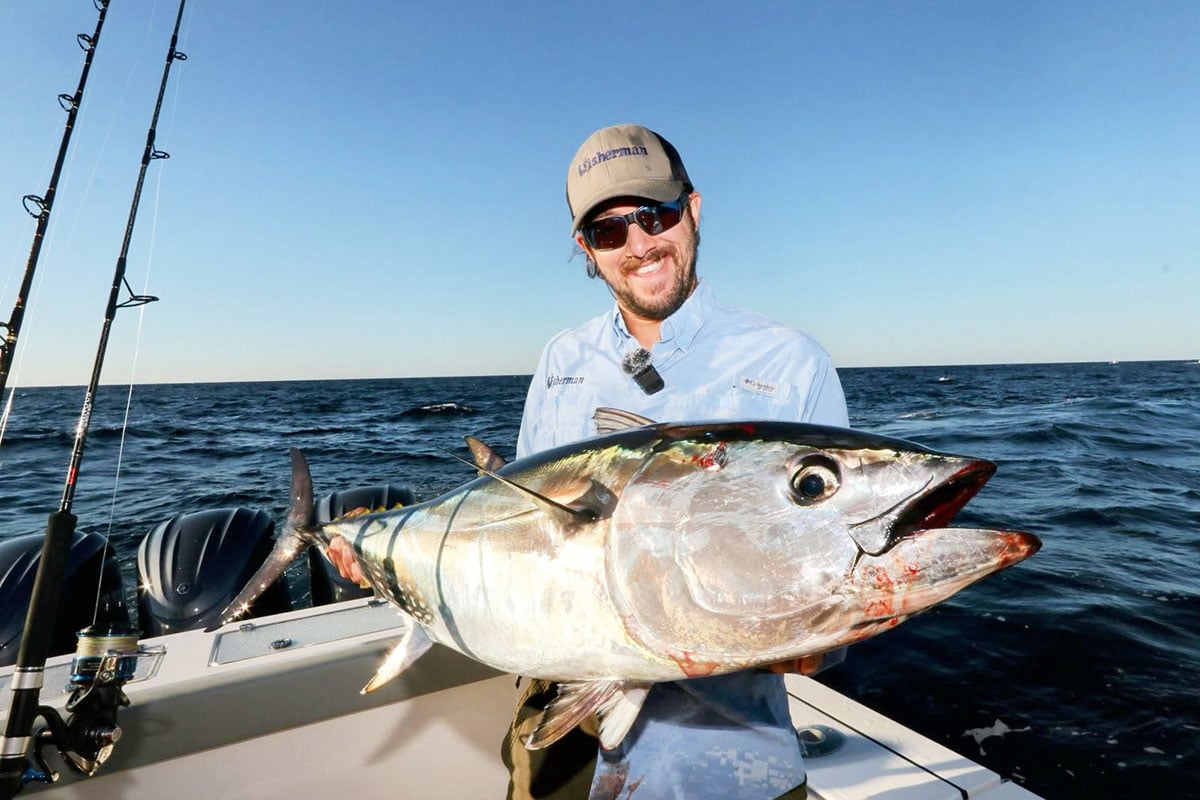
An experienced captain walks you through the standup tuna game, from top to bottom.
The easiest way to think about tuna fishing, whether it’s a 100-pound schoolie or a 1,000-pound giant, is like tackling a 10,000-piece puzzle. For some, it clicks quickly; for others, it can take a while. Some simply walk away from it altogether.
But I’m not talking about chasing reports or jumping into a fleet because someone handed you coordinates. I mean the real reward of finding your own bite. It’s not just figuring out where the fish go when things slow down, but getting them to eat as well.
Watching how tuna behave without boat pressure is incredible—something you’d expect to see in a nature documentary. But getting to that point takes work and patience. Whether you’re tracking their migration, dialing in contour lines, stemming current breaks, following temperature shifts, or targeting old wrecks aging away on the bottom, only staying alive through legendary folklore, the process is anything but simple.
Hopefully, this article helps you start putting that puzzle together, piece by piece, from top to bottom.
Surface Level
Envision this: you glide onto the grounds as the boat settles to a stop. You get a sudden whiff of sweet, oily watermelon. Before you can even turn your head, a massive splash—like a Volkswagen getting dropped from the sky—hits the water and echoes around you. Then chaos erupts! Tuna of all sizes burst from the surface in every direction. Streaks of silver tear through the water like runaway freight trains, and the surge of adrenaline slams through your veins. Your chest tightens, your stomach leaps into your throat, and suddenly you’re buzzing with that same electric excitement you felt as a kid on Christmas morning.
What’s next? Whether you’re the captain or the angler, the first step is to closely observe what the fish are feeding on. In our waters, the most common forage on top includes pogies, butterfish, sand eels, mackerel, herring, and skip bait. Occasionally, though, you’ll witness wild scenarios: squid being pushed to the surface and inking the water black, bluefish and bass getting catapulted clear out of the water, or even tuna erupting and foaming on mahi and other exotic strays caught in the Gulf Stream. The takeaway: be prepared.
Faced with such conditions, a simple, organized, yet versatile arsenal goes a long way. No matter the lure, the basic variety of colors I keep in my box are white, blue, red, gold, silver, pink, different shades of brown, and, in the right conditions, chartreuse. Always match the color and action of the lure to the species you’re trying to imitate. For example, if herring are abundant, go with blue and silver. If they’re keyed in on squid, reach for that pink or white. When it comes to chasing tuna, I could go on all day. However, I’m going to keep this short and sweet, strictly covering artificials. As much as I love live-bait fishing, I also love to run and gun.
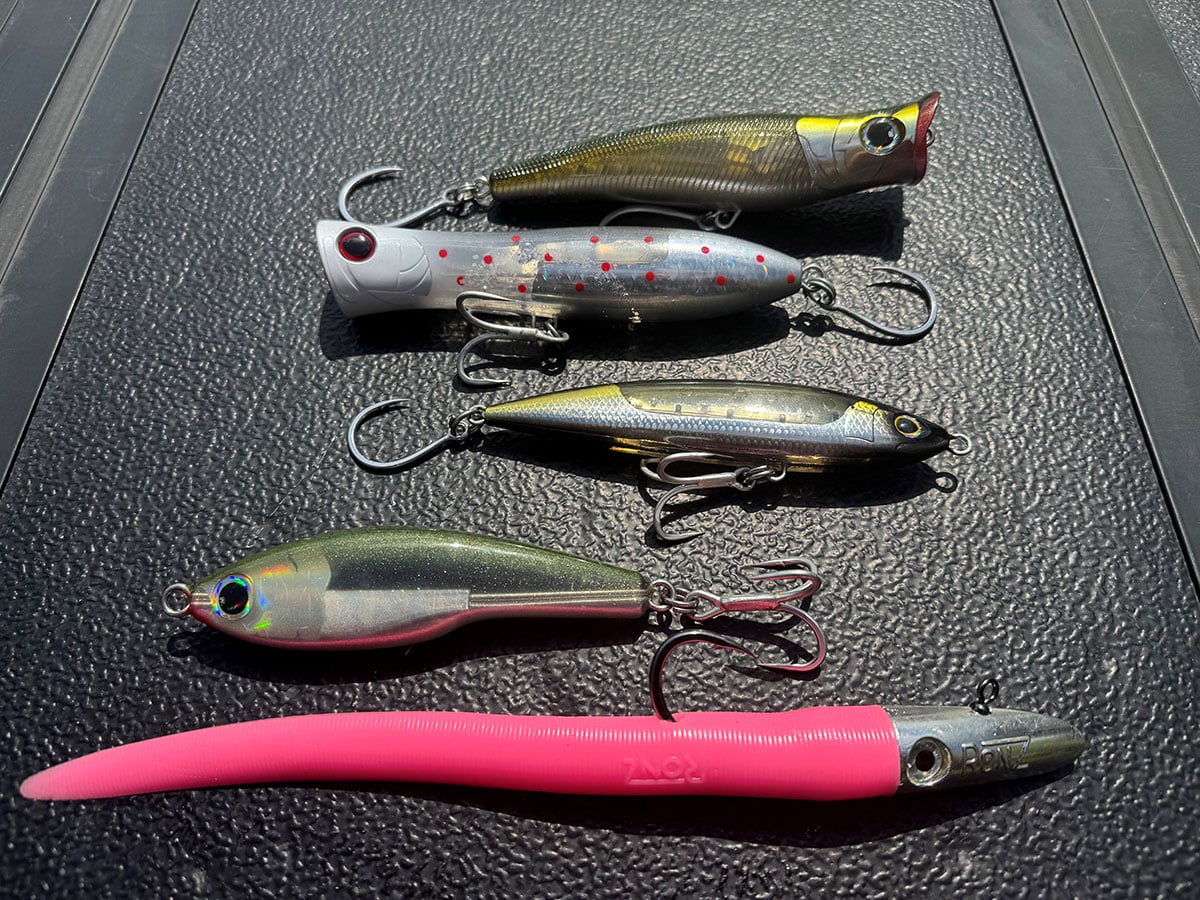
Poppers. As for lure types, I’m going to start with the most epic and vintage choice: a classic popper. These simple, old-fashioned baits prove, time and again, why they are a staple in my tackle box. However, don’t focus on the overall color of these too much; the bottom half is the only color the fish really see. Whether blind-casting or waiting for surfacing pods of fish, they give you the advantage of being able to cast longer distances than almost anything else in your bag. They shine when fish are “rolling” on slower-moving, unsuspecting bait schools, creating that vital element of surprise. They create a ton of surface commotion that pulls fish in, even if they’re just milling around and staying tight to the bait balls. Poppers are also extremely effective at calling them in like a dinner bell when they might not be pinned to bait on the surface.
Floating Stickbaits. When the fish are moving extremely fast on top and covering water, you need to cover ground to keep up with them. That’s when stickbaits take over. While they come in a variety of styles and sizes, I’m going to cover floating stickbaits first. Floaters, in particular, are deadly when tuna are keyed in on fast, sizeable forage like mackerel, pogies, herring, butterfish, and squid. Similar to the popper, cast them blind or fire them at feeding fish. But pay attention to the direction the fish and bait are traveling and try casting in the way they are heading so that by the time it lands, it’s in the zone. Some days you may get endless opportunities, but other days you may only get one or two shots, so make them count. Placement matters. The thing that sets stickbaits apart from a popper is their versatility. Another difference is the ability to burn it in and give it that “walk the dog” action that we all know is so deadly and drives fish mad.
Sinking Stickbaits. Sinkers, on the other hand, come into play for suspended fish and when the bait and tuna aren’t on the surface. Whether the action is 10 feet down or hovering above the thermocline, getting your lure beneath the bait school and presenting it in their zone can make all the difference—sometimes it’s critical. Tuna always look upward or straight into the school, so presenting your lure from below can help it stand out, especially when bait is thick. When bait is that abundant and trying to push or flee down, topwaters can sometimes go unnoticed.
With that said, every day is different. Work all sides of the bait: the front, back, edges, and sometimes change it up by using the current to your advantage. Pausing it while the thousands of other baitfish around are moving fast—keeping that stickbait suspended and slowly flowing with the tide—can create some ferocious bites. Don’t be afraid to cast directly into the school and rip your lure through it either.
As I said before, bluefin feed facing into the tide because it creates resistance if the bait tries to flee. Often, the strike comes as your lure breaks free from the school, mimicking a confused, wounded baitfish fleeing for safety. Watching them feed like this is something special. It’s organized, yet controlled mayhem. Few things are more focused than a hungry bluefin locked into full attack mode. Enjoy the moment, but more importantly, study it.
Snake In The Grass!
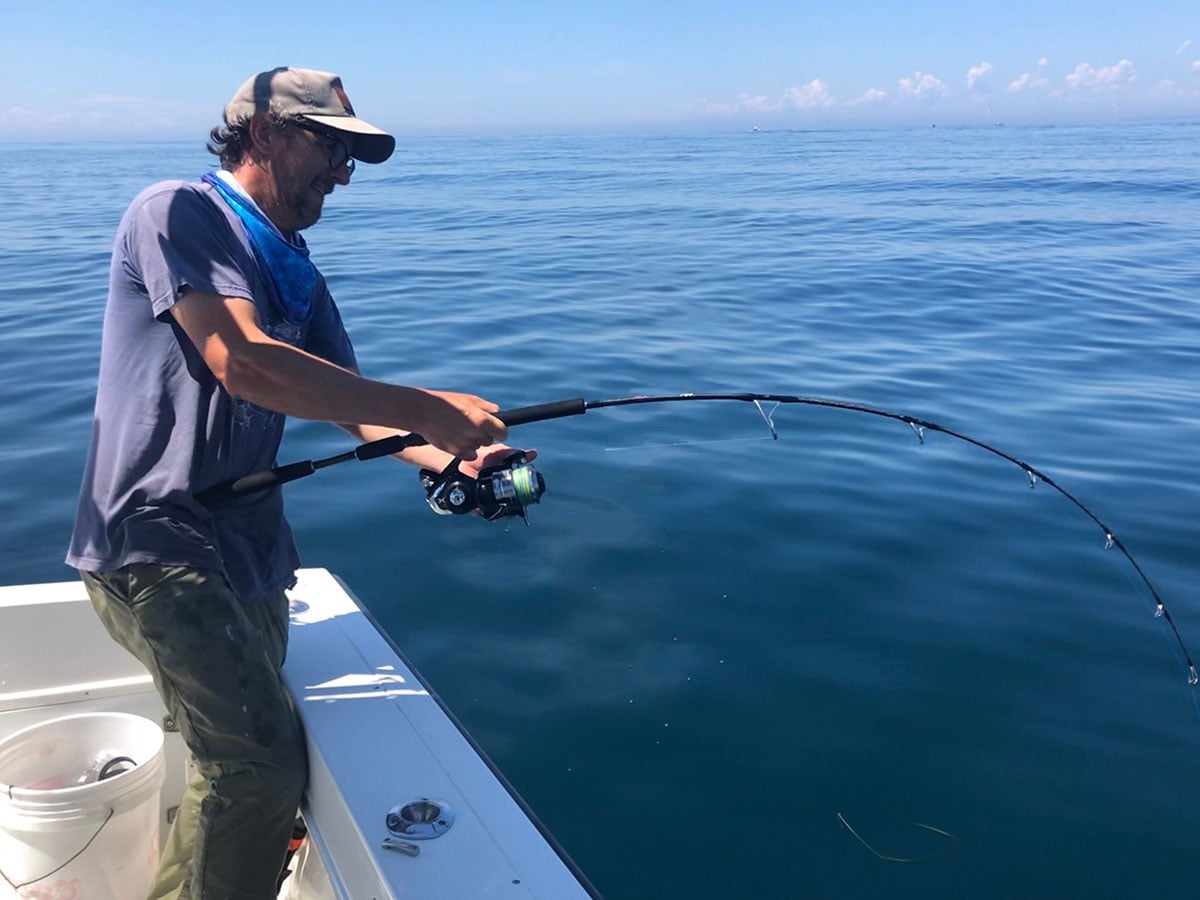
Here’s a common, frustrating scenario that I’m willing to bet many of you have found yourselves in. It’s slack tide, the wind is barely blowing, and there’s weed and debris floating all over the water. Tuna are feeding heavily, but you can’t make a cast without picking up junk. Half the time you’re left cleaning your hook and using words we can’t print in good conscience.
However, I’m going to save you a lot of time and trouble by teaching you one of the most epic weapons in my arsenal. I can’t even begin to explain how many times this setup has saved the day. I call it the “snake in the grass.” This a Texas-rigged Senko, or a weedless Slug-Go; the only difference is you’re using much heavier tackle for much larger fish. This technique is deadly when you stumble upon large debris, fish feeding in nasty “mung,” or my absolute favorite, floating mats of Sargasso weed. Whenever you find this weed, not only does it provide shade and cover, but I can guarantee there will be life on it. From tiny krill to schooling juvenile baitfish, to mahi and “strays” that hitched a ride through the Gulf Stream, it’s an all-out picnic for tuna.
While it’s usually overlooked and actually avoided, some of my most memorable days have been skipping rubbers into this mess. While there are many different hooks and lures to approach this with, I’ve had my best luck with the biggest size VMC Heavy Duty Swimbait hook or the Owner TwistLock Beast hooks that I also use in Florida for big tarpon. As for baits, nothing beats the 10-inch Ron-Z or a 12-inch Slug-Go.
Techniques:
- Whip n’ Rip: Fast, steady retrieve followed by vigorous twitches.
- Low and Slow: Rod tip low, reeling slowly, while giving it brief pauses to entice finicky and lethargic fish.
- Turn n’ Burn: How many times do you not like a cast, reel it in fast as you can, and the lure gets smoked? There’s a method to this madness. This is a notorious approach to creating violent reaction strikes and massive blow-ups. Cast as far as you can and just reel it in as fast as you can.
- All of the Above: Don’t be afraid to mix all these techniques in a single cast. This is an awesome approach when trying to figure out the retrieve the fish want. Slow, then fast, twitch, pause, boom, fish on!
Mid-Column & Deeper
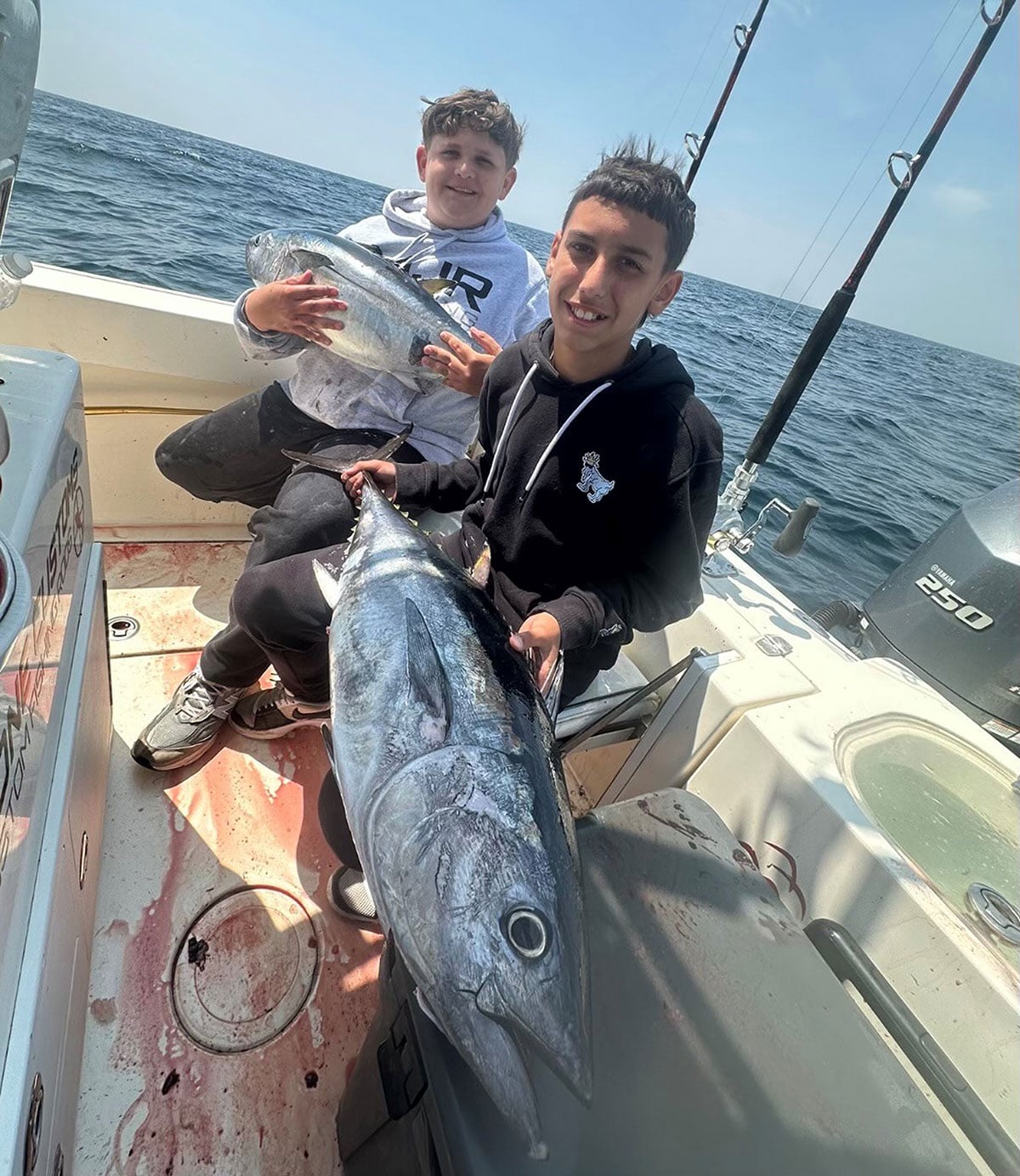
As much as we all love explosive topwater bites, some days it’s all about taking what the conditions give you. But no one’s complaining as long as fish are hitting the box. The challenge comes when you’re marking plenty of bait and fish, but they won’t rise above the thermocline to feed. So what’s the move? This is where your electronics earn their keep. Understanding your sonar—how bait appears, how fish position around it, and matching your presentation to what they’re actually feeding on, is key. If you’re unsure, dropping a Sabiki rig can quickly tell you what’s down there.
Another big clue is not just where you’re marking fish, but how they’re behaving. Are they streaking up? Dropping down? Holding steady? When the answer isn’t obvious, the most effective approach is to experiment. Drop a mix of artificials and have some anglers working metal vertical jigs while others fish soft plastics on jigheads. That way, you’re covering different forage types and working every inch of the water column.
With metal jigs, send it to the bottom, then burn it up fast while aggressively snapping the rod. Once you hit the bait zone, mix in pauses, drop the rod tip, and let the jig flutter back down before continuing. Repeat until your line scopes out or you go tight. Then reset and go again until your arms hurt! More often than not, a soft plastic like a “snake” style bait on a jighead gets the job done. My personal favorite, along with many other high-liners, is the first of its kind: the legendary Ron-Z. Under the right conditions, it may even outperform live bait.
On calm, bright days with little wind and minimal bait, either jigging it or letting it sit motionless in the rod holder can still draw strikes. Drop it to the bottom, work it up to the depth where you’re marking the most life, and hold it there. Sometimes just leaving it right on the bottom like you’re fluke fishing is all it takes to get crushed. This approach shines when fish are keyed in on forage like squid, sand eels, or small groundfish that may be hovering just above the sediment. In these situations, color can make a real difference, so don’t hesitate to mix things up. Once you can figure out the forage and dial in the right combinations, you can keep the rods bent and everyone smiling all day long.
In the end, tuna fishing success goes far beyond simply finding fish. It comes down to preparation, awareness, and the ability to act when the moment arrives. The most skilled anglers know that every detail matters, from having the right gear and lures ready to ensuring all licenses and safety measures are in place before leaving the dock. Even in the middle of a full-blown feeding frenzy, a lack of preparation can leave you watching opportunities slip away.
Put in the time to understand the fundamentals, learn what works for you, and stay ready for changing conditions. Approach each trip with intention and determination. Do that, and you won’t just improve your chances; you’ll discover why tuna fishing becomes an obsession for so many, all around the coast, from top to bottom!