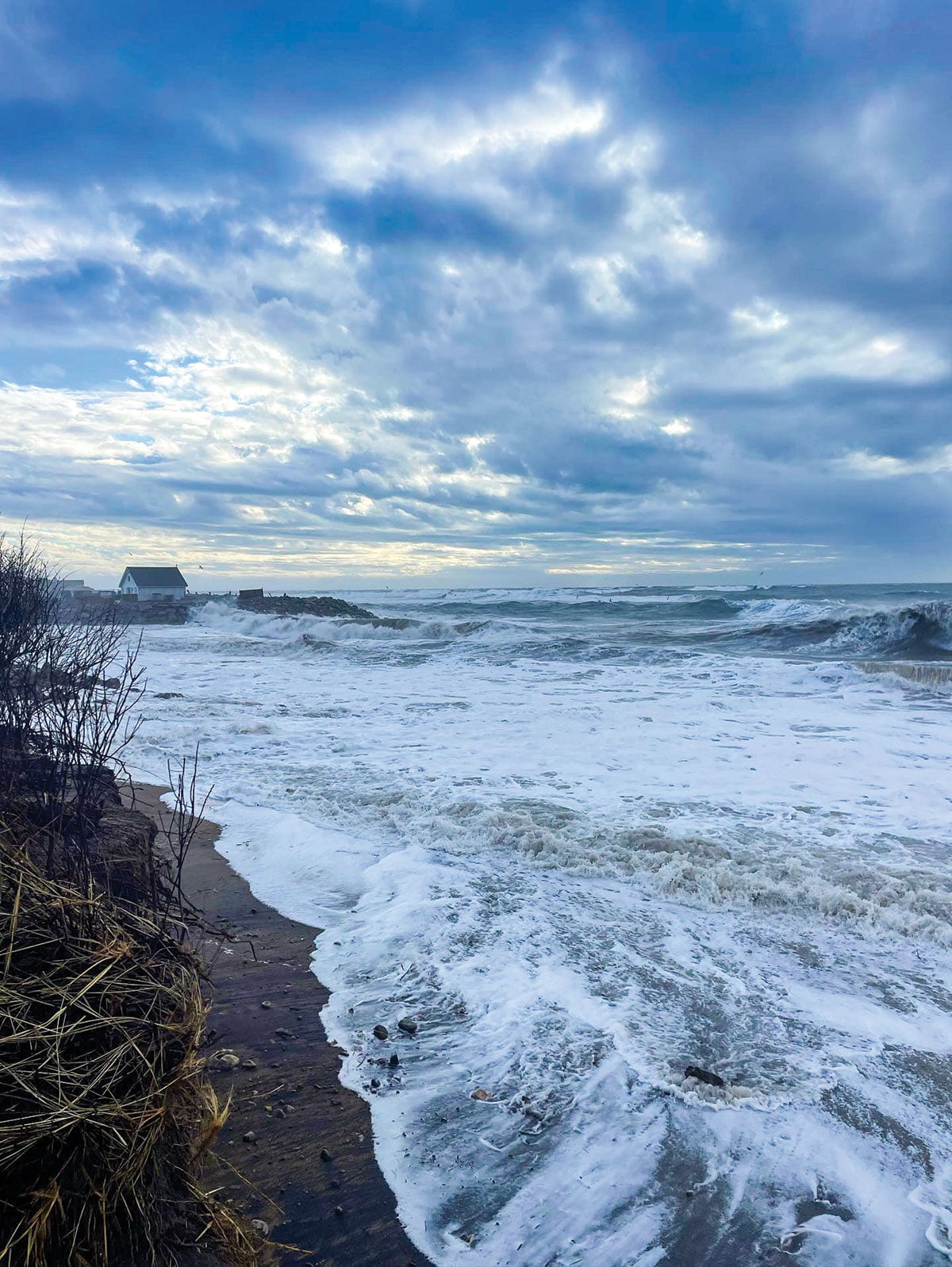
Improve surf success by understanding how wind drives fish behavior.
Many environmental variables dictate whether different fish species will visit an area, let alone feed there. While water temperature remains the supreme variable, I’d argue that wind ranks second, even beating out the tide in most scenarios.
Wind regulates fish behavior directly, but also indirectly through its influence on tides and other variables. A well-versed understanding of wind’s effects, can help a surfcaster prep their outings more optimally for success.
Both the direction and strength of the wind are of paramount importance, as either can work to your benefit or detriment depending on the spot. For example, an onshore wind (blowing from the ocean towards land) can churn up the seas to activate a bass bite on clams. However, at 40 mph that same wind makes it impractical to cast if fishing from the front beach. Not to mention, getting pelted in the face with strong winds and cold rain can be rather miserable, drastically reducing an angler’s focus and stamina.
These scenarios highlight how wind direction and velocity can conflict, or seamlessly synergize to enhance fishing productivity.
East & West
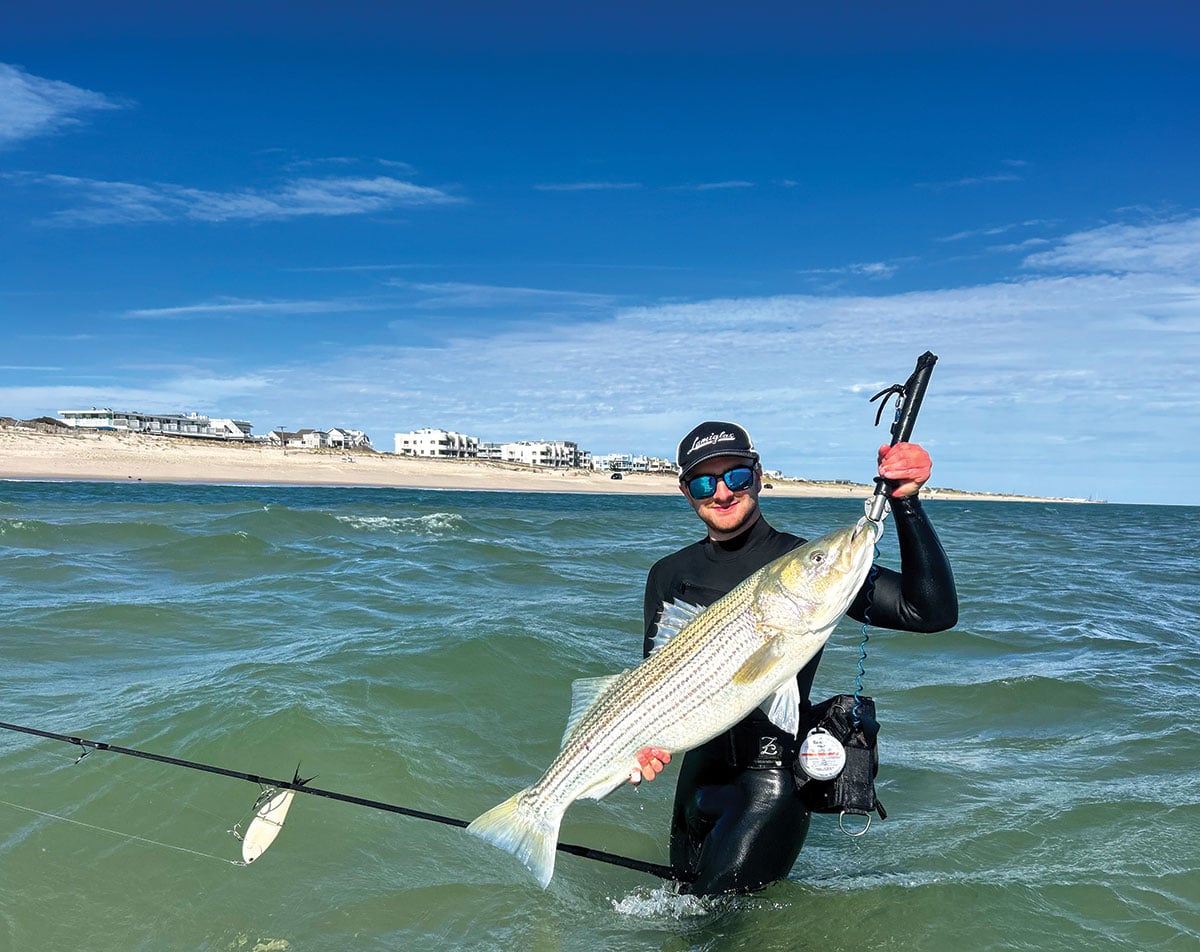
To determine if these two associated – but distinct – factors are reinforcing or negating each other, consider how they will affect your comfort and casting ability before going out. On an easterly-facing front beach, a west wind will help with your casting distance. However, on a hot summer day, that same breeze acts as an open invitation for greenheads, black flies and mosquitoes, creating pure anguish for an unprepared angler.
When striped bass fishing, I like to pre-plan my spot for an outing based on the wind forecast. After looking up what the wind direction and speed will be for the upcoming nights, I will first refer to my mental toolbox of spot options. During the spring and fall bass runs when the temperature and bugs are never an issue, I prefer having the wind at my back. So, I will then decide on two or three spot options from my pool of locations for that night based on having the wind at my back. I believe Dave Anderson said on The Fisherman’s Next Cast podcast over the summer that he uses the same approach during his hunt for cows in New England.
Having the wind at my back provides better comfort in cold or rainy conditions, extending my endurance on the water. It also provides extra distance to casts, which is crucial at times. I especially like employing this strategy when blood-bagging for early-spring trophies. It allows me to present the bait nearer to the channels on the outer edges of long flats. The reason I choose more than a single back-wind spot option before going out is to ensure I have an alternative in case the primary location is crowded, closed, or compromised by unforeseen circumstances.
Beyond comfort and casting, wind direction and speed also influence some baitfish behavior, and with that, predatory fish behavior indirectly. The most important baitfish for stripers is actually the one most affected by the wind – bunker. Menhaden, especially adults, primarily swim into the wind, likely due to their filter feeding behavior. For your planning, though, it means that during an offshore wind (from land towards sea) you may find menhaden moving in along the beach. If they are in a bay – Sandy Hook or Delaware Bay for example – an east wind may pull them into westerly-facing shores, like those of Sandy Hook or Cape May. That same easterly wind, however, will pull bunker away from oceanfront beaches and out to sea. It is from this distinct menhaden behavior at the Jersey Shore in particular that the famous surfcasting adage “west is best” was spawned.
So an offshore wind is typically best when bunker are around because they tend to come in closer to shore with any bass likely following, but there is an exception. Remember how I mentioned how direction and speed can conflict? If an offshore wind is too strong (i.e., 25+ mph), it can blow a ton of the beach’s sand into the water, creating a sandy, “muddy” region that could exist up to half a mile out. In my 30 years of experience, the bunker (and any bass intending to blitz them) do not like traversing that. They stay on the edge of the dirty water, far out. Instead of relying on their lateral lines to augment their eyesight, any stripers swimming in the dirty water must use their sense of smell to feed. In such cases, use stationary bait, like chunked bunker.
Ebb & Flow
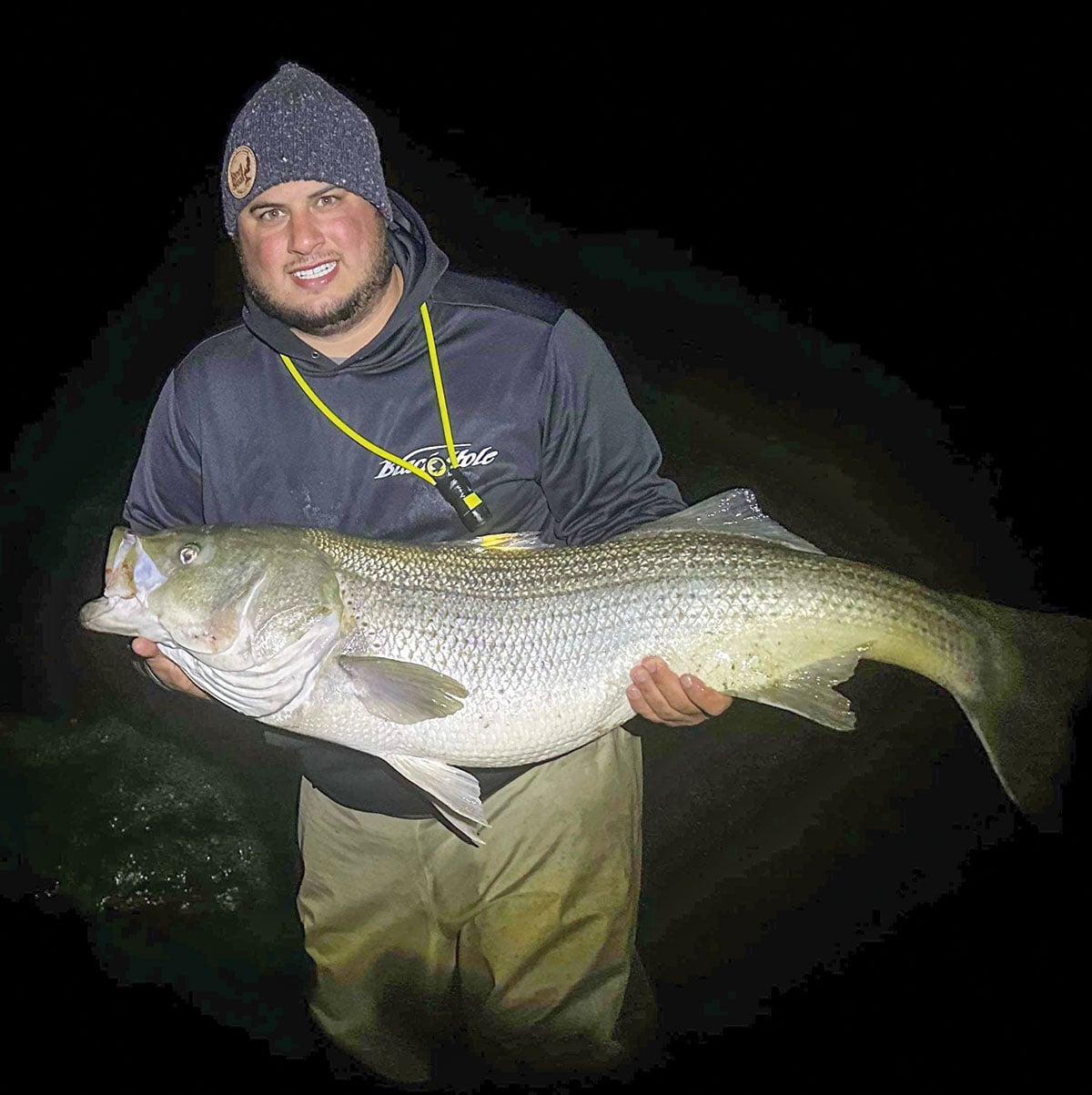
Wind has an extraordinary impact on other variables that in turn may affect fish activity. Depending on whether the wind and current are in concert or at odds with each other, wind can increase or decrease a current’s strength, and therefore its timing. For example, a 20 mph onshore wind at any inlet location will increase the speed of the flood current, but reduce that of the ebb. This scenario will, as a result, slightly offset the pre-scheduled times for slack tide. That mid-strength onshore wind will make high slack there a bit later, while making low slack a bit earlier. A stiff offshore wind would have the opposite effects in that same location. Understanding this phenomenon, and appropriately applying it elsewhere, can help you adjust your fishing times and strategies around real-time currents and slacks.
Water height is often only thought of as being dictated by the tide and moon phase. Primarily that is true, but wind is a tertiary influencer of water level. A north-facing boulder field may have its best rock stance still exposed during most high tides. However, throw in a strong northerly wind and the water level is up much higher, making fishing that particular stance no longer practical. Inversely, on blowout low tides – where the wind is coming from shore – new, otherwise usually submerged rocks are now able to be exploited. The extra rise or drop of water level caused by the wind also influences the staging eddies that bass can exploit. When wind helps increase a high tide even higher, structure can be exploited by fish that otherwise never would be. Keeping this in mind will illuminate potentially productive areas in which to cast.
As mentioned previously, water temperature trumps any other variable in most cases. This is because all organisms – even us humans – have preferred temperature ranges with even narrower spans within those ranges for optimal activity. Optimal water temperatures differ across fluke, bluefish, striped bass, and all our other favorite species. And water temperature itself can be seriously impacted, at least locally, by wind speed and direction.
Upwelling vs. Downwelling
The Coriolis Effect and Ekman Transport are responsible for phenomena called upwelling and downwelling. Not wanting to fully nerd out here I will spare you the geophysics behind the first two terms. In short, though, the rotation of the earth causes moving objects, including wind and currents, to deflect from their straight-line trajectories. This applies directly to the frictional energy being transferred from the wind to the water’s surface.
This wind-to-water link allows north and northeast winds (at least on the East Coast) to induce downwelling, which is when the wind moves warmer surface water inshore while pushing the colder water down and outward. The local water temperatures then spike a few degrees. Conversely, upwelling is caused by southerly winds along the eastern-facing Atlantic Coast, where the warmer surface waters are pushed offshore, while the colder, deeper water is pulled inshore and upward to replace them. The local water temperatures then drop a few degrees.
When operating during early spring or late fall, it is not difficult to imagine why north and northeast winds turn the stripers on, while south winds turn them off. At either point in time, the water temperature is likely only a few degrees above the lower limits of their active range. South-wind-induced upwelling would plummet the temperature into the lockjaw range. However, any slight temperature boost from a northeast wind could spark a major feeding window.
The opposite applies at the end of spring and the start of summer, where south winds break their evil stereotype of being horrendous. It is at these times that the upwelling from a south wind can be a life-spark to the bass run. Of course, this upwelling also brings nutrients up from the depths, which can trigger plankton blooms and frustrating seaweed barrages for fluke anglers and bait fishermen alike.
Wind speed and direction are two intertwined but separate factors, each having independent and combined effects on a fish’s tendency to feed. They directly influence the movement of some bait species, impacting the presence or absence of the predator fish you’re targeting. The wind can be an ally for comfort and casting distance, or a foe turning an outing into a pointless venture.
The wind also affects other important variables; it can raise or drop water levels, exposing useful stances and providing additional ambush points for the fish. The wind can prolong or stall currents outside of their scheduled times. And its local effect on water temperature, through downwelling and upwelling, cannot be overstated. So, if you plan to optimize your catch frequency, use the wind to your advantage instead of just blowing with it.