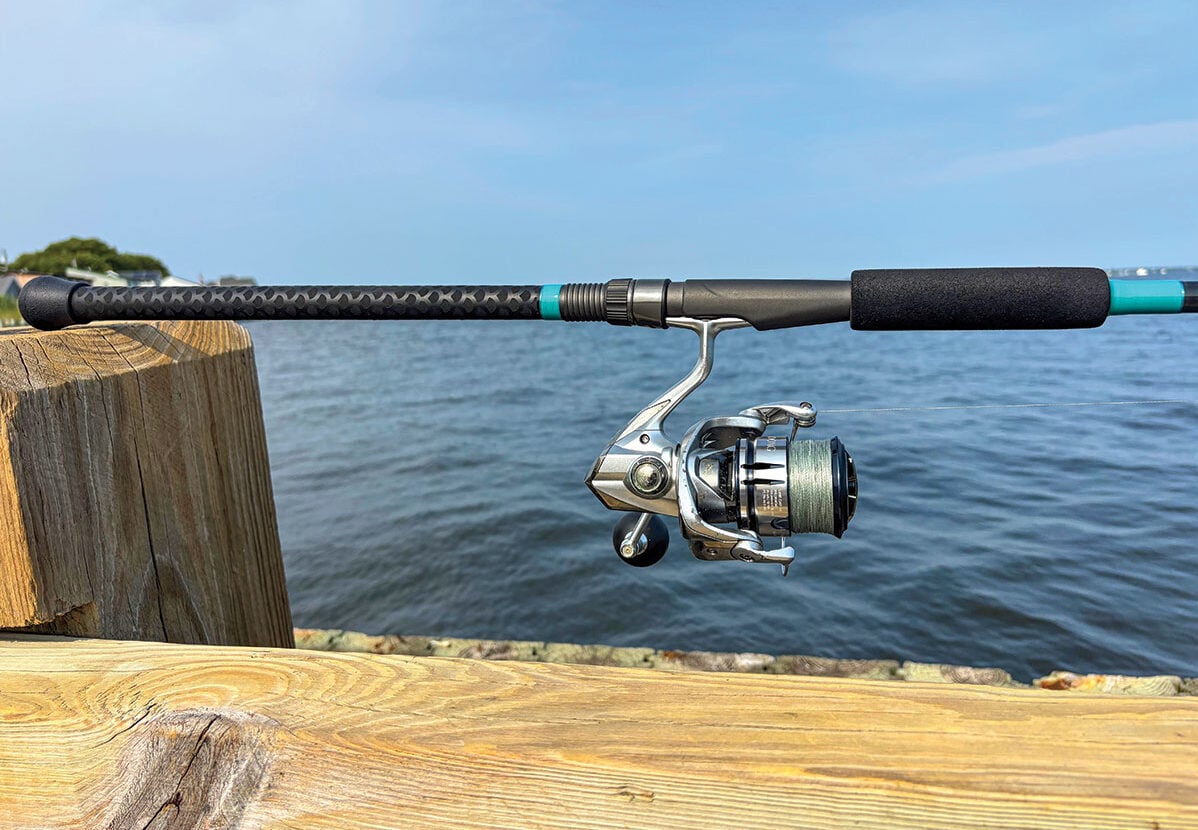
Building a light, fast and highly “castable” surf rod specifically for albies.
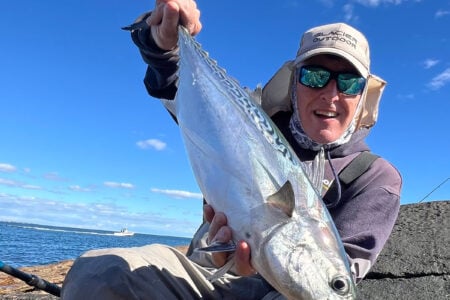
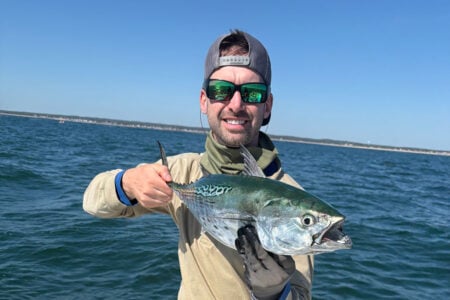
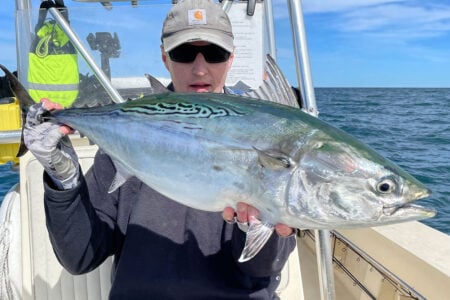
There are few things in Northeast surf fishing that can change the mood of a beach or jetty as quickly as a school of false albacore. One minute you’re making casts into relatively quiet water, and the next the surface erupts 80 yards down the beach. Rods get picked up, anglers start moving and everyone is trying to figure out where those fish are going to show next.
False albacore present a unique challenge from the surf. They move incredibly fast, frequently feed on small bait and have a habit of staying just outside comfortable casting range. Even when they do push close to the beach, the opportunity might only last a few seconds. You need to be able to make a quick, accurate cast with a relatively small lure and immediately get it moving.
Those requirements were what I had in mind with this build. Instead of putting together another general-purpose surf rod that could also catch albies, I wanted something built specifically around the way I target them: small tins and epoxy jigs, light braid, fluorocarbon leaders, long casts and plenty of moving up and down the beach.
Start With The Blank
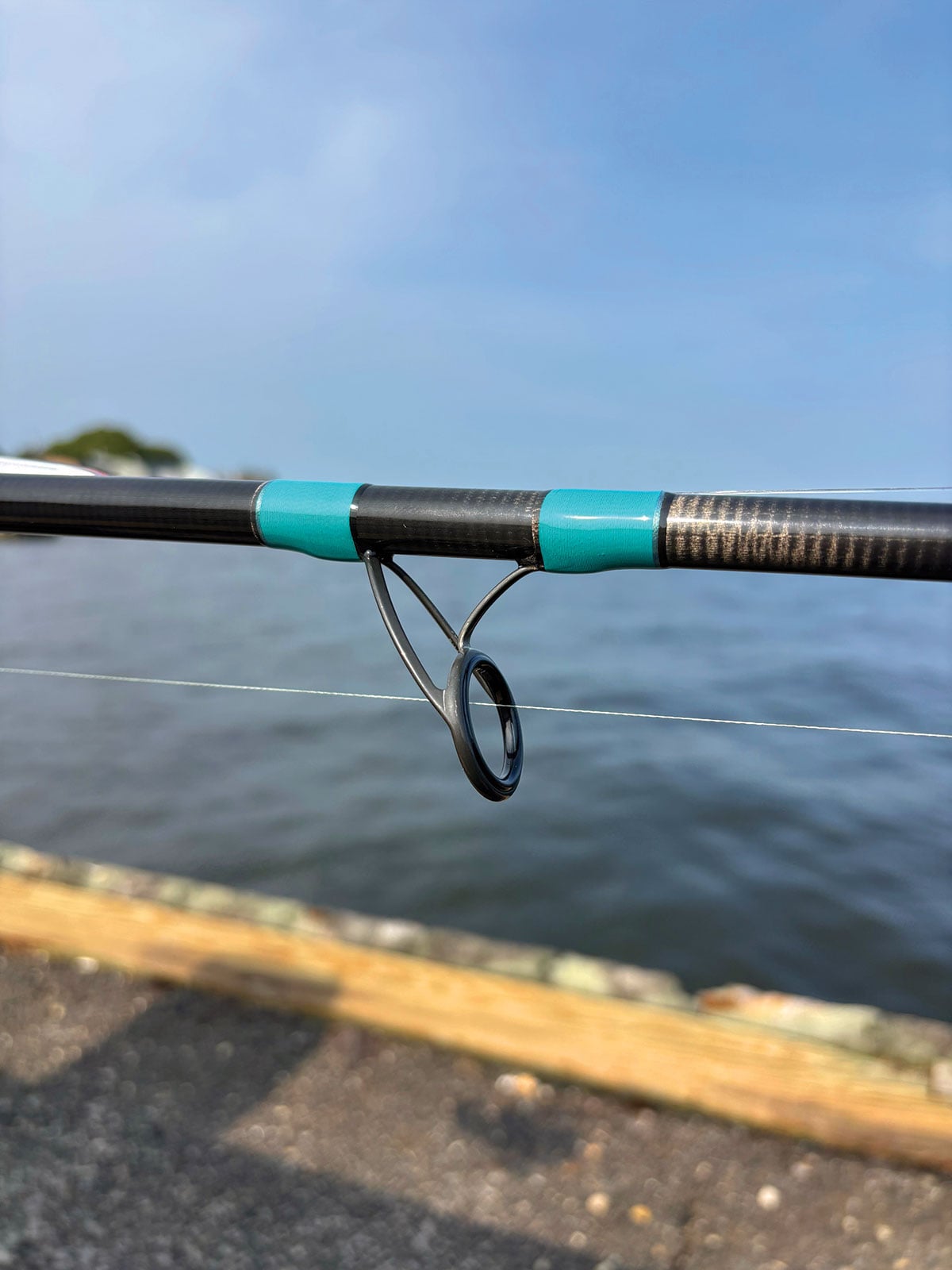
The foundation for the build is an MHX L904 Light Saltwater blank. At 7 feet, 6 inches, it’s shorter than what many fishermen picture when they think about a Northeast surf rod, but that compact length is one of the reasons I like it for this application.
The one-piece, gloss black blank is rated for 10- to 20-pound line and lures from 3/8- to 1-5/8 ounces. It has a medium-heavy power and fast action, which puts it right in the range I wanted for a dedicated albie stick.
Most of my false albacore fishing isn’t done with big plugs. Small metals and epoxy jigs are usually the name of the game, particularly when fish are keyed in on rain bait, bay anchovies and other small forage. A rod that needs 2 or 3 ounces to properly load isn’t going to do much good when you’re trying to send a small offering toward breaking fish.
At the same time, I didn’t want an ultralight rod.
False albacore aren’t huge fish, but anyone who has hooked one knows they don’t fight according to their size. The initial run can empty a surprising amount of line from a spinning reel, and there are times when you need some authority in the lower section of the rod. The medium-heavy power provides that backbone while the fast action keeps the upper portion responsive enough to cast lighter offerings effectively.
The 7-foot, 6-inch length also makes the rod extremely manageable. Albies can force you to move constantly, and carrying a lighter, shorter rod while walking a beach or working around a jetty is noticeably easier than doing the same thing with a 10- or 11-footer.
Keeping The Surf Rod Feel
Even though this is a relatively light build, I still wanted the finished product to look and feel like a surf rod.
For the rear grip, I went with scale-pattern shrink wrap. It’s durable, provides a good gripping surface and keeps the handle from becoming overly bulky. At the bottom, a Fuji BRC 19 butt cap gives the rod a clean finish while protecting the end of the blank.
The reel is held in place with a Fuji NPS ergonomic spinning reel seat in size 18. This setup pairs nicely with the 3000 to 4000 size spinning reels that I consider ideal for the rod.
A 3000 size reel makes for an extremely light package if you’re going to spend the day throwing smaller offerings. Stepping up to a 4000 gives you additional line capacity and a little more drag surface without overpowering the blank. Either way, the goal is keeping the complete outfit balanced and comfortable enough to cast repeatedly.
An EVA foregrip finishes the handle assembly. I like having a functional foregrip even on a lighter surf rod. Once a fish settles into a run or needs to be controlled near the beach, having somewhere comfortable to place the forward hand makes a difference.
The result keeps some of the traditional surf rod appearance while scaling everything down to fit the lighter style of fishing.
Setting Up The Guide Train
| BUILD MATERIALS |
| Blank: MHX Light Saltwater L904
Length: 7 feet, 6 inches Pieces: 1 Power: Medium-Heavy Action: Fast Line Rating: 10-20 pounds Lure Rating: 3/8 to 1-5/8 ounces
Stripper Guide: Fuji K-Series KW Double-Foot Alconite – 25mm Reduction Guides: Fuji K-Series KL Single-Foot – 16mm and 12mm Running Guides: (4) Fuji K-Series KT Single-Foot – 10mm Tip-Top: Fuji Medium Duty Spin MN – Size 6.5-10
Reel Seat: Fuji NPS Ergonomic Spinning Reel Seat – Size 18 Rear Grip: Scale-pattern shrink wrap Foregrip: EVA Butt Cap: Fuji BRC 19 |
Guide choice was especially important because I wanted to balance durability, weight and the ability to pass a leader connection.
The guide train begins with a 25mm Fuji K-Series KW double-foot guide with an Alconite ring. I deliberately went with a double-foot guide in the stripper position because that’s the guide most likely to take abuse.
Surf rods aren’t treated like display pieces. They get put in truck racks, leaned against bumpers, carried through brush and bounced around on the beach. The stripper guide also deals with the initial coils of line leaving the spinning reel. Using a sturdy double-foot guide in this position gives the rod some added durability where I think it matters most.
After that, however, I wanted to reduce weight.
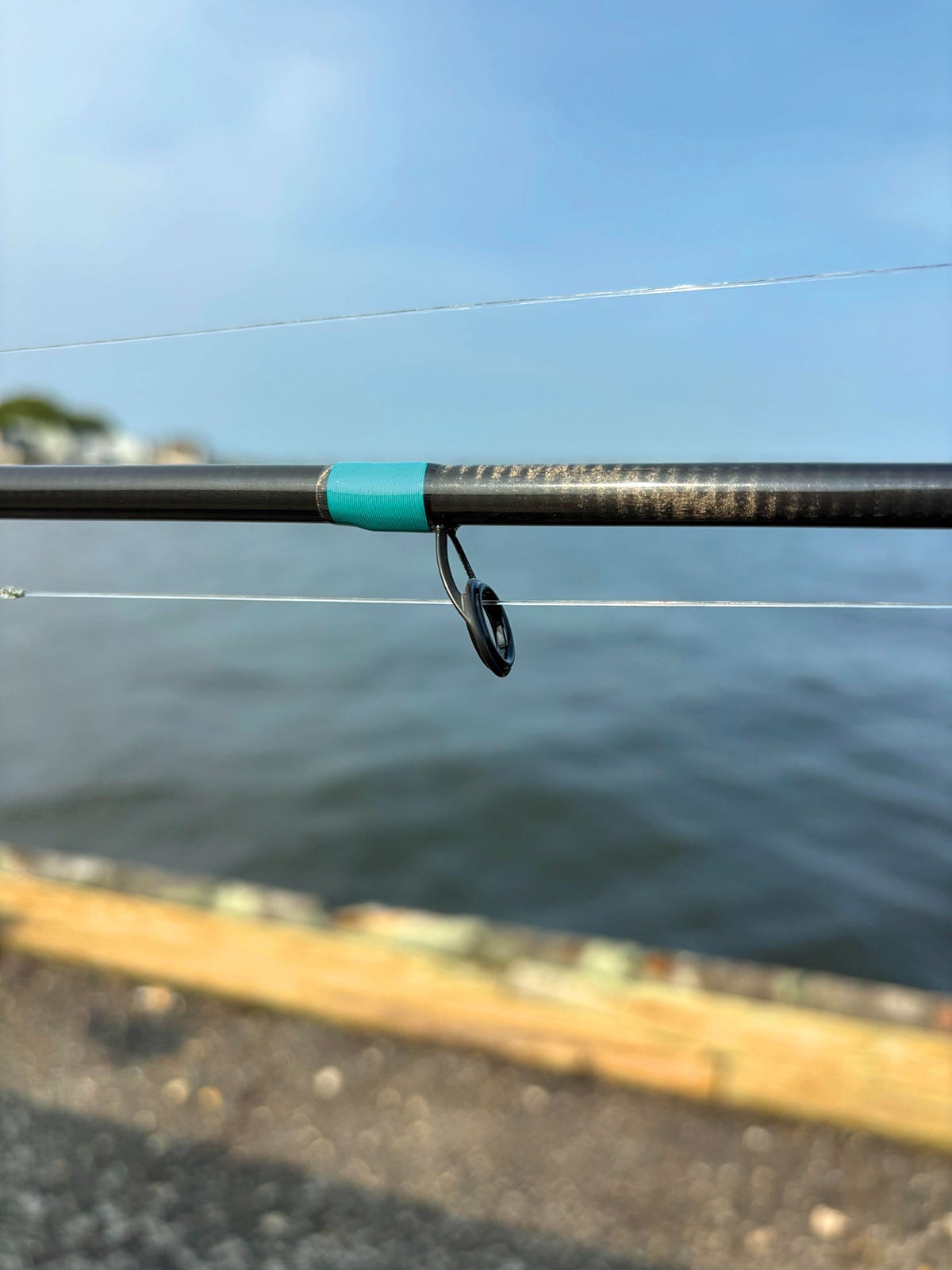
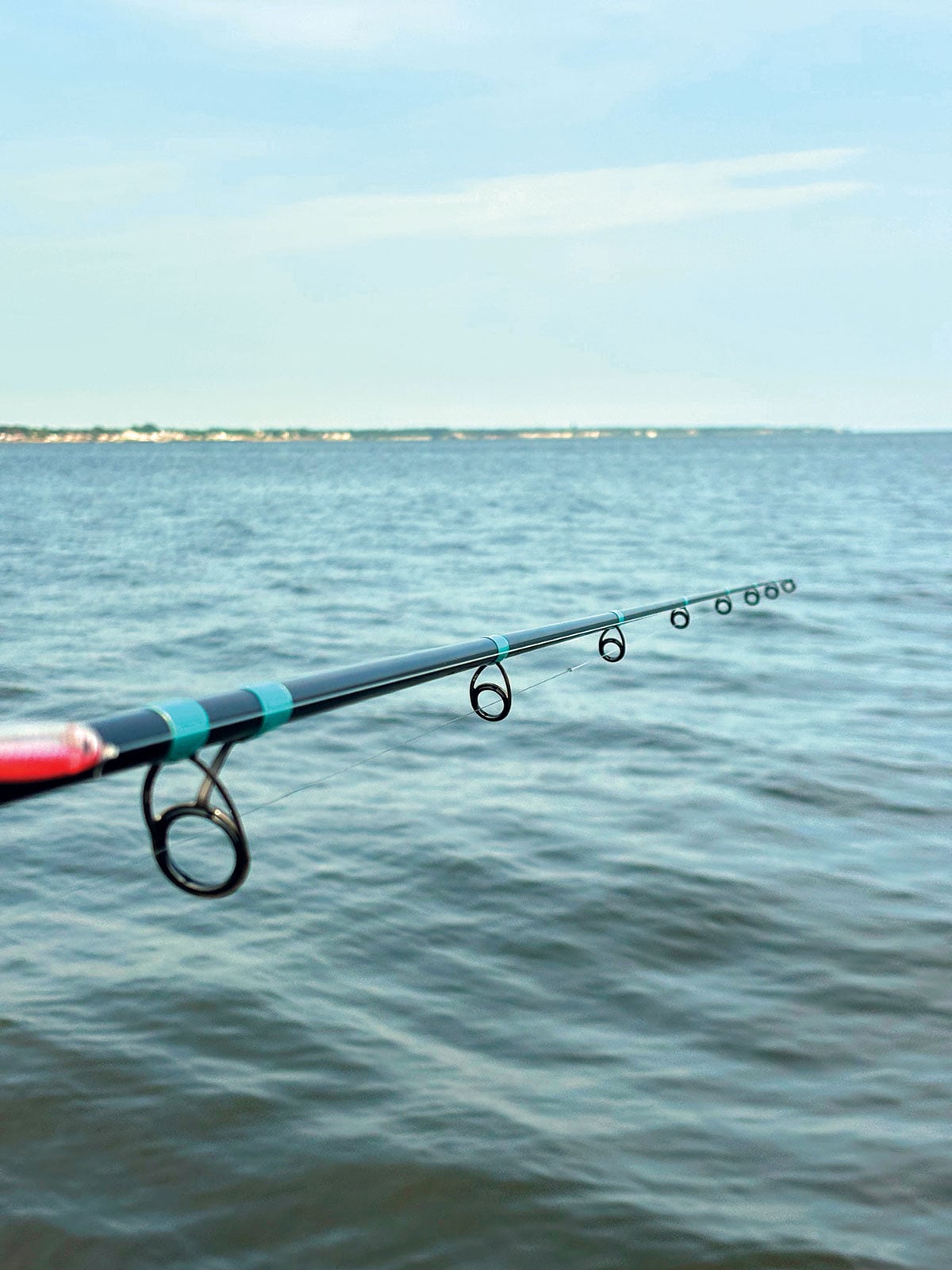
The next two guides are Fuji K-Series KL single-foot guides in sizes 16 and 12. From there, the rod transitions into four 10mm Fuji K-Series KT single-foot running guides.
Using single-foot guides through the majority of the blank reduces the amount of hardware and thread sitting on the rod. That helps maintain the natural action of the blank, particularly toward the tip where additional weight becomes increasingly noticeable.
It might seem like a minor detail, but when you’re building a rod around casting relatively small lures, keeping the upper section responsive is important. I want the blank doing the work rather than fighting against a heavy guide train.
The rod is finished with a Fuji Medium Duty Spin MN tip-top in size 6.5-10.
Why I Went Bigger
| BUILD SPECS | |||||||||||||||||||||||||||||||||||||||||||||
Guide Layout (Tip to Butt)
Butt to Center of Reel Seat 14-1/2” |
|||||||||||||||||||||||||||||||||||||||||||||
One detail that stands out is the size 10 running guides. I could have gone smaller and created a very streamlined guide train, but there was a specific reason I didn’t.
Fluorocarbon is a major part of my albie setup.
There are certainly days when false albacore will hit just about anything moving through the water, but there are also days when they become incredibly selective. Clear water, bright skies and tiny bait can make these fish frustrating. That’s when a fluorocarbon leader can become particularly important.
I wanted the option of running a longer leader and bringing the braid-to-fluorocarbon connection through the guides. Slightly larger running guides allow a properly tied direct-connection knot to pass through more easily.
That consideration is important when building a rod for a specific purpose. The smallest and lightest guide isn’t automatically the best choice. The guide train needs to work with the way the rod will actually be fished.
In this case, giving up a small amount of weight savings for better knot clearance made sense.
Line And Leader
For the main line, 15-pound braid is an excellent match. It keeps the diameter small, which helps casting distance, while still providing plenty of strength for false albacore. The lack of stretch also helps maintain contact with small metals and epoxy jigs, particularly when making longer casts.
From there, I like a fluorocarbon leader for its abrasion resistance and reduced visibility. Leader strength can be adjusted depending on conditions, structure and how picky the fish are.
A direct braid-to-fluorocarbon connection also eliminates additional hardware. With a good connection knot, the leader can be wound through the guides and even onto the reel if desired. That’s exactly why I built the guide train with enough clearance to accommodate it.
When fish are feeding aggressively, leader details might not seem particularly important. When you’re standing in front of breaking albies that refuse five casts in a row, suddenly every small advantage starts to matter.
Small Lures, Long Casts
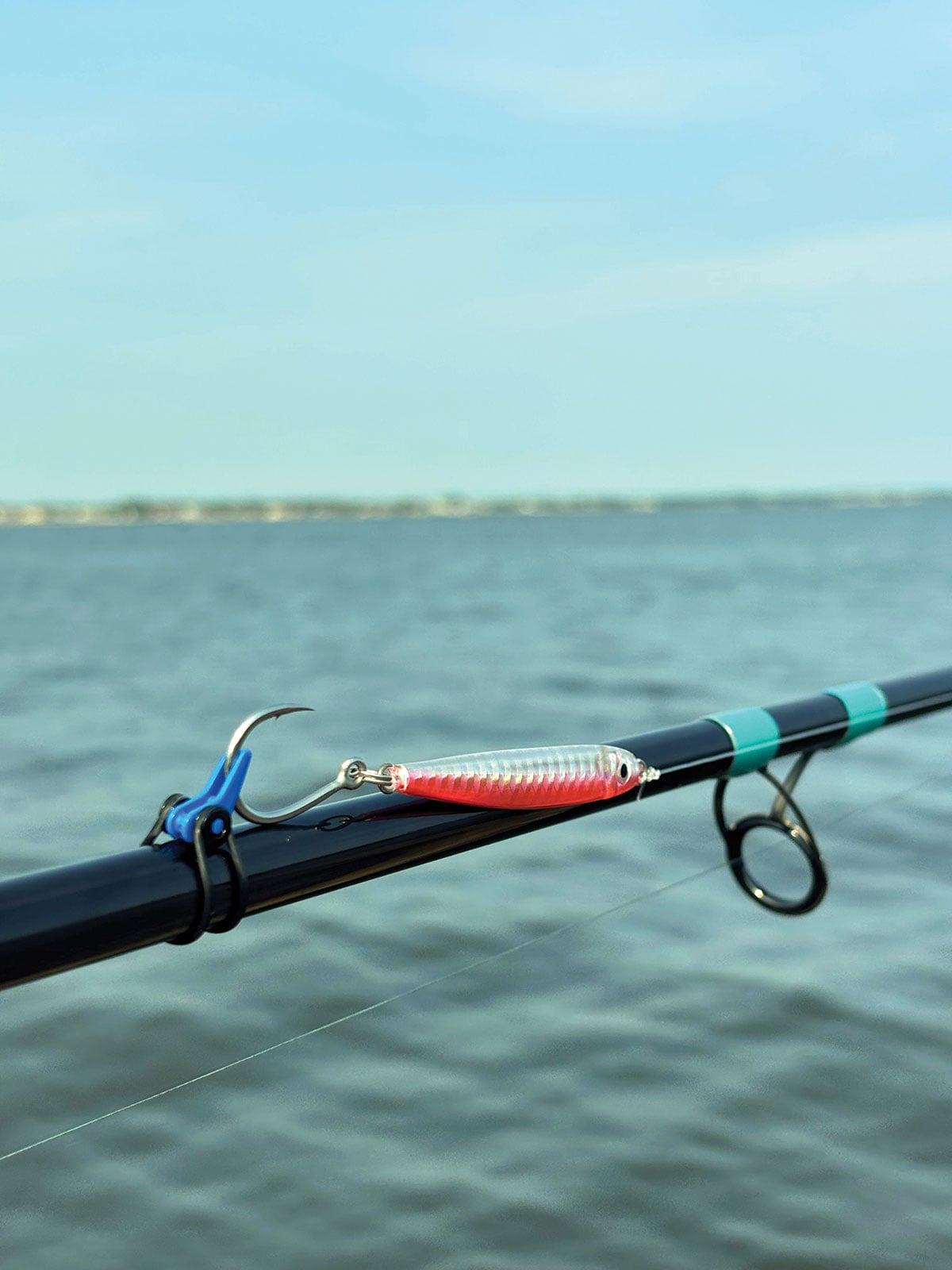
A large portion of the lure selection for this rod will consist of small tins and epoxy jigs.
False albacore are famous for keying in on tiny forage, and matching that profile often means downsizing. The problem is that the smaller the lure becomes, the harder it can be to reach the fish. That’s where the combination of blank, line and guide train comes together.
The 3/8- to 1-5/8-ounce lure rating covers the range I expect to fish most often. Fifteen-pound braid keeps resistance down, and the responsive tip allows the blank to load with smaller offerings.
Casting distance isn’t just about using a longer rod or a heavier lure. An outfit that properly loads and releases its energy efficiently can send a surprisingly small lure a long way.
More importantly, this rod should make those casts without beating up the angler. During an albie bite, you might make hundreds of casts in a session.
Built Around The Fishing
One of my favorite parts about building rods is being able to make component decisions around a specific style of fishing. There isn’t one perfect surf rod for everything.
A rod designed to throw big plugs into a fall nor’easter shouldn’t necessarily look or feel like something intended to throw a small epoxy jig at albies in September. Trying to make one outfit cover both situations usually means compromising somewhere. This build goes the other direction and that’s ultimately the point of a purpose-built rod.
False albacore fishing is fast, unpredictable and sometimes downright frustrating. You can spend an hour watching fish break outside casting range, only to have them suddenly appear directly in front of you for 15 seconds.
When that happens, you don’t have time to think about your equipment, you just need to make the cast.