Changes you can apply to make porgy fishing more interesting.
A few decades ago, anglers experienced a decline in porgy abundance. We still caught them, but fewer and smaller, except for wreck fishing. Porgies increased sharply in the 1990s and the bottom fishing crowd enthusiastically clustered on the porgy grounds. As time passed, some were bored, but others looked for ways to add a little excitement to pork chop fishing.
Is this a strange psychology at work? Perhaps so, since many people tell us we hunger more for things that are hard to get than for things that are readily accessible. With the complexities of human nature in mind, let’s consider porgy fishing.
Porgy Psychology?
Alas, what is the present angler psychology about porgies? Since trawlers were forced to larger mesh sizes, the porgy numbers and sizes began to climb. I clearly remember an abundance of porgies fishing in Peconic Bay in the 1950s as a boy. We caught some very large ones. I was taught to call them humpbacks, because large males boasted a hump on the front of their heads.
In those days we never chummed. We never used worms, or clams, or any of today’s favorite baits. We used a package of frozen local squid. We motored out to a favorite spot and took ranges. We lined up the white windmill on the west side of Robin’s Island with a big grey water tower on the south fork, and drifted with a hi/lo rig.
A Time Of Plenty
Yes, it was a time of clean water and plentiful fish in the 1950s in Peconic Bay. We didn’t have to anchor, so we didn’t. We didn’t have to chum, so we didn’t. We didn’t need to use expensive worms, so we didn’t. We made drift after drift on the ranges we knew so well, and caught weakfish, big blowfish, fluke, sandbar sharks, big kingfish, and, of course, porgies. As an absolute fishing nut, I’ve wondered again and again how many fish we might have caught if we anchored and chummed.
Of course, back then our tackle was heavier and our lines more troublesome, because the technology of subsequent decades hadn’t been invented yet. Heck, my reel lacked a star drag. My drag was a thick piece of leather attached to the cross piece on a conventional reel and I had to apply thumb pressure on the leather to slow down the run of a fish. I also had a reel or two that lacked the thumb pad, and a few big weakfish put a good burn on my thumb since my thumb was my drag. Memories are great, protect them vigorously, but I caution myself not be nostalgic about it since today’s gear is so much better and much easier to use.
Back To The Porgies
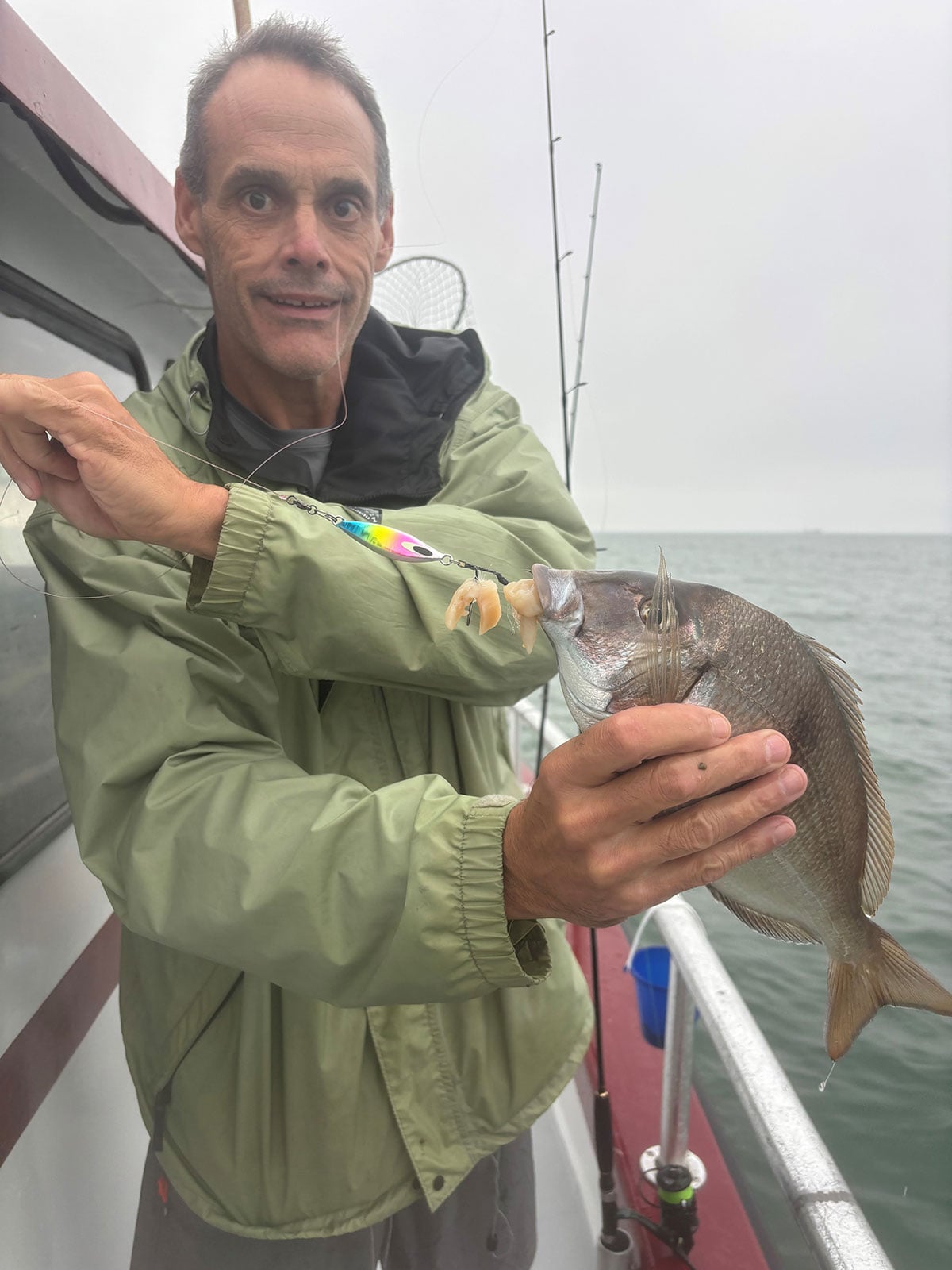
In the end, perhaps I wax nostalgic, but history is always the backdrop to our present reality. In that regard, I remember the extreme ups and down of many species. The abundance of stripers and blues in the last two decades of the 20th century distracted me from porgy fishing, but I never forgot my youthful days in Peconic Bay. In the 1990s I was urged by friends to fish with them for the stocky silvery fish. Armed with better and lighter tackle and line, each porgy brought back memories from childhood, and also an appreciation of how hard they fight and how intense the action can be.
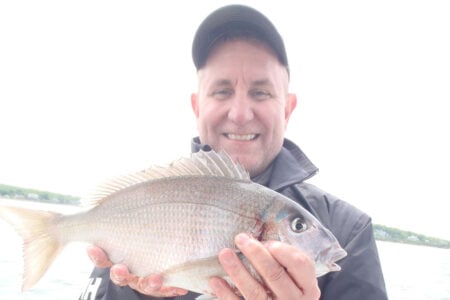
Former Fisherman editor, the late Scott Simons often said; “If porgies grew to be 20 pounds, people would give up striper fishing in favor of porgy fishing.” He was right. However, they aren’t 20 pounds, but they are dogged fighters and we can get more fun out of them and a better appreciation of the sport they offer by using modern lightweight rods, reels, and lines. Still, some anglers get bored with porgy fishing. My son Drew is one of them. Although he never quit on them as a boy when it was all new to him, now he catches a few and prefers lounging in the front of the boat getting a tan. Fortunately, my friend Rich, like me, never tires of catching them.
Add Some Zip
In fact, it was Rich who first came to me with a few ideas about porgy fishing that at the time seemed misplaced. Basically, I didn’t think it would work. Rich was motivated to think about ways to get more fun out of porgy fishing in the new millennium. So, one day when we were planning a porgy trip he said, “Hey, bring along a couple of rods that you use to catch panfish.” Understand, I hadn’t been porgy fishing with heavy tackle for decades, but what Rich suggested seemed to present more problems than it was worth. Perhaps a little too light, I thought. Nonetheless, I was open to it.
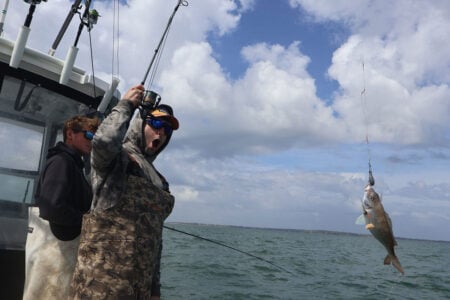
We anchored on a gravel and sand hump with scattered mussels, dropped a chum pot, baited a single hook, and dropped it using panfish tackle. Within a few minutes Rich set the hook, and his ultra-light rod bent over like a pretzel, and his drag sang, too. Well, that’s all I needed. I wanted in on that, too. It didn’t take long.
No Need For Fancy
A bonus to a great fight was a reality that, unlike surf fishing, I didn’t have to put together an expensive outfit to have fun. My light, freshwater tackle did the trick because technology has made it possible to produce good quality rods and reels at a reasonable cost.
For example, one outfit includes an Okuma Stratus SVI 40 reel that I spool with 15-pound-test braided line: either Sufix or Daiwa J-Braid. I bought my 6-1/2-foot rods and paid less than $50 per rod. Although I don’t fuss about the name on the rod, I do insist that they be graphite rods with medium power and fast action.
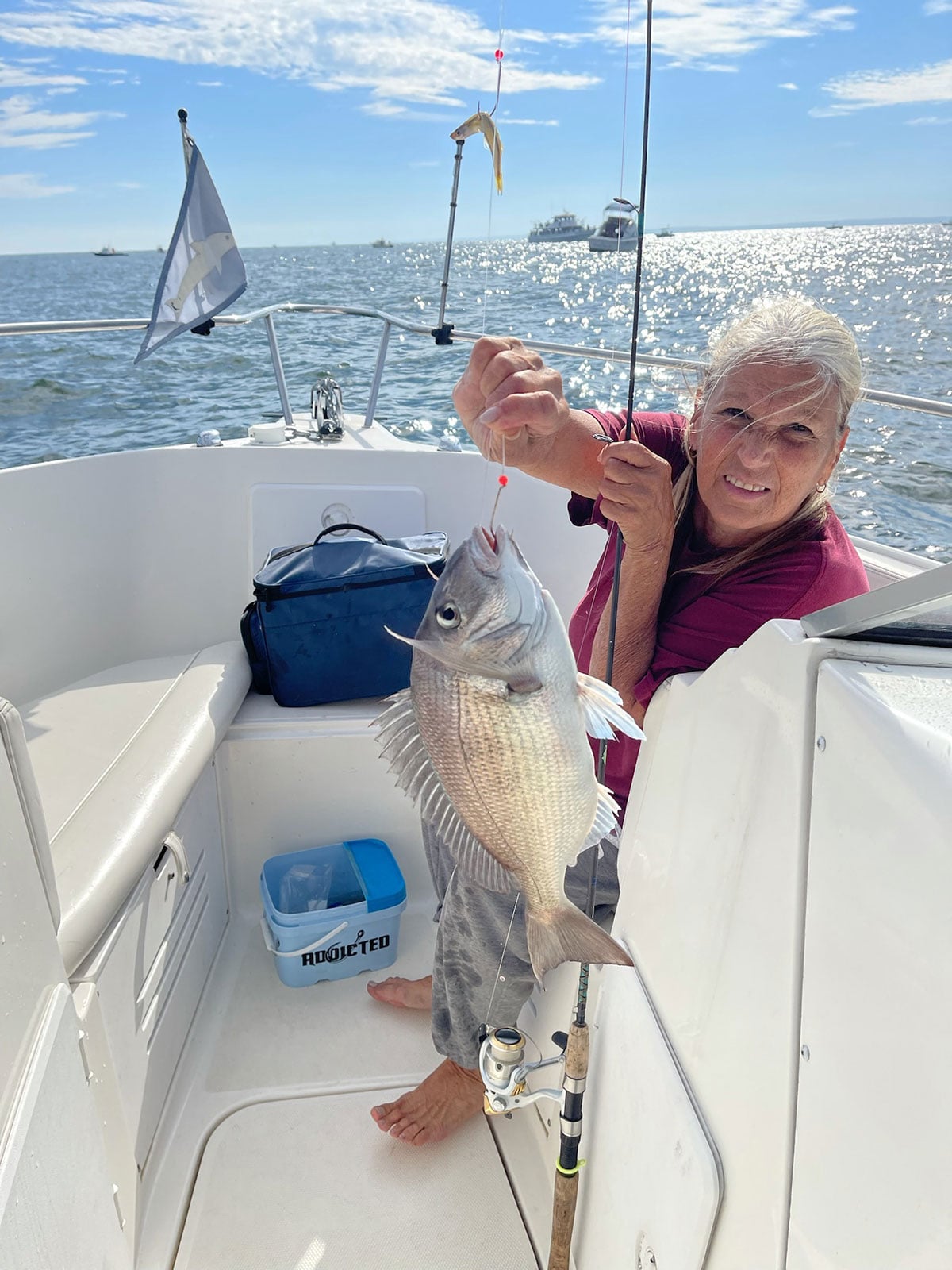
Fish shallow and without the heavy sinkers that inhibits an all-out fight. It’s also a lot easier to sink a hook. When we fish at anchor and chum, we generally use 1/8-ounce jigs or a 1-ounce sinkers and 1-hook rigs. Ten-inch porgies may not delight you, but I assure you that a 14-inch fish will bend the rod over to the water and make surprising runs. At that moment you will likely start to recall your own memories of childhood and delight in the knowledge that today’s porgies are the same ornery critters they were when you were young.
A second way to put zip in your porgy fishing is to try unusual spots. For example, try a local dock or pier in the summer. Even if the wind is gusting, you can take the kids, some clams, light gear, a lawn chair perhaps, and delight in watching your children enjoy the same action you had when you were young. A variety of structures work, but new wood seems to deter the fish. Seek out docks, piers, and other wood structures with old wood that’s been discolored over time by wind, winter ice, and algal growth. Old wood attracts various small life, which in turn seems to attract porgies. They gather around the wood and feed on amphipods, grass shrimp, clam and mussel spat, worms that burrow in and out of the wood, as well as young of the year baitfish.
Another Big Idea
It didn’t take Rich long to come to me with another idea. He told me we were going to fish in less than 3-feet of water up against a gravelly beach in a cove in the harbor at high tide. Perhaps I’d been mildly suspicious of his other ideas, but I was certain he was nuts this time. Again, his boat, his harbor, his idea. “Here,” he said, handing me an 1/8-ounce lead head, “Put a piece of clam on this and cast it towards the beach.” I offered that there was less than a foot of water against the beach, but he simply replied, “Just do it.” Although generally mild-mannered, Rich can get testy at times.
I thought about it for a second or two. Meanwhile Rich was already in the water, jiggling the lead head and clam ever so slowly towards the boat. Do I need to tell you? Of course, he set the hook on what turned out to be a 13-inch porgy. I try to take my come-uppance like a man, but-wow!
Beaches
Don’t forget fishing from beaches. Not ocean beaches, rather any beach with boulders, mussel beds, and gravel will do. Don’t forget about inlet jetties, the also attract porgies. North shore beaches with boulder strewn areas and mussel beds are good choices. Rest assured, you won’t need surf tackle. Pick a calm day and all you’ll need is a light sinker, a light rod, some clams, and a short toss.
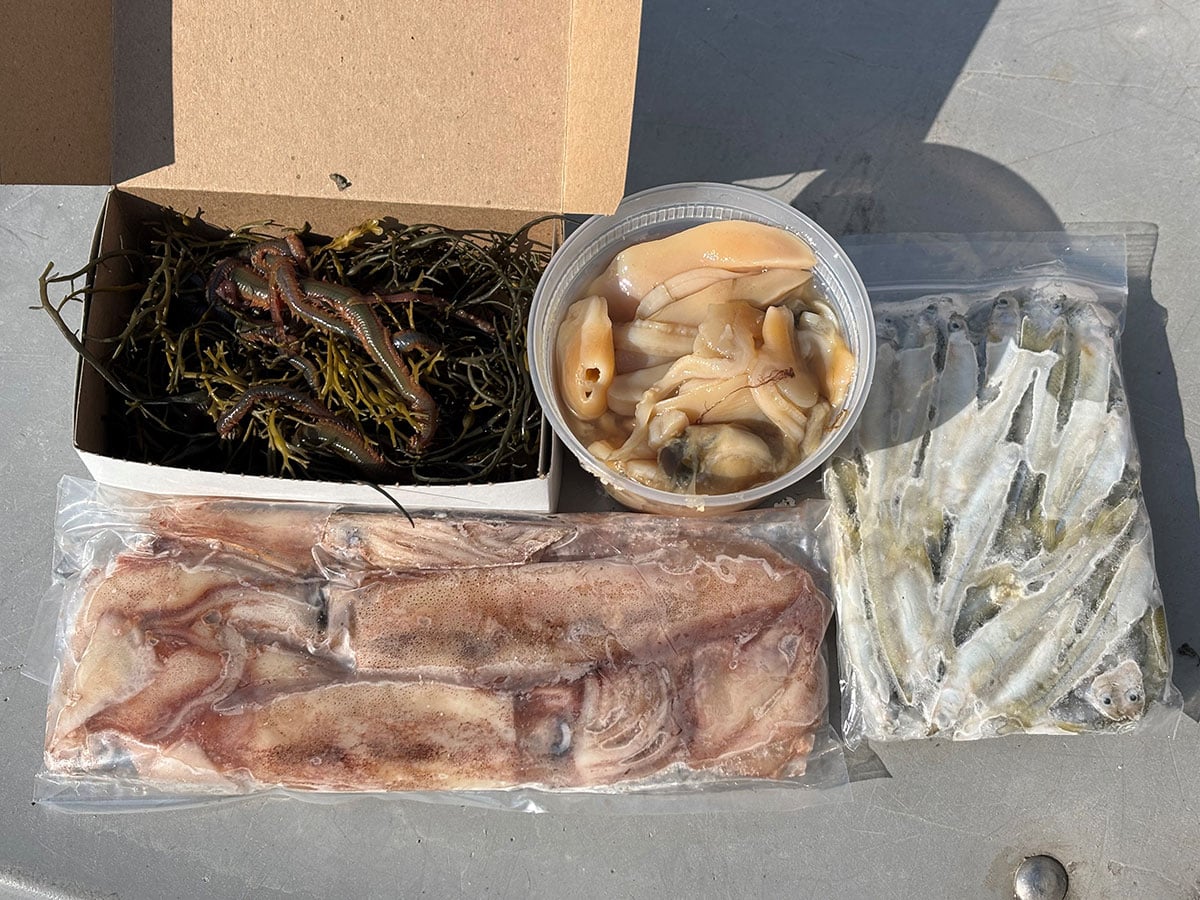
While I cast for stripers, I watched one fellow make short tosses to a gravel bottom in Long Island Sound and pull in one big porgy after the other. Although I’m positive you don’t have to use the bait he selected, I’ll tell you about it anyway. He collected spearing along the shore with a one-man seine net. When I talked with him, his enthusiasm was out of sight. He was having a ball with light gear and spearing and insisted the bait had to be spearing. Spearing will work, so will small killies, squid, worms, and most anything else. However, clams are cheap, available, and easy to use, so why use expensive bait or catch your own bait. I listened but, realizing how positive he was about using spearing, I didn’t have the heart to disagree.
Are you and yours a little bored with porgy fishing? Well, why not try one or more of the ideas I’m offering and maybe you’ll discover some newfound zip in your porgy fishing.