Old school Cuttyhunk guides were territorial, secretive and not afraid to intimidate!
It was akin to a glimpse into an illicit peep show. Others might have felt a bit guilty but it didn’t bother me in the least. I’d been walking the Cuttyhunk guide’s dock for years and never saw so much as a crack in the door of Smitty’s shack, as I cautiously tread the thick, uneven planks, hopeful some of its magic might rub off.
The guides dock was nothing more than a collection of large wooden lockers that the guides referred to as their shacks. Those were the units where the charter boat skippers kept their tackle and top secret lures; and no outsider was ever permitted a glimpse of what was hidden inside.
For me, as well as the other striper hopefuls, Cuttyhunk was linesider nirvana and the men who inhabited those shacks were the high priests of striperdom. For that reason, during the years I frequented the island, I had was always been very careful to maintain a low profile. Eyes and ears open, mouth shut.
On the aforementioned afternoon the impressive figure of Capt. Bob Smith was standing in his shack with his back to the door whittling the neck of a big wooden plug. I was stunned that I actually had a glimpse inside, I froze as I watched him slipping a huge eel skin over his latest creation. I didn’t make a sound I just stood there watching, memorizing and holding my breath until he sensed my presence and shot out his huge rubber boot, slamming the door shut. While I was startled I chuckled to myself as I walked away because Smitty shut the door which left him in total darkness.

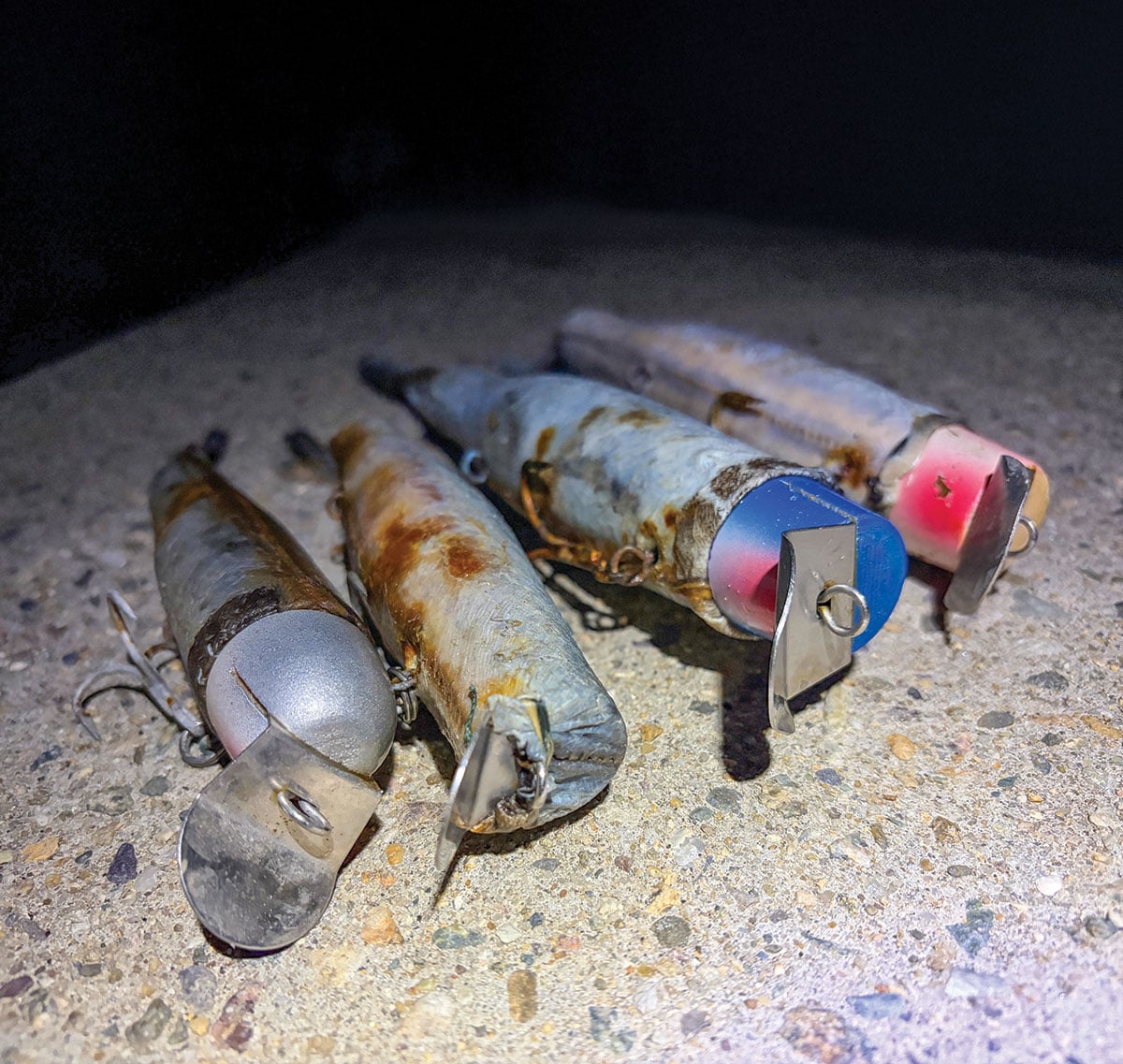
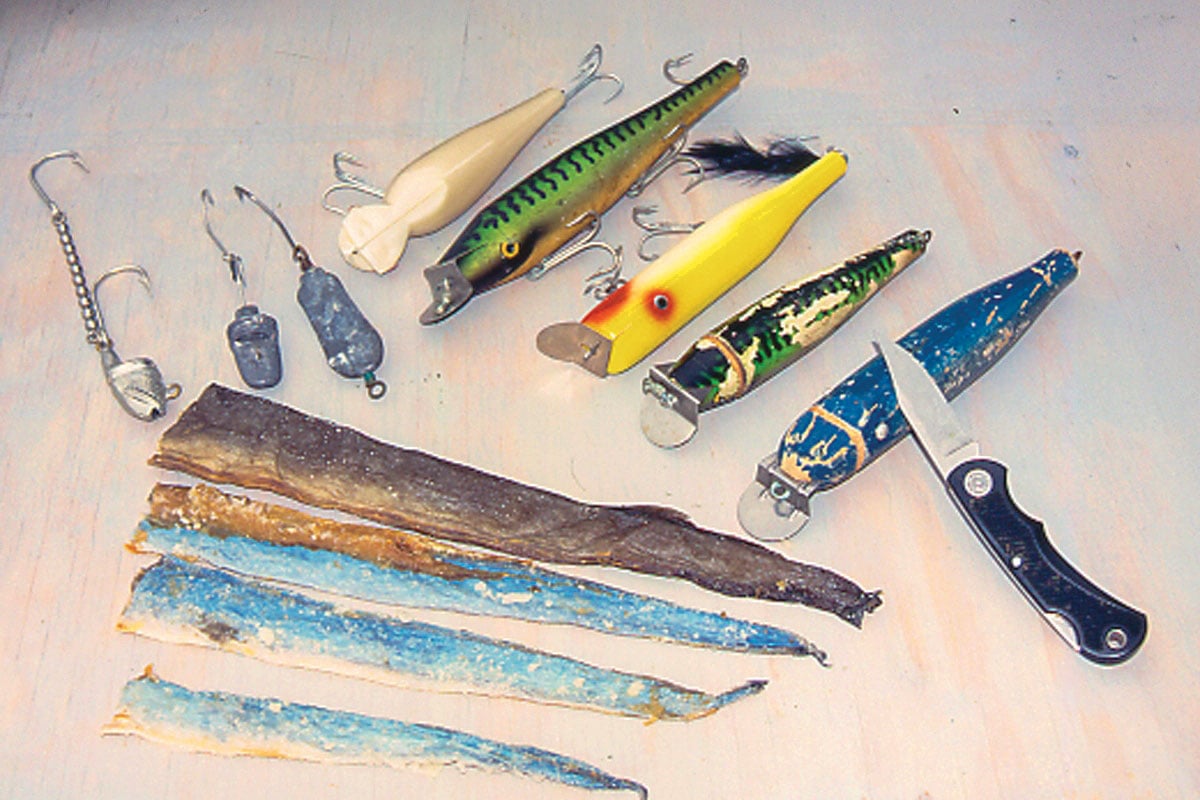
Before he detected me standing there I’d seen just enough of the lures hanging from the ledge and the excision he was performing on the head of the wooden plug to stir my imagination. I observed a row of large wooden plugs many devoid of hooks but most were notched around the neck at the upper end while some were dressed with eel skins tied off in that notch just behind the plug’s glass and painted eyes. The lures were arranged in various stages of repair. In one section there were new lures with shiny hooks, never kissed by the salt alongside veterans with rusted and twisted hooks the victims of collisions with heavyweight linesiders on the gnarly boulders that protected the island shoreline.
The guides went out of their way to maintain secrecy, so getting a peek at their hardware was akin to having an enemy spy hand over classified military information. The “skin plugs” were the deadly lures the guides stored in the heavily-salted crockpots they carried aboard their bass boats.
During that brief, yet revealing, glimpse into the secret chamber I’d seen enough to confirm what I already knew and I took that information and began to refit my own eel skin plugs. Remember, back then there were very few books and no videos or Saturday morning television shows to provide novice anglers with reliable information on how to become more successful fishermen.
Introduction By Fire
I first met Capt. Bob Smith (absent a formal introduction) on the waters of Vineyard Sound where he plied his trade in his iconic red 23-foot MacKenzie bass boat the Susan-B that bested the dangerous rips of Sow and Pigs and Devils Bridge as well as the boulder fields of Vineyard Sound. At the time I was fishing Sakonnet Point and Newport with more than a modicum of success; unfortunately that success created unwanted company and with a fleet of boats dogging us we decided to move to new horizons and focus on the waters off Cuttyhunk and inside Vineyard Sound.
Several of my fellow fishing club members had chartered the talented and daring skippers that worked those fabled waters and they brought home numerous outstanding trophies. The parade of the 40- and 50-pounders that topped our clubs leaderboard created a burning passion to fish those waters on our own. We believed that if our live eels were productive from Newport to Westport, they would reap greater rewards in that striper kingdom 13 miles across the sound.
Because of our financial situation the only way we could access that action was in our own boats so we set out to investigate that habitat and as you might imagine we didn’t expect or seek assistance from the local fishermen. My strategy was to fish under the radar and poke around quietly while I studied the topography. At that time my primary discipline was casting and drifting live eels, a method that was and still is one of the leading choices of highline striper fishermen across the entire stripers range.
To give you an insight of what is was like on that remote island I would point out that there was an intense level of competition among the guides. If you believe that athletic competition is the essence of rivalry you have no idea what hostility truly is until you’re a member of a cutthroat entity such as a charter fishing fleet competing for business and celebrity. There was a palpable level of dislike and no small measure of intimidation, and that was towards members of their own society, so you can only imagine how they felt about an interloper like me.
While I never actually witnessed the guides engaging in physical combat, I was privy to numerous insults, shouting matches and actual hull to hull scrubbing and bumping when a competing guide believed a skipper had crowded him off the fish or cut him off. A few of the men who fished with several of the guides relayed stories about just how passionate this competition and dislike for each other was between certain skippers. My personal depiction of the relationship between these highly-competitive guides when there were several on the dock at the same time was not one of civility, however the word tolerance might be better-suited.
Initiation By Intimidation
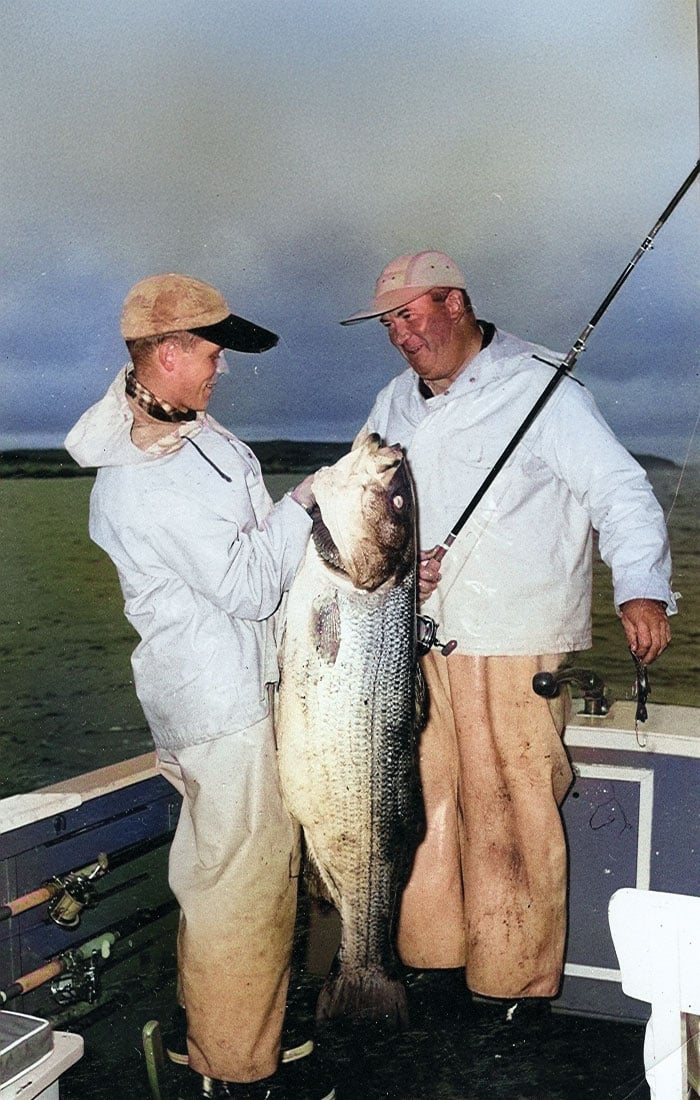
Smitty, as we referred to Capt. Smith, was a huge and intimidating man with a booming voice. He was one of the few charter captains who became a legend in his own time and not just in his mind as was the case with some of the guides I’ve met over the years. Our relationship began on an ominous note with me running for cover whenever he pointed the bow of the famous Susan-B at me when I fished in close to the boulders on the backside of Cuttyhunk. I spent my first 10 years of fishing Cuttyhunk looking over my shoulder and trying to stay out of Smitty’s way.
As much I wanted to fish Sow and Pigs reef I never trolled that rip when Smitty and the other guides were working it because I didn’t want to interfere with their passes. That was why I fished that location on the off tides and even as a rookie I still caught quite a few fish. Although there were numerous encounters. On one night I was casting eels in tight to the Three Rock Pool on the southeast corner of the island where I was sitting on a concentration of very big fish. Because we never used running or flashlights to avoid detection (we never fished in channels or frequently-travelled routes) unless there was fog we could usually see other boats in the available light.
On the flood tide that night I was well inside the rocks and was fighting a heavy fish when Smitty and his party came up on me. The rip was dead that night and Smitty wasn’t in a very good mood so when they saw me with the fish on he pointed his bow right at me. I knew I was in very shallow water but he kept on coming. He knew that area better than I did, but he did not take the moon tide into consideration and on the way to giving me a shove he grounded on the outside rock. He set loose a torrent of fire and brimstone none of which was complimentary of my fishing skills. He was able to back off the rock and headed for the harbor. After I regained my composure I caught two more bass but my apprehension of Smitty and his intentions caused me to spend an uncomfortably damp night rocking on the anchor outside the harbor.
An Eel Tax
It was a few years until our next meeting. On that night I was tied to a pole out in the harbor when the red McKenzie came up alongside and took hold of my gunwale. I jumped out from a fitful nap under my foul weather gear and saw Smitty. “What the hell did I do now?” I thought. I learned that Smitty and all the other guides struck out but he saw me fishing in Barge Cove for over 4 hours and stopped by to see what was going on. I told him I didn’t do much but he insisted that I lift the canvas in the stern under which were seven or eight husky stripers. The big man wasn’t looking for trouble he was looking for information. The rips had been barren but the big fish were in tight to the rocks and we were slamming them with eels.
He grabbed the line hanging off the stern cleat, lifted it and looked into my eel pot. He told me to get him three-dozen eels. This was not a request, it was an order… but I figured if the eels would get Smitty off my back it would be worth the effort. That night we broke the ice and although he never provided me any assistance he stopped trying to put me out of business.
At that time the idea that Smitty and I could ever become friends never entered my mind but stranger things have happened. Some 25 years later we were sitting by the pool at the Motel Somerset having a drink and laughing about him yelling at me suggesting I, “get the hell back to New Bedford where you belong.” Bob was from South Dartmouth and believed all the encroachers came from New Bedford. When he found out that I was making the trip from Sakonnet to Cuttyhunk in a boat the size of my home built 19-footer, he said only someone with a death wish would make that trip alone after dark.
Twenty years removed, the big man had mellowed and over the previous few years had been trailering his famous New England MacKenzie bass boat from Massachusetts to Key West where he gave the conchs a lesson on catching huge tarpon using his ‘downeast’ big plug trolling method. My last conversation with Smitty was a reunion with Captain Roland Coulombe as the big man spun yarns about his outrageous Cuttyhunk and Key West experiences. Close by was that infamous vinegar jug of clear liquid refreshment between the lawn chairs and a spacious smile on the big guides’ face as he reminisced about the pursuit of the Holy Grail of striped bass fishing.
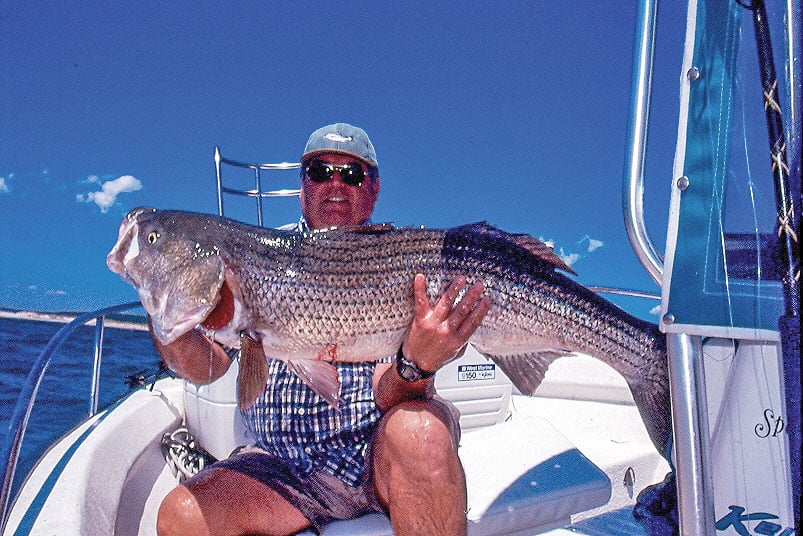
One of the biggest hoots came when I reminded him of the time I caught a big striper on a swimming plug and that fish had a stainless eel skin rig solidly hooked in the inside corner of its jaw. Smitty was the only one I knew using a rig like that with the stainless steel cotter pin so the next time we met I showed him the rig. His eyes widened then he asked me how much the fish weighed. When I told him it was about 34 pounds, he calculated the going price at 40 cents a pound and told me I owed him thirteen dollars. That was classic Smitty.
Following the example of that legendary guide I began years of experimentation and went on to fish those skin plugs and eel skin rigs with a modicum of success. I would suggest that when you get a follow or a boil behind the plug you sent into the wash, don’t send it back on a return trip. That fish is telling you that she’s there and she’s interested but not convinced your offering was something natural. Snap on a skin plug, send it back in there and keep a firm grip on the rod because if your experience is anything like mine, you just might hook into a striper that’s reluctant to give your plug back!