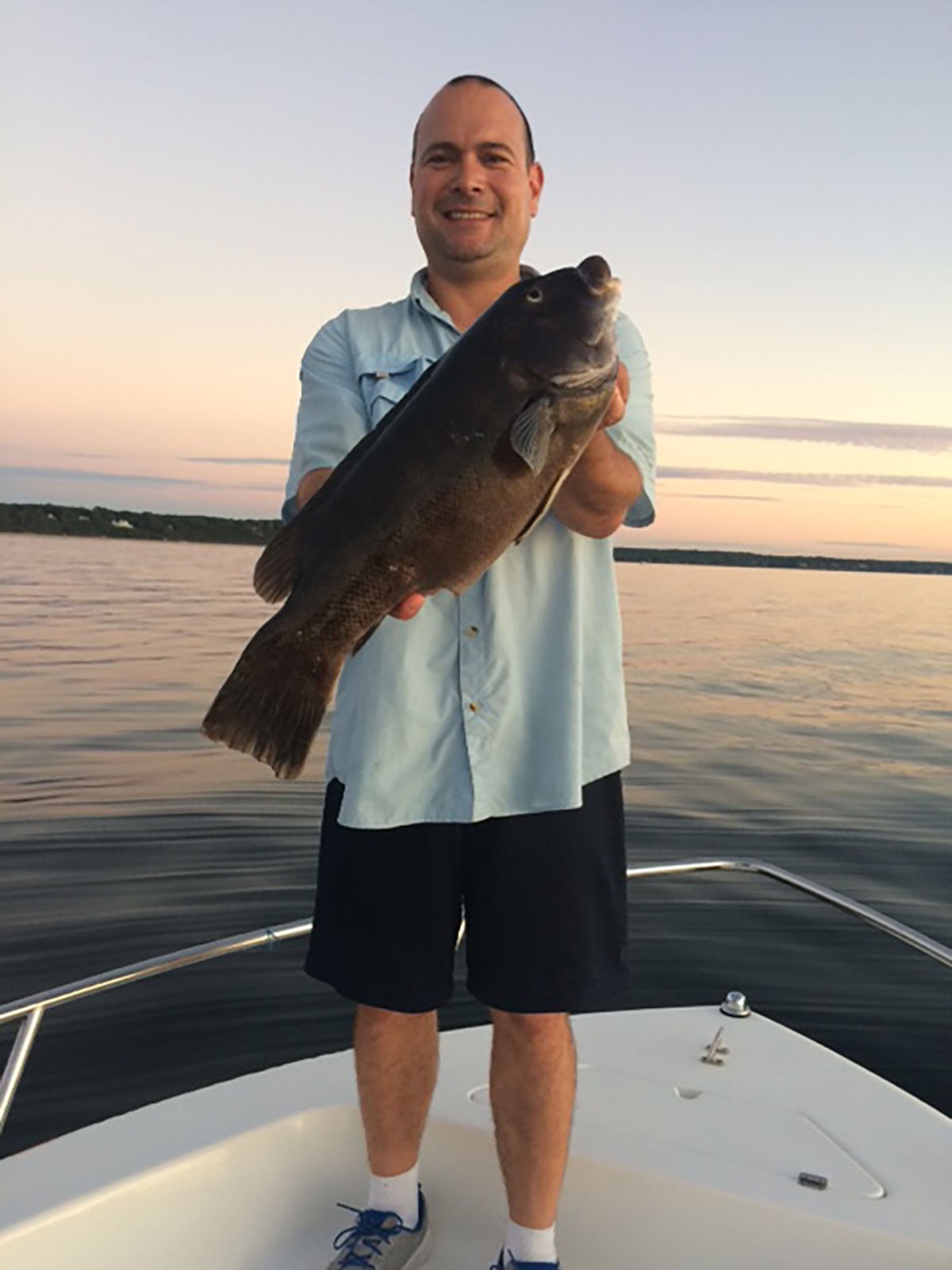
Early-season North Shore tog fishing shines in shallow water, where light jigs, precise boat positioning and a careful read of rocky structure can lead to fast action.
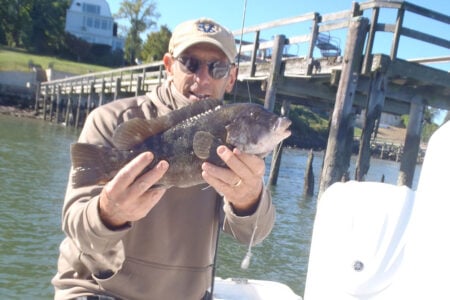
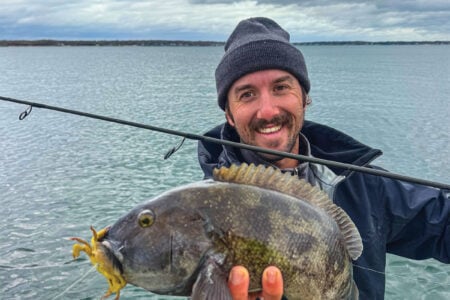
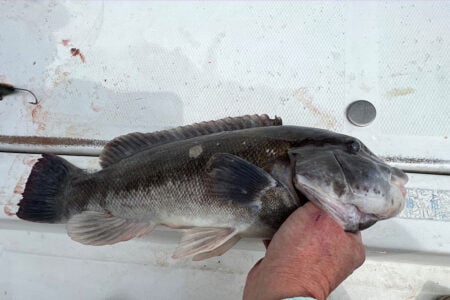
“It just doesn’t feel like blackfishing,” I said to my buddies, Capt. Dan Donohue and his son Kevin. Here we were in mid-October, fishing a rock pile in 15 feet of water off the Norwalk Islands on the Connecticut side of Long Island Sound. We were wearing short-sleeve shirts in sunny, 75-degree weather, dropping half-ounce lima bean jigs and catching and releasing blackfish to 6 pounds on light spinning tackle.
It was a far cry from the blackfishing I was accustomed to. On the South Shore, stronger currents, deeper water and less-forgiving bottom structure often call for heavier tackle and considerably more lead. Here, however, Capt. Dan explained that rarely would we need more than a 1-ounce jig.
The bottom consisted largely of giant boulders, and although the blackfish had plenty of structure to relate to, there were fewer tight crevices for a hooked fish to immediately bury itself in. That made the light tackle practical and turned every hookup into an exciting battle. Fishing shallow water at the beginning of blackfish season with light spinning tackle is truly in a class by itself, and under the right conditions, jigging can be one of the most effective ways to put tog in the boat.
Nothing New
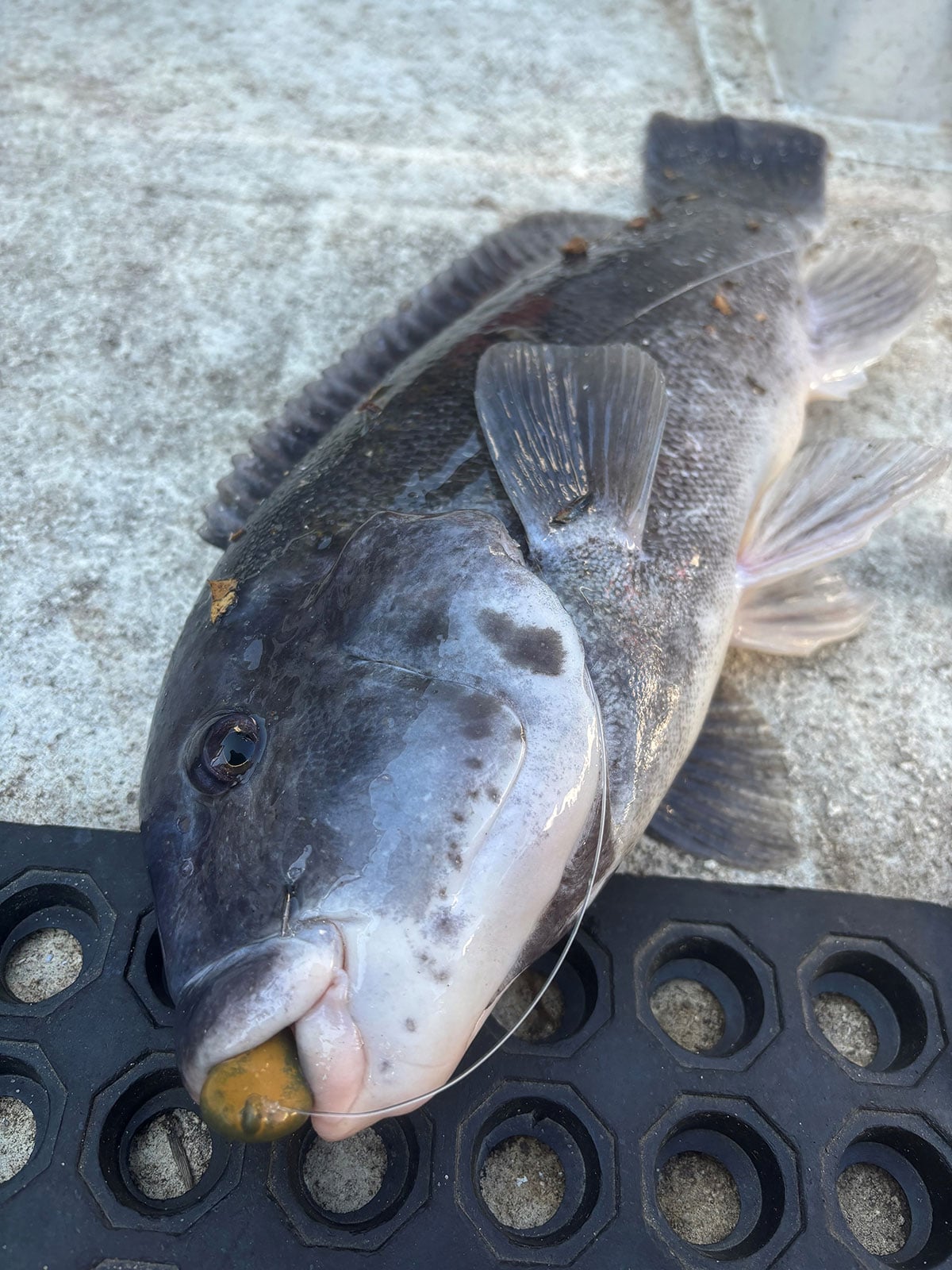
Blackfish jigs certainly aren’t a new development. I remember back in the mid-to-late 1990s when they began gaining serious attention throughout the Northeast. The lima bean jig was one of the early favorites, and since then the blackfish jig market has expanded to include countless shapes, sizes and configurations. Some have proven extremely effective, while others seem to do a better job of catching fishermen than fish.

For the shallow waters of Long Island Sound, I continue to favor relatively compact lima bean and sheepshead-style jigs. Their streamlined designs cut through the water efficiently and allow anglers to significantly reduce the amount of weight needed to reach and maintain contact with the bottom. Instead of the 3 or 4 ounces of lead commonly used with traditional rigs, jig weights ranging from a half-ounce to 2 ounces will cover many shallow-water situations. Around new and full moons, stronger current may require a heavier offering, but the general rule is to use the lightest jig that consistently maintains bottom contact.
The jig also gives an angler the freedom to fish rather than simply wait. Instead of lowering a traditional bait rig directly beneath the boat and hoping a tog finds it, you can cast a jig, slowly work it along the bottom and probe different pieces of structure. A crew can spread out around the boat and investigate multiple angles, crawling jigs over drops, around boulders and alongside other likely blackfish hideouts. Covering water this way often helps locate the exact part of the structure where fish are concentrated.
Mastering The Feel
Learning the feel of a blackfish bite on a lightweight jig can take some adjustment. Anglers accustomed to traditional rigs often wait for that familiar solid rap before setting the hook. With a light jig, however, the bite can be considerably more subtle. A tog may simply pick up the bait and begin moving away with it.
That’s why watching your line is every bit as important as feeling the jig. A slight twitch, sideways movement or unexpected bit of slack can indicate a fish has picked up the offering. Once you begin recognizing these subtle signs, your hookup percentage should improve. Of course, there are also days when there is nothing subtle about the bite. When blackfish are feeding aggressively, they can crush a jig with a hit that feels like a jackhammer.
Rapid-fire pecks are often another story; cunners, small porgies, juvenile sea bass and other bottom dwellers are still active during the warmer days of October and can quickly strip a bait. When nuisance bites dominate, moving the boat just 10 or 20 feet can sometimes change everything. If you repeatedly reel up an empty jig without feeling a bite, try making occasional slow lifts off the bottom. When you feel weight or a solid grab, come tight and set the hook. Whatever technique you use, make sure the hook remains razor sharp.
Bait Still Matters
The jig may get plenty of attention, but what you put on the hook is still a major part of the equation. Blackfish spend much of their time rooting around rocky structure for crabs, mussels and other hard-shelled food, so presenting them with a fresh natural bait remains one of the most reliable ways to draw a strike.
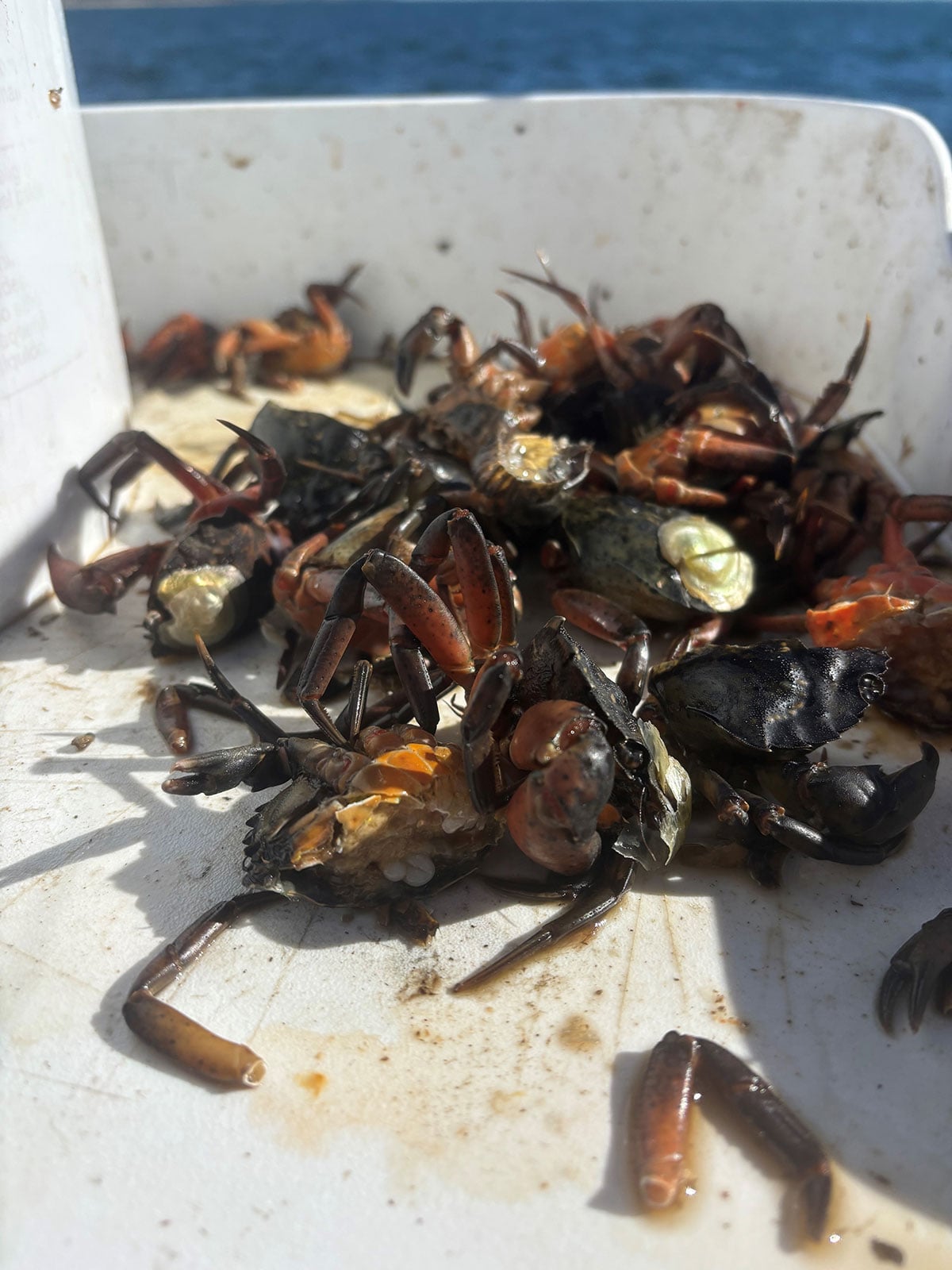
Green crabs are a longtime blackfish staple, while other legal crab baits can also be effective depending on availability, location and the time of season. Later in the fall, larger crab offerings often become popular with anglers looking for quality fish on deeper structure. Regardless of the specific bait, freshness and presentation are important. A properly sized piece should sit securely on the hook without completely burying the point.
Experimenting with how a crab is presented can also make a difference. Some days a whole or larger bait will produce, while on others a smaller section will get more bites. Removing portions of the shell or cracking a bait can release additional scent into the water. Let the fish tell you what they prefer rather than becoming locked into one bait or presentation.
Keep It Light And Tight
To me, tog fishing and spinning tackle generally go together like oil and vinegar. Early fall is the exception. When blackfish are feeding in shallow water and the current is running at a slow to moderate pace, a properly matched spinning outfit is an absolute blast to fish. It also allows you to cast and probe little drops, boulders and pieces of bottom that would be difficult to reach with a traditional straight-down presentation.
A stout, fast-action spinning rod around 7 feet long provides a good balance of sensitivity and lifting power. Match it with a quality spinning reel and braided main line, then finish the system with a fluorocarbon leader. The thin diameter and lack of stretch in braid help you feel exactly what the jig is doing, while fluorocarbon makes an excellent leader material around shallow, clear water.
There is a limit to how light you want to go. A big blackfish hooked around heavy structure will immediately attempt to return to its lair, and you need enough power to turn its head. The goal is to enjoy the advantages of lighter tackle without leaving yourself completely undergunned when a serious tog decides to eat.
Make The First Seconds Count
The initial moments after the hookset are the most important part of the fight. Once a good blackfish realizes it is hooked, its first instinct is usually to dive back toward the rocks. Give it enough line and the battle can be over before it really begins.
Keep the rod loaded and apply steady pressure immediately. You don’t necessarily need to horse the fish, but you do need to establish control and gain separation from the structure. Once you get the tog several feet away from the bottom, you can usually relax slightly and enjoy the fight.
This is where shallow-water jigging becomes so much fun. A 5- or 6-pound tog on appropriately matched spinning gear can make several hard runs, and you feel every surge. Get a larger fish hooked around a field of boulders and things become even more interesting.
Anchors Away
Good electronics are invaluable for this style of fishing. Anyone serious about blackfish, sea bass or porgies should have a dependable bottom machine and GPS. Blackfish often concentrate on very specific pieces of structure, and being just a short distance away from the productive zone can mean the difference between steady action and an empty bait.
Once you locate fish, boat positioning becomes critical. Anchoring is still one of the most reliable ways to stay over rocky structure in tidal current. Make sure you carry plenty of scope so the anchor can set properly and so you have room to make small positioning adjustments. Whenever possible, set the anchor in cleaner bottom and allow the boat to settle back toward the rocks. Dropping directly into the nastiest structure increases the odds of wedging an anchor into a crevice.
A second anchor, along with adequate chain and rope, is cheap insurance. Properly sized galvanized chain helps an anchor dig quickly and hold securely. An anchor ball can also make retrieval considerably easier, particularly when current is moving hard. Modern trolling motors with GPS positioning have added another option for anglers fishing relatively shallow water, allowing precise adjustments without repeatedly hauling anchor.
Small Moves, Big Results
One of the biggest mistakes anglers make is assuming an entire rock pile is equally productive. Blackfish may stack along one edge, behind one particular boulder or on a subtle change in depth. You can be close to the fish and still not be close enough.
If the action slows or you’re catching nothing but small fish and bait stealers, make a minor adjustment before abandoning the area entirely. Shifting 10 feet in one direction might place your jigs directly in front of better fish. Current direction can also reposition tog on a piece of structure as the tide changes.
Once you get bites, take note of where they’re coming from. If everyone on one side of the boat is catching while the other side is quiet, there is a reason. Use your electronics, observe the direction of the current and continue fine-tuning your position until you understand how the fish are relating to that particular piece of bottom.
Safety On The Sound
| ASIAN SHORE CRABS & NYS REGULATIONS |
| Asian shore crabs are classified by New York State as a prohibited invasive species. They cannot be sold, purchased, transported, introduced or propagated. They may only be used as bait at the location where they are caught and must be dead before use. Anglers may not transport live Asian shore crabs to another fishing location. New York also limits recreational crab harvest to 50 crabs per person per day, whether of one species or a combination of species. Always check current NYSDEC regulations before collecting or using crabs for bait. |
Long Island Sound can change quickly, particularly during the fall. A calm morning can become uncomfortable in a short period when the wind increases or changes direction. Northwest winds deserve particular respect around exposed North Shore and Connecticut structure.
Check the marine forecast before leaving the dock and continue monitoring conditions throughout the day. Make sure your VHF radio is operational and personal flotation devices are readily accessible to everyone aboard. No blackfish is worth putting yourself or your crew in a dangerous situation.
Shallow-water blackfish jigging may look unconventional to anglers accustomed to heavy sticks, big sinkers and deep wrecks, but that is part of its appeal. Put a light jig in the right place, pay attention to the subtle bites and be prepared to turn a hooked tog away from the rocks. When everything comes together, there aren’t many better ways to enjoy the opening stages of blackfish season.