“Fish eggs? Jellyfish larvae? Nope, they’re salps!”
What were those tiny translucent jelly-like tubes all over the surface of the ocean late this summer, clinging to your net, coating your line, and clogging your guides and reel?
Fish eggs? Jellyfish larvae? Nope, they’re salps!
And calm your fears, they can neither sting nor bite.
Salps belong to the group of invertebrates know as Tunicates, or “sea squirts.” Also known as “sea grapes” there are over 50 known species of this harmless gelatinous planktonic creature.

The clear cylindrical or barrel-shaped bodies of salps are generally small, from less than 1 inch to around 3 inches long. However, larger individuals of some species have been noted throughout the temperate and cooler regions they inhabit.
At times, salps also form long chains that can range from several feet to upwards of 50 feet in length.
As free-swimming pelagic zooplankton, salps use their own version of jet propulsion to move by compressing their bodies and pumping water through it. In fact, according to an article in the Journal of Zoology it is one of the most efficient examples of jet propulsion in the animal kingdom (Bone and Trueman 1983).
Salps are filter feeders and they feed using the same mechanism they use to move, by pumping water into their bodies. A mucus membrane captures all of the edible material in the water, particularly microscopic phytoplankton, before the water is propelled out of the other end of their body.
Other than potentially disrupting your day at the beach, particularly when covering your line and making it nearly impossible to fish a lure or soak a bait, salps do serve an ecological purpose. They play a key role in the marine food chain as food for a variety of organisms including many fish, turtles, and even jellyfish.
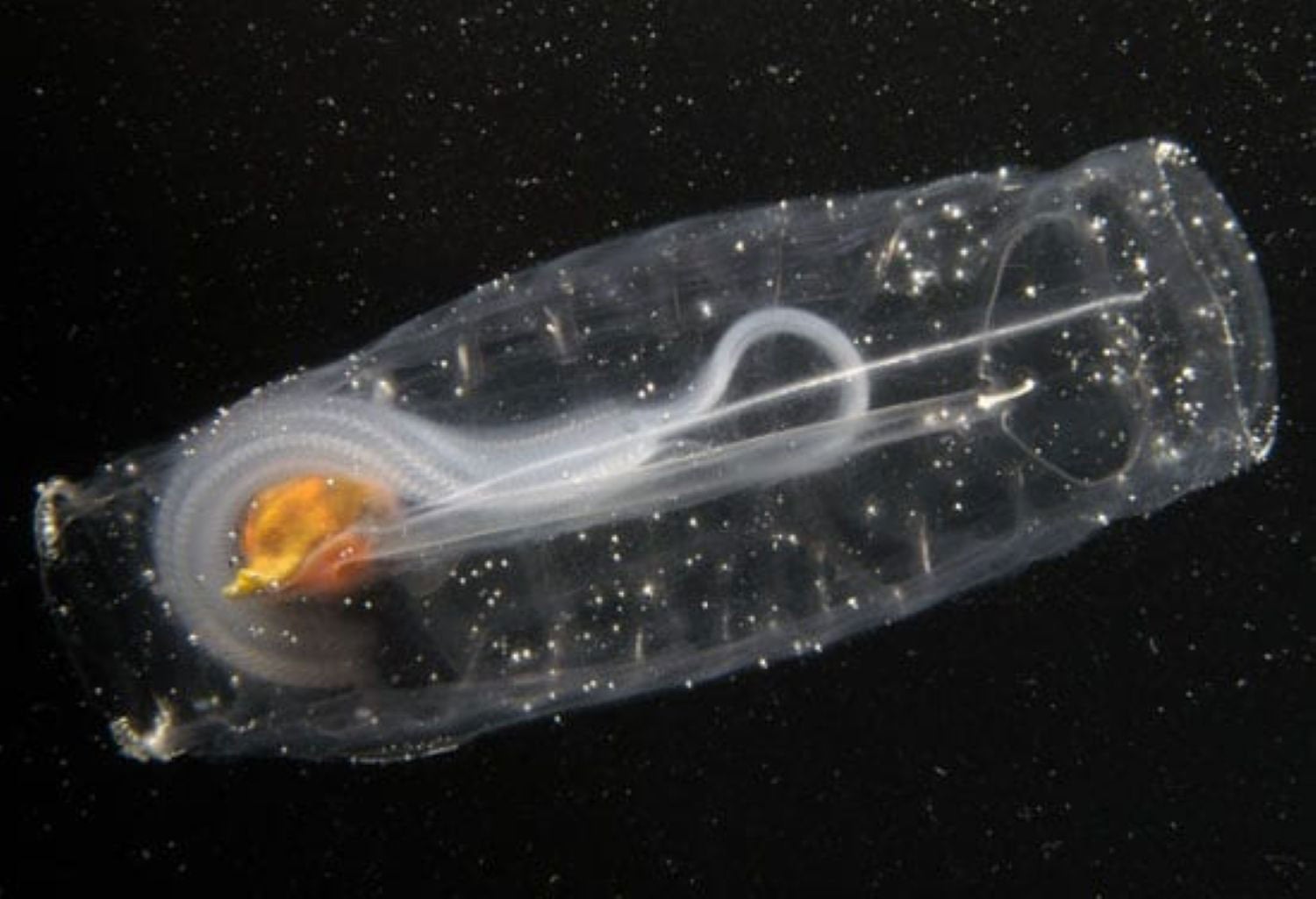
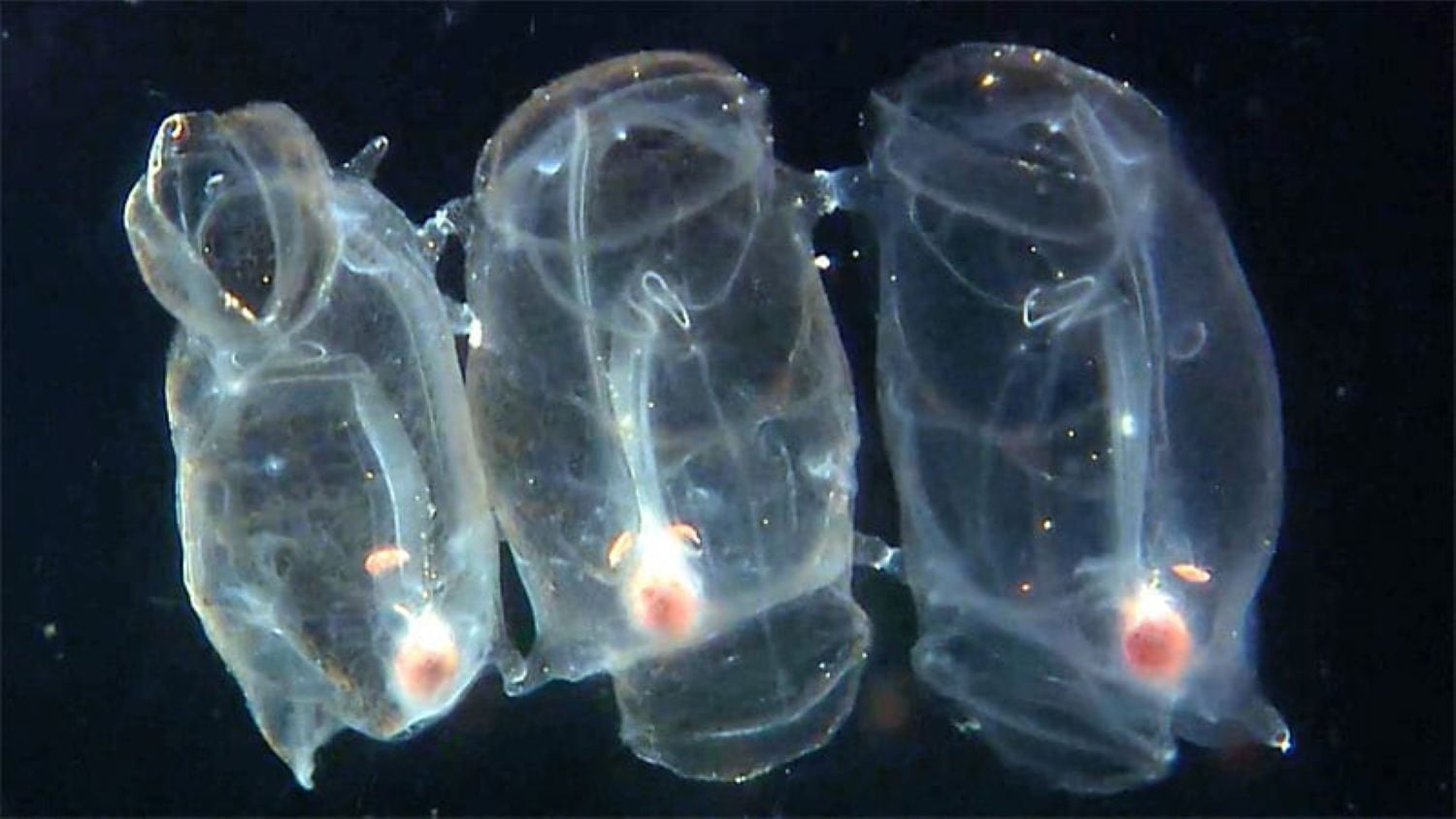
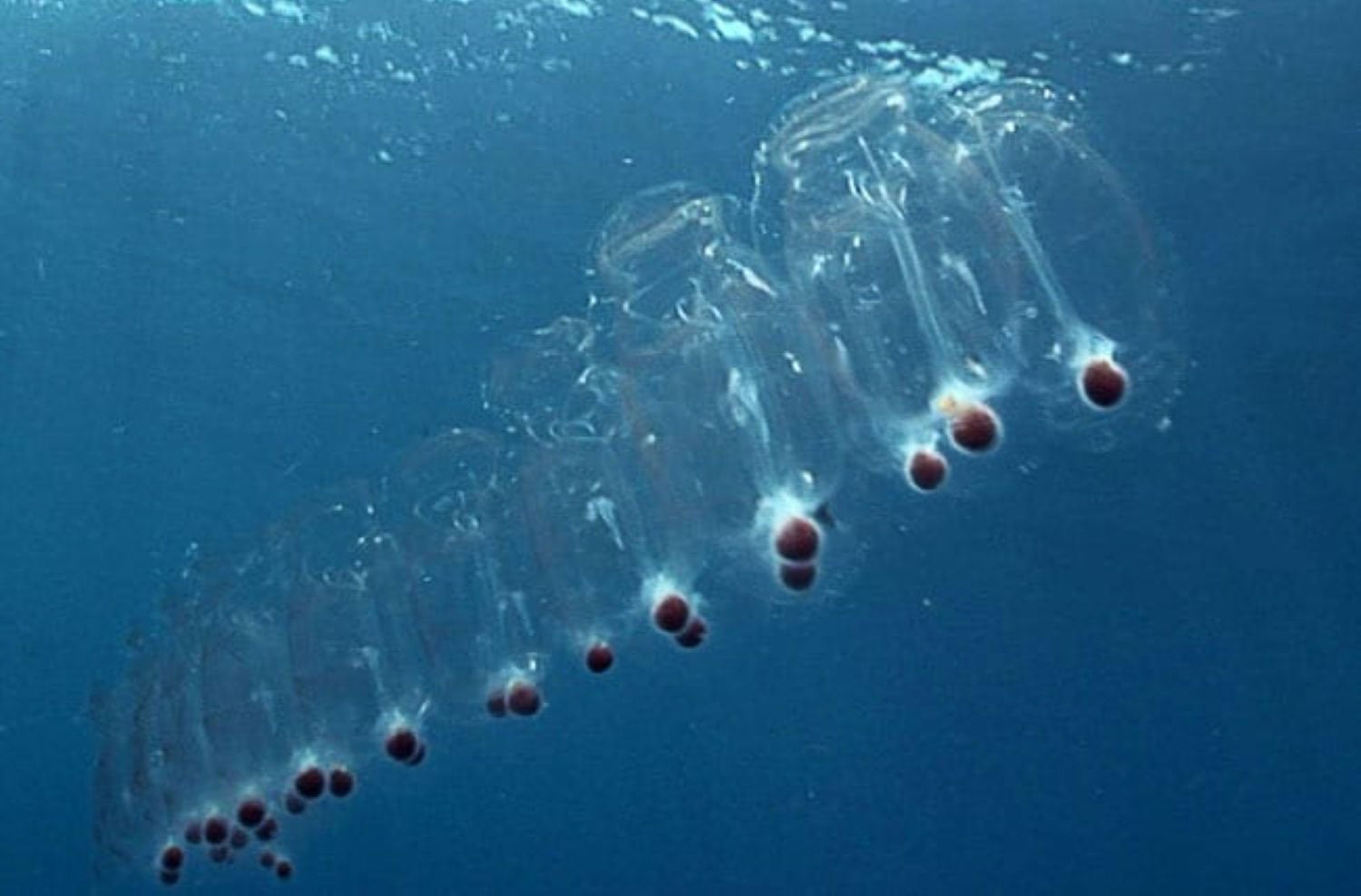
Salps have a unique and somewhat complex life cycle for a fairly simple looking creature. Salps alternate generations between a solitary and aggregate form. Solitary salps, known as oozooids, reproduce asexually by budding off clones that subsequently link together in chains, known as blastooids.
The chain of salps is the aggregate portion of the life cycle. Clonal members of the aggregate chain reproduce sexually. Each blastooid in the chain starts off as a female and matures into a male. They reproduce when the male releases sperm to fertilize the embryo contained in the blastooid. Completing the cycle, a new oozooid is eventually released from the parent blastooid to feed and grow as the solitary phase.
The entire generational cycle can be completed in less than 2 days, providing an explanation for the sudden appearance of enormous salp blooms during late summer or early fall when environmental conditions are favorable.
Salps live under what scientists call a ‘boom or bust’ scenario. Typically, their population is held in check until environmental conditions are conducive to the formation of massive blooms that can cover thousands of square miles of ocean waters.
The primary factors causing these blooms are a combination of increased nutrient availability resulting from nutrient rich runoff associated with summer storms and short term upwelling events and warm summer ocean water temperatures. The combination of these factors facilitates a sudden surge in phytoplankton populations, the salps major food source. This increased availability of phytoplankton triggers the salps rapid population explosion.
Although salp blooms are a seasonal occurrence in the greater New York Bight and can be a bit of a nuisance when fishing in and around a ‘salp swarm,’ the good news is that salp blooms are typically short-lived, and within weeks they subsequently end as their food is depleted and the salps begin to die and sink through the water column or wash up on local beaches, typically not to be seen again until next summer!
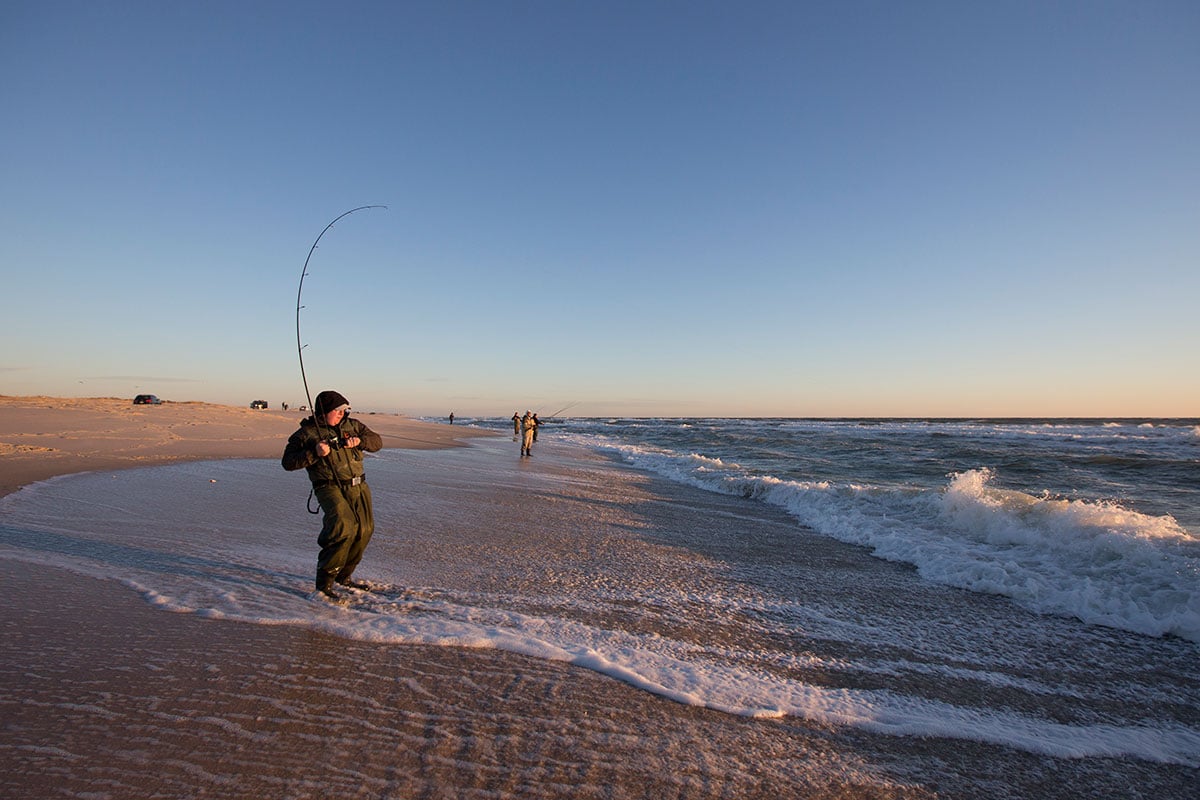
At some point in late summer or early fall while fishing the surf along the Jersey Shore, you may find yourself plagued by these salps on your line, coating your spool and all over your baits and hooks. Rest easy knowing that it won’t last long, and you’ll be back in business in no time at all.
Just give it a couple of days!