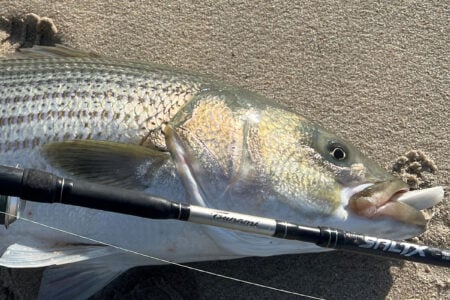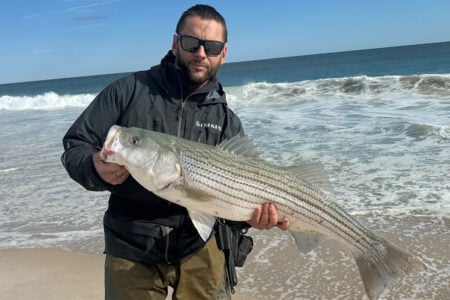
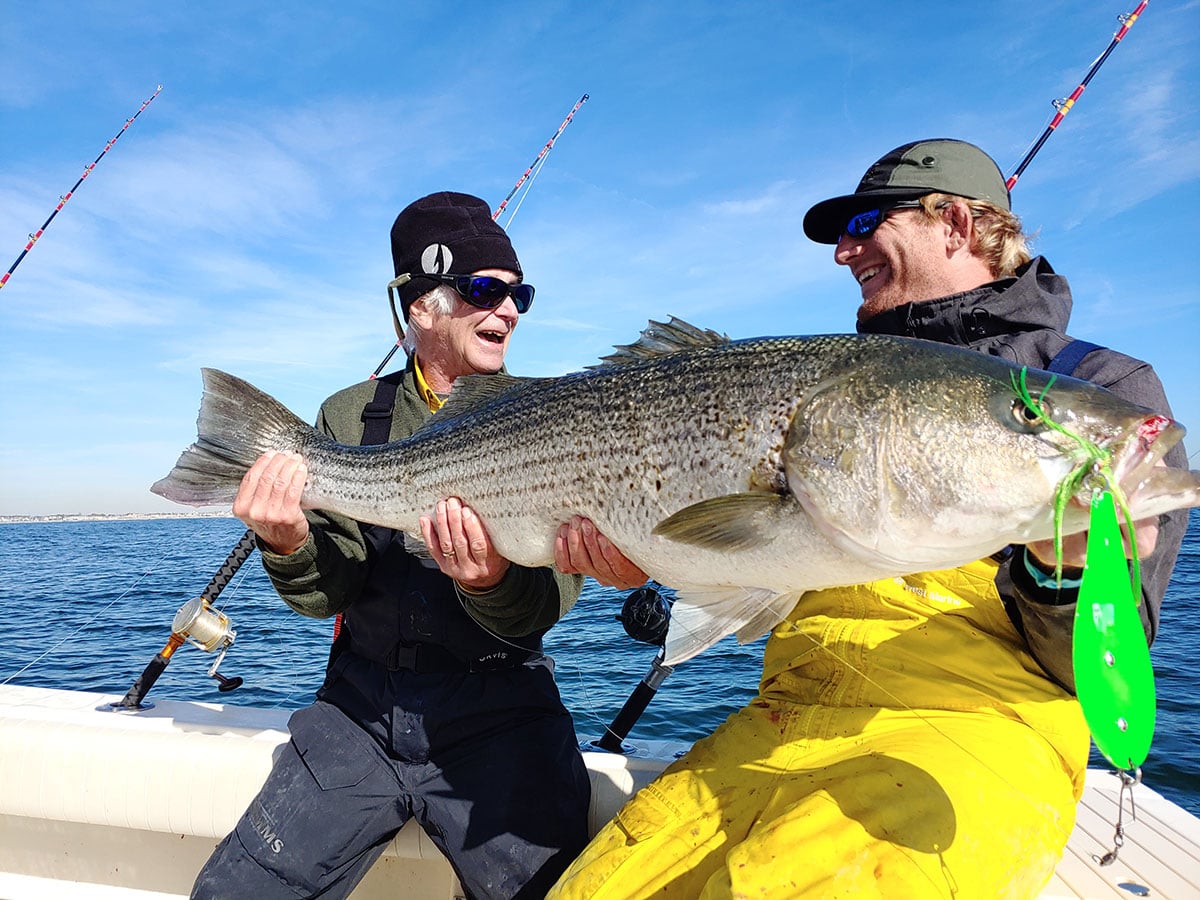
New Jersey boaters get the edge on newly arriving striped bass this month.
When I looked back over the years through my October logs – which is now in the cloud on my Google photos – there’s one thing I can say about October and that is get ready for striped bass.
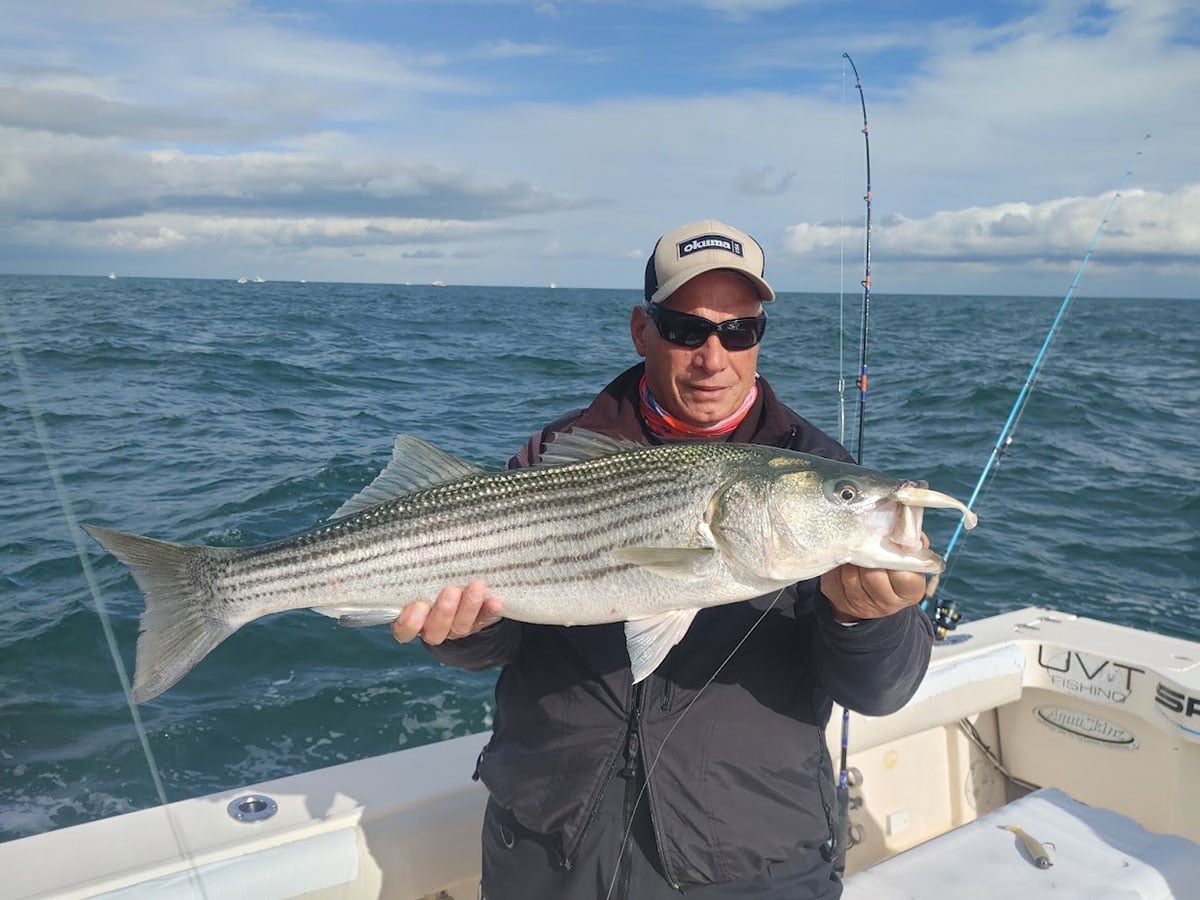
I looked back 10 years while sitting down to write this article, and all I saw was consistent striped bass action this entire month, with striped bass from 28 to 50 inches registered from year to year. And there were two baits that consistently stood out throughout this month, adult bunker and peanut bunker.
With nice weather and ocean temperatures that will drop from around 68 degrees at the beginning of the month to about 58 degrees by the end of the month we should have the makings of another great fall run.
To give you a feel for what the striped bass action can be like in October, this is what I wrote in 2022: “What made this October so epic was that there were many days when we were catching 30- to 40-pound bass one after another and it did not matter if you were a boater or a surfcaster.”

And I wrote this last season: “It did not take too long for striped bass to flood into our area after the big nor’easter as boaters that were out this past weekend found plenty. Big striped bass up to 50 inches were present from Long Branch up to Sandy Hook and provided some great surface action for boaters. The bass were blitzing on peanut bunker that pushed out from the back bays on the heavy ebb tides after the blow.”
Keep in mind that I run my boat out of Manasquan Inlet, and our migratory striped bass are essentially coming down from the north. But adult bunker and peanut bunker are the two baits that will drive our October feeds, and on many days all out blitzes.
Match The Hatch
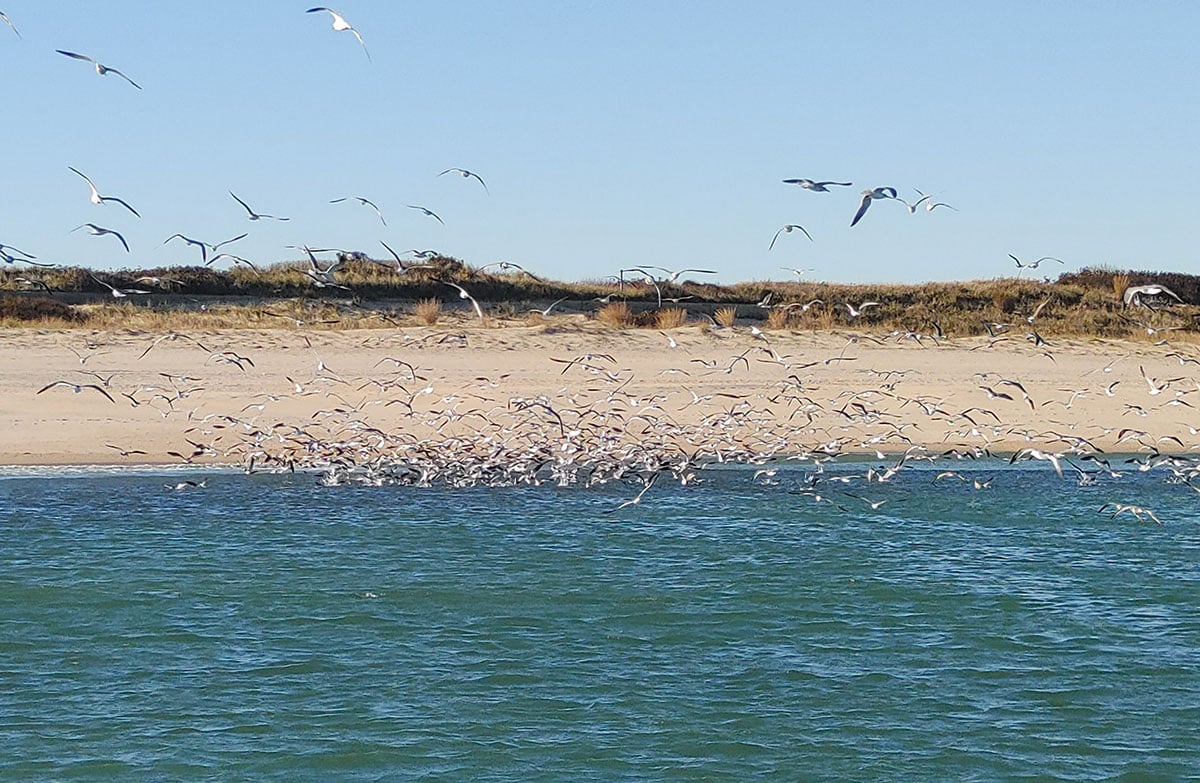
Adult bunker make their appearance first during the beginning of the month. As the ocean water cools towards the end of the month into the upper 50s peanut bunker begin to pour out of back bays and rivers. Some adult bunker may move out of the back bays and rivers as well, but there is a large population that summers over just offshore about 12 to 15 miles from the beach. Every time we head offshore tuna fishing we see big schools of bunker many times with sharks ripping through them.
When adult bunker are around big bass can be caught by many different methods. You can cast Tsunami shads, NLBN paddletails, metal-lipped plugs, planks, docs, spooks, Lex pencils, or jig flutter spoons. You can also troll bunker spoons and mojos, or liveline bunker on an inline circle hook. On all my charters I am ready to utilize anyone of these methods. Most of the time my clients opt to fish topwater as this is one of the most exciting ways to catch a big bass as the strikes are highly visual and explosive. Nothing is more exciting than watching a big bass follow your plug tailing behind it then crashing it.
My personal ‘go to’ topwater artificials are Madd Mantis Planks, JP Spooks, Docs, Lex Lure pencils, and glide baits. The first three artificials are walk the dog style artificials while the Lex is a variation of this type of retrieve and easier to work. It is a good lure for first time topwater clients to use. Rarely do I use poppers anymore. This spring, glide baits took the striped bass community by storm and can be fished waked across the surface of just sub surface. I am sure they will once again be grabbing all the attention this fall.
My favorite colors to use for all these artificials are white, bone, yellow, or chartreuse. I attach these lures to a 175-pound Tactical Anglers power clip tied to the end of 50-pound fluorocarbon leader. My leader is attached to 50-pound braid via an FG knot. As for preferred rod, on my boat I use 7-1/2-foot Okuma Silver Slayer to cast these artificials. Obviously in the surf you’ll be increasing size to 9- to 10-foot rod lengths for maximum distance.
Get Down On It
Livelining bunker is also a very exciting way to score big bass in the fall but you need to remember snag and drop with a weighted treble is no longer legal. You can snag a bunker using one of these snag hooks, but then you will need to re-hook it on an inline circle hook. I like to use the 8/0 to 10/0 Gamakatsu Octopus inline circle hooks.
There are three ways I like to hook my bunker which depends on the conditions. When the wind is up I will hook the bunker through the bottom lip and out the top of the snout so it swims naturally along and is not dragged on its side due to the fast drift of the boat. If the wind is calm I will hook the bunker right at the front of the dorsal fin penetrating through the bunker a quarter inch down.
And if I want the bunker to swim down towards the bottom or below a surface pod I will hook it through the stomach. When I read bass deep near the bottom in 40 to 60 feet of water I will hook the bunker through the bottom lip and out the snout and use 6 to 8 ounces of lead from a three-way swivel to hand grenade the bunker right on top of them.
When the bass are in the 20- to 40-foot ranges below the boat vertical jigging a flutter spoon or Tony Maja drift spoon can be deadly. When jigging vertically drop the spoon to the bottom and then snap it up by lifting the rod and then lowering it following the line down until it comes tight and then repeat. On the drop it is best to allow a little slack in the line to allow the spoon to flutter down naturally moving side to side so it looks like an injured bunker falling out of the pod.
When it is windy you can use a long scope presentation. To do this let line scope out from your reel to get the spoon to the bottom as the wind pushes the boat away from the spoon. The windier it is the more scope you will need. Once scoped out hold the rod low to the water and sweep or jerk the rod forward and then let it drop back repeating this motion. When ready to retrieve work the entire water column in this manner from the bottom to the top. Don’t be surprised if a bass follows the spoon and commits and strikes right before you pull it out of the water.
On The Move
Trolling Maja spoons and mojos will also be very effective this month right before the bunker congregate in large numbers when the bass are in search mode. I am a Tony Maja pro staffer and love his spoons but plenty other spoons available on the market will work as well if you have them tracking correctly. Whether you are trolling spoons with wire, Monel, braid with drails, or leadcore there is no magic textbook speed to set your throttle at. Rather it is important to adjust your speed so your spoon rods are rhythmically pumping along.
Back in the early 80s the late Joe Nunziato taught me how to troll spoons and told me, “When the desired speed is reached your rods will be pumping at least 100 times every minute.” Now I don’t count rod pumps, but I know what this looks like, which is one pump in just under a second. This action will usually be accomplished when trolling between 3 and 4 knots, but it all depends on your boat and the current conditions.
Spoons that are running correctly will track from side to side and have about a 6-foot sweep producing vibration and sound that imitate an injured bunker struggling to survive. Going too fast will cause the spoons to spin and too slow they will not sweep enough. I have switched over to trolling lead-core line exclusively with my spoons because in my opinion it out fishes anything else. My catches doubled when I started using it. This is because the sway it gives the spoons allowing them to have more of a full sweep.
The Peanut Parade
Young of the year peanut bunker will join the adults around the middle of the month and their concentrations will build right on through November. Peanut bunker are the first year offspring of the adult bunker that arrived at the Jersey Shore back in the spring. They are usually 3 to 6 inches long and have been gathering over the past few months in local creeks and canals. Spotting them along the beach when they are present is a no brainer, as they are easily visible especially on calm flat days as dark masses in the surf zone.
Livelining a peanut is going to be one of your most successful methods to catch a bass however to do this you will need to cast net them and put them in your live well. Again, snagging and dropping them like adult bunker is not legal using standard j hooks or trebles; the coastal requirements are that all natural baits must be rigged on inline, non-offset circle hooks when targeting striped bass.
To net your baits you will need a 4- to 6-foot diameter cast net and some skill in throwing the net into the pods. To fish live peanuts take a 2/0 to 4/0 Gamakatsu circle hook, and depending on the size of the bait place it just above the pulls from the dorsal. You do not need any terminal tackle or weight. Gently flip cast the bait into the pod and let it go. Get ready for a quick take as the bass will inhale the bait in one swipe.
Remember with a circle hook don’t apply a hook set rather as the line pulls from the reel point at the bait and engage the drag. This will set the hook in the corner of the bass’s mouth. You can also add several ounces of lead to sink the peanut to the bottom of the pod.
There is a wide selection of artificials that will also work well when the bass are not finicky and zeroed in on the real thing. My three top producing artificials are the 5-inch NLBN paddletail, the Tsunami Pro Holographic swim shad, and the new Nomad Design Live Ops 5-inch Dozer minnow. The Storm Wildeye swim shad is also very productive. Four to 6-inch metal lip plugs and Rat-L-Traps will also work. For all these artificials white or pearl is the preferred color to use. Also fish these with a pause to emulate a stunned or injured bait.
If you are tossing metal the shorty Hopkins, 1-ounce Kastmasters, 3/4- to 1-ounce Krocodiles, are the ones to use. For best results with your metals impart a fluttering action to them on the retrieve.