Discover the history and legendary trout fishing of Long Island’s Connetquot River.
Close your eyes and imagine a mystical place encompassing almost 3,500 pristine acres of woodlands and a magnificent spring creek containing a world-class trout fishery. Visualize a hatchery that, for more than fourteen decades, operated as one of the most innovative facilities of its kind in the United States.
Now imagine that this fly fishing paradise is a mere 50 miles from New York City and has attracted presidents, kings, celebrities, wealthy industrialists, and financiers, all drawn primarily by the magnificent trout fishing.
Imagine, too, a place like that, situated in suburban Long Island, eventually being opened for the angling public to enjoy. That place is now the Connetquot River State Park Preserve.
Although I grew up fishing in the Bronx and the freshwaters of Westchester and Putnam Counties, I learned to fly fish on the Connetquot River on Long Island.
More Than Just A Trout Stream
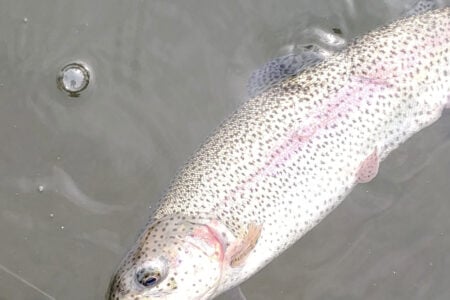
The “Disney World of Trout Fishing” is what some call it, due to the ease with which salmonids can be caught on flies. Some patrons perceived it as an artificial fishery where anyone could fool rainbow, brook, and brown trout at will. Yet even those critics were drawn back time and again by the river’s magic.
Others, including me, view the river, parklands, and watershed that nurtures it with much more reverence. This mindset is established the moment one enters the front gate and gazes upon the sign greeting visitors. The message is simple: “A piece of Long Island the way it used to be.”
The sign is a reminder of a truly remarkable and priceless place, a fishing destination that, at its core, is a living, natural museum.
When considering the Connetquot River State Park Preserve in its entirety, the river and its inhabitants are the park’s lifeblood. The trout were the catalyst that brought thousands of paying visitors through the front gates each season.
Yes, trout were at times easy to catch, but that was not always a given. Old warriors die hard, and that is certainly true of time-tested, large trout, even those that were hatchery-raised. They would not relinquish their domain easily.
The fish residing in the waters of the “Conny” can be as challenging as those in the most technically demanding spring creeks anywhere in the country. Anglers can seek out large, battle-worn fish beneath deadfalls and undercut banks, holding stations that present even experienced fly casters with difficult, if not impossible, presentations.
That challenge is especially evident in the upper reaches of the river, particularly above the hatchery. Specific mayfly, stonefly, and caddisfly hatches, or the nymphal and larval stages of those insects, can elevate trout selectivity to a point where fish snub even one’s finest fraudulent fly offering. Such conditions test any angler’s skill, mettle, and patience.
Yet at other times, the river’s fish can be easy to catch. Very easy. And pray tell, what is wrong with that?
Many youngsters and novice anglers have been introduced to fly fishing by the welcoming flow of a friendly river and an abundance of willing fish. And who among us has not enjoyed that special place where we could catch plenty of fish whenever the desire arose?
The Connetquot River can be such a place.

A Storied Fly Fishing Tradition
The Connetquot traverses its course more as a gentle stream than its river designation would imply. It is a place steeped in history and tradition.
When considering the origins of fly fishing for trout in the United States, many think of time-honored, almost spiritual places. The first are the hallowed waters of the Catskills: the Beaverkill, Willowemoc, and East and West Branches of the Delaware River.
The Poconos also receive consideration, with classic streams like the legendary Brodhead and its Paradise Run. Some might even turn toward the American West.
But fly fishing’s American roots are firmly grounded in the areas surrounding New York City and Long Island. The core of that trout fishery exists on Long Island in the collective form of the Carmans, Nissequogue, and Connetquot rivers. The Connetquot is the jewel of that trout trilogy.
Early travelers came to the Connetquot in horse-drawn carriages and later by rail. Eventually, some arrived by chauffeured limousine. All converged on that precious piece of Long Island real estate to share a common interest in fly fishing.
They came to escape the hectic pace of city life and for the trout inhabiting this unique spring creek.
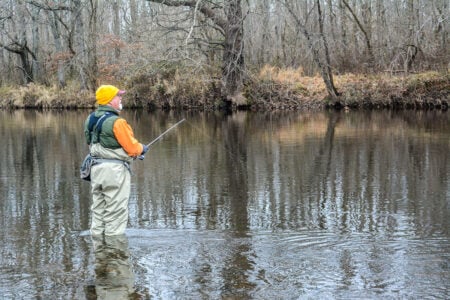
Eventually, the private preserve became a public place where all could enjoy what was once the exclusive domain of a fortunate few. For a modest fee, one can still reserve a classic “beat” for a session of fly fishing and enjoy an almost private slice of trout heaven.
Substantial populations of brook, rainbow, and brown trout swim throughout the five miles of the Connetquot River within the park. Thousands of fly anglers from across the United States and around the world have visited annually to sample its prized bounty.
In the eyes of many, it is nothing less than a preeminent, world-class fly stream.
My First Cast On The Connetquot
| MORE FROM THE AUTHOR |
| ‘Return to Painter Creek’ is an anthology of many of the author’s favorite essays and stories about fishing, fly-fishing, Alaska wilderness fishing, dogs, and the outdoor lifestyle. Most of the stories contained in this volume have been recognized with awards by numerous regional, national, and international outdoor writing organizations. The content of the book is informative, entertaining and written in a style that avid anglers and ardent outdoors enthusiasts will appreciate and find relatable. The book is currently available on Amazon.
|

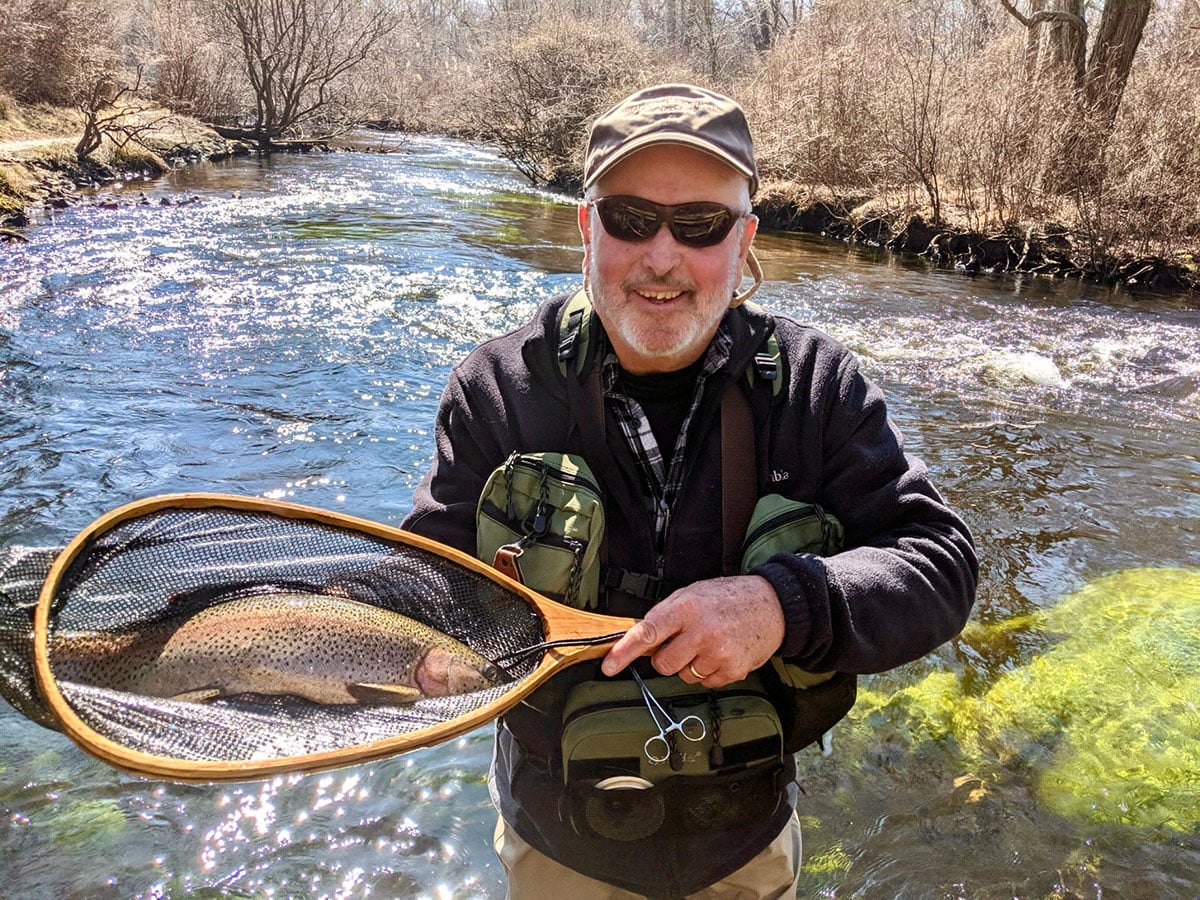
My first exposure to the Connetquot River occurred in May 1975, shortly after the park extended public access privileges to fly fishermen. That initial trip was enchanting, and I have been drawn back ever since, not only for the fabulous trout fishing but also for the experience of such a magical place.
Throughout its course, the river slowly transforms itself, yet maintains its majesty as a classic trout stream. I, too, have been transformed by the river’s flow and the spirits of those who fished there before me.
Traditions hang heavy in the park, and it is easy to understand why. The Connetquot has a small trout stream charm and elegance all its own. Its cold-water, spring creek attributes are ideal for sustaining healthy populations of trout.
The history of the place dates to 1683, when William Nicoll purchased a large tract of land from Winnaquaheagh, a member of the Secatoug Native Americans. Bordering this land was a river called the “Conttquut.”
In 1702, after amassing holdings encompassing more than 51,000 acres, Nicoll returned a portion of the Connetquot River headwaters to the Native Americans for use as a campground.
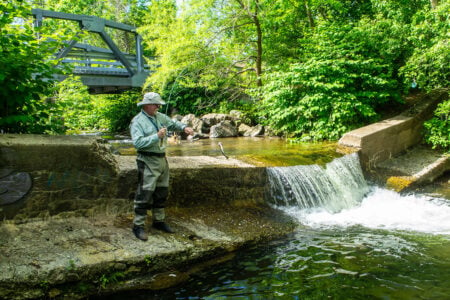
During the early 1700s, Nicoll also constructed a gristmill, which still stands along the river. The mill remains a popular and productive fishing area, like many other beats.
Although all locations could be productive, friends and I would camp overnight alongside Sunrise Highway to be first in line to select our beats for the morning session.
At times, 32 cars and trucks lined the shoulder, one for each of the river’s beats. We brought camp stoves and supplies to begin the day with a hearty breakfast.
This became a tradition until authorities deemed the roadside lineup hazardous. But it was certainly fun while it lasted.
From Private Retreat To Public Treasure
The Connetquot watershed’s beginnings as a sportsman’s paradise date to around 1820, when Eliphalet Snedecor leased land along the river to establish Snedecor’s Tavern, a coach stop for travelers journeying from New York City to Montauk.
The area’s bountiful natural resources soon established it as one of the nation’s most popular fishing and hunting destinations.
A group of wealthy sportsmen who regularly visited the inn found adequate lodging unavailable. In 1860, they purchased the tavern and its facilities, along with 879 adjoining acres. This marked the beginning of the Southside Sportsman’s Club of Long Island.
The club attracted influential business leaders and politicians. Over time, it expanded its holdings to encompass 3,473 acres.
In 1963, New York State purchased the property, leasing it back to the club for 10 years. The park became fully public property in 1973 and opened its gates to fly fishermen in 1975.
For years, the park maintained the same, if not better, quality of angling than it had when the river and its surroundings served as an exclusive retreat for some of the nation’s most influential leaders.
A River Built For Trout
The Connetquot River is located in Oakdale, New York, and runs an almost 8-½-mile course to the Great South Bay, five miles of which are within the park.
All trout stocked in the river were hatchery-raised within the park and ranged from about half a pound to two pounds. Occasionally, smaller and larger fish were released. Approximately 33,000 trout were set free into the river annually.
Sea-run “salters” that migrate from the park into the Great South Bay and even the ocean beyond have been imprinted to return to the preserve, adding greatly to the river’s appeal.
I have witnessed the return of magnificent sea-run trout. It is a sight to behold, especially on Long Island.
Some of the first German brown trout imported into the United States came to the Connetquot’s hatchery and were subsequently shipped elsewhere in the country for stocking.

Preserving A Living Legacy
Whenever I walk the park or fish the river’s cool spring waters, I contemplate what the original club members must have felt in such an extraordinary place. I never have to think too long or too hard.
The beauty and traditions of the park and river have been meticulously preserved and enhanced through the efforts and vision of the late park manager, Gil Bergen.
Through his stewardship, the Connetquot River became classified as one of New York’s Wild, Scenic and Recreational Rivers.
All who visit this magnificent piece of Long Island owe tremendous gratitude to Gil for his diligence, perseverance, and commitment to preserving this precious natural resource. His efforts have allowed us to bridge the decades and experience the Connetquot much as our predecessors did.
Much of that grandeur remains.
The trout fishing represents both a strong connection to a treasured past and a hopeful continuity for all those who will visit the Conny for many years to come.