Make memories this Memorial Day week with good friends counting up catches.
Hit or miss characterizes the late season, but if you know spots that hold trout, you can probably catch many. It was a “miss” that made an outing last May flabbergasting.
Since Fred Matero had driven all the way from where he now lives at the shore, my coming to believe we’d get skunked felt unnerving. The stretch had been a favorite of ours for decades. Although getting skunked on the rivers has happened to me before, judging the day in hindsight now – Fred and I had about four hours – reminds me we had plenty of time to explore a lot of water.
I like fishing salmon eggs. Fred catches as many as I do, on little jigs. He’s fished them for three decades. I’ve fished salmon eggs for more than five decades. Either way, to not be informed of just where the fish are, means you’re looking for them.
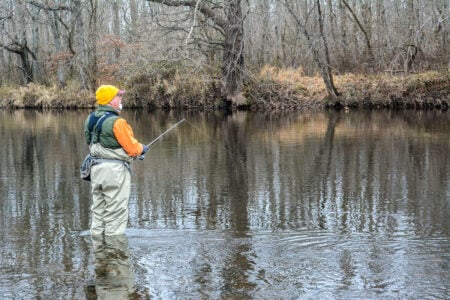
At that first stretch, I usually don’t bother with waders and fish from the bank. Up and down for about 200 feet. Weather had been chilly overnight and temperatures would never get out of the 60s as we fished into the afternoon. We wore breathable waders all day. And water temps in the low to mid-60s meant we wouldn’t kill the trout due to lactic acid poisoning. Wading gave us a full command, but the water was not producing. I believed others had fished the river out. Fred would visit a few other people afterwards, but I didn’t want to be remembered for nothing!
Finally, I thought I felt a pull, and then two more, before I saw a group of three trout near the head of the stretch. None caught, but fish in the river. I had a small stream in mind to hit next, but first, I couldn’t rule out a spot upstream. I floated the idea by Fred and he rose to take it. I wasn’t optimistic, but I couldn’t rule out the possibility of fish.
We were fishing a Tuesday after the river got stocked on Wednesday, and it was understandable that it could have got hit hard during the week. But not only had rain raised water levels on that Wednesday and barred anglers from fishing; by the third week in May, not as many anglers fish the trout, anyhow. Not as many trout get stocked, either, but enough do.
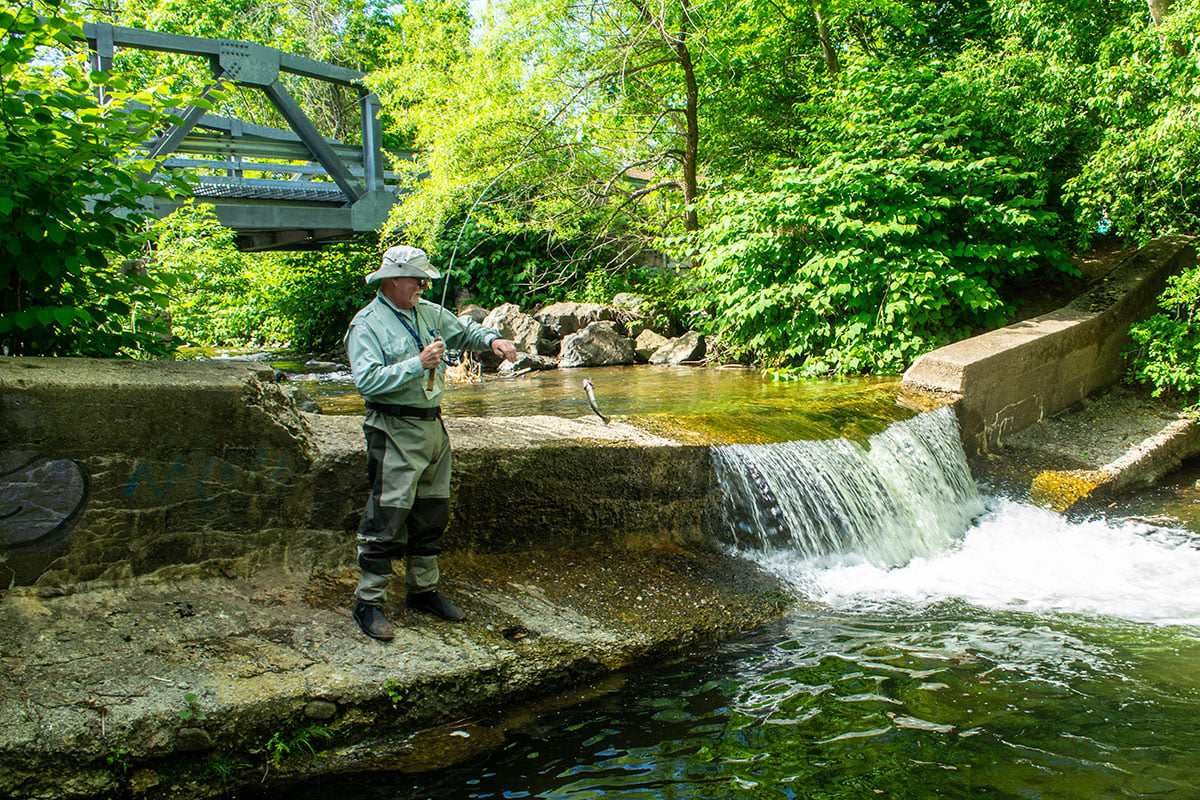
Fred and I made our way back into the fresh greenery of a woodland and came upon the river a mile upstream. The stretch is about 100 feet long, and it has a belly about 5 feet deep where I catch most of my trout. It remains new to me, as I’ve only fished it 5 years. I got hit on my first cast and on the next six or seven. That’s the thing about fishing salmon eggs. Part of what the game is all about is narrowing that inevitable margin of missed hits. When Fred’s jig gets hit, he usually hooks up, but I doubt he gets hit as often.
I finally started catching trout. After I had caught seven and Fred four, the bite died, and we moved on to that small stream. Possibly, it hadn’t been stocked in two weeks, and it seemed as if it never had got stocked as we explored stretches behind a parking lot with vaguely OK public access. But I felt confident about the next spot we’d try, where I’d done well before. Decades ago, I’d caught five holdover rainbows in July from another, but I knew it had filled in. And Fred told me he knew about a spot I had never heard of.
At the spot we both knew, Fred’s two trout could have amounted to more – he missed hits. I also caught two and missed hits. We walked downstream to Fred’s spot, where he caught two, me one. And then Fred departed to visit people he knew when he formerly lived in the area.
When discouragement gets testy, I listen to reason. I understood I couldn’t rule out the next spot. Late in the season, other anglers overlook spots like that. It may be weeks after the last stocking, but dump holes hold numerous trout. Wading in-between stocking points gets interesting, also, but when Fred and I did that on the small stream, we found no fish.
The author is currently at work on his first book, “The Microlight Quest: Trout, Adventure, Renewal.”