This second installment will help sharpen your nymphing skills.
Nymphing becomes especially effective when casting within the 1- to 30-foot range that most Northeast trout anglers commonly fish. In nymph fishing, the goal is to have your fly drift naturally at the speed of the current, behaving as if it isn’t attached to anything. This natural drift is known as a “dead drift,” and mastering it is essential to consistently catching fish.
Method 1: Short Line, No Indicator, Up-and-Across Stream
This method involves fishing with only the leader outside your rod tip, or with just a few feet of fly line beyond it. The idea is to use just enough weight above the fly to allow the rig to drift freely just above the streambed, occasionally ticking bottom to confirm you’re in the strike zone. Flip your nymph upstream, maintain a semi-straight leader, and track the drift with your rod tip. The leader should angle slightly downstream, with the rod tip trailing behind the nymph as it drifts.
Strikes will often be subtle. If you feel a tap, a twitch, a pause, or even just something that feels ‘slightly off’, set the hook. A trout only needs to open its mouth to inhale the fly, so the take is frequently light and easy to miss. With time and experience, you’ll gain the feel for it and the confidence to respond instinctively. Start by fishing the water closest to you, then gradually reach out to cover more. Once you’ve thoroughly fished a section, reposition yourself upstream, downstream, or across the current, and repeat the process. This method is highly effective at covering water within short to moderate range.
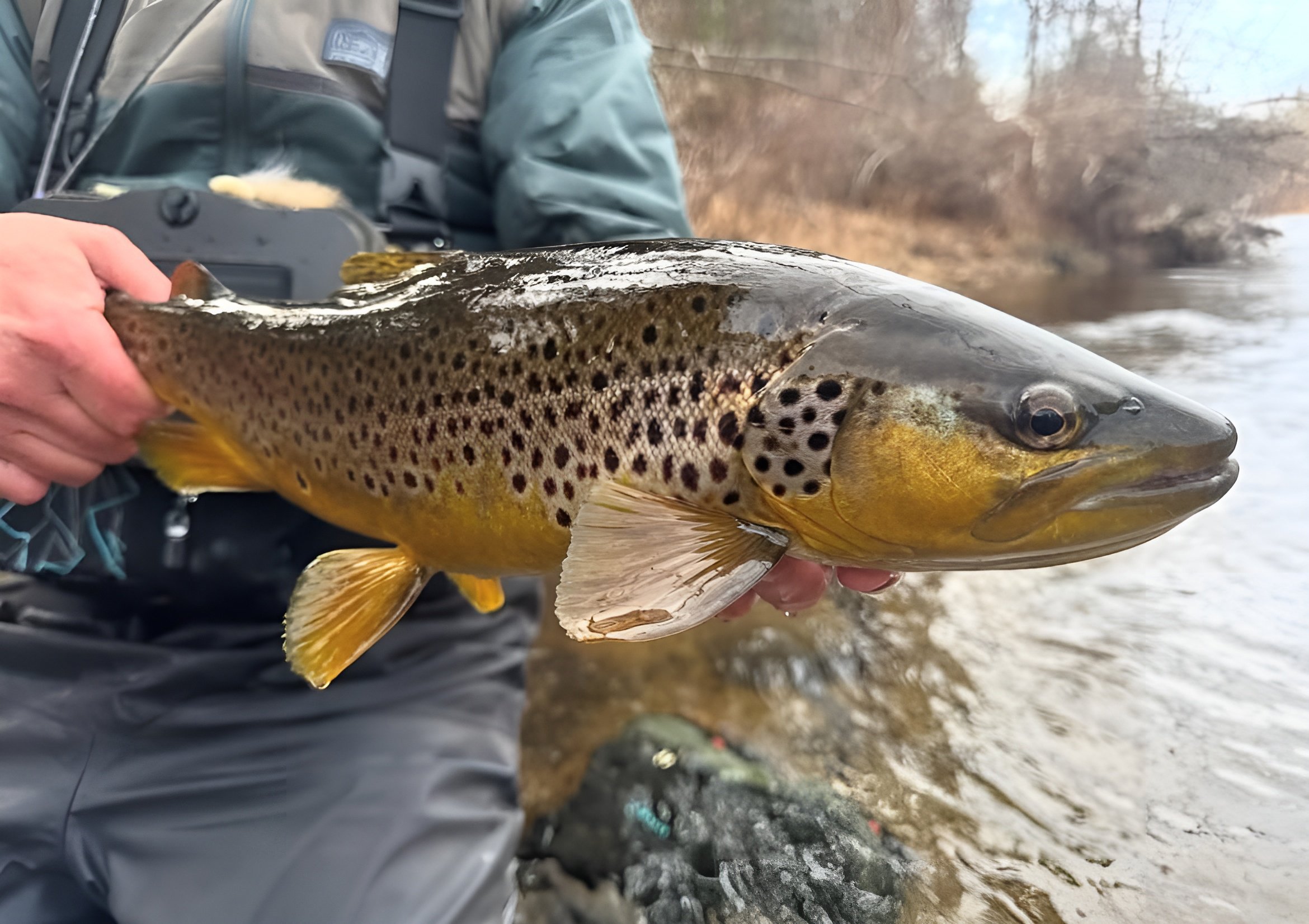
This technique is also excellent for sight-fishing in clear, shallow water. When you spot a trout, position yourself so it is slightly upstream and across from your stance. Flip the rig upstream and beyond the fish, ideally on the opposite side. Make sure you cast far enough upstream that the fly has time to sink and begin drifting along the bottom before it reaches the fish. Follow the drift with your rod tip, but focus your eyes on the trout itself. You are watching for changes in the fish’s behavior. If the trout opens its mouth, turns its head slightly, moves a few inches to the side, or swims forward with any hesitation, set the hook. These subtle movements often signal that the fish has taken your fly. This is an exciting and highly visual way to fish. It takes patience and practice to do well, but once you develop a feel for it, you’ll find it incredibly rewarding.
Method 2: Nymphing with an Indicator
This is a more forgiving and accessible approach, ideal for fishing at greater distances and for beginners learning how to dead drift effectively. Start by attaching your indicator to the leader above your split shot at a distance equal to the water’s depth plus 6 inches. For example, if you’re fishing in 3-feet of water, place the indicator 42 inches up from the shot.
Cast upstream and slightly across from your position and follow the indicator downstream with your rod tip. As the indicator reaches a position directly across from you, make sure your fly line and leader are upstream of it. This may require mending, which is simply flipping the line upstream with a lift and sweep of the rod tip. Maintaining this upstream alignment ensures the rig drifts naturally with the current. Continue to mend as needed when fishing below your position to avoid drag and achieve a true dead drift.
Watch your indicator carefully throughout the drift. If it twitches, bobs, slows down, darts, stops, or dips under, set the hook. Even slight or uncertain movement could indicate a strike. It’s always better to react than to miss a fish. If the depth of the water changes as you move, adjust the indicator’s position on the tippet accordingly to keep your nymph in the strike zone.
Begin by fishing the water closest to you, then gradually cast to water farther out. This method is especially useful for working defined current seams or specific drift lanes. You may want to fish one lane repeatedly if you suspect trout are holding there – or if you’ve seen them. This technique allows you to present the fly naturally at a distance, far beyond what’s practical with the short-line, no-indicator method.
I often choose Method 2 when nymphing beyond 20 feet or when trying to cover a wide piece of water with limited wading options. It’s also easier to learn and master than Method 1, making it a great starting point for anglers who are new to nymphing or who want to simplify their approach.
Both methods are proven and highly effective when fished correctly. Method 2, using an indicator, allows you to cover more water and offers a more visible signal for strikes, which helps boost confidence and hook-up rates – especially for newer anglers. Method 1 requires more finesse but offers unmatched sensitivity and control in close quarters, particularly in shallow, clear water or when stalking sighted fish.
Learn both, and you’ll be a far more versatile and effective nymph angler, capable of adapting to whatever the water and the trout demand on any given day.