How to properly present three-way bucktail rigs in rips.
When the faster water in front of a reef collides with the slower water behind the structure, a series of standing waves forms a rip line. The rip is easy to spot because the water ahead (up-current) of the rip line is calm, while the water behind (down-current) is choppy and roiled. Near the bottom, an upsurging motion and change in pressure create a vacuum effect.
Immediately ahead of the reef is a pocket of calmer, slower water commonly called the “sweet spot.” Since it takes time and distance for the upwelling water to reach the surface, the sweet spot is located a short distance—influenced by both depth and current speed—ahead of the rip line. In large rips like the Race or Plum Gut in Long Island Sound, for example, the sweet spot may be located 100 yards or more up-current. Slammer bluefish and cow bass stage in this area to conserve energy and ambush baitfish that gather there seeking shelter and feeding on organisms stirred off the ocean floor.
To locate rips in your area, peruse a chart and pinpoint spots where the depth rises and falls abruptly, preferably perpendicular to the current flow. The best locations are where relatively flat ground meets bottom contours with significant vertical relief over which a strong current passes. But the biggest rips are well known among anglers for both their ferocity and the predators they attract. Wave size along major rips can range from a subtle 6 inches during tide changes to 3 to 5 feet, depending on current speed, depth-change ratio, moon phase, and wind direction and speed.
The strong current in rips causes baitfish like squid, herring, mackerel, and butterfish to school and face the same direction, making them easy targets for predators. Conversely, during slack tide, baitfish scatter, making it harder for predators to locate and attack them. Likewise, gamefish disperse, rest, and stop feeding during slack water. That’s why fishing is often best during the first two hours of a hard tide—prey resumes schooling, and predators are hungry after resting. One of the most effective ways to imitate these struggling baitfish is by drifting lead-head bucktails on 3-way rigs.
“In the Race,” says Captain Kerry Douton, owner of J&B Tackle in Niantic, CT, and a charter captain for over 40 years, “as in other large rips, positioning your boat is fairly simple. Watching your depthfinder, run uptide from the structure, start in water deeper than the shoal, and drift up the slope and over the high spot. Mark productive drifts on your chartplotter so you can repeat them.
“The specific procedure for fishing 3-ways is to drop the rig to the bottom before the reef, crank up 3 to 5 turns, and hold it. Every time you feel a bump—usually the bottom—immediately swing the rod up and take another 3 turns. That action either clears the rocks or sets the hook on a fish. What you’re doing when fishing 3-ways, in effect, is ‘trolling’ using only the current. The sinker hangs about 18 inches below a 3-way swivel and keeps the bucktail down. Use enough weight to tend bottom, and just vary the weight for the rip in your area. Use only 30-pound leader to the sinker so it becomes sacrificial in a hang-up, and you don’t lose the entire rig.”
Douton recommends using a 6-1/2 – to 7-foot boat rod rated for 20- to 40-pound line with a slow taper. In the Race, Plum Gut, or other major rips, where you may be fishing with sinkers from 10 to 20 ounces, a slow taper responds better when swinging up the weight. He favors 3/0 to 4/0 reels like the Daiwa Seagate SGT35H. Douton avoids levelwinds in deep rips because the mechanism slows the sinker’s drop. He loads reels with 50-pound Dacron backing and tops them with about 200 yards of 40- to 50-pound braid.
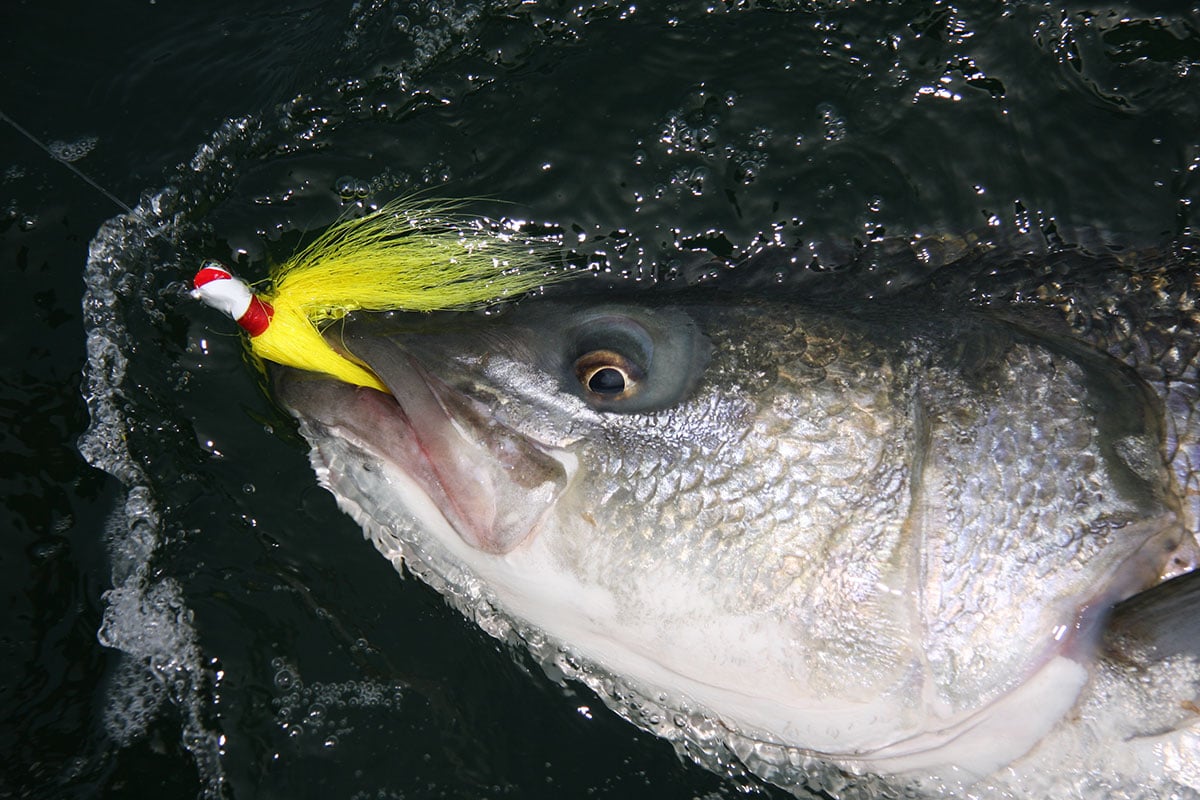
“Stay light on the lead-head bucktail,” Douton advises. “Use just 1-1/4 ounces on an 8/0 hook. When you go too heavy, the jig loses action—especially when the tide slows. Run the bucktail 4 to 6 feet behind a sturdy 3-way swivel using 80-pound mono. Tip the jig with a bright pork rind, which simulates a fluttering tail or tentacles. Use light-colored bucktails during the day and dark ones at night.”