Discover why a simple one-jig presentation remains one of the most effective—and often overlooked—ways to catch more keeper fluke.
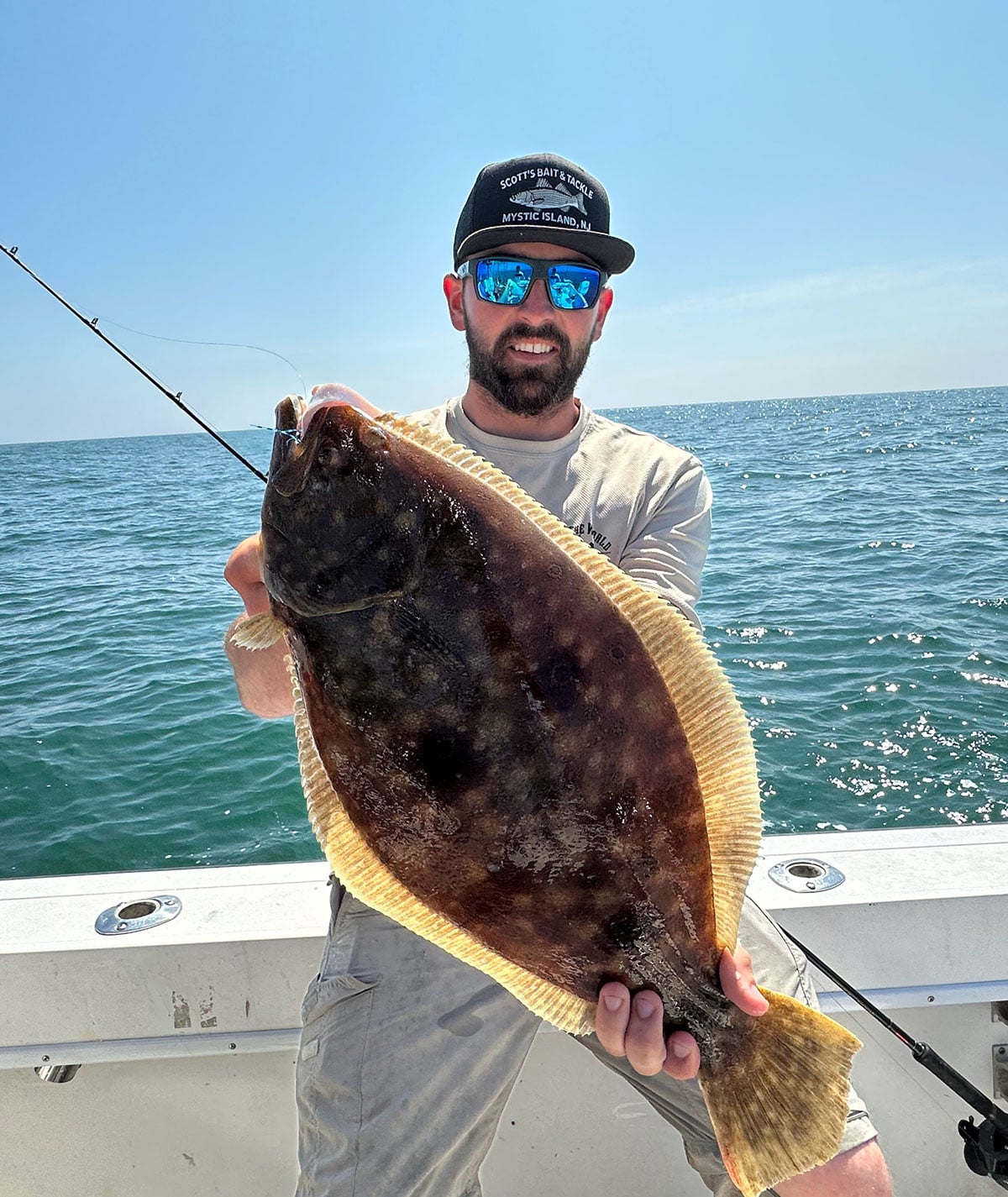
Jigging with a teaser has become so popular that fishermen forget that using a single jig or bucktail is extremely effective. It doesn’t get the credit it deserves for effectiveness on the fluke grounds. I have witnessed charter boat anglers and expert rec fishermen stack up keeper fluke when eliminating the extra presentation on the leader.
A single presentation without a dropper loop laced with another bait doesn’t create as much drag in the water. It’s easier to fish lighter jigs or bucktails. Swivels, knots and any other associated hardware contribute to drag in the water. Likewise, braided lines or monofilament of a higher diameter do the same. They drag more and therefore require more weight. The fisherman also gains more “feel” during the presentation of the bait and will better detect each bite when sending single.
When anglers eliminate all the extras, they can add more life with their wrists and elbows making it easier on the angler and harder for the fluke to pass up. The fluke only sees the one offering that is being bounced so they will strike accordingly and without indecision. Modern era footage displays summer flounder chasing and tasting, trying to decide whether to fully eat or just taste and see.
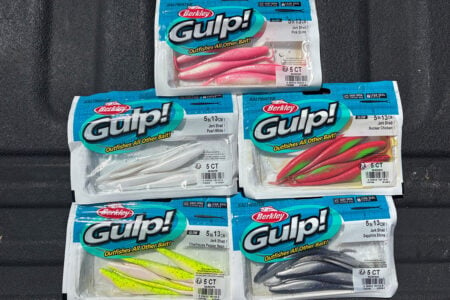
I recall this time I brought expert recreational anglers Doug Keeping and Sean Holten to a local wreck. They went with a single jig and I chose one with a teaser. They had a half-dozen keepers in the boat before I could blink an eye. Their contention was they could fish one ounce in 70-feet of water by using 20-pound braided main line, 20-pound fluorocarbon leader and a jig with a Berkley Gulp Grub. They used an inline knot to avoid a swivel. We back trolled to mitigate the current and the lines stayed fairly straight up and down and only scoped out when we neglected the throttle briefly. As all observant fishermen do, I switched up so I could get in on the better bite. The fish were clearly keyed in on the light tackle, single presentation. I asked the guys if they ever go lighter on the leader line and they said they do not because break-offs take place too often. 20-pound test is the lightest they were willing to go they said.
I was invited to join a couple guys on a fluke charter out of Cape May, New Jersey. We steamed to a deep water spot called the Old Grounds where average depths range between 60 and 90 feet, but there are some valleys and gullies that drop to 120. Each angler on the boat was supplied with a 3-ounce Andrus bucktail and told to tie it directly to the 30-pound braided line. No leader. The captain was adamant that everyone was to fish the same exact rig so the lines paid out in a perfect stagger with less chance for tangle.
Everyone used Gulp or squid on their single terminal offering. The bites came fast and furious and the boat limited out in reasonable time. Two takeaways were the single bucktail set-up doing the job, and of course, there was no leader. The straight braid did not deter the fluke. Personally, I like to use a 20- to 30-pound fluorocarbon leader in the bay and 30- to 40-pound flouro in the ocean depending on the type of bottom. On mud and sand, I’ll go lighter, but if it’s rock, rubble or wrecks, I’ll beef up to 40. Nonetheless, the braid to jig tactic was eye-opening.
Those that choose the single jig system are advised to impart motion on the bait. No matter what kind of jigging motion, snap jigging or slowly lifting the lure, the fisherman must give life to the presentation. Jigs with a teaser up above allow the angler to relax and dead-stick because the jig acts as a bank sinker, of sorts, and then the teaser becomes the primary target. That’s just not so when going solo.
The stacked, teaser set-up is here to stay and will remain the “number one” for many fishermen, but don’t ignore the option to go single once it while, sometimes it’s just what you need to get bit.