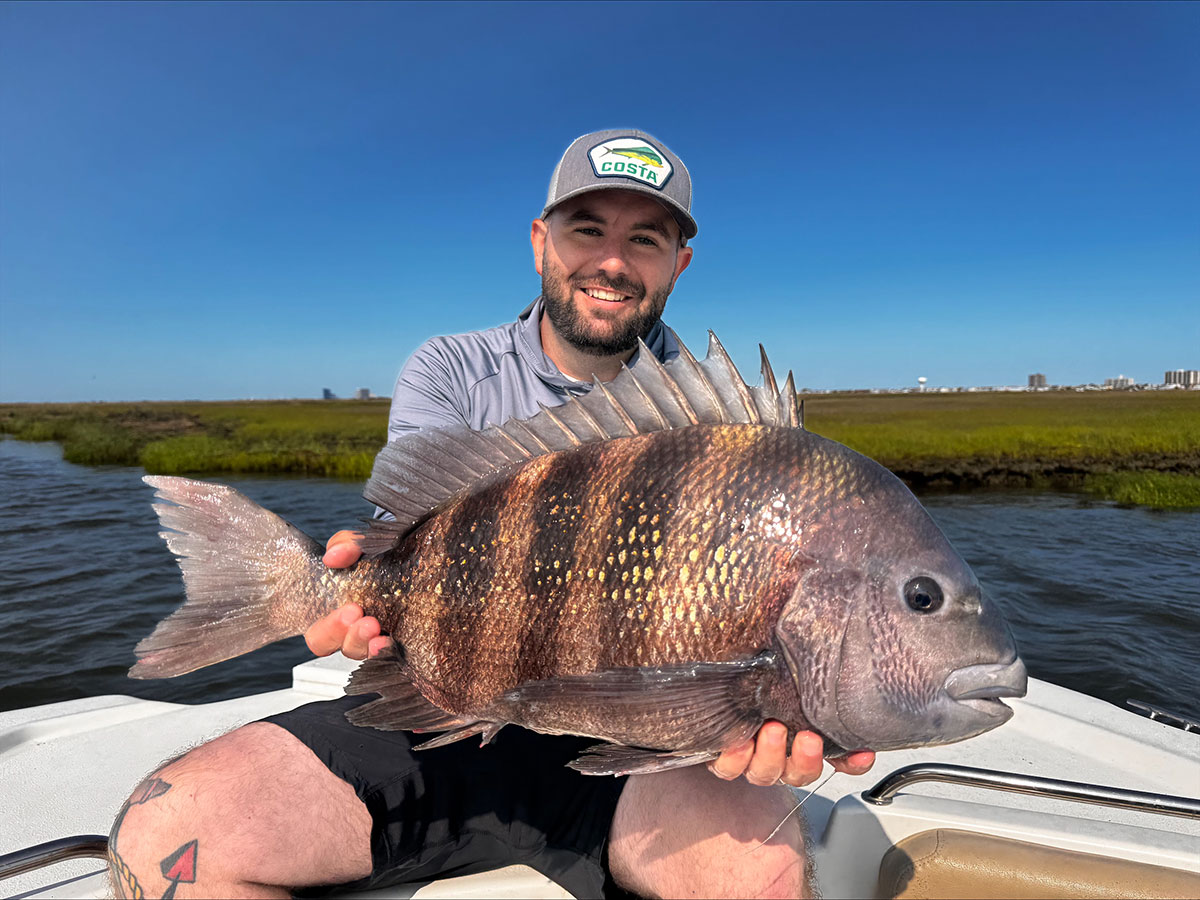
A trio of species to focus on in the Northeast during the summer.
The waters of the Northeast have long been dominated by traditional favorites—stripers, blues, fluke, and blackfish—but in recent years, more and more anglers are encountering exotic visitors from the south. Call it warming trends, call it shifting currents, but one thing is clear: sheepshead, cobia, and triggerfish are showing up in increasing numbers in inshore and nearshore waters from New Jersey to Long Island and even into southern New England. With a little knowledge and the right tackle, you can add these tasty and hard-fighting exotics to your summer hit list.
Sheepshead
Sheepshead have become more than just an occasional surprise. Reports from South Jersey, Long Island’s South Shore, and the Peconics confirm that these striped, toothy bruisers are now legitimate targets during the warmest months. Look for them around structure—bridge pilings, bulkheads, jetties, and rocky docks are prime. They’re not shy about shallow water either; some of the best catches have come from back bay areas no deeper than 6 feet.
Their diet consists mostly of crustaceans, so matching that with bait is key. Fiddler crabs, green crabs, sand fleas, and even barnacles scraped into the water column are prime offerings. Use a small 1/0 or 2/0 octopus hook and a 1- to 2-ounce jighead or knocker rig to get your bait down in current. This is tight-line, vertical fishing—think blackfish, but lighter.
Sheepshead bites are notoriously subtle, often just a soft tap or the feeling of weight. Many locals have adapted tautog-style jigging rods with fast, sensitive tips to detect the take and still turn the fish out of structure before they break off.
Cobia
Perhaps the most unexpected newer target in our waters is cobia. These brown torpedoes with a white belly stripe are known for their brute power, unpredictable runs, and overall stubbornness. While more common from the Carolinas southward, cobia have been caught more frequently along Long Island’s South Shore, New Jersey’s reef systems, and even on bunker pods nearshore. They are also a possibility in the surf as well!
Cobia are true opportunists. They might trail rays and sharks, cruise bunker schools, or hang near buoys and inlet towers. The best way to target them is by sight-fishing or chumming. If you’re running the ocean on a flat day and come across a ray, slow down and scan carefully. A cobia or two might be using it as a mobile bait buffet.
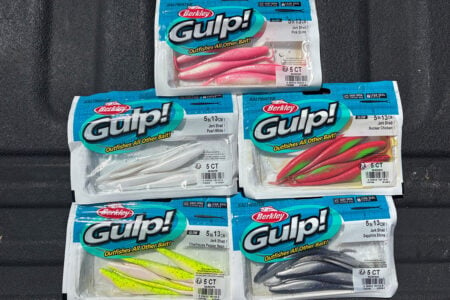
Live eels, spot, bunker, and soft plastic paddletails like the Z-Man DieZel MinnowZ on a heavy jighead will all draw attention. Cast well ahead of the moving fish and work your bait with a slow, steady retrieve or a gentle flutter.
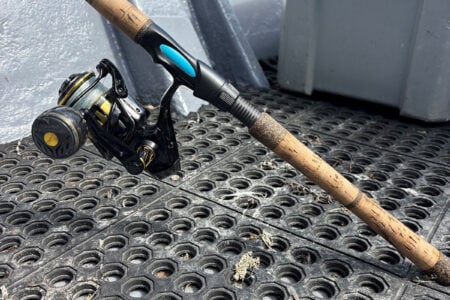
These fish are not as structure-oriented as sheepshead or triggers, so light tackle can be used, but it’s wise to have a 5000- or 6000-size spinning reel loaded with 30- to 40-pound braid and a 40-pound leader—just in case the fish of a lifetime makes an appearance.
Triggerfish
The gray triggerfish might not get the fanfare of cobia or sheepshead, but they’re arguably the most accessible and abundant of this southern trio. Triggers have been a common catch along rocky jetties, inlet walls, nearshore wrecks, and even deep-water docks throughout the Northeast in for some time now, especially from mid-July through September.
They often school up tight to structure, and while small in size, they make up for it in tenacity and as table fare. A light spinning rod, 10- to 15-pound braid, and a basic high-low rig with #2 hooks tipped with clam, squid, or crab will get the job done. Some anglers even scale down to sabiki-style rigs or small crappie jigs to entice finicky fish.
The trick with triggerfish is getting through their tough lips. A strong, fine-wire hook and a firm, quick hookset are necessary. Once hooked, expect a dogged fight that punches well above their weight.
Gear & Strategy
What’s exciting about these species showing up in local waters is that you don’t need to overhaul your tackle collection. Sheepshead gear overlaps with tautog tackle. Triggerfish can be targeted with porgy setups. Cobia may require a heavier setup if you’re heading outside the inlet, but even that can be improvised from striper or bluefish gear.
The common thread among all three species is structure and timing. Focus your efforts from late July through early September, and concentrate on hard bottom, reef zones, and places that concentrate bait. Water temperatures between 72 and 78 degrees seem to mark the sweet spot for peak activity.