Soft-sided tackle boxes or “tackle bags” blend convenience and practicality.
Leading the tackle box lineup are innovative, soft-sided models offering anglers versatility, minimal weight, easy storage, numerous organizational features, and they won’t crack or dent when bounced onto the deck in a pounding boat. Moldable bodies and padded straps provide carrying comfort, and they compress for easy storage.
Tackle bags replace traditional hard-plastic construction with a rugged-but-light nylon fabric like you find in high-quality, rip-proof backpacks or luggage. This design permits tackle bags to be crammed into corners of a full vehicle trunk or boat locker without the need for space dedicated to a large, rigid box, which can crack when struck.
Tackle storage encompasses three main features: versatility, function, and durability. Many tackle bags look great online or in a store but don’t stand up when put to work, especially in rugged saltwater conditions. Some bags are tough but add weight or bulk, making them difficult to work and travel with. The perfect tackle storage solution gives anglers a bag that’s easy to carry, holds all their gear, and allows them to be versatile and customize each adventure based on tackle selection, size and duration, even when flying.
Water resistance or waterproofness is another important feature, which prevents damaged cellphones, damp clothes, rusted tackle, and soggy sandwiches.
“The number-one feature I require in a tackle bag,” says Capt. Chris Elser, a pro with 40 years of experience fishing trophy striped bass in southern New England, “is for it to be extremely waterproof including the closures like a high-tech, rugged zipper. That tops my list of important bag features.”
Capt. Danny Latham, a southwest Florida guide for over 30 years is also big on quality zippers. “For my saltwater needs”, he says, “I carry a lot of gear in my boat bag and tend to overstuff the side pockets. That’s where good zippers come into play. Not only does the zipper need to handle the weight, but it also must stay shut under excessive pressure.”
“Tackle weighs a lot, and by the time you fill your bag it can weigh over 20 pounds. That puts stress on the bag, and if it’s made of cheap material, it will soon fall apart. A tackle bag must be made of high-quality material, feature strong handles, and provide a comfortable carry strap that’s well attached to the bag,” Capt. Latham continued.
Capt. Elser says that his other bag requirements include a durable setup that remains waterproof in any conditions. “Detachable boxes are nice in the rain,” he adds, “so you don’t have to open the main bag to access the lures you need. I also look for lots of attachments for tools via a docking station layout. The bag also must be lightweight, and a magnetic catch lid system is innovative and handy for quickly closing a bag.”
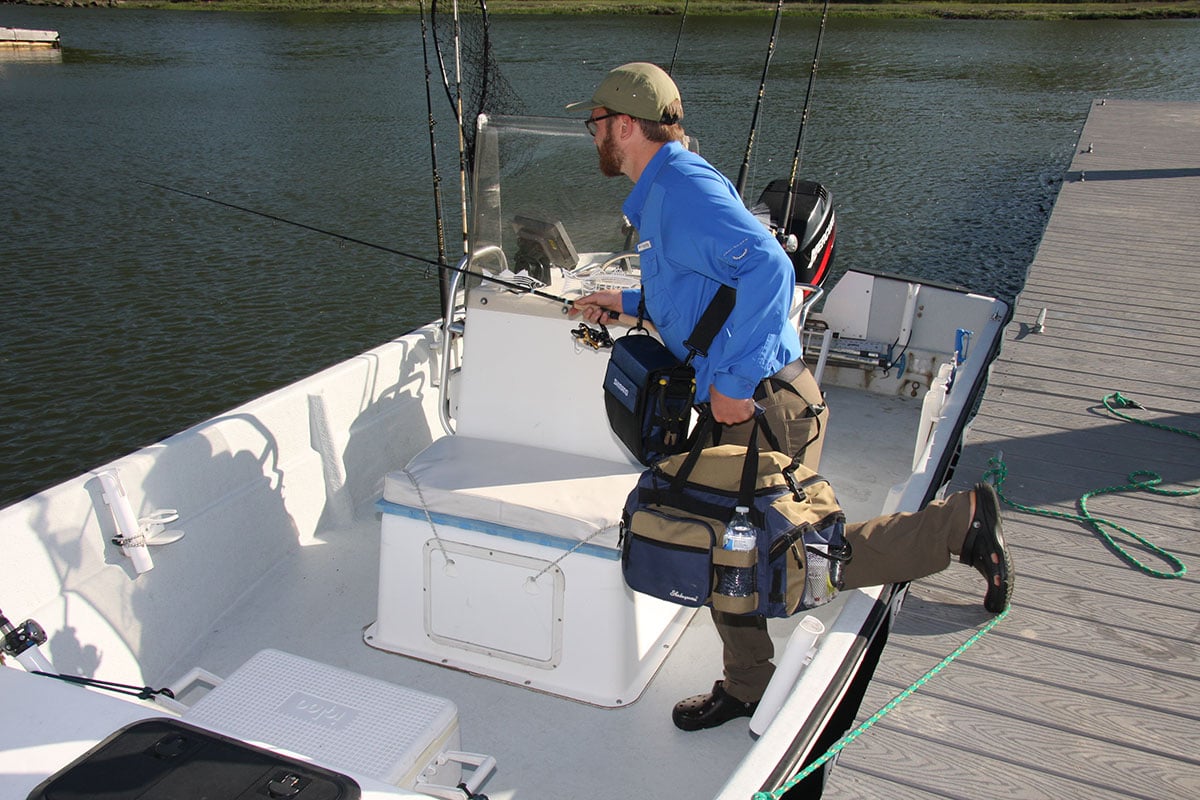
Tackle bags should be easier to carry than tackle boxes, and some convert to a backpack to keep your hands free to manage rods and other gear as you head down to the boat. The better bags incorporate a molded bottom for added strength, to stop water from seeping in and to hold the bag upright on pitching deck or in the back of a pickup truck.
Most tackle bags employ transparent plastic utility boxes, which are quickly and easily removable for access when rigging or packing. An advantage of this system is that the angler can purchase additional containers to fill them by tackle or species type, and then can simply switch them out rather than buying multiple tackle bags.
Besides lure storage boxes, good tackle bags should contain multiple pockets with cover flaps to protect contents from sun, water, and salt. These should be featured on at least three sides of the bag and designed for versatility. Capt. Elser adds that detachable lure and fly boxes are great, and he likes being able to have an extra set of tools directly on the bag, so a docking station is, again, a key feature when choosing a bag.
Another obvious advantage of tackle bags over tackle boxes is a shoulder strap. A tackle bag’s carrying strap distributes the weight across the shoulder, which is easier on the body and leaves a second hand free to carry rods, a cooler, or to grab railings. Important strap features include a length-adjustment device, heavy-duty nylon construction, sufficient width for weight distribution, and reinforced stitching at the attachment points to the bag or clasp.
“How handles are placed on a tackle bag is a huge item for me,” says Capt. Latham. “Over the years, I’ve had several bags rip at the handle attachment points. The carry strap is sometimes overlooked but you’ll appreciate a wide, comfortable strap when you’re making a long walk to your boat, fishing spot, or through the airport. When you’re well organized, can transport all your supplies and have confidence in your gear… you can turn your full attention to catching.”