When that summer wind keeps blowing in.
By the time July rolls around, most inshore anglers in the Northeast have grown used to checking more than just the tide charts. Wind, specifically the steady southerlies that dominate this time of year is just as critical when it comes to planning a productive day on the water. While wind can often be seen as a nuisance, savvy fishermen know that a well-timed wind shift can make all the difference between a slow day and a hot bite.
Southerly winds in July are expected across much of the region, from the South Shore of Long Island to the open bays of Rhode Island, the Jersey Shore, and even into areas north of Cape Cod. They tend to rise mid to late morning, strengthening through the afternoon, and can have a major impact on everything from water clarity and drift speed to surface temperatures and baitfish behavior.
When a south or southwest wind pushes up the coast, it can have both immediate and delayed effects on the inshore scene. One of the most noticeable impacts is on water temperature. These winds tend to push warm surface waters in a northerly direction, sometimes driving temperatures up several degrees over a single tide cycle along east-west facing Long Island and New England regions, while the north-south facing shores of New Jersey and Delaware experience a cooling effect as warmer water is pushed away from the beaches replaced with colder water from the bottom, referred to as upwelling.
That’s why knowing how species react to these shifts is so important. At the Jersey Shore for example, while steady southerlies may shut down the fluke bite, cooler incoming tidal flow may actually spark a back bay striper bite. Along the southern facing areas of Long Island and New England on the other hand, the fluke bite may be more intense in warmer water conditions, while stripers become more active around moving water – think deep inlet mouths, bridge shadows, or the base of jetties where cooler water still churns beneath the surface.
South winds can work for you or against you depending on the tide. When the wind is at your back and complements the tide, your drift becomes more controlled, allowing bucktails or bait rigs to sweep naturally across productive structure. But when the wind runs against the tide, it can stall your drift or even push you backward over the same water again and again, leading to less coverage and unnatural bait presentation.
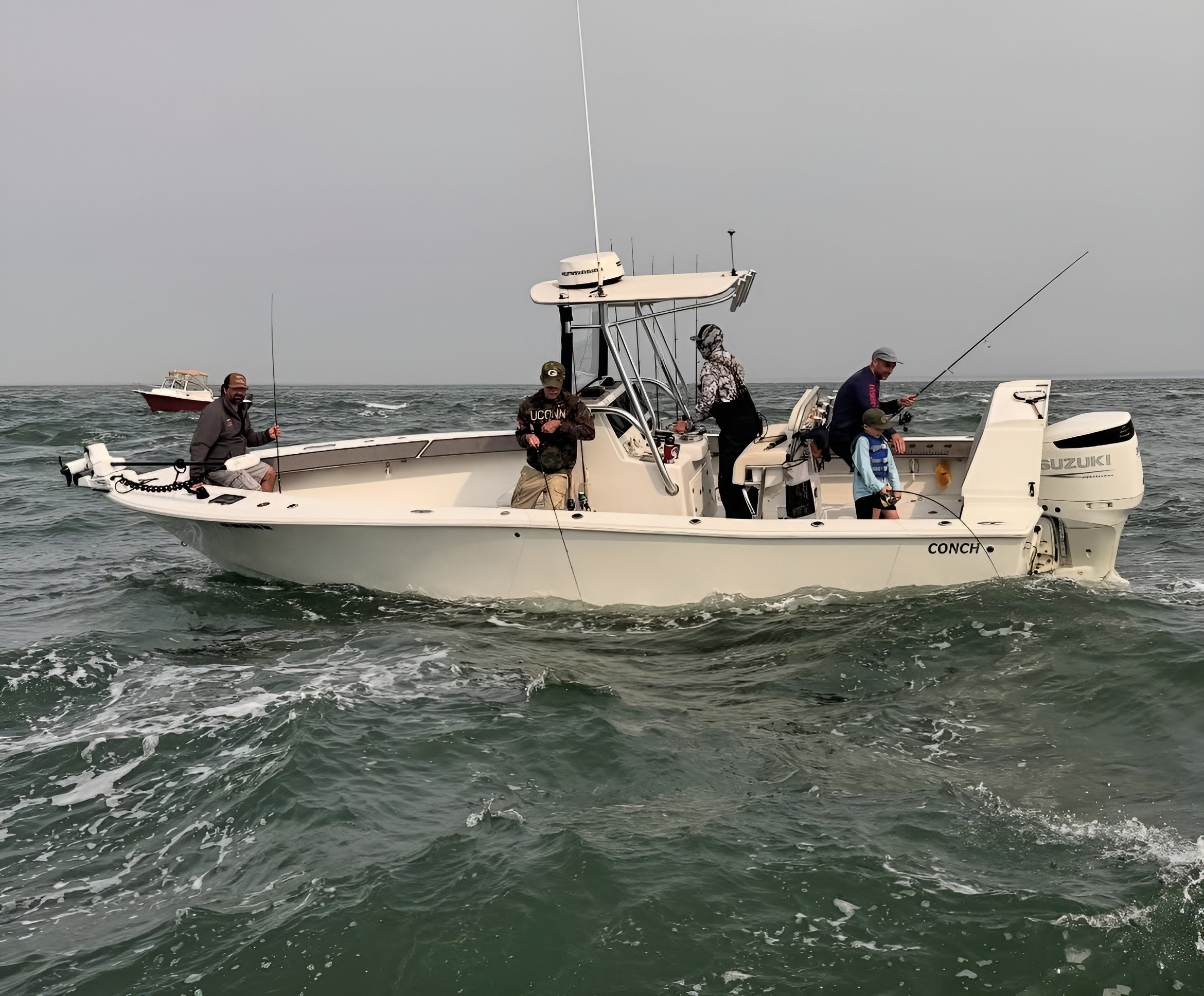
In strong wind conditions, drift socks, sea anchors, or simply shifting the boat’s angle using controlled power drifting can help regain precision. Choosing the right weight is equally important – too light and you’ll skip over the fish; too heavy and you’ll hang up or lose sensitivity. Fluke anglers especially must adapt constantly during July as the wind and tide interact differently over the course of a single trip.
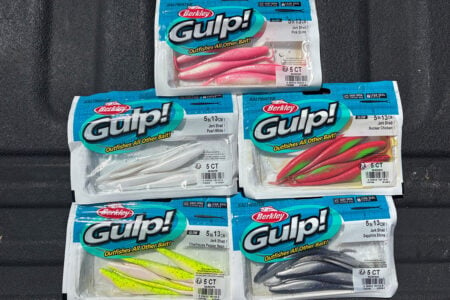
South winds can stir up bottom sediment in open bays and near inlets, especially if there’s a shallow mud or sand bottom. This churned-up water often reduces visibility, which shifts the predator-prey dynamic. Fish like fluke and stripers rely less on sight and more on scent and vibration in turbid conditions. That means it’s time to turn to scented baits like Gulp, Fishbites, or baited teasers.
Topwater lures might take a backseat during periods of low visibility, but vibration-heavy offerings like paddletails, swimming plugs, or rattling crankbaits can draw strikes by alerting nearby fish through sound and pressure waves. This is also when natural baits like spearing, squid, and sand eels – drifting with a bit of motion and scent can be especially deadly.
Wind also plays a role in stacking baitfish. South winds can push schools of spearing, anchovies, or peanuts into corners of bays, creek mouths, and along shorelines, especially during flood tides. These bait concentrations, in turn, draw fluke, bluefish, and even weakfish into predictable ambush positions.
Look for windblown points, eddy lines, or sod bank pockets where bait gets pinned by both current and breeze. Don’t overlook shallow flats or grass lines where disoriented bait might settle temporarily, offering a window of opportunity just before the tide turns or the wind shifts direction.
Checking the marine forecast shouldn’t just be about wave height or deciding whether to go or stay. A smart angler uses the wind direction and speed as part of a pre-trip game plan. A light morning breeze can make the early drift perfect, whereas steady 15-knot southerlies in the afternoon may mean switching to heavier tackle or picking protected inside cuts rather than open water. Over time, you’ll start to recognize how different locations respond to particular wind patterns. Keeping a simple log – even just a note on your phone can help you build a map of productive wind/tide combos unique to your local waters.