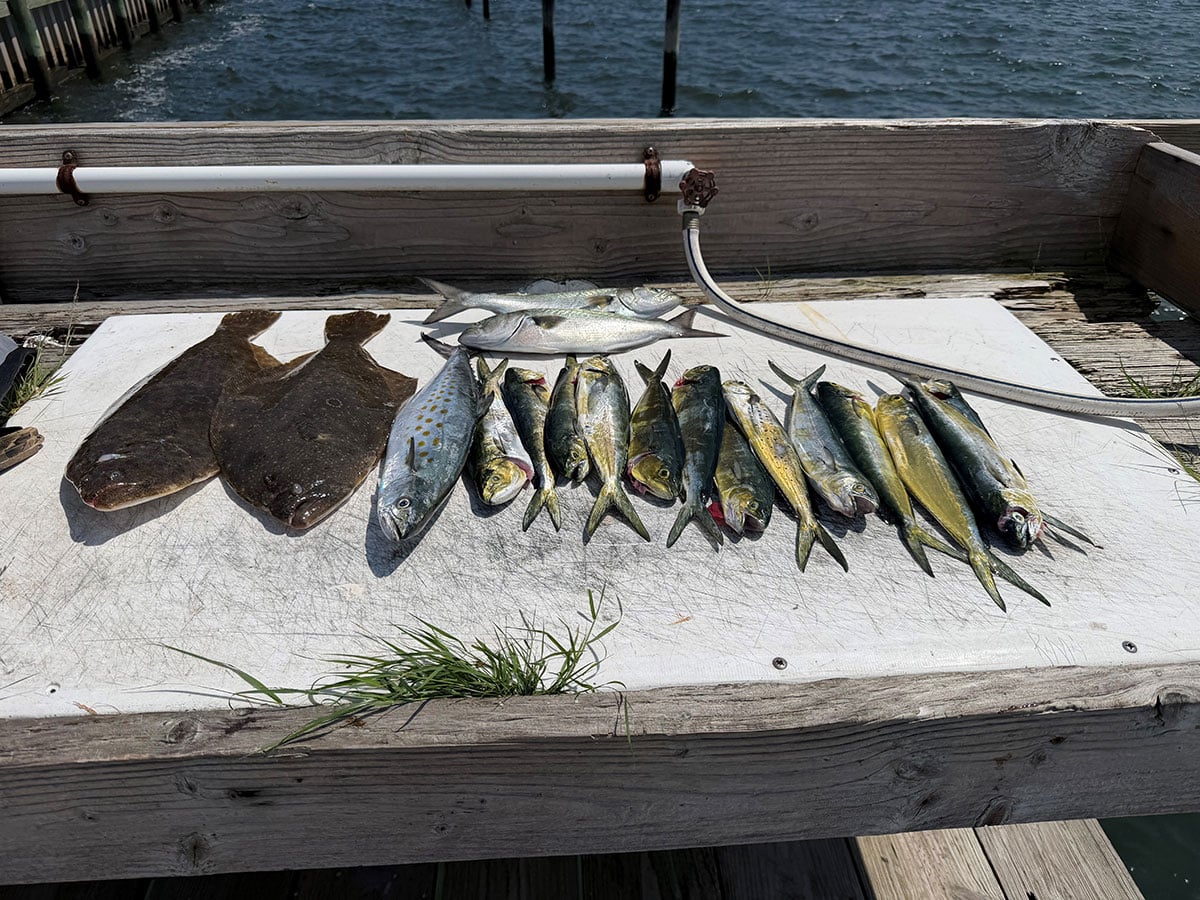
Your August guide to the Northeast’s hottest inshore species.
August has a reputation for being a tough month for fishermen across the Northeast Coast, but it doesn’t have to be that way. Depending on where you live and fish, there might be any number of saltwater species available to you. Since we cover such a broad area between our three editions, basically Delaware to southern Maine, some of the species listed here may not be available to all readers, but this list should put you in a good position to find a diverse list of target species, no matter where you cast your line.
FLUKE
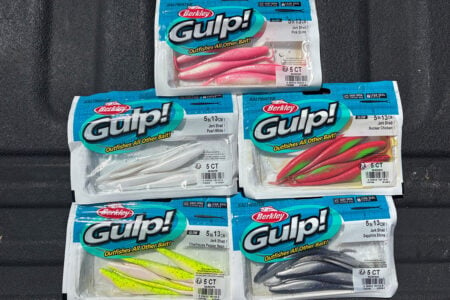
If there’s one fish that defines August, it’s the summer flounder. While many of the smaller fish have spread throughout bays and estuaries, the better keepers are increasingly setting up along deeper structure, reefs, wrecks and channel edges. Bucktails tipped with Gulp, large strip baits or squid continue to produce, but anglers targeting trophy fish shouldn’t be afraid to upsize their presentations. Six-inch grubs, whole squid and larger strip baits often separate the bigger fish from the shorts. Drift speed becomes increasingly important during August. Wind against tide frequently creates slow drifts that allow bucktails to stay in the strike zone longer, while fast drifts often require heavier jigs or drift socks to maintain bottom contact.
SEA BASS
Black sea bass fishing remains one of the most dependable bites of the month. Rock piles, wrecks and artificial reefs continue producing excellent catches, with many anglers quickly filling limits before switching gears to fluke or porgies. Simple hi-lo rigs baited with clam, squid or sandworms remain deadly, although slow-pitch jigs have become increasingly popular for anglers looking to target larger fish. Don’t overlook isolated pieces of structure. Small rock piles that receive less pressure often hold surprisingly large sea bass throughout August.
PORGIES
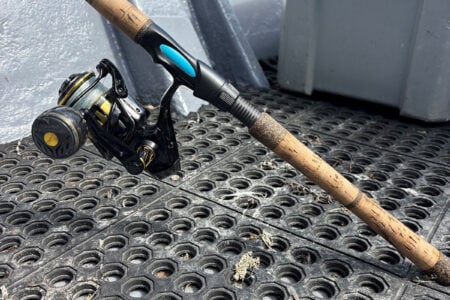
Scup continue providing nearly nonstop action and remain one of the best options for introducing new anglers to saltwater fishing. Rocky bottoms, mussel beds and reef sites are loaded with fish, and light spinning tackle makes every hookup enjoyable. Clam remains the standard bait, but squid strips and sandworms also produce consistently. Large “hubcap” porgies become more common this time of year as schools gather over deeper structure, offering anglers both fast action and excellent table fare. Note: New Jersey scup season opens 9/1.
BLUEFISH
Bluefish are becoming increasingly common along beaches, inlets and open water as schools of baitfish continue to grow. Surface feeds often erupt without warning, making metals, epoxy jigs, poppers and soft plastics must-have lures throughout August. While many fish fall into the cocktail category, larger blues frequently mix in, especially around inlets and oceanfront structure during moving water. Wire leaders generally aren’t necessary for smaller fish, but heavier fluorocarbon leaders help withstand their abrasive teeth.
MAHI
Late-summer is prime time for inshore mahi, with chicken dolphin showing up around lobster pots, high flyers, buoys, and floating debris. Most fish range from a few pounds to the low teens, providing outstanding action on light tackle. Keep a small bucktail, epoxy jig, or soft plastic ready. Once you find one mahi, chances are more are holding beneath the same piece of structure, turning a single hookup into a memorable day on the water.
TRIGGERFISH
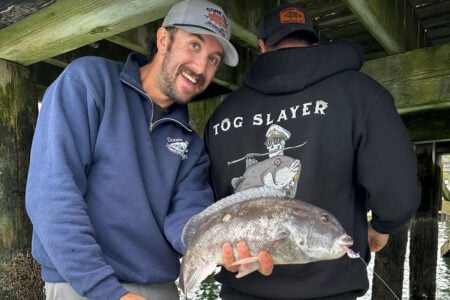
Few species have gained more popularity in recent summers than triggerfish. Once considered uncommon visitors, triggerfish are now regular August targets around jetties, rock piles, docks and inshore wrecks throughout much of the Northeast. Small hooks baited with clam, squid or crab pieces produce best, but patience is required. Their powerful teeth allow them to quickly strip bait before anglers ever feel the bite. The reward is well worth the effort, as triggerfish rank among the finest eating fish found in local waters.
SPANISH MACKEREL
Spanish mackerel continue expanding their late-summer range into Northeast waters. Fast-moving schools often blitz rain bait and spearing around inlets, beaches and nearshore waters. Small metals, epoxy jigs and slim-profile lures retrieved at high speed produce the majority of hookups. Keep a dedicated Spanish outfit rigged and ready. Their appearances can be brief, but the action is often spectacular
SHEEPSHEAD
Sheepshead continue establishing themselves deeper into Northeast waters every summer. Bridge pilings, dock pilings, jetties and rocky shoreline structure all deserve attention. Green crabs remain the gold standard bait, fished on small jigs or simple bottom rigs. Their subtle bite frustrates many anglers, but once dialed in, sheepshead provide both a challenging fight and outstanding table fare.
BONITO
Bonito are often the first pelagic visitors to arrive each August, providing exciting light-tackle action before the false albacore move in. Look for them feeding on bay anchovies and spearing around inlets, beaches, and current rips. Surface-feeding birds are often the biggest clue that fish are nearby. Keep a rod rigged with a small epoxy jig or metal. Schools can erupt without warning and disappear just as quickly, this makes preparation the key to cashing in on one of late summer’s most exciting bites.