A legendary surfcaster spotlights this sand eel classic.
To say the expression “match the hatch” is one of my favorite expressions in the world of striped bass fishing would be an understatement. Making sure to use plugs that emulate the specific baitfish that striped bass are feeding on at that particular time is of vital importance.
A common mistake made by many anglers, especially those who are new to the sport, is thinking that striped bass will feed on just about anything present. Not true. If it doesn’t look like it belongs stripers will not prey on it. To maximize one’s catch and increase chances of scoring, mimicking bait that’s in the water is of utmost importance.
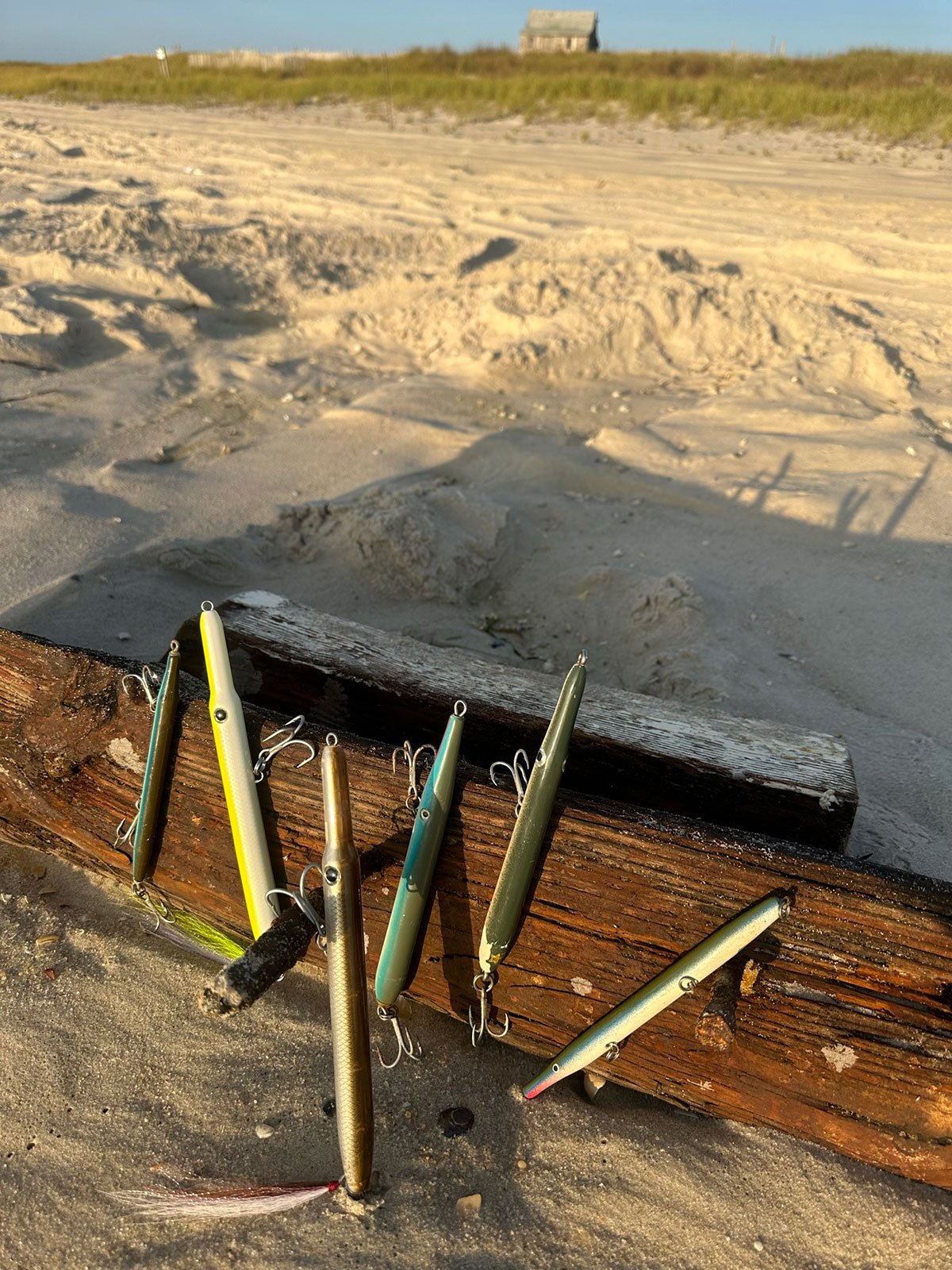
One of the striper’s favorite food is the sand eel. This delicacy will generally push up along the beaches during the fall run. Although metal lip swimmers, pencil poppers and darters work well in many circumstances, they are not going to be very effective when there is nothing present other than sand eels.
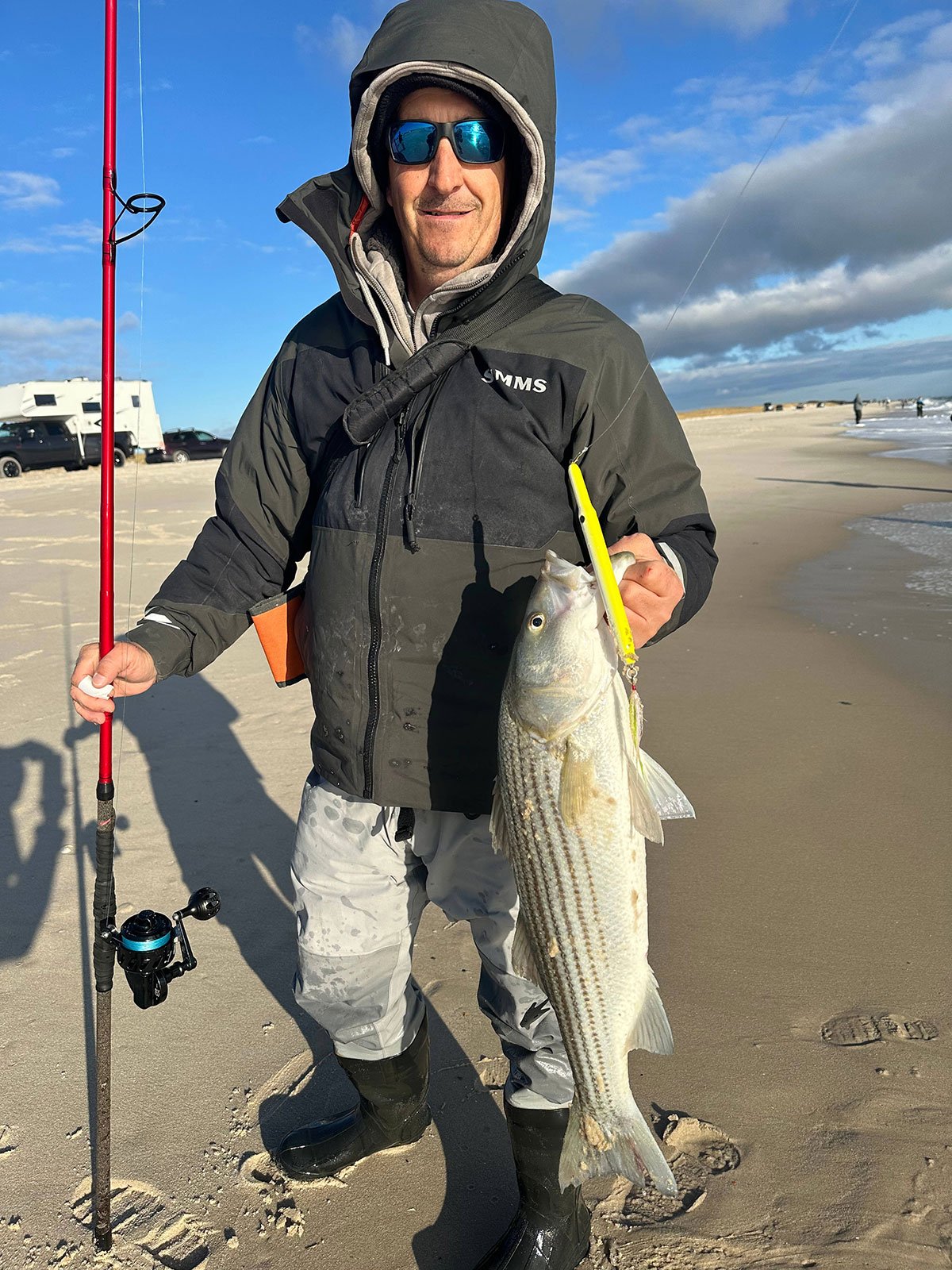
The year was 1969 when I was formally introduced to the needlefish plug. A fishing buddy and I had heard they were catching stripers at New Jersey’s Island Beach State Park, so we took a ride down. We stopped at a local bait and tackle shop called Jean and Art’s, and the guy behind the counter said the stripers were hitting nothing but needlefish lures. I promptly asked, “What’s a needlefish?” Needless to say we had so much success that day that I started referring to this long, thin and extremely unique plug as “Mr. Needlefish.”
Sand Eels
| “MEET MR. NEEDLEFISH” |
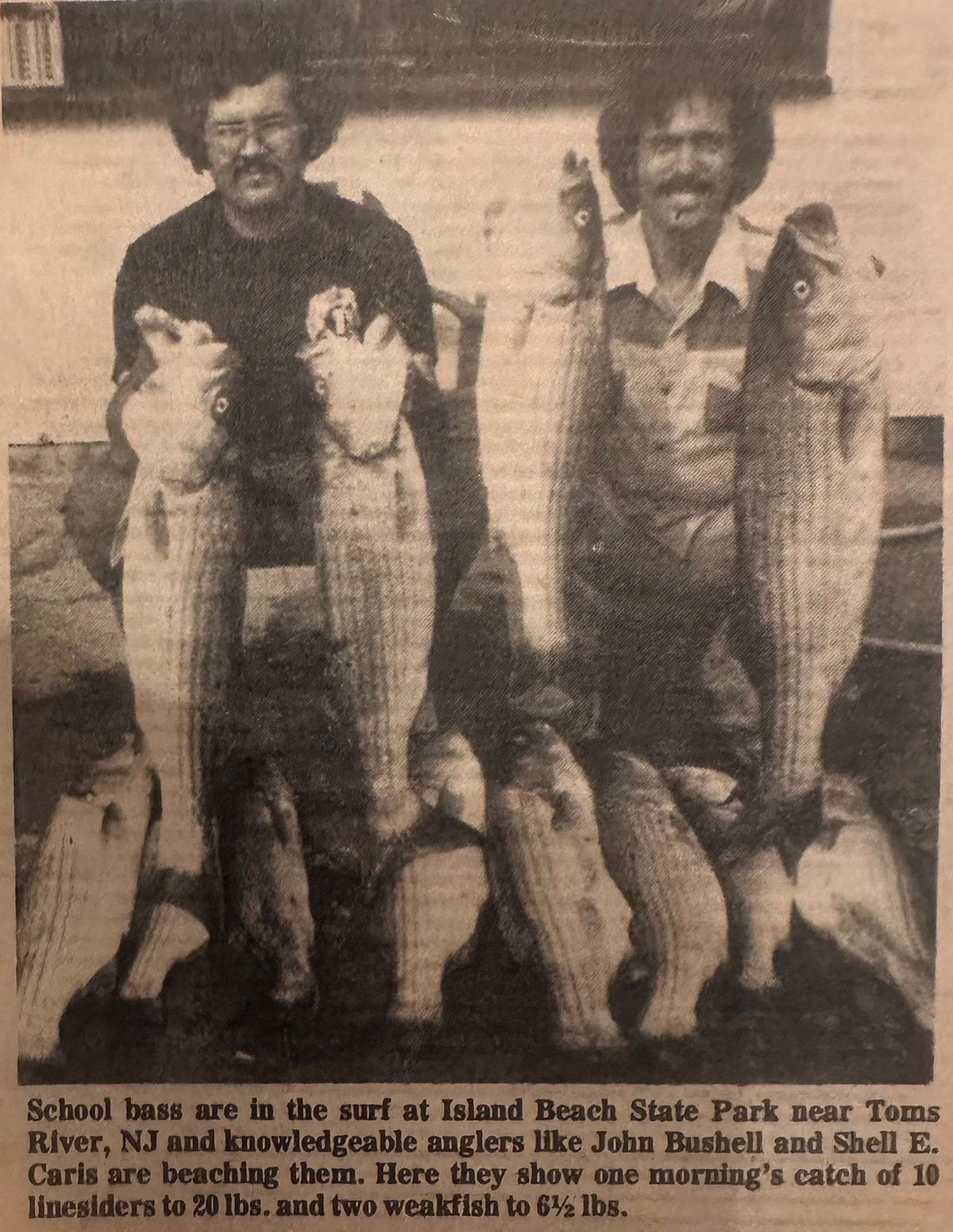
| Shell E. Caris first tackled this subject for surfcasters in the November 29, 1984 weekly edition of The Fisherman, tabbing these offerings under the title “Meet Mr. Needlefish and a Friend” (the friend being the teaser). “This is a deadly combination,” Shell wrote 41 years ago in The Fisherman, shown in this classic photo (right) beside the late John Bushell (left), adding “in the month of October I took over 40 bass and many blues and weakfish on this combination.”
|
The skinny little sand eel, or sand lance, increased from years of relative scarcity in the 1950s and early 1960s. Scientists were afraid that it might upset the marine food chain. During the 1970s and early 1980s the sand eel was a major source of food for the winter whiting, and for stripers and bluefish during the spring and fall.
The sand eel is easily identified from other baitfish; it has a pointed nose and a protruding lower jaw, and its tail is forked. Its color generally appears as silver with a greenish back and white belly. There are times when they will have an olive or brown tone on top, so it could be assumed that color would depend on the area of the shore and the depth at which they are in.
When this bait species inhabits our inshore waters striped bass can be very selective in what they eat. Anglers using artificials will need to choose their lures wisely in order to be successful during selective feeding times. There are situations when schools of sand eels can be well-defined. There are also times when they can be loosely strung out along a sandbar.
During the fall striped bass will be rooting around the bottom, gorging themselves on this primary food sources. And this is when the needlefish lure is most effective.

History Lesson
For many years, the needlefish plug wasn’t widely used. The original needlefish was manufactured by Boone Bait Company in Winter Park, FL. They originally built the lure in three sizes, with the grandpa 7-1/2-inch model and their 6-1/2-inch versions the most productive models. Boone later discontinued the needlefish and anglers panicked. Some would end up making their own from a dowel. Then in the early 1980s, a New Jersey surfcaster, John Bushell, Sr. who worked at the longstanding Betty and Nick’s in Seaside Park, started to produce Classic Lures and made one of the best needlefish of the time. The olive-back and brown-back colors would become very productive.
| TEASER RIGGING |
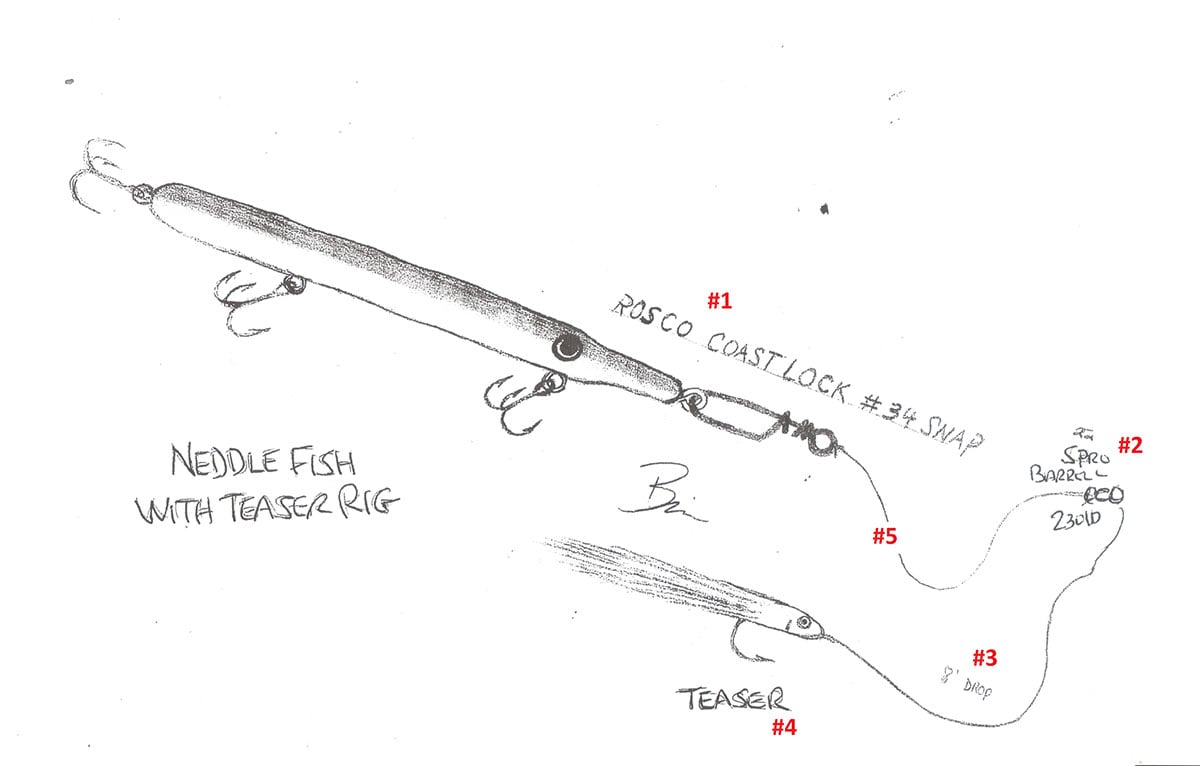
1 – Rosco Coastlock Snap #34 or TA Clip Teasers, sometimes simply called a dropper, have been used in the surf by knowledgeable anglers for many years. They are generally used in conjunction with a swimming style plug. Teasers are awesome addition when using a needlefish. There are many times when the teaser is what entices a striper to strike. |
The needlefish has no real action of its own. It has no metal or plastic lip to give it any side-to-side action. All of the needlefish action comes from the angler’s skill in working the plug. There are various techniques in retrieving the needlefish; I usually work a slow to medium retrieve, twitching the tip of the rod to the right and left, which causes the needlefish to dart with side-to-side action.
Don Musso from Super Strike Lures has done a fantastic job in making exceptional-quality plastic lures with stainless steel through-wire and swivels. His original needlefish were made out of wood and were highly sought-after. In fact these originals were difficult to obtain due to the high quality and overall rarity. Musso’s needlefish design transition from wood to plastics was made in 1984, with current models including 3-1/4-inch (1 ounce), 6-3/8-inch (1-1/2 ounce), 7-1/4-inch (1-3/4 ounce), and also a 6-3/8-inch (2-3/8 ounce, heavily weighted). All the models are sinking lures.
The Hogy needlefish combines features of the 1970 classic needlefish. I see it as the next generation of needlefish with its amazing casting performance and durability. The 3-ounce Hogy needlefish is made with a rear-weighted balance for super-long casts, even in howling, onshore winds. It has one belly treble and a flag on the tail. This needlefish is a “catch and release friendly” lure by design, helping reduce injury to fish. Use a steady slow to medium speed retrieve with a few twitches of the rod tip to make the needlefish dart like a fleeing baitfish or one that’s injured.
The Hogy needlefish is available in three colors, olive, albie crack and black.
I’m not telling you to throw away your plastics, your wooden metal lip swimmers or your pencil poppers; what I am saying is that when sand eels begin to show along the beaches this fall, or at any time, make sure you have a good supply of needlefish lures – of various colors – in your plug bag.
The fact is, the only thing that stripers may want when sand eels are present is “Mr. Needlefish.”