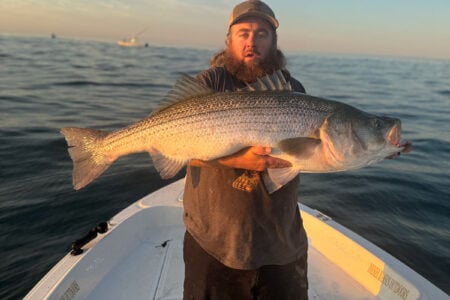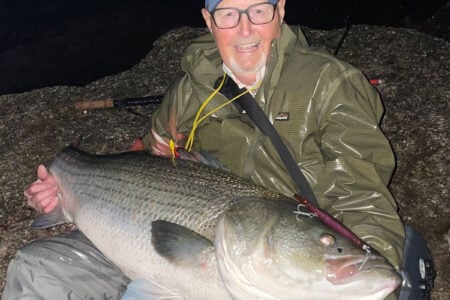
A true master of his craft
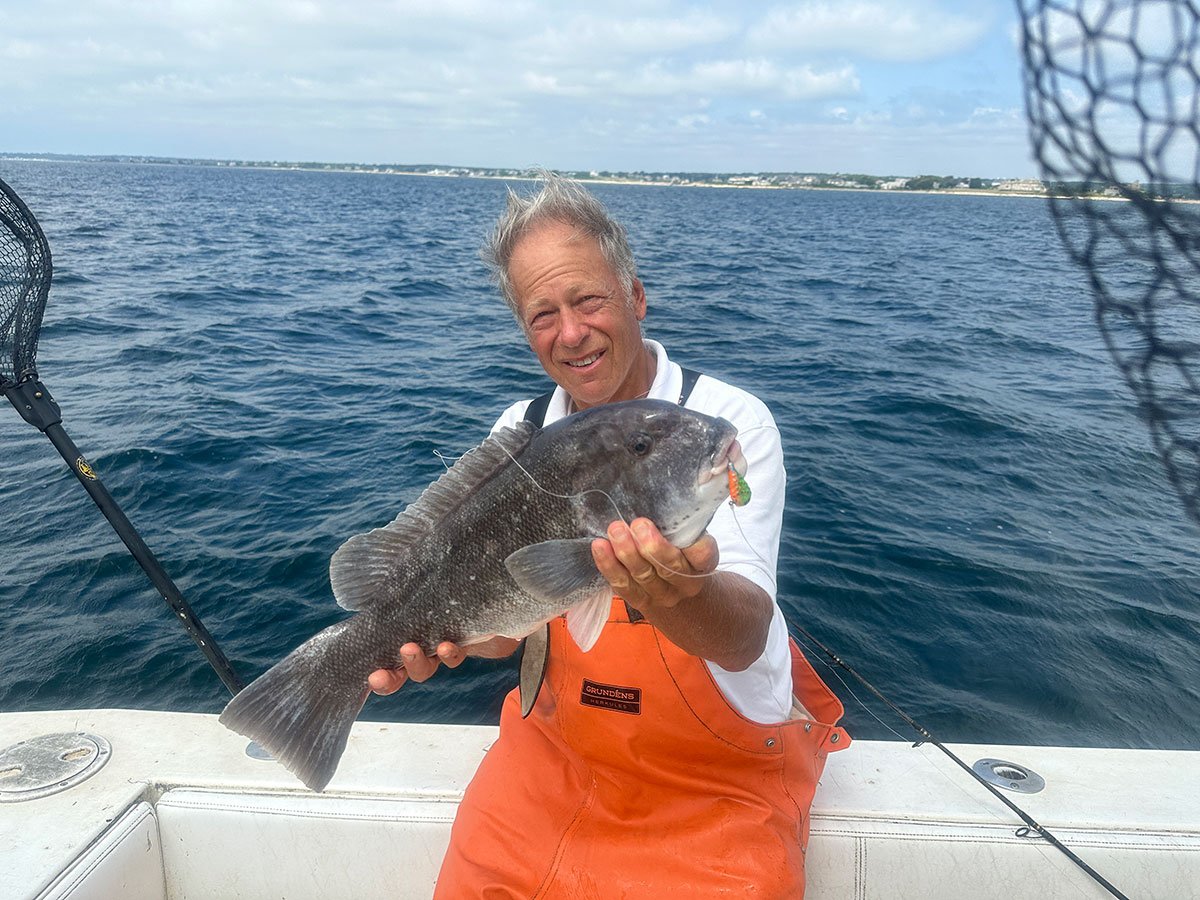
It was October 20th and even though the 31-foot Contender, with its twin 300-horsepower Yamaha outboards is a good size boat, it was bouncing around pretty good in the sloppy 2- to 3-foot chop caused by a 15- to 20-knot northwest breeze. The sun was bright and the sky blue, but the wind was cold and blustery which made it difficult for Captain Jason Colby to stay on top of the tautog bottom that he was fishing. If the wind had been less, his bow mounted trolling motor and “Spot Lock” could have “made it easy”, but the wind was just too strong. That said, his four anglers were experienced tautog fishermen, they dressed warm and they had caught just about all the fish they wanted. The fishing had been good.
Voice Of Experience
“Reel ‘em up”, said Jason as he fired up the two big Yamahas. “I have one more spot that often has bigger fish on it. It’s nice and rough today, so maybe they’ll bite”. Ten minutes later they came off plane and idled another 200 yards before Jason slowed the boat down even more, watching his fish finder carefully. There wasn’t much to see on the machine until it indicated a prominent spike as the chunk of granite known as “spot #286” showed on the screen. We are probably going to only get one chance with setting the anchor properly in this wind”, said Jason, “as this spot is so small we are already back on soft bottom, but let’s give it a shot”. Jason eased the boat a little more upwind and slightly to the west to account for the tide, then dropped the anchor. After paying out more scope than normal, he held on to the rode, waiting for the anchor to fetch up. It bounced along for a few seconds than caught and the bow came tight into the wind.
“Fish tight on this spot, the fish tend to be big and they know where the rocks are!”, said Jason, but Pat and Gary just smiled and dropped their two hook rigs to the bottom not knowing what to expect. “I’m on“, said Pat, just a Gary swung and missed, then set the hook on a second fish. The other two anglers were fishing 50-pound braid, with a 60-pound mono leader and heavy-duty 5/0 hooks. Their green crab baits hit the bottom moments after Pat and Gary hooked up. In the 90 seconds it took for the second pair of anglers to get bit, both Pat and Gary broke their fish off. The two fish that were landed were 7 and 9 pounds respectively. The wind began to pick up even more and it was time to head back to Westport Harbor.
“One of the biggest mistakes that many tautog fishermen make”, says Jason, “is to use hooks, line, rods and reels that are not up to the task of handling a big tautog. Pat and Gary are experienced anglers, but even great fishermen get schooled pretty often. A rod that is fun to catch blackback flounder with, will do the job for many of the tautog you might catch, but you will have to be very lucky to land a big fish, because they live on rough bottom and will use that and their strength to their advantage. “

From The Surf
It has been said that “frequency” is one of the most important foundations of a successful fisherman. You have to be on the water day after day to build the knowledge and skills that will measurably improve your success. When you are 8 years old, as Jason was when he first started fishing the beaches on the south side of Long Island, “proximity” was key to “frequency”. Given that he couldn’t drive, it was a big help that he lived only a couple blocks from the endless beach of Long Island’s south shore and all the jetties that ran perpendicular to this long belt of sand. Jason could walk to the beach and down the beach, fishing a small popper on his $20 rod and reel combo. The first year he didn’t catch a single bass, but that didn’t stop him from going practically every day. His first bass, came on a tin lure, then there were more as he began to see the patterns of wind, tide and structure. Being observant, he learned as much from those times and locations that he didn’t catch fish, as he did when he was successful.
A subscription to this magazine’s Long Island Edition and the weekly surf-fishing column by Vinnie Gauglione called “Strictly Casting” gave him more information to add to his own personal experience. At 14 years old, he “graduated” to fishing the beach with eels at night and he began to catch large fish in the very same areas that he’d caught small ones in prior years with his small popper.
Among Jason’s interests is his long-time involvement with the martial arts and its culture. In the 1970s there was a TV show titled Kung Fu, starring David Carradine as “Grasshopper” a young student of martial arts and philosophy. Grasshopper’s master noted that “when the student is ready, the teacher will appear”. How wonderful it is that many older and more experienced fishermen have recognized a serious younger angler and taken the time to teach them what they know. Jason was very fortunate to gain a friend in the legendary surfcaster, Al Bentson, whose specialty was big bass on rigged eels. Jason had developed his skills on the oceanfront, but he was in awe of what he learned under Al’s tutelage, consistently catching very large bass in the bay and backwaters.

Going Commercial
By the time Jason turned 20 in 1978, he’d caught a number of 50-pound class stripers, as well as his personal best of 64.25 pounds. He moved to Montauk and, like some of the other small boat fishermen, lived on board his 28-foot Hans Peterson wooden lapstrake inboard. With its 6-cylinder Chrysler Crown gas inboard, it made a steady 7 knots steaming out for the day or on the way back home.
There are many different types of fishermen in the food fishery. Some use pots, some use nets and others use hook and line. Jason has always been a hook and line fisherman. He is a very good striped bass fisherman with more 50-pound fish than most, but he is a superb bottom fisherman for winter flounder, scup, sea bass, cod, fluke and tautog. In the 1980s and 1990s, he sharpened his skills rod and reel fishing out of Montauk, then later from Point Judith for big scup, fluke, sea bass, striped bass and tautog. It is a hard way to make a living, which means that if you can, you must be pretty skillful. In the cold of winter, Jason would head to Florida and work for a fresh fish distributor, hand filleting mid-Atlantic species, particularly flounder.
When you charter Captain Jason, not only do you get a lesson in bottom fishing for a variety of species, you also get the chance to see a highly-skilled fish cutter and watch as he converts a cooler full of whole fish into bags of clean fillets. You’ll see that seasoned fish cutters, like Jason, have a dancelike rhythm to their movements as they set up a whole fish, separate the top fillet, flip it, remove the bottom fillet, then skin both pieces. If you’ve ever filleted a bucket of blackback flounder, you’ll appreciate that Jason can reduce a 750-pound pile of small whole flatfish, to 300-pound (40% yield) of skinned fillets in an eight hour day at the filleting table.
A Move North
In 1998, Jason and his wife moved to Massachusetts where his fresh fish expertise led to his role as general manager of one of Boston’s leading fresh fish processing and distribution companies. It was during this time period that he learned how to fish Quincy Bay for blackback flounder and cod in the spring, as well as establishing his summertime fishing routine out of Westport Harbor.
Growing up on Long Island, Jason had learned to chum surf clams for striped bass, working multiple rods with 2-ounce sinkers and 8/0 hooks baited with clams. Fishing off Hull, MA for codfish using his surf clam expertise, Jason was surprised to be losing bait to some sort of bait stealing fish. Downsizing his hooks, he and his clients started catching very nice blackback flounder and so started a very successful approach to land those dinner-plate sized flounder. Whereas the sound of a couple tautog crunching down on hook rigs baited with green crab is often enough to pull more blackfish from their rocky habitat, winter flounder really respond to a clam filled chum pot on the bottom and a clam baited hook.

Little Sister Season
For a number of years now, Captain Colby starts his charter season catching cod and tautog out of Westport in April, then moves north, to Sesuit Harbor (on Cape Cod) for blackback flounder. At the beginning of June he moves the Contender back to Westport to target sea bass, tautog, stripers and fluke, then finishes up sometime in November concentrating on tautog.
Even though the long-term trend seems to be warming water and air temperatures, short term temperature fluctuations, from year to year, can present warm water temperatures in one year and colder temperatures in the next. In 2023, soon after Jason’s April launching in Westport, his anglers were enjoying doubles of tautog and cod in 100-feet of water on the same two hook rig. In 2024, water temperatures on the bottom at the same locations was decidedly colder and the fishing was more of a slow pick.
Jason is no stranger to the difficult conversations about fisheries management. During the period 2015 to 2018, Jason served on the Recreational Advisory Panel for the New England Fisheries Management Council, providing direct input from his experience on the water. During that same span, Jason wrote the monthly Conservation Corner Column for this magazine, which won an award from The New England Outdoor Writers Association.
If you enjoy catching your dinner, you’ll love fishing with Captain Jason Colby and Little Sister Charters. If you want to see more from Jason or book a charter, you can find his ad in the reports section or visit his website at www.littlesister1.com. Jason is a great guy and fun to fish with, and you’re almost certain to learn something new when you fish with him!