Part I: How It Used to Be
Surf fishing has been a huge part of my life. I loved it from my very first unsuccessful trip, and I’ve enjoyed sharing that passion with other serious surf rats. Hopefully, this four-part series will resonate with surf anglers in two ways, depending upon how long they have been chasing fish along the surf line. Today’s sport is very different from the one I was introduced to. I hope old-timers like me will read it, chuckle here and there, and find that happy memories rise to the surface and put smiles on their faces. For younger surf addicts, I hope you gain insight into the meaning and value of today’s sport by better understanding the game as it was reinvented by World War II veterans in the late 1940s and 1950s.
These anglers, returning from war, found a different America than the one they had left. They had more leisure time than their parents, earned more money, and had new technologies that opened fresh opportunities in surf fishing. By today’s standards, these innovations were low-tech. Nonetheless, spinning reels, fiberglass rods, monofilament lines, plastic lures, and surplus four-wheel-drive Jeeps changed the sport. Later, some anglers even converted Volkswagen Beetles for beach use with large balloon tires.
Seven Decades In The Surf
I’ve been privileged to spend more than 70 years surf fishing. Granted, I was young at the start and fished only when someone took me. Later, during college, trips were infrequent, but I maintained my investment in the sport. Once school was over, I settled into a job that would last until retirement and jumped into the deep end of the surf fishing pool.
There is no doubt the sport has changed drastically since my youth. Some changes have been great, others have been double-edged swords, and some have even betrayed surf fishing as it was reinvented after World War II. Throughout this four-part series, I’ll share aspects of my life as a surf angler and examine how the sport has changed. I hope you enjoy reading about the sport so many of us love.
Learning The Hard Way
Although I love all forms of fishing, my passion for surf fishing runs deeper, as does my profound love of weakfishing, nurtured by childhood encounters in Peconic Bay. My father enjoyed fishing, as did his brother, my uncle. For several years, on most Sunday mornings in the fall, they would trundle toward the Jones Beach jetty with 10-foot conventional tackle and linen line, looking for stripers. Eventually, I had the chance to join them. I doubt most young anglers can appreciate how much more difficult it was to fish with the tackle and lures of those days.
When I was a kid, all fishing lines were made of natural fibers, meaning they were subject to rapid rotting from microbial decay. About the time my dad let me tag along, my job upon returning home from Jones Beach was to strip the linen lines off the reels, lay them on the grass in long loops, wash them with fresh water, and wait for the sun to dry them. Once dry, I reeled the lines back onto the reels, ready for the following Sunday. Does this sound like annoying work? It wasn’t. However, if this task wasn’t completed after each trip, fungus and bacteria would weaken the line, causing it to break during casting. That was one way I learned about paying your dues. Linen line was both my curse and my dues.
I’m quite sure my dad knew I was determined, but I don’t believe he realized how badly I wanted to fish the surf. I’m not sure he believed I’d ever master conventional tackle, especially the Beach Master reel, essentially a boat reel modified for surf use. None of the conventional reels from the 1950s survive with dignity today, and for good reason. They were difficult to master, and avoiding backlashes was nearly impossible. My father’s challenges were nothing compared to those served up by the weather, seas, seasons, and fish. Eventually, I learned to deal with the elements. His challenges and the simple act of paying dues strengthened my commitment. With the exception of certain types of fly fishing, surf fishing is the hardest way to fish, but that difficulty enhances the sport. Although I didn’t understand this in my youth, I certainly did when I returned after completing my education.
The Changing Face Of Surf Fishing
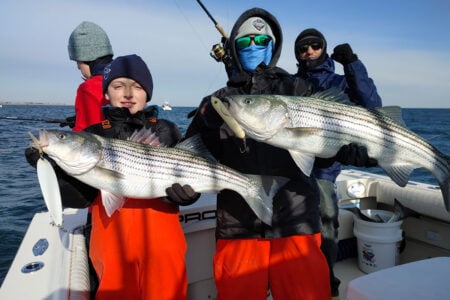
Not all beach anglers view the experience through the same lens, something that became evident following the dramatic return of striped bass in the 1990s. The resurgence of stripers increased interest in fishing, promoted growth in charter boats and guide services, and drew many young anglers into the sport. Through discussions with newcomers during the 1990s, it became clear that their interest in the surf resulted from a larger striper population and romantic tales told by old-timers. Yet these newcomers entered the arena with different perspectives and far more tackle choices, including better rods, reels, and lines, lightweight apparel, and a vast arsenal of lures.
Ironically, many began forgetting the original allure and moved away from what made surf fishing special. Today, many modern surf rats work hard to reduce the sport’s challenges by relying on cell phones, social media, e-bikes, and fishing reports to locate fish. Sadly, these conveniences separate anglers from the joy of finding their own fish and encourage laziness, with some simply waiting for a phone call or post from someone else.
It’s always been said that 10% of fishermen catch 90% of the fish. That reality generally kept the other 90% out of trout streams and the surf. But the 1990s ushered in technical advances that made catching fish easier. Men and women who loved the surf shared the romance and challenges of the sport with newcomers, hoping they would develop the same appreciation. The regulars succeeded with some, but their message fell on many deaf ears. Soon, those unwilling to listen joined the 10% on the beaches with the sole objective of catching and killing fish. Newcomers showed up during the fall at places like Montauk and Jones Beach wearing sneakers, carrying flounder rods, dragging coolers and vile-smelling bags of three-day-old bait. They had no problem standing on the sand and casting over anglers already in the water. I began seeking other access points where I could fish peacefully alongside seasoned anglers who shared a similar philosophy.
The Old Guard
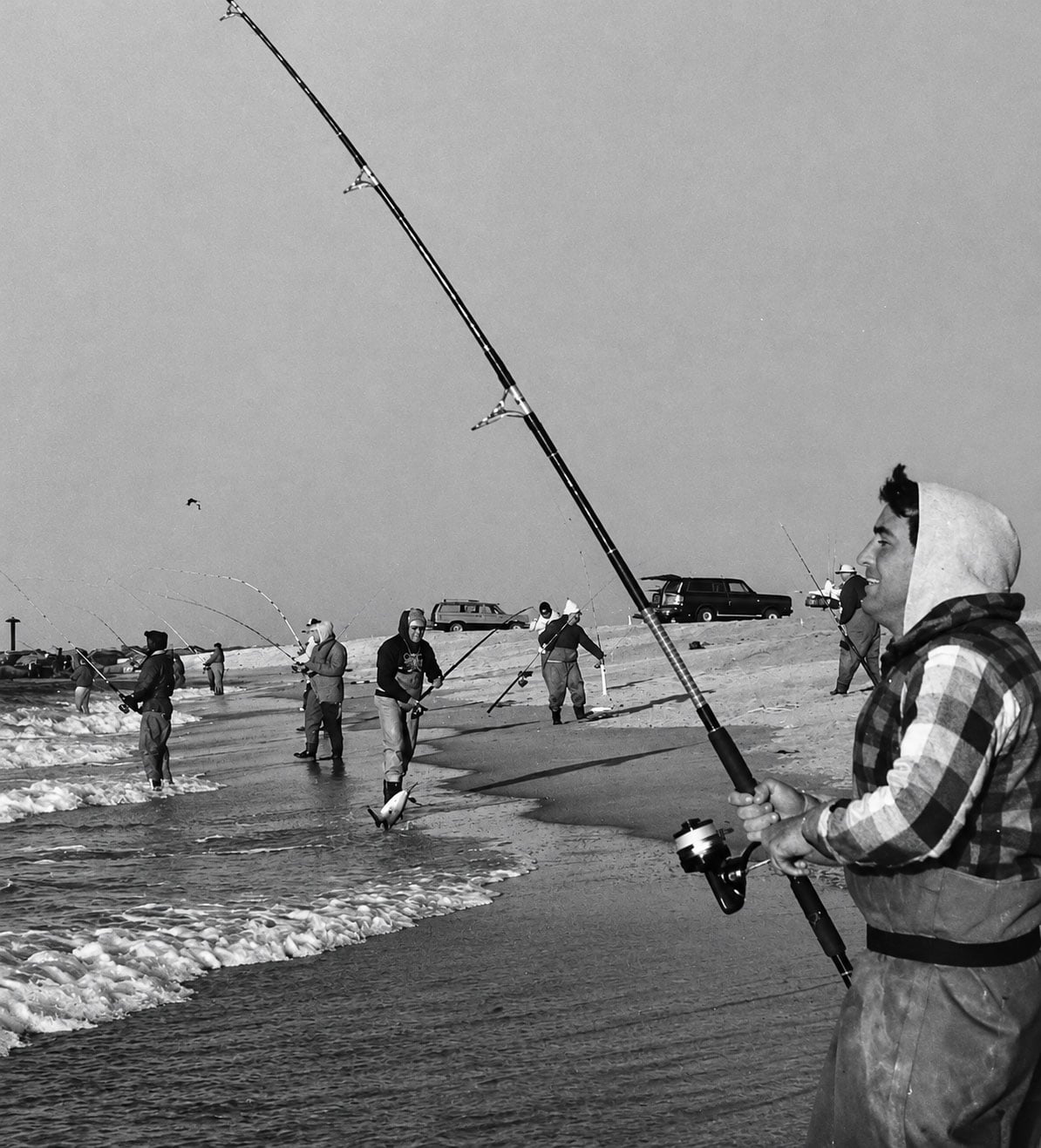
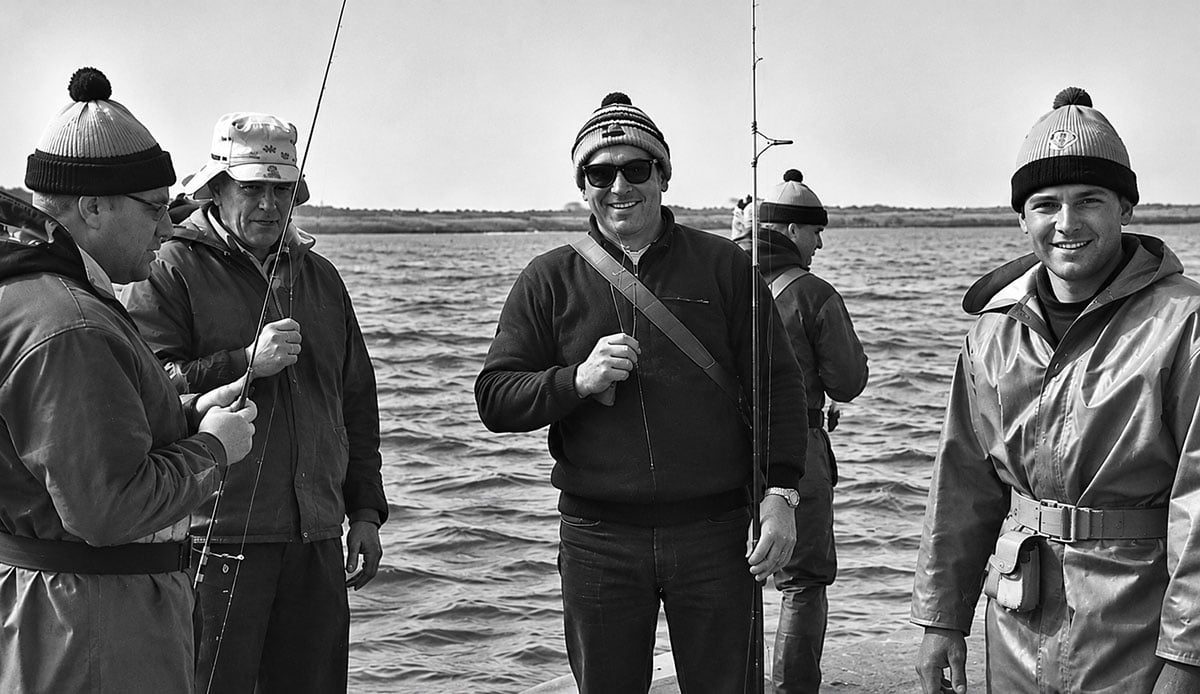
Things were different before the resurgence of stripers in the 1990s. During the 1960s, 1970s, and even into the early 1980s, beaches belonged mostly to surf anglers after Labor Day. Walkers, swimmers, surfers, and sun worshippers were rare. When hunting season opened, there were even fewer surf anglers because some fishermen were also hunters. You knew the anglers you encountered, and meetings were punctuated with hearty handshakes, tall tales, and laughter. It’s not that way anymore. On a pleasant September or October weekend, parking lots and beaches can be so crowded that an angler might walk miles to fish without interference.
Yes, the business model changed. Suddenly, inexperienced anglers clogged access points, social media buzzed about where, when, and what to fish, and cell phones chimed, rang, and jingled in homes, pickup trucks, cars, pockets, and businesses. Cell phones, blogs, computers, and loose lips replaced the ethic of paying dues, and surf fishing changed forever. I resist the digital age as it applies to surf fishing information. I still do things the old-fashioned way and often hear myself described as an outdated dinosaur. What critics don’t understand is how much I enjoy the difficulty of the sport. Testing myself against other anglers, the fish, weather, and odds is a privilege, not an outdated strategy. To me and others, catching is secondary to the hunt and its challenges.
How can an angler pay dues, defeat the odds, and experience the satisfaction of finding fish by staying home and waiting for someone else to do the work? I’ve never understood that mentality. Why in hell’s name would I share precious information with someone who sits on his or her butt waiting to be led to the oasis, especially when that person will likely never find fish to share in return? I share information with a close-knit group of excellent anglers I trust to fish properly and keep their mouths shut. In my articles, I prefer to teach anglers how and where to fish rather than lead them to the shoreline and point toward breaking fish.
Paying Your Dues
Today, I do as much mentoring as fishing, and my mentees don’t get off easy. I teach them about the sport, the joy of its difficulty, the great people who reinvented surf fishing after World War II, and the importance of paying dues. Most importantly, I teach them that catching is the result, not the primary objective.
The real reward involves improving your skills and enjoying the satisfaction of knowing you’ve earned every fish while successfully participating in a difficult form of fishing. At that point, anglers know they’ve proven themselves against the odds. In this context, the absence of technology becomes a blessing. This is the old-guard style of surf fishing I love. It should be obvious that I have no affection for instant gratification. I enjoy mastering something, paying my dues, enduring hardships, and respecting my quarry.
Better Tackle, Same Philosophy
That said, I’m not stupid. I no longer use conventional setups, mushy honey-colored fiberglass rods, or reels that break down every other trip. I use and enjoy modern tackle. These are tools for craftsmen, not shortcuts for the lazy. Accepting better equipment doesn’t mean I’ve abandoned my philosophy. It simply makes casting and fighting fish more comfortable and reliable. Since their introduction decades ago, graphite rods, high-tech reels, and braided lines have advanced so far that I can’t imagine fishing without my favorite graphite rods, Van Staal reels, and modern braids. Imagine lumberjacks still cutting trees with handsaws instead of power tools, and you’ll understand how much tackle has changed.
Decades ago, the standard equipment was a honey-colored fiberglass rod, Penn 704 reel, 20- or 30-pound-test Ande monofilament line, and a limited assortment of lures. That combination was serviceable and quite good for its time, but not without problems. The Penn 704 was a workhorse that served us well. Then came the 706Z, featuring a manual bail and wider spool while remaining easy to repair. Most of us switched to it. There was also the Luxor-Crack, preferred by many Montauk and hardcore anglers. I didn’t care for it because it was heavy and noisy, and I’m a stealth angler. Our rods were whippy, and our shoulders suffered when pencil popping. Fiberglass was heavier than graphite, and when combined with stretchy monofilament, it made setting hooks difficult.
From Linen To Mono To Braid
One of the worst aspects of older tackle was monofilament line. On one hand, it was revolutionary compared to linen, which decayed easily. But mono had its own demons. Made primarily from nylon, monofilament was readily available, inexpensive, and low-maintenance. There were no more backyard loops on the grass or bacterial decay, and casting was easier. However, it became stiff in cold weather, and anglers needed to retie terminal knots during a flurry because mono knots weakened under pressure. Those who didn’t often lost lures and fish to break-offs. Monofilament also stretched and weakened. When fishing actively, we would cut back about 10 feet of line because that section absorbed most of the abuse. After several trips, stripping the remaining line and respooling became necessary. I’ll decline to discuss shock leaders, which are practically extinct today.
Mono stretches a lot! It doesn’t take long for the line to lose its “life.” Water and sunlight also weaken it, so anglers fishing frequently during daytime fall runs sometimes experienced unexpected break-offs. If you lived in the city, you learned that chemicals in the smog could also weaken the line. Anglers began protecting their monofilament by covering reels, storing line in refrigerators, and finding other ways to shield it from the elements.
I’m therefore amazed when I give seminars and attendees tell me they won’t use braided lines because of wind loops and knot problems. Of course, the lines aren’t to blame. These issues generally result from overfilling reel spools or allowing loose loops to fall off when a lure lands. Remember to make 10 turns when tying an improved clinch knot with braid, rather than the five or six we used with mono. Why doesn’t everyone use braid? After all, it doesn’t rot, properly tied knots retain their strength for a long time, hooksets are a snap, and compared to mono, you can cast to the moon!
Next in the Series — Part II: Portraits of Noted Surf Anglers