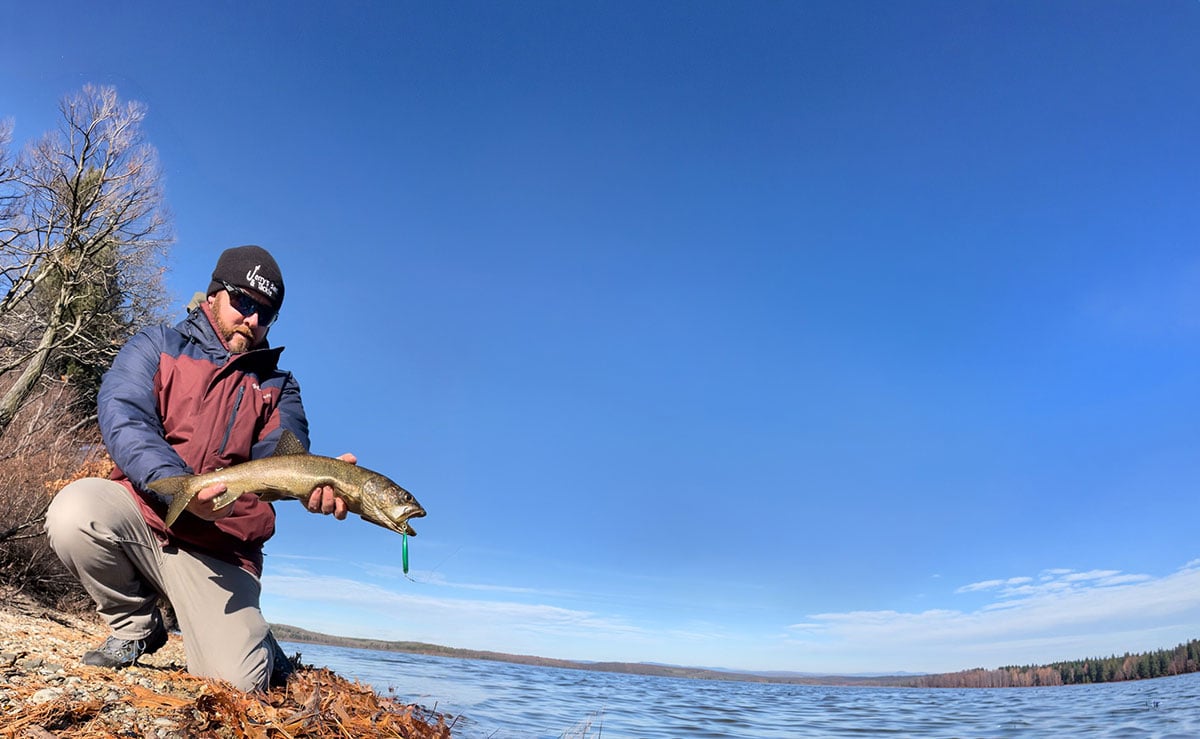
Massachusetts’ second-largest waterbody comes alive with spawning lake trout in October!
Whether you call it the “Res” or the “Chu”, this big body of water holds big fish year-round. You can tell when it’s time to start fishing by looking at how many cars and trucks are parked at each gate. If you see a few trucks with fishing bumper stickers, you know it’s go time.
After fishing the Res for many years I’ve always found it funny that the nickname for this body of water changes depending on the angler’s age and experience. I’ve noticed the older crowd seems to prefer “the Res” while many of the younger anglers seem to prefer calling it the “Chu”. No matter your age, what kind of gear you use, or what you decide to call this amazing place, there is an abundance of fish in Wachusett Reservoir, and October is a great time to catch them.
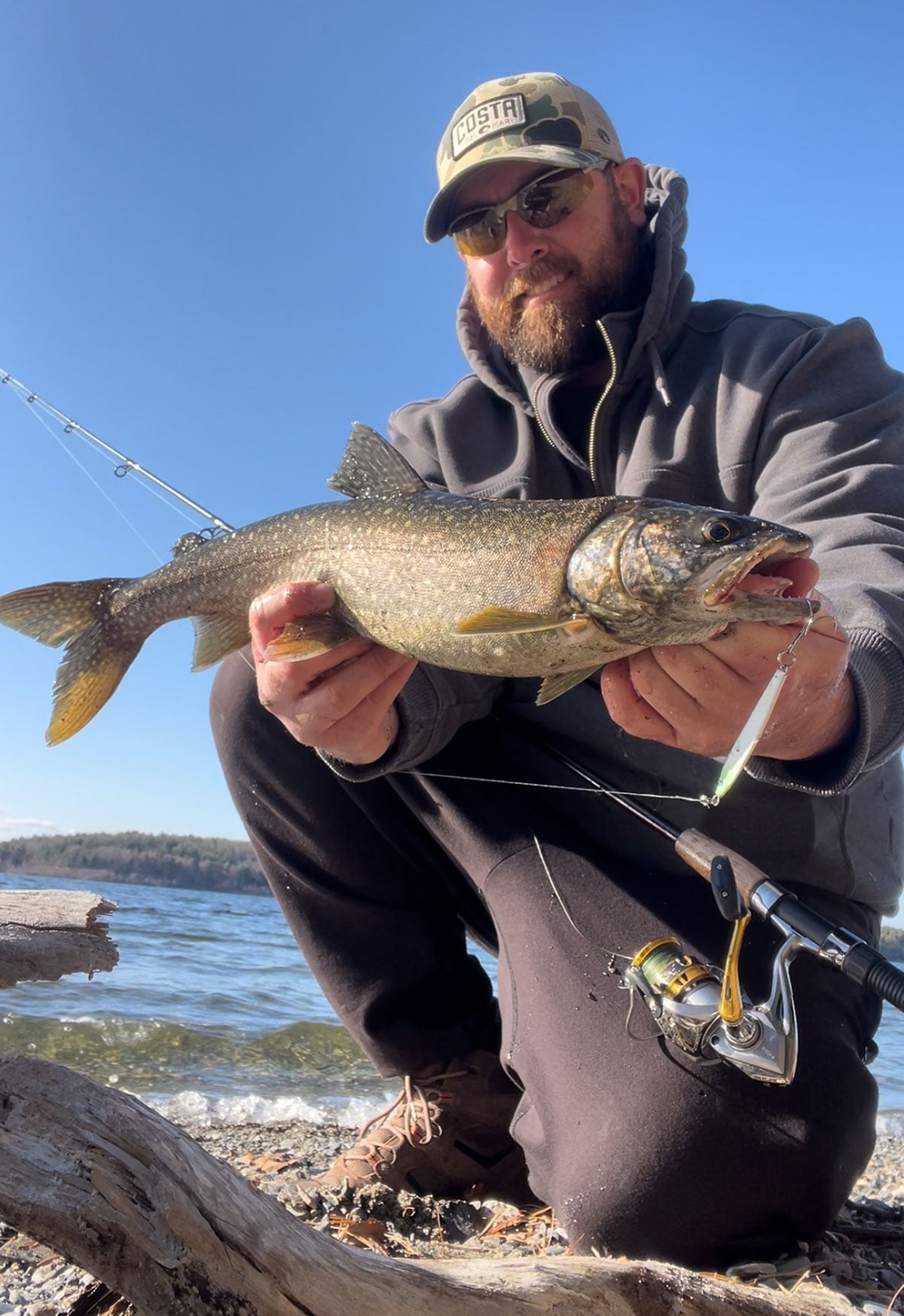
You can target everything from smallmouth and largemouth bass to various types of salmonid, including landlocked salmon and ‘stockie’ trout. My target of choice is the lake trout. Starting in October lakers come surprisingly close to shore, giving anglers their first reliable opportunity to connect with one of these powerful fish after a summer of staging in deeper waters that aren’t reachable from shore. In case you didn’t know, Wachusett Reservoir is designated for shore fishing only, no boats, kayaks or even wading are allowed.
October is one of my favorite times to fish the Res for another reason, the weather. Autumn days in New England are often warm enough for anglers of all ages to feel comfortable all day without bundling up (too much). Some October days warm up to the point that you might forget August was almost two months ago! There’s something pretty special about these warm, dry autumn days and knowing some of the biggest fish of the season may be moving within casting distance. Surfcasters who need a quick break from the fall striper run, will feel right at home on the Chu, with miles of fishable shoreline and a variety of species to target, you can leave the saltwater behind for a day and enjoy a completely different atmosphere that will feel strangely familiar.
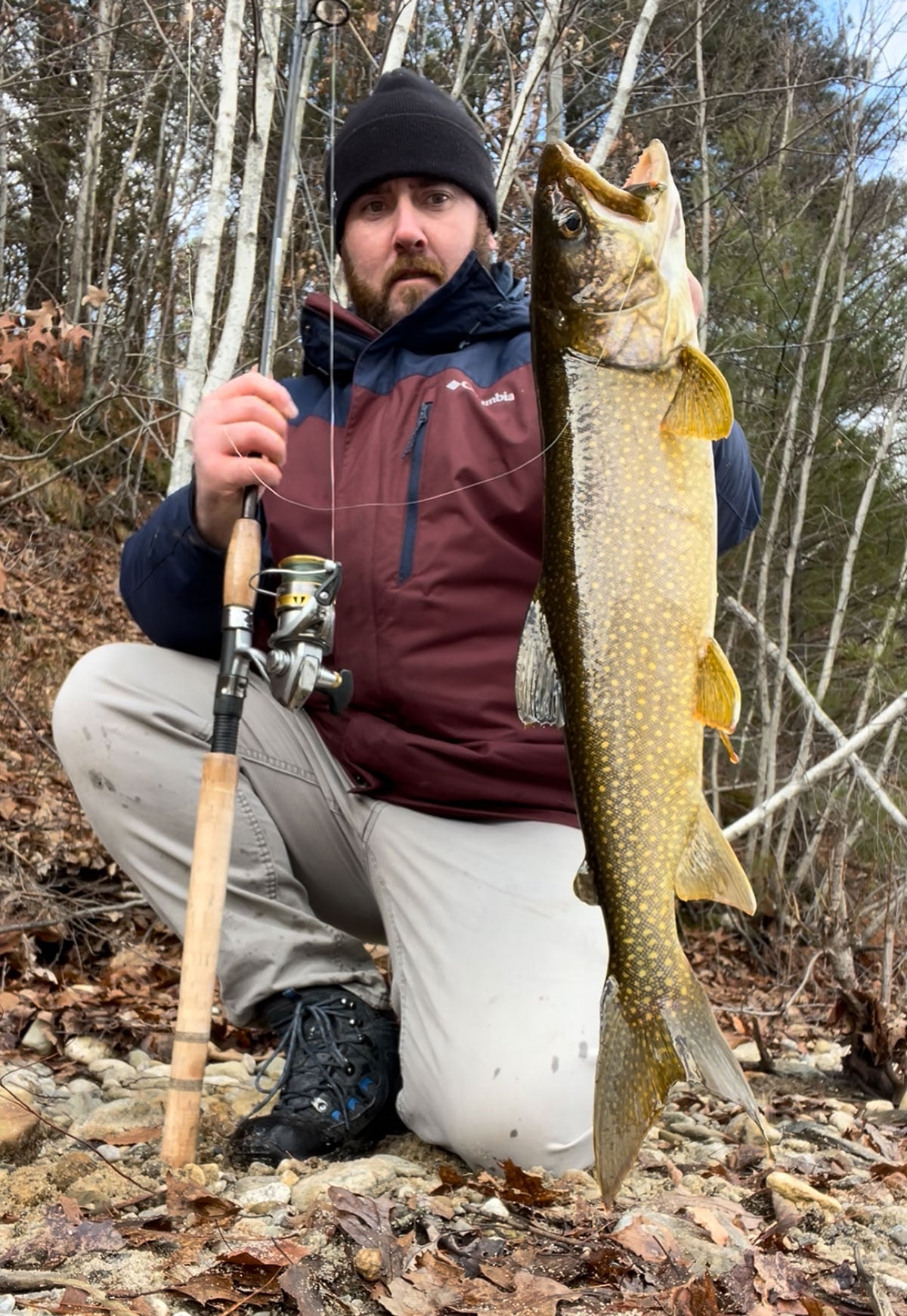
Targeting Lakers
Catching Wachusett lakers becomes a little easier in October and it’s why I time my first autumn trips to the reservoir at this time. Around the first week of October there’s usually a big water temperature change as it drops off from the mid-60s of September down to the upper 50s in October and fall spawning begins when temps fall to 55 degrees. As temps near this mark, lake trout become increasingly motivated to spawn and therefore they congregate with other lake trout and pile into rocky shoals. That’s one reason October can be so interesting for shore anglers, these lake trout that spent the summer suspended in over 100 feet of water migrate to shallower rocky structures that are much closer to shore. The best shore fishing opportunity, in my opinion, occurs during the period when the fish are transitioning toward spawning right before the actual spawn. This can gather a lot of trout into one area. That’s why timing your fishing at the reservoir in early-October is the perfect time.
| DUAL PURPOSE GEAR |
| As for the gear, I like to use the same setup I use for albie and bonito fishing, a lot of the same lures, jigs, and paddletails work incredibly well, too. Any medium-fast rod from 7 to 9 feet, rated to throw 1/4 to 2 ounces will work well. My personal favorite is the Ugly Stick Elite 8-foot, 6-inch Steelhead Rod with medium action. You really can cover a lot of water with very long casts. Although long casts are not always needed during the month of October, but it’s nice to have the option. I pair this rod with a Shimano Sedona 3000 with green Power Pro braid tied to a 15-pound fluorocarbon leader, any 3K spinning reel will do the trick. |
The fishing tactics, for me, are a little different in the fall than what you might know from spring excursions. In the spring I pick areas where I can walk the shoreline with ease so I can cover as much water as possible. After Ice-out lakers are spread out and may be anywhere in the water column, so covering a lot of miles on the shoreline and hitting many depths and bottom types including sand, gravel and rocky ledges. In the fall I like to concentrate my efforts around rocky spawning areas and steep points and I will repeatedly fish those areas rather than walking the bank in search mode. I find that the fish will eventually come to you during the fall.
You don’t necessarily need to cast far. If you find a rocky spawning area close to deep water, lake trout can literally come within casting distance of the bank. Many times I’ve hooked the biggest fish of the day on a halfhearted cast into the reservoir. Areas where sharp drop-offs are within range, look for spots where 30 to 50 feet quickly comes up to 20 or even 10 feet of the water, these spots are perfect. There are plenty of spots like this at Wachusett Reservoir and you can find them simply by looking at maps online.
The Route 70 side is my personal favorite since it has an abundance of rocky points and shoals in close proximity to deeper water. Some of the best spots at the reservoir do not require a long walk. You’d be surprised at how many fish you can catch just a short walk from the truck creating endless possibilities for people of all ages to find fish.
Trust The Process
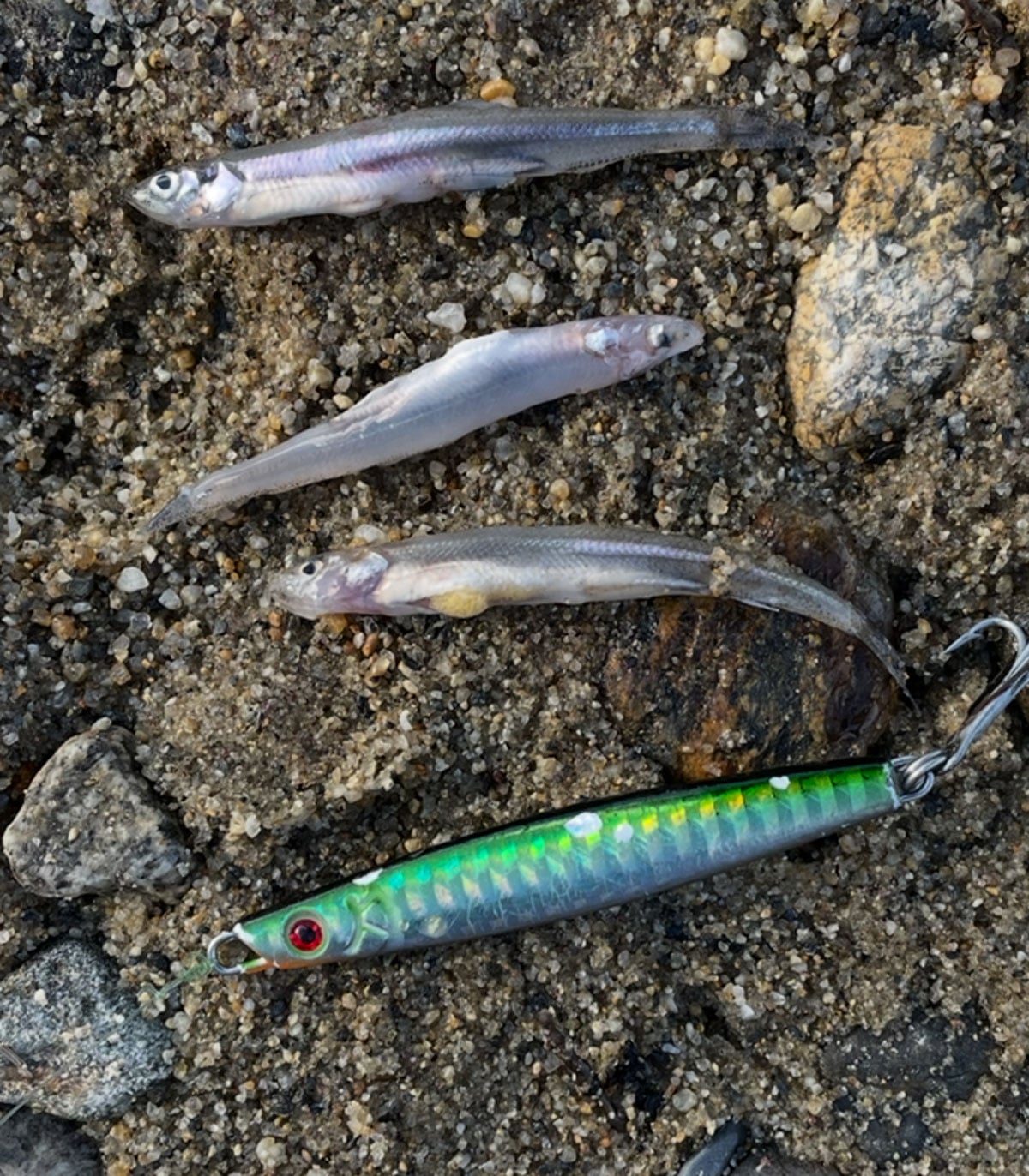
Once you’ve found a deep rocky point, l fan-cast the area until you find a fish. I start by casting out as far as you can and then methodically work closer to shore with shorter casts. I like to use Epoxy Jigs and metals in 3/4- to 1-ounce size range in green, blue, and white. All of which match the laker’s favorite baitfish, the smelt.
| GET THE LEAD OUT |
| Just like all freshwater lakes, ponds and rivers in Massachusetts, lead sinkers are prohibited. This includes things like jigheads. So, while soft plastic paddletails threaded onto jigheads work well in the Res, your jigheads will have to be of the lead-free variety. |
I use a jigging technique with these lures and it catches a lot of fish; it’s really not that much different than jigging the Cape Cod Canal. For starters, you want the jig to be as close to the bottom as possible, so begin by casting out and letting your jig sink all the way to the bottom. Because you might be casting into 30 to 50 feet of water, or even more, you’ll want to leave you bail open until it reaches bottom. If you don’t you’ll be pulling your jig closer and closer to shore on a tight line.
Once it hits bottom, you want to immediately start jigging, with sharp upward jerks followed by a period of allowing to flutter back to the bottom. My experience indicates that if the jig is allowed to lie on the bottom too long, the fish get a longer look at it and they are less likely to eat it. At this time of year, lake trout aren’t always striking out of hunger, you are eliciting reaction strikes from fish that are schooled up to spawn. You want to bounce the jig and continually feel the bump of the bottom. As your jig moves closer to shore and the water gets shallower, it’s smart to pause once and in while to allow the jig to settle back into the strike zone.
Always watch your line when the jig floats back to the bottom as this is the time when they usually hit. In the last third of the retrieve, I like to switch to a slow continuous swim, abandoning the jigging action, this will help you keep the jig swimming in the 5- to 10-foot range. This will allow you to stay close to bottom without snagging or picking up vegetation on the way in.
Fine Tuning
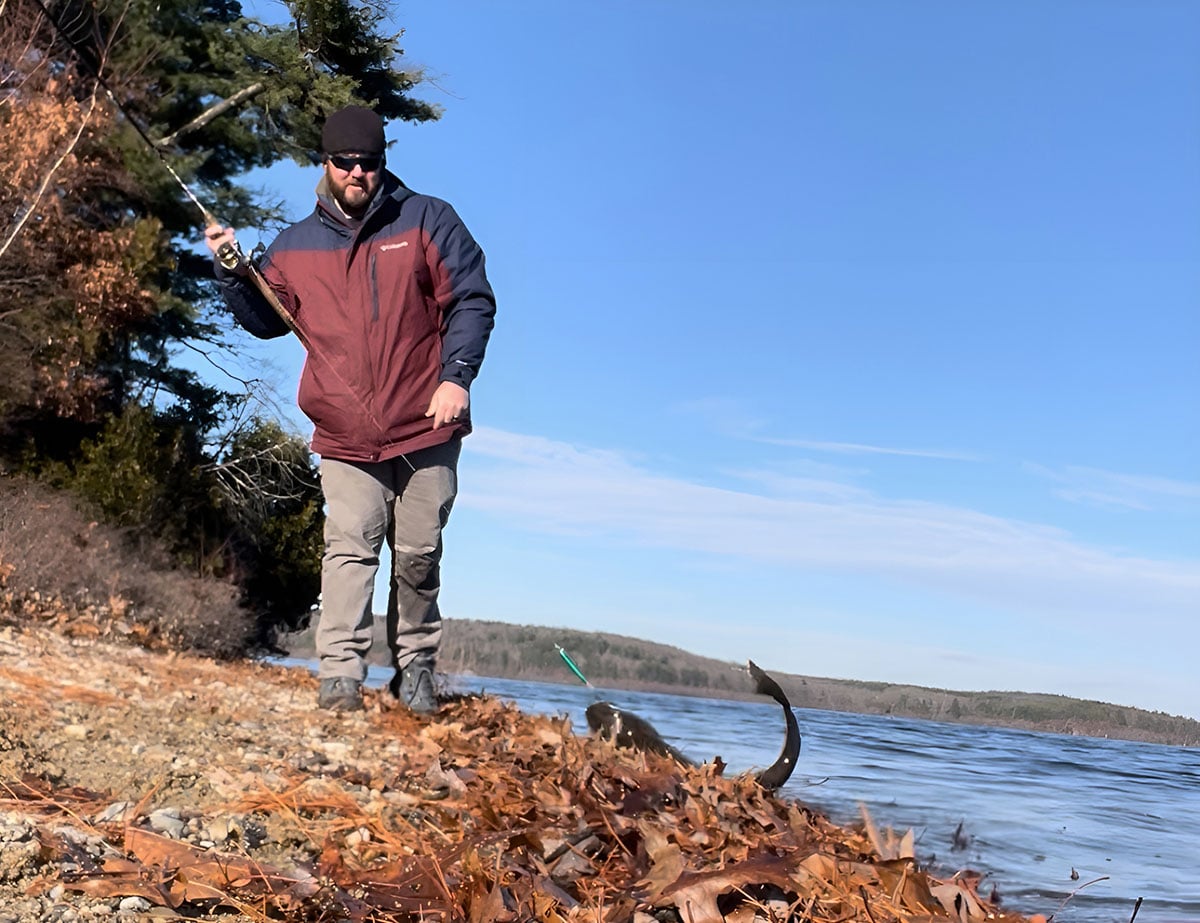
If you’re having trouble locating fish in a particular area, it’s a good idea to look at wind direction. Try to pick a shoreline where the wind direction is directly in your face. It’s not always the ideal fishing conditions and makes for a tougher cast into the wind but this will immensely improve your chances of hooking up to a quality fish. The wind is the main driver that will concentrate bait like smelt in a particular area. The spawning lake trout will often shadow these baitfish and that clash of predator and prey makes for a productive fishing experience.
A tip for casting into the wind is to cast diagonally across the beach instead of casting straight out. It’s also good to know that these diagonal casts, positioned at approximately 10 and 2 o’clock, will keep your jig in the strike zone longer especially if the fish are hanging in a shallow spot. It’s also a good idea to “fish” your jig all the way back to the rod tip, as it’s quite common for lake trout to strike just a few feet from the shore. I hooked into the biggest fish I’ve ever seen in the Res only a few feet from the bank. I was fishing a rocky shoreline when this monster, that looked to be in the 20-pound class, ate my jig barely 3 feet from dry rock.
Sadly, I was unable to land this impressive fish… Which brings me to my final point, planning a spot to land your fish before you make a cast.