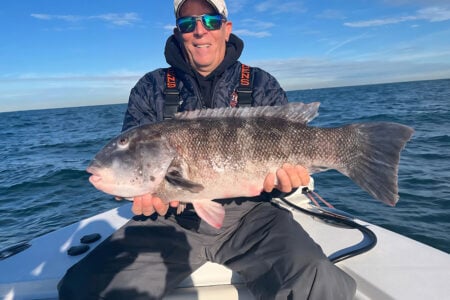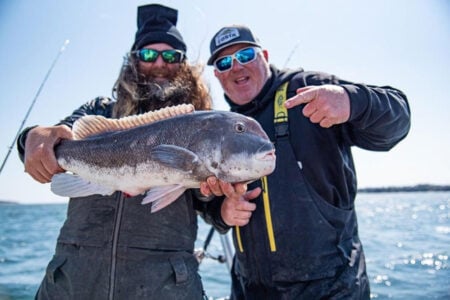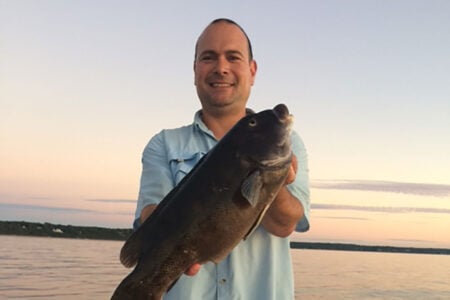
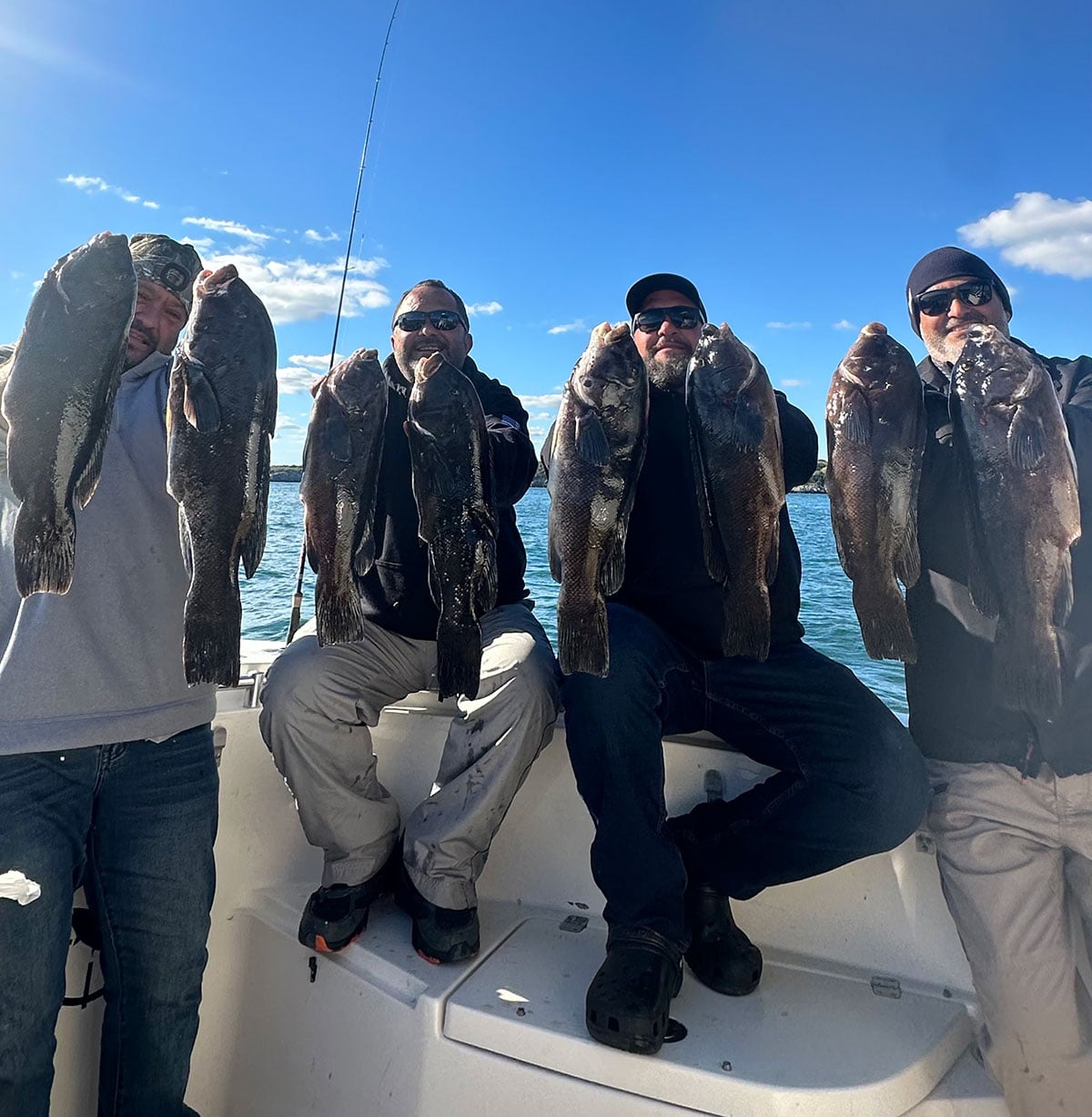
A heady deep dive on October blackfishing.
There’s something different about fall in the Northeast. The days grow shorter, the air takes on a crisper edge, and the first real cold fronts arrive with a quiet reminder that summer is officially behind us. But here in Rhode Island, and along the entire coastline of southern New England, fall means something else entirely, it means tautog season.
The signs are unmistakable; thicker Grundens and winter gear are dusted off and pulled from the closets. Heaters and defrosters run full blast on predawn drives to the water. Coffee is brewed stronger and poured hotter. Rigs are tied heavier. And our attention turns toward the most unforgiving terrain, the kind that chews through tackle without mercy, yet rewards precision with some of the hardest-fighting fish the New England coast has to offer.
Tog Country
As the water cools, anglers from across the region converge along rocky coastlines, chasing tautog that have spent the year growing bigger, meaner, and increasingly difficult to fool. Beneath the surface lies a world every bit as rugged as the coastline above it: a maze of jagged rock piles and reefs rising like mini mountain ranges, weathered pilings standing rigid in the current and shipwrecks whose stories have become woven into local lore will now have tog swirling in their shadows.
For a few short months, we all come together with one common goal, catching the monstrous, white-chinned bulls that put every piece of tackle to the ultimate test. This is tautog country, and when autumn arrives, there’s nowhere else most of us would rather be. From the first cool days of fall through the heart of the season, success comes down to understanding how tautog transition with the changing water, where they position themselves on structure, which baits they prefer, and how to present those baits when the difference between a crushing bite and a lost fish can be measured in inches.
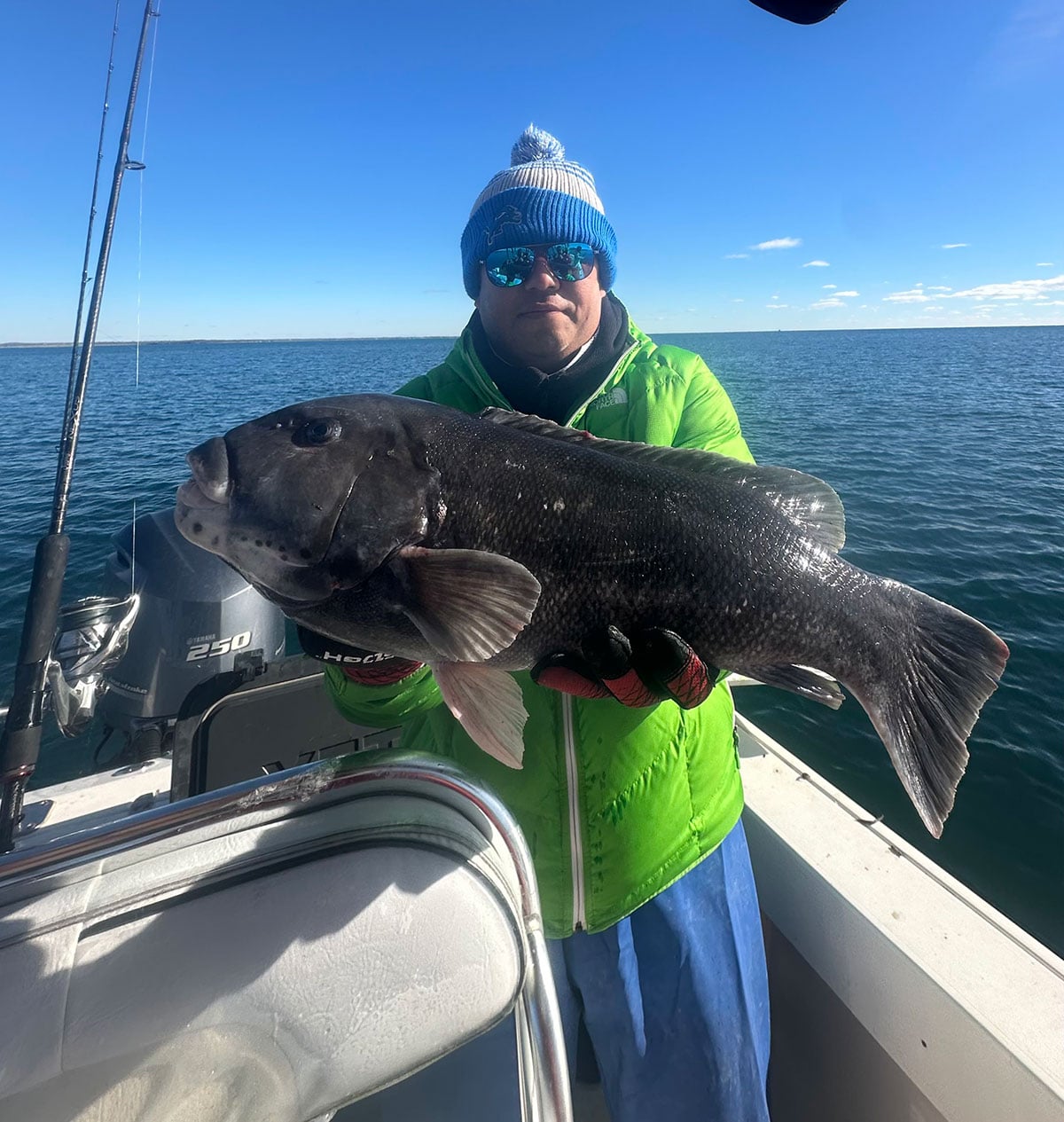
Early October
The first half of this month is still very much a part of their transition from the shallows. During this period, targeting 20 to 40 feet of water is my go-to. The water temps are dropping and their forage is beginning to trend deeper. As the fall season settles in, crustaceans migrate away from turbulent shoreline whitewater into deeper structure. I think blackfish can instinctually detect and follow this trend, when their food moves, so do they. My top baits are Asian shore crabs and smaller green crabs. Simply put, if I can flip rocks and find them, they belong on the blackfish menu.
Gear-wise, we’re still comfortably within the optimal range for tog jigs, so light- to medium-action setups with half- to 2-ounce jigs plays. Since these fish rely heavily on sight when they’re up shallow, experimenting with jig colors can make a difference. However, when fish want a stationary presentation, a hi-lo or snafu rig on a conventional rod takes over. Tie on a 30- to 50-pound fluorocarbon leader—blackfish know every cranny of the structure, and heavy tackle will provide the backbone needed to turn them before they dive into structure and saw you off.
Expect to burn through bait, because you’ll likely be dealing with numbers of short fish between keepers. Every day is different, but if you locate the food, lock onto structure and let the tide work, you’ll be in for a rewarding trip.
Meat & Potatoes
As we approach mid-month, the nights are getting colder, the days have lost their warmth, and the fish are beginning to make one of their biggest seasonal transitions. For me, mid-fall runs roughly from mid-October through mid-November, and it’s one of my favorite stretches of the season. This is when I start inching a little deeper, focusing much of my attention on ledges, wrecks and rock piles in the 40- to 60-foot range. To me, this is the sweet spot of fall togging; and it’s often when I see the greatest numbers of fish; more importantly, it’s when the entire pattern begins to change.
By this point, much of the bait has started sliding into deeper water. The fish that were scattered across the shallows and mid-depths two weeks ago are now beginning to gather into larger schools as they prepare for their eventual winter migration. That transition is important. You won’t be able to rely on those pieces of structure that produced consistently earlier in the fall. As the bait moves, the fish move with it, and they begin concentrating around those deeper, mid-ground and offshore structures.
The upside is that once you find them, the bite can become much more consistent. Instead of picking a handful of fish from several different spots, you may find a concentrated school holding on a particular piece of structure. When you get on a good bite, it’s likely to last longer because there are simply more fish competing for the same food. There will still be plenty of smaller fish around, but the ratio of shorts to keepers typically improves substantially.
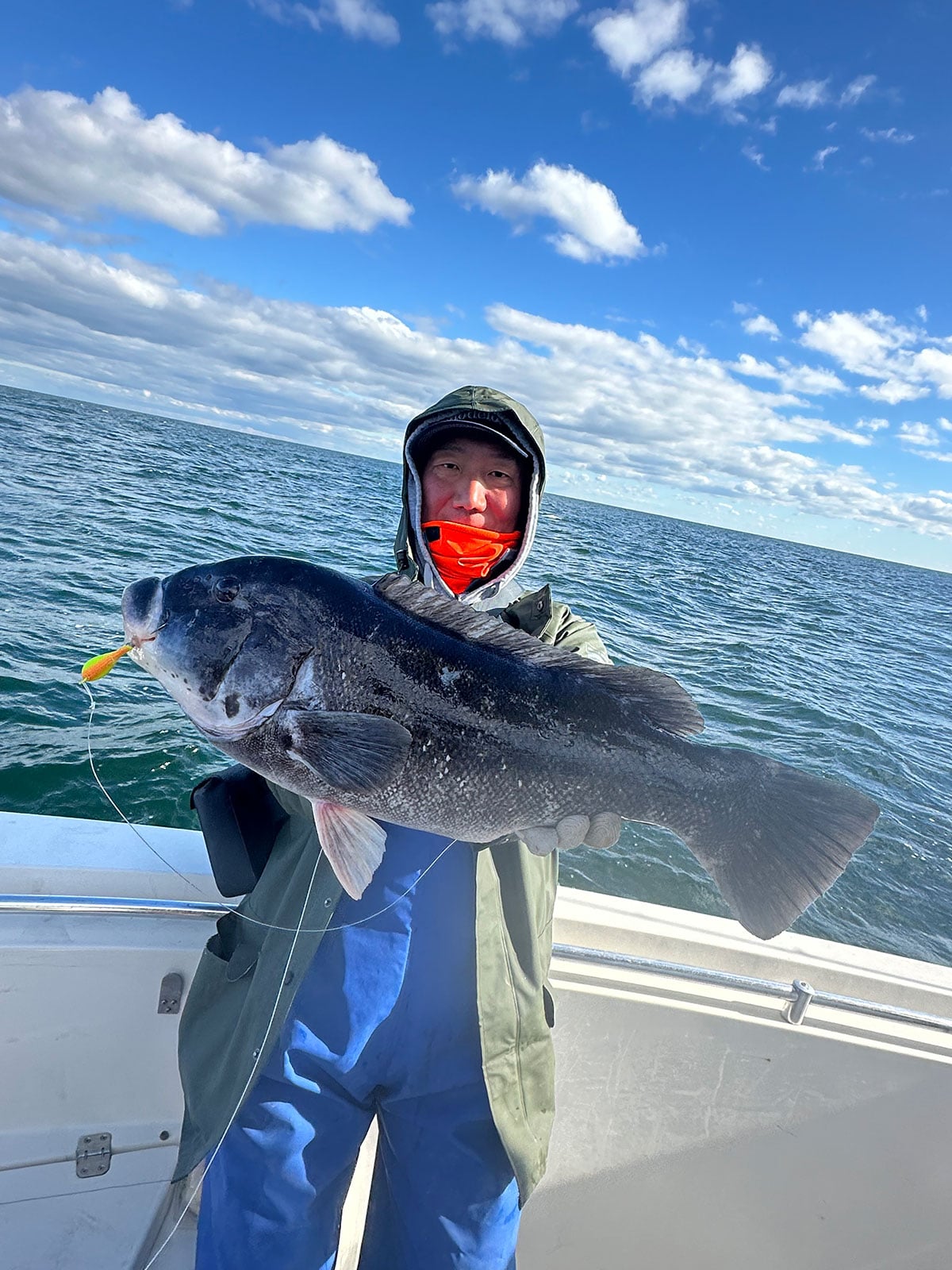
Going Big
This is also the time of year when I start increasing the size and profile of my baits. Whole crabs become a major part of my presentation. As fall progresses, fish are increasingly willing to feed on larger offerings; whole green crabs, Jonah/whiteleggers and even spider crabs become part of the menu. There’s a reason I like showing them a substantial bait at this point in the season. The fish are gathering, competition is increasing and they’re looking to put on as much weight as possible before winter.
A bigger bait can also help separate your offering from the smaller forage and smaller baits that are still being picked off by the abundance of fish below. As the water gets deeper and the fish become more concentrated around specific pieces of structure, my reliance on jigs starts to decline. Jigs can still produce, particularly on a calm day with a slow current when you can keep the presentation exactly where you want it. But those conditions aren’t always easy to come by.
More often, I find myself turning my attention toward rig fishing. The presentation becomes more vertical and deliberate. Instead of covering a large area, I’m trying to pinpoint specific pieces of structure that are holding fish. I’ve always joked that when that first sinker hits bottom, the dinner bell has rung. But getting that sinker onto the right piece of bottom is everything. When fishing deeper structure, positioning becomes critical. Sometimes the difference between a productive drop and a dead one is only a few feet. That’s why I concentrate on areas such as wrecks, deeper ledges, rock piles and other pieces of structure that consistently provide depth and cover. From there, the goal is finding a competitive bite with some keepers (or heavyweights) in the mix.
Advantage You
One of the biggest advantages of this late-fall period is the sheer number of fish competing for food. There are still plenty of fish around, and with more fish packed into a smaller area they can become extremely competitive. Sometimes they’ll commit to a bait almost as much out of competition as it is because they’re actually hungry! That creates more bites and more opportunities to get hooked up. And don’t be afraid of getting too close to the structure, either. In fact, I’ve always said that if you’re not snagging a rig every once in a while, you probably aren’t fishing it right. The goal is to put your bait where the fish actually feed, not just where they live.
There is one more segment of the fall season, late-fall, that deserves its own article. This is a time when it’s necessary to fish very deep, 70-plus feet, but it’s also a time when some of the biggest blackfish of the season landed each year. As the season winds down and the last few tautog settle into the depths, the boats will begin to disappear from the ramps and marinas, and another year of blackfishing will inevitably come to a close. But that bittersweet end, is one the things that makes it so special. And if you play your cards right and take full advantage when the October togging it at its peak, you’ll be able to pick and choose your late-season runs and transition into winter with a head full of memories and a freezer full of fillets.