Our ice season is usually short, so it pays to be ready before it happens!
I am optimistically looking forward to hard water fishing again this year. By all standards, last year was an old-fashioned winter for ice fishing here in southern New England as we had lots of ice for much of the winter. That revived my ice fishing interest from years past and I went a lot last year, something I hadn’t been able to do much in previous winters.
I only jigged last year on the ice and did it in a number of lakes and ponds in Rhode Island and Massachusetts. As the winter continued, my sons often accompanied me, and we landed good numbers of fish as well as a variety of species. As the old-fashioned winter progressed, I found myself adjusting my strategies as my experience grew and my success was increasing, as well.
New To The Game
For anyone who is new to ice jigging, it is a very effective, yet simple, way to fish through the ice and is much more similar to warm weather fishing because you’re using a miniature rod and reel. You drop some type of lure to the bottom, and then jig the rod tip up and down to give the lure some type of action. No fish in one hole, move on to another.
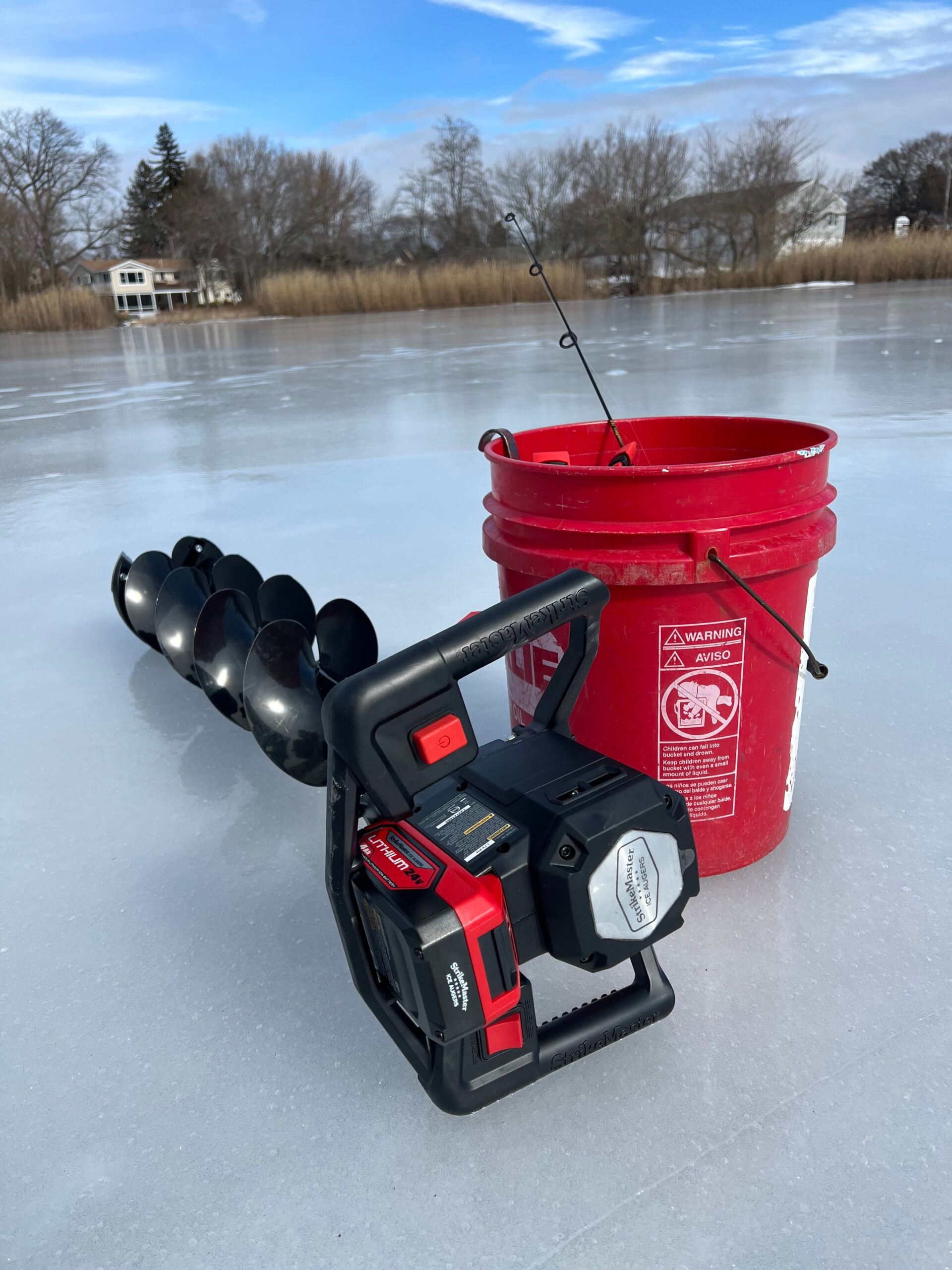
Jigging often involves finding the fish and that translates into cutting or chopping a lot of holes at times as you move around the hard surface of a body of water looking for concentrations of fish. In the beginning of the winter, I was chopping holes with my ice chisel. My sons were using a hand auger. After a few outings, it got to be too much for this 74-year-old! So, I decided to make a real commitment, and I purchased an electric ice auger that ran on a lithium battery. It was one of the BEST fishing purchases I ever made.
My auger was a StrikeMaster Lite Flite auger. It weighs just 14 pounds and can cut an 8-inch diameter hole through 12 inches of ice in under five seconds. This auger also has a unique feature, it was made with wings along the shaft that allowed the cuttings and slush to blow upwards and outward like a volcano erupting once you break through to the water. It pushed out the cuttings and slush so well that I didn’t even need to clean out the hole with my scoop. With the electric auger I was also able to cut a lot more holes with little effort. I never wore out the battery but recharged it every time after use.
Rigging For Jigging
I have two rod/reel setups that I use for ice fishing. The first set-up is an older Berkley ice rod/reel combo, and the other is an Ugly Stik ice fishing rod/reel combo. Both rods measure a little over 2 feet long, ideal length for jigging. I spool my reels with 6-pound test monofilament line and tie on a 3-foot length of 12-pound test shocker leader that I can grab to get a big fish out of the hole. Many rod/reel companies sell ice fishing combos at reasonable prices. I carry the rods and box of lures in a five-gallon bucket. I also carry forceps for unhooking fish. And I still bring my scoop, even though I rarely use it.
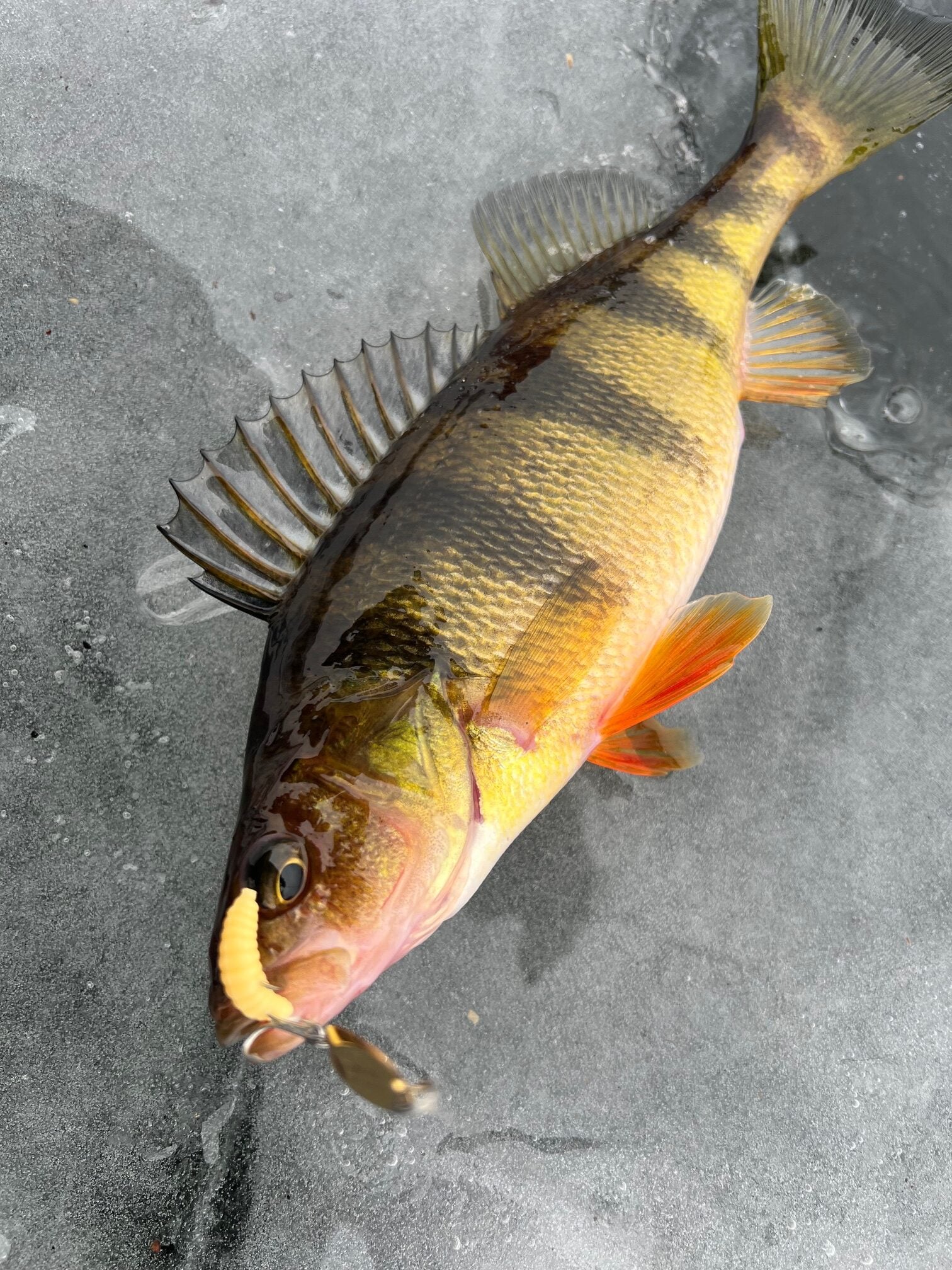
I pack a good supply of a variety of metal lures in the 1/12- to 1/4-ounce size range in my lure box, but I have to admit my favorite is a 1/8-ounce gold Kastmaster. Here’s a big key to success. Add an enticer to the hook of your Kastmaster or any other lure. In the beginning of the season, I was threading on real mealworms that I bought in a pet store. That worked great but I was going through lots of worms as the fish would either tear them off or they’d fall off after catching a fish. So, I decided to try soft plastics. I bought some “fake” yellow maggots from Amazon. They were inexpensive and my package of 100 will probably last me for years. They worked incredibly well and were just as effective as the real ones. In addition, they were durable and so much more convenient. Plus, I was no longer storing my mealworms in the family fridge, something my wife appreciated! The plastic maggots were so durable that some days I would land 25 fish on the same plastic bait. Note that many fishermen also report good success using Berkley Gulp maggots while jigging.

Strategies
My jigging strategy is quite simple: after cutting the hole, I would lower the Kastmaster to the bottom and then reel it up about 6 inches off the bottom, this is the starting point. From there, just lift the rod tip slightly and let it flutter back down. After the lure drops I like to pause before jigging it upward again. I tend to get most of my hits on the pause or as the lure drops back down. Oftentimes, the fish will just grab the jig and hold on. No big hits and pulls. If you feel any resistance, pull and enjoy the battle up to the hole.
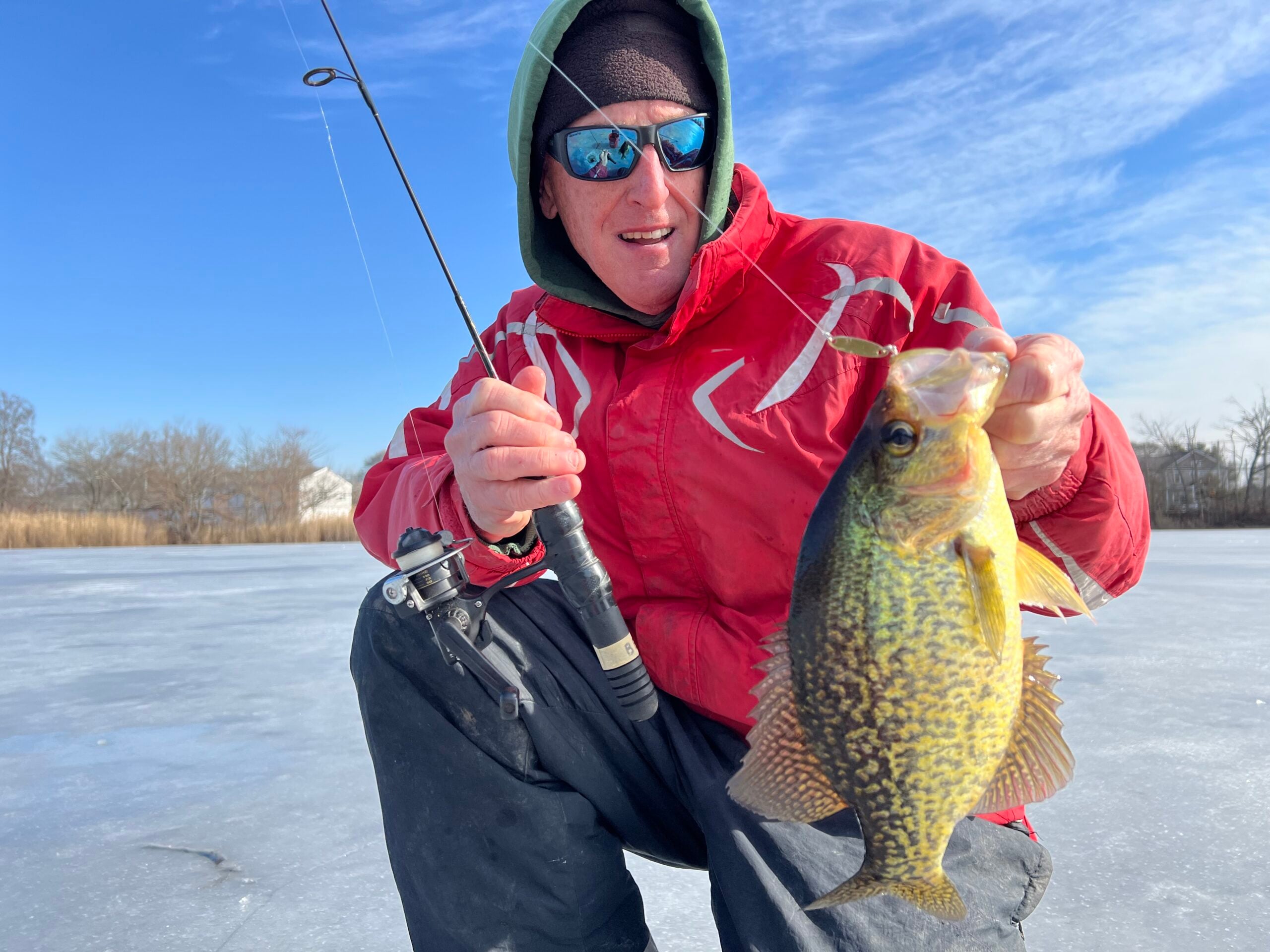
I was amazed at the variety of fish that my sons and I landed last year while jigging. Yellow perch are famous for being active under the ice, and we landed good numbers of them everywhere we went. We also landed good numbers of crappie, largemouth bass, pickerel and bluegills. On some days I would land all of these species. In one pond, we caught near record-size crappie. Another featured large pickerel and good-sized largemouths. One small pond had loads and loads of bluegills.
If I had a whole day to fish, I would often jump from one pond to another just looking for variety or bigger fish. Some of my friends were also jigging trout stocked ponds in South County. DEM often stocks some of the biggest trout in these ponds during winter. My friends added some impressive rainbows, browns, and golden trout to the list of fish that can be taken while jigging.
Both my sons and my grandchildren enjoy going ice jigging. I’d get them out on the weekends whenever I could. They had a blast on the days we found fast action. As the winter progressed I started to become familiar with the best locations in each pond, making it possible to put them on fish almost every time we went.
Give It A Try
If you want to try jigging this year in southern New England, realize you need a freshwater license for the state you are fishing in. The regulations vary from state to state. Massachusetts and Connecticut follow the calendar year when it comes to renewing fishing licenses. So, you’ll need a new license as soon as we cross over into the New Year. In Rhode Island, your freshwater license runs from March 1 to the end of February. So, your 2025 license is good until the last day of February, 2026. If you plan to ice fish in March, you will need a new license.
Note that if you plan to keep a trout in Connecticut or Rhody you will need a trout stamp. Also, it’s important to remember that in Connecticut trout are catch and release only from March 1 through the second Saturday in April and Rhode Island trout-stocked waters are closed during that same time.
I have every reason to believe that we will have some safe ice at some point this winter and if you’ve never tried jigging, the best time to get ready is long before that safe ice forms. Some years we might only have safe ice for a week or two, consider this your early warning. This tactic is simple, yet so effective and delivers a variety of species and, often, fast action. Best of all, for all you rod-and-reel anglers with cabin fever, jigging will scratch the itch of wanting to catch fish on a rod and reel.