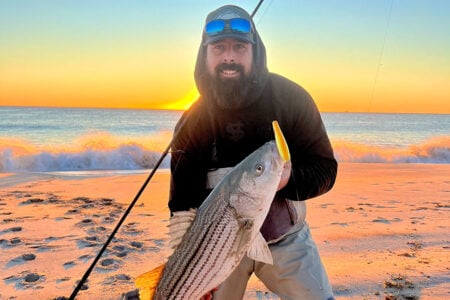
No matter where you fish, there’s a collective understanding of what November means for the striped bass addicted: it means the end is near. That end could be weeks away if you fish in New England or a good two months away if you fish in New Jersey, but that chill in the air, those short days, that thin, filtered sunlight… it all adds up to eventually giving in to winter and saying ‘goodbye’ to another striped bass season. But, that certainly doesn’t mean that we’re giving up.
In fact, some of the most exciting fishing of the year happens up-and-down the Striper Coast during the eleventh month and the ways to score vary by region. While anglers in New England might be pushing themselves back “out there” with the hope of cheating the season past Thanksgiving, stealing another good tide from the clutches of Old Man Winter. New Jersey surfcasters are licking their chops as they blow out the candles in their jack-o-lanterns for the last time, and the heart and soul of the Jersey fall run ramps up through November and continues into December. Long Island sees a little of both, with east end action typically winding down by the end of the month, while the area from Fire Island to the New York Bight typically catches fire at this time and hangs on well past Black Friday.
Whether you take the ‘have rod, will travel’ approach and chase good bites all over the Northeast, or if you’re more of a home-body that strives to catch every bite as the late innings wear on, we’ve got you covered with expert advice to put you ‘on the meat’ through November and beyond.

New England – Dave Anderson
Up here in New England, the end of the season is dictated more by the doubt that creeps into anglers’ heads, rather than any true confirmation that the last striper has actually swum past. After an intense spring run, a full and fishy summer and a fall run that has already demanded long, hard effort through September and October, many anglers here switch to chasing antlers or vegging out in front of the football game come November, but that is a mistake!
While earlier fall exploits are often hard to pattern, as new pushes of stripers come and go with waves of bait, moons and changes in the weather, the late-running stripers in this region relate to one of two things; bait or warmer water. As the ocean temps dip into the low 50s, straggler stripers tend to migrate with more purpose, almost like they’re late for work. But creature comforts take precedence, as the fish stream along the coast, if they encounter a good school of peanuts, sea herring or sand eels, they’re going stay with it and feed. Or, if they find themselves in a plume of warmer water, they will typically follow that cloud of warmth to its source.

The Grind
This is why the most successful November anglers in the region use a ‘two-factor authentication’ method when choosing where and when to go. Spending some time out during the day can pay off big, whether you’re hitting the lots in your truck or speeding around in a boat. Finding pods of active fish that are visibly feeding on bait might lead to an epic daytime blitz, or it might give you the starting point you need to inform your plans for later that night. The other thing you may look for is baitfish balling up inside an inlet or salt pond, as if the school is preparing to run out of the inlet on the next dropping tide. Whether you find bait on the beach, bass, both or a teeming backwater preparing to let loose it’s payload of baitfish, you’ll have a big leg up on other anglers going in blind.
Typically, I don’t expect to catch a ton of fish on a November trip, but I have had some banner nights for numbers and caught some impressive fish as well. The typical “after dark” November striper trip can be summed up as ‘grinding it out’ but most of the time, I feel like I can connect with 2 to 4 fish and sometimes crazy things happen. And those crazy nights usually happen when some kind of large bait draws in a pile of bigger bass. I’ve seen some wild nights fueled by mullet, sea herring and peanuts in November.

Focus Groups
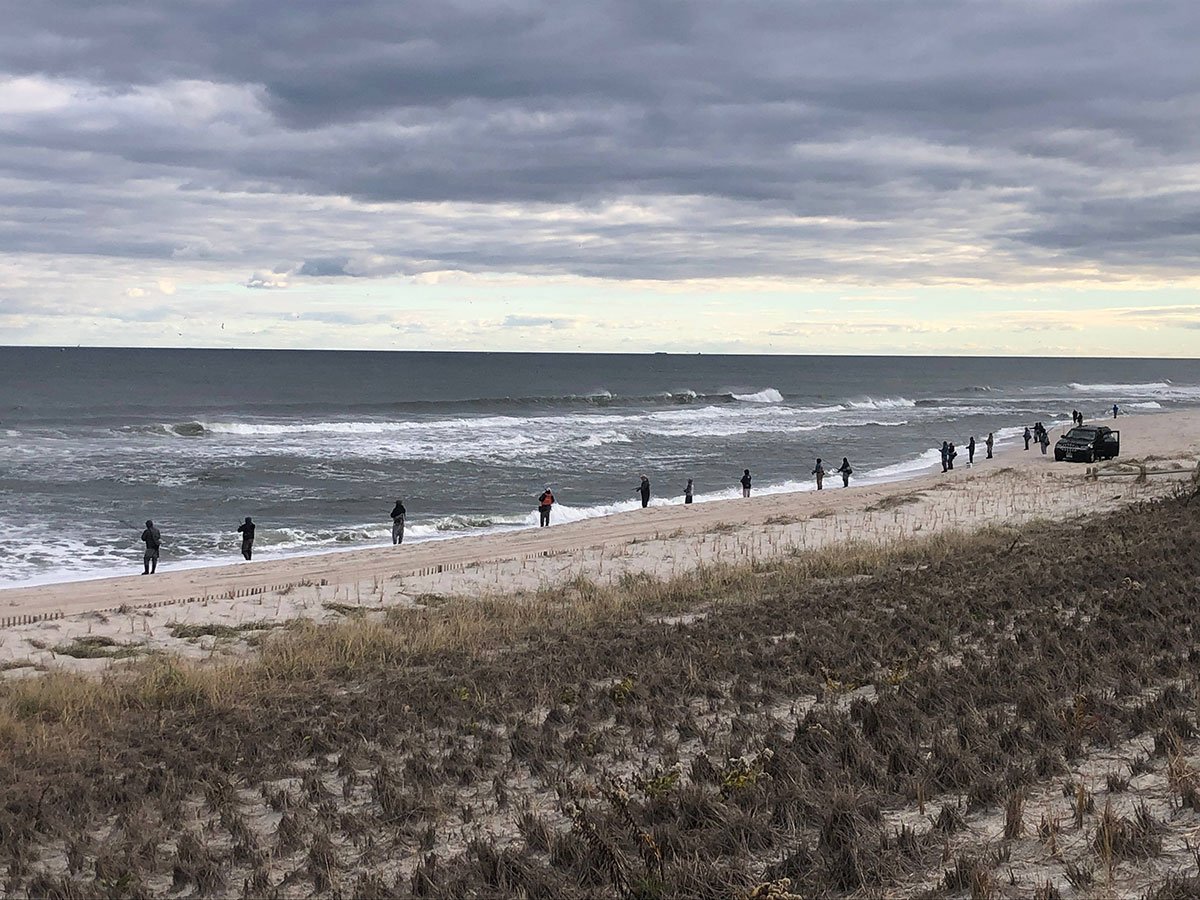
The quintessential image of November stripers in New England would be a surfcaster fishing the South County beaches of Rhode Island and that’s because it’s a great place to fish at this time of year. It’s also a place that’s famous for electric daytime fishing. With gannets pushing herring schools offshore and some late-running ‘corncob’ mullet leaving the breachways, the bite can be insane. The breachway ponds pump sun-warmed water into the scene every dropping tide and the action can ‘go red’ anytime, day or night. The typical daytime arsenal includes spooks of various sizes ranging from 5 to 9 inches, pencil poppers, poppers, bucktails, epoxy jigs and paddletails. After dark darters, bottle plugs, plastic swimmers, large needlefish, paddletails and bucktails fill the bag. Another killer method for tempting a November cow is drifting eels out into a dropping tide from the mouth of a breachway. (HINT: these methods work around any inlet, they don’t have be officially listed as a breachway).

Another great trick is fishing around the entrances to areas where striped bass are known to holdover for the winter. There are countless rivers, bays and ponds that hold wintering populations of stripers in the Northeast, but it often seems like anglers forget that those fish have to swim into these places before the winter starts and much of that movement happens at the end of the run. Without blowing up anyone’s favorite spots, a little research will reveal the locations of some of the most popular holdover waters and – trust me – those inlets produce some serious fish when you hit them right. In a similar vein, when the seas get ugly out front, many of our tidal rivers – from Cape Cod to Connecticut – will see an influx of stripers that will feed heavily while they wait for the weather to change again.
I’ve often said that I love to fish in November, because I feel like every fish I land, especially toward the end of the month, is one I stole from the winter. And those fish count for double when you need to call upon memories to get you through the cold darkness of the New England winter.