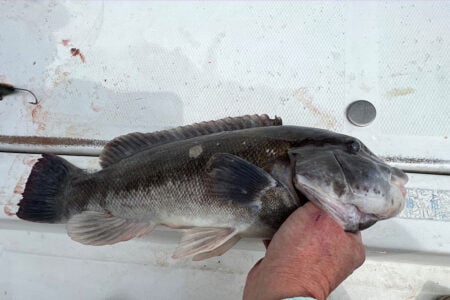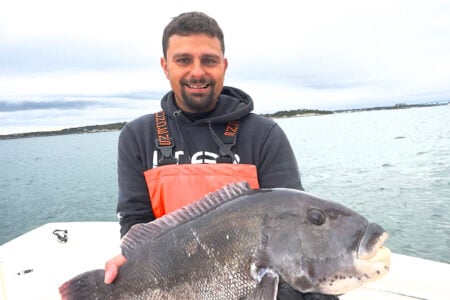
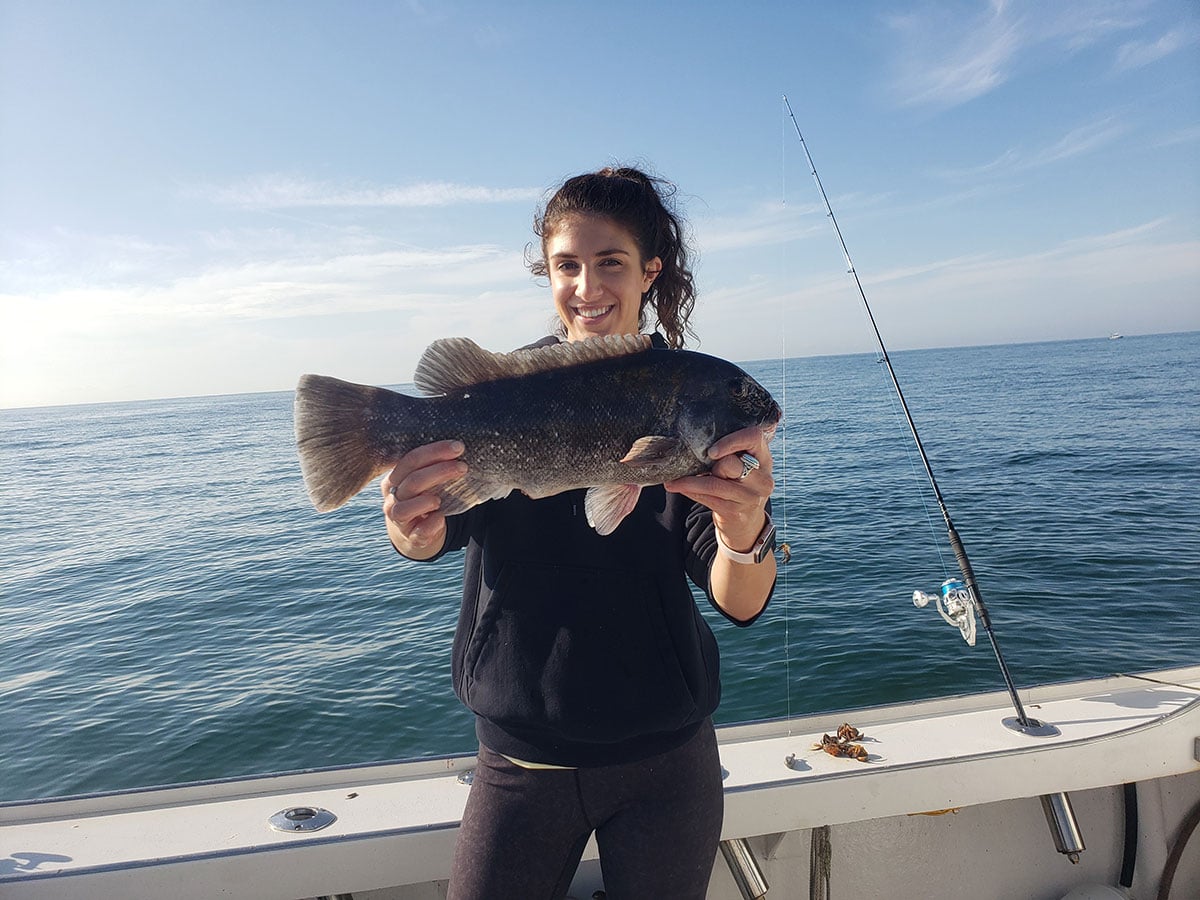
Warm September waters bring the tog in tight and open up an awesome light tackle opportunity.
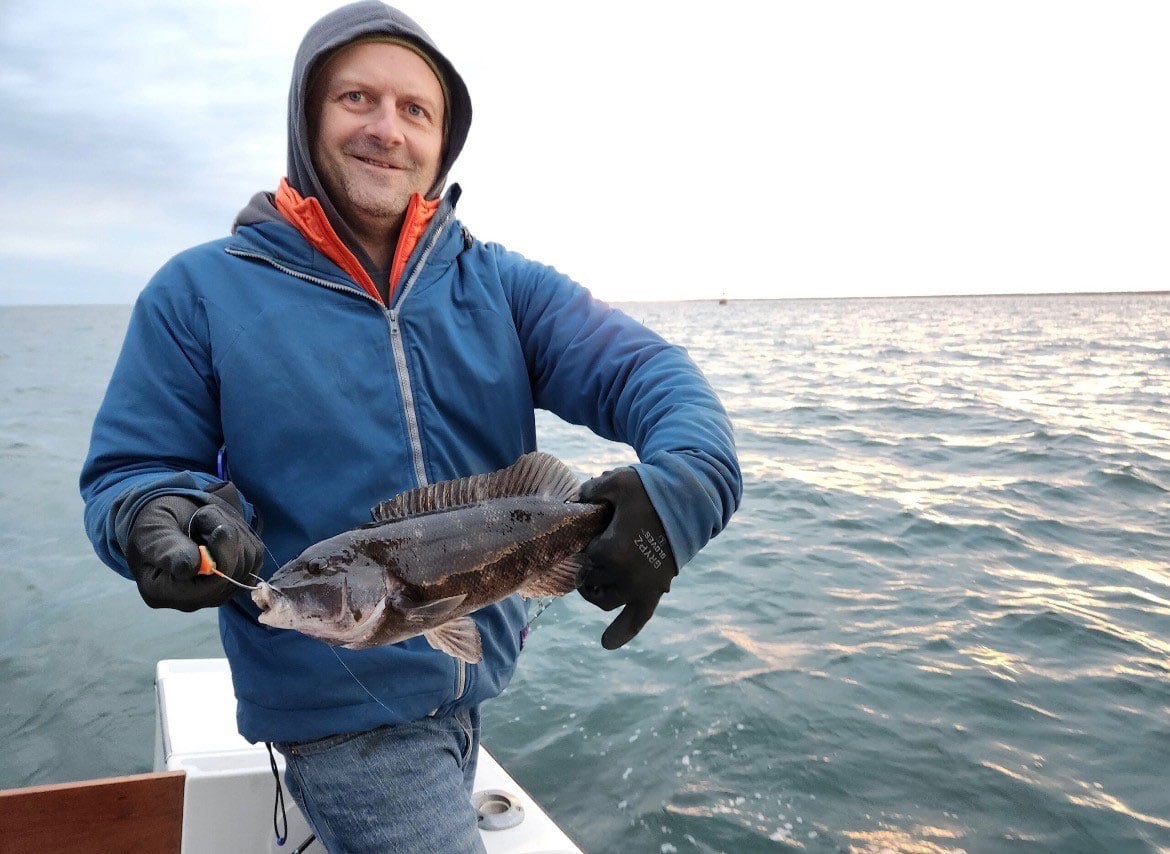
Believe it or not, September is my favorite month to target tautog… well, perhaps I should rephrase that slightly, my favorite 30-day stretch would really be September 15th to October 15th. The reason I like this time so much, is because when the waters are still relatively warm and the fish are often up very shallow, putting them in the perfect zone for shore fishing, kayak fishing (and boat fishing, too).
I also – far and away – prefer to target tog on jigs, using a spinning rod. I like this because it appeals to my bass fishing roots, when I’m swinging a heavy conventional and my rig is anchored with 6 ounces of lead… for me, it loses something. But that’s just me.
It is unfortunate, that Connecticut and New York can’t seem to find a way to allow their anglers to access this awesome time of year for togging. However, for those of you living in Connecticut’s ‘no tog zone,’ trailering your boat or carting your kayak into Rhode Island or Massachusetts waters puts you legally back in the game until the season opens in your home state in October. Trust me, if you’ve always waited for October to start togging, you’re about to rethink your entire fall playbook.
Set The Gearshift
When you’re togging in shallow water, there are safety concerns for each mode of transport. If you’re fishing from shore, do not even attempt this without studded footwear such as Korkers or other wading boots with metal studs screwed into place. If you’re in a boat, anchoring in shallow water can be hazardous, large waves can come out of nowhere and surprise you, so you’re best off to choose a calm day to ply the shallows. But, of course, the best and safest method is going to be using a spot-lock equipped trolling motor.

In a kayak, anchoring is not recommended, unless you’re in a very well-protected area with little current or wave action. Anchors can pull a kayak underwater in heavy current and even a large boat wake can swamp or capsize an anchored yak. A spot-lock equipped motorized kayak is safest, but some anglers find success during slow current/low wind scenarios by using a drift sock or using a breakaway tie-off system, tying off to moorings, pilings, or other above water structures using a method that can be pulled loose with a snap of the wrist, proceed at your own peril.
As for my rod and reel, I keep it very simple, in fact, I use the same setup for all three platforms. My rod of choice is a 7-foot Tsunami Carbon Shield II (TSCSHDII701MH) and my reel of choice is a Tsunami Salt-X II 4000. Some anglers like to use a longer stick when casting from shore, but I feel like it’s more fun to do it with the 7-footer and that’s what I use. If the spot is particularly gnarly or if the surf is extra rough, I will sometimes step up to my MagicTail 7-foot, 6-inch inshore rod paired with a Shimano Saragossa 5000.
Of course there are a long list of combos that will do the job, our Long Island editor, Matt Broderick, suggests the 7-foot St. Croix Legend (ITLS70MF) paired with a Daiwa Saltist MQ 2500, and my sales counterpart here in New England Mike Hachey uses a high-end setup that consists of a 7-foot Century Weapon paired with a Shimano Stella 4000. For those looking for more of an entry level setup, a Jigging World Onyx 7-footer and a Daiwa BG 4000 would be another solid pairing. I use 20-or 30-pound braid, knotted direct to a 40-pound leader and I tie my jigs direct (no snap). Pick your favorite tog jigs off the wall at the shop and make sure you have a selection covering half-ounce up to 2 ounces in your jig bag.
Rocky Little Rhody
Rhode Island is pretty much the tog capital of the world and finding productive structure is not difficult. Nearshore rock ledges, boulder fields, breakwalls and pilings will all have the potential to be hot spots. Add in some current or breaking waves and your chances increase dramatically. Here are a few starting points from local shops that will get you on the fish and hone your eye for what to look for when finding your own blackfish hot zones.
The Watch Hill Paper Route
When I spoke with Mike Wade at Watch Hill Outfitters in Westerly, he basically said it would be impossible to choose just one spot to highlight for September tog. “Once you get to Watch Hill and look south and west, it’s all tog water!” Anglers fishing this area will need to watch their state lines, because crossing into New York or Connecticut waters could put you in danger of incurring a violation. Mike laid out a nice paper route of tog water starting just south of Watch Hill Point (41.18.088N – 71.51.506W), pushing out to Watch Hill Reef (41.17.680N – 71.51.825W), then across to Sugar Reef (41.17.752N – 71.52.603W) and ending at Catumb Rocks (41.17.479N – 71.52.976W).
He also had a unique rig for fishing a jig. Mike ties an 18-inch section of leader off the eye of his jig with 4/0 or 5/0 circle trailing behind the jig. He baits the jig and the circle hook and sends it down. He uses a circle because you often don’t feel the hits on free-trailing crab, they find that weightless crab and try to run off with it, the circle usually finds the corner of the mouth automatically. He says that free-trailing hook accounts for many of his biggest fish each season.
Fresh Pond Rocks
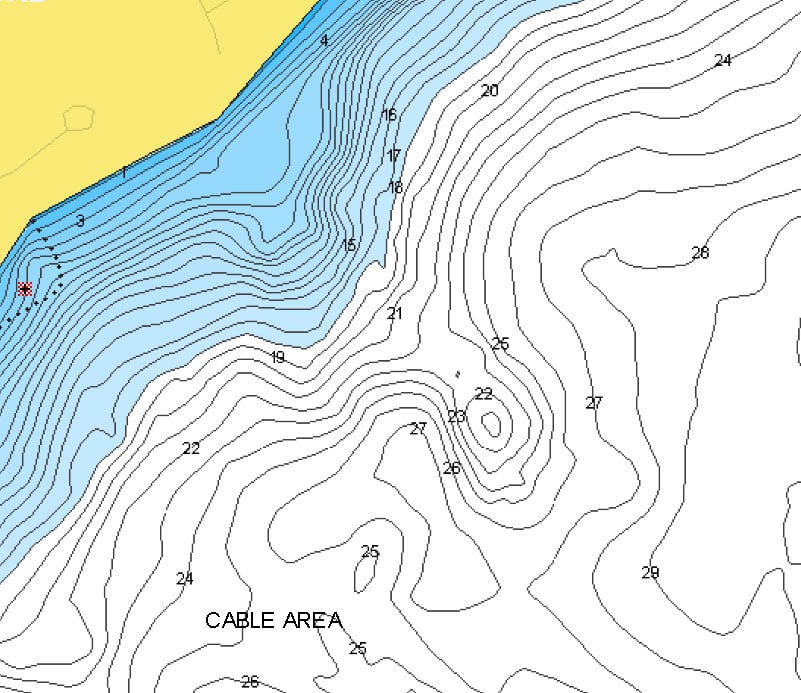
I checked in with Declan O’Donnell from Breachway Bait & Tackle in Charlestown and he said a great early fall tog spot is one many striper fishermen will be familiar with: Fresh Pond Rocks (41.20.135N – 71.41.781.W). This spot is a vast boulder field extending out from Blue Shutters Beach, positioned between Ninigret and Quonochontaug Ponds. This is a point all toggers should take to heart, rocky striper spots are very likely to hold tog. Life attracts life, and when you find a piece of fertile bottom, it’s likely to host the entire food chain.
“As September kicks off,” says Declan, “Focus on the rocky structure in 15 to 20 feet of water, and move out if you don’t find them right away.” The rocky structure in this location extends out to about 27 feet of water. “It’s also a productive spot for shore fishermen,” added Declan, “no matter how you fish it, the best action comes around the peaks of each side of the tide, when the water movement is strongest.” Anglers who fish here should be prepared for breaking bass and bluefish, especially on overcast or snotty days, Fresh Pond Rocks has a long history of producing big striped bass.
Gooseberry Island
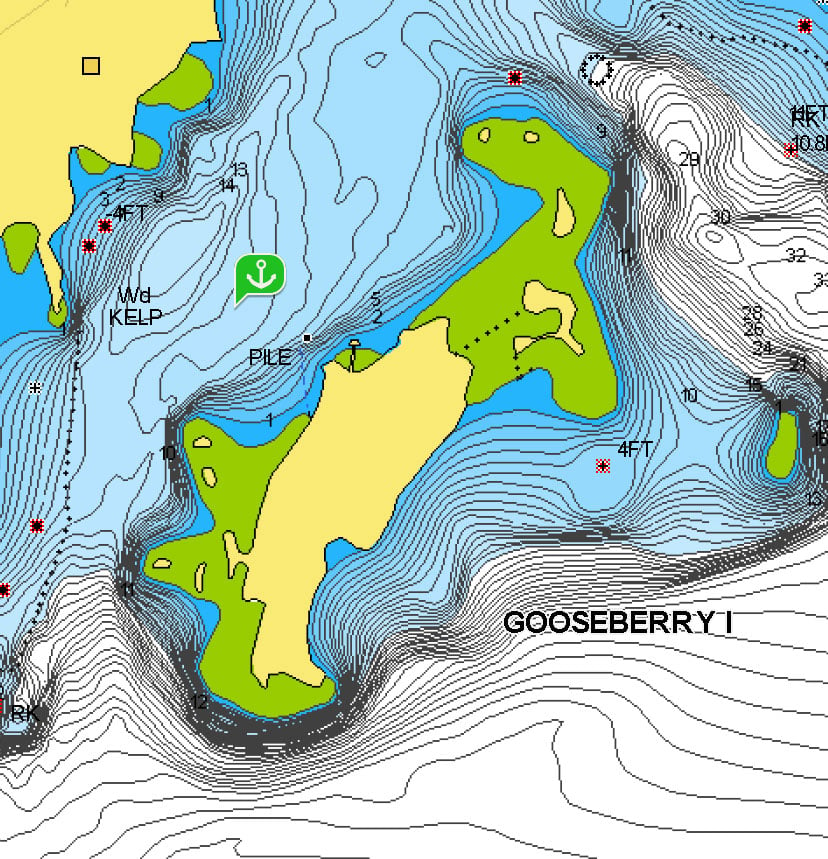
When I spoke to Peter Jenkins at the Saltwater Edge he said that boat-accessible shallow water is not really what Aquidneck Island is known for. The steep, ledge-studded shores of Newport, Middletown and Portsmouth are heralded for their deep waters and strong currents, often within casting range for shore anglers. There are a couple spots that give up consistent catches to early-fall toggers; one area is the various ledges, docks and rocks of Newport Harbor, another standout is Gooseberry Island (41.27.257N – 71.19.564W). This privately-owned hunk of ledge is rife with tog terrain for a full 360 degrees, offering boaters and yakkers more than enough nooks and crannies to prod for a day of togging.
Many anglers highlight the area between the shore and the north side of the island as an overlooked hot zone. But if the tog are trending deeper, anglers can push out off the south side to find the fish wherever they’re hanging. Anglers who hit this spot, should have a rod rigged for large striped bass as topwater action may erupt at any time around this historic hunk of granite.
In The Commonwealth
Blackfish seem to be everywhere these days Massachusetts waters. While Buzzards Bay, the Elizabeth Islands and Martha’s Vineyard mark the epicenter, anglers are reporting tog from all over the Cape, Plymouth, Duxbury and all the way up to the mouth of the Merrimack River. These three proven hotspots will get you on the bite and give you a little more insight into what it takes to make a tog feel ‘at home’.
Chappaquoit Humps
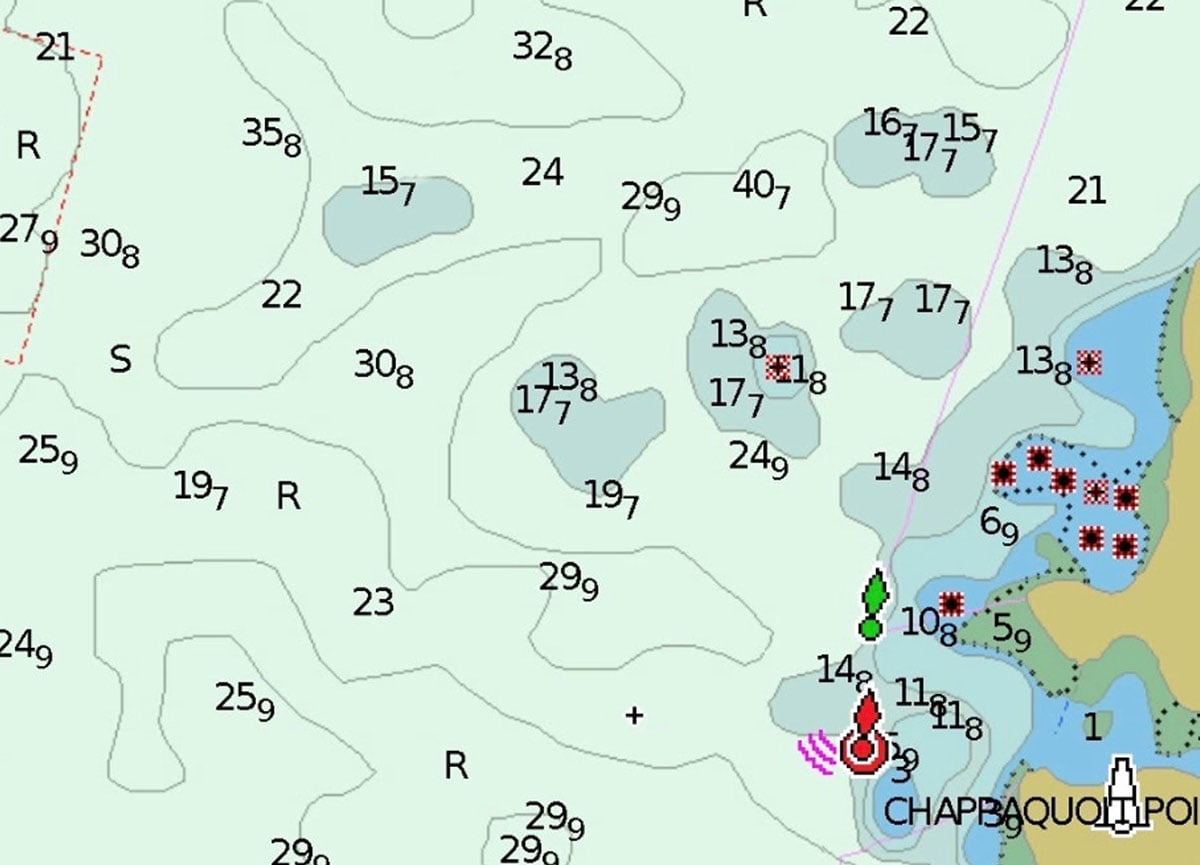
AJ Coots from Red Top in Buzzards Bay hit us with a hot one, highlighting a large expanse of rocky humps and bumps just west of Chappaquoit Point (41.36.301N – 70.39.139W). These humps sit in 24 to 40 feet of water, but mound up to between 12 and 17 feet. The use of spot-lock technology will make it possible to bounce around from hump to hump to find the best bite. AJ likes green crabs on tog jigs, but when green crabs have been scarce (like this past spring) he says clams or even Gulp Crabs will get the job done. AJ says this spot is also a sleeper for big sea bass, so make sure you’re keeping the knotheads honest, and you’ll likely come home with a mixed bag of dinner options.
Naushon South Side & Robinson’s Hole
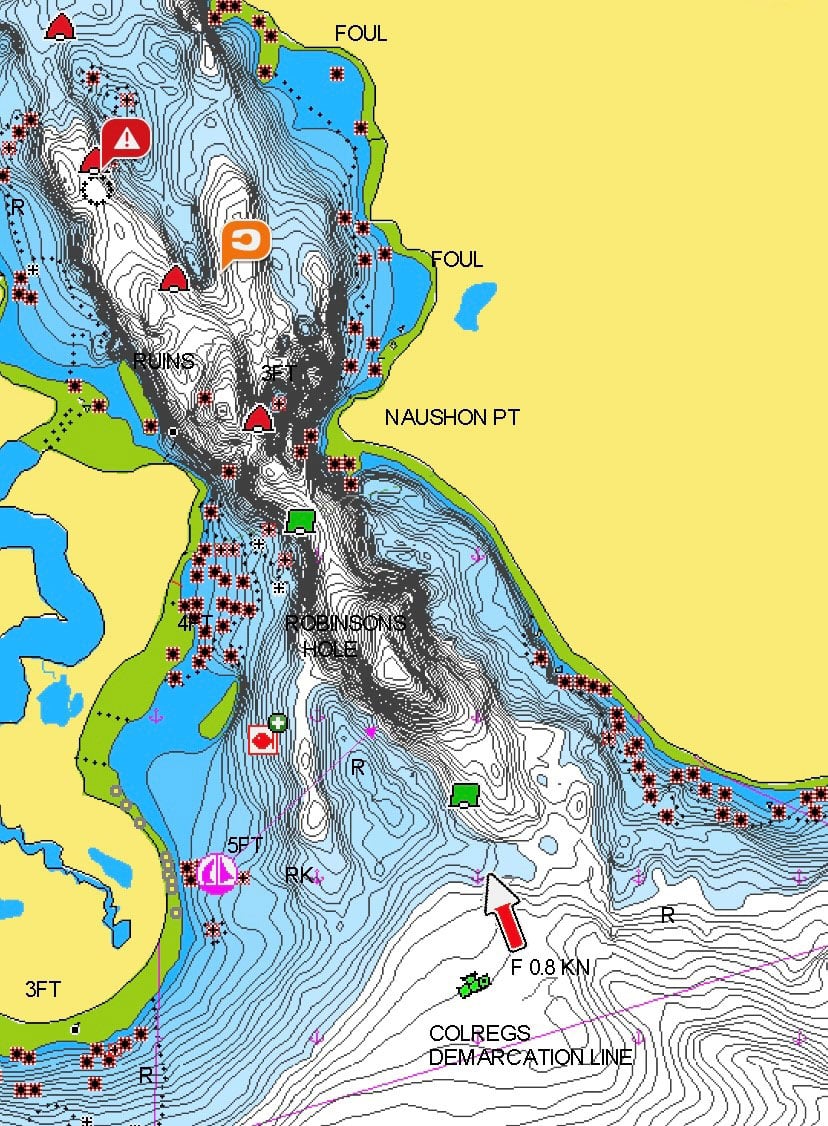
Steve from Dick’s Bait and Tackle on Martha’s Vineyard said that the second half of September and into October is a great time to target blackfish around the Vineyard, not only is the bite solid, but most everyone fishing on the island is focused on Derby species and tautog is not on the list! While there are many good spots on the Vineyard itself, the many north shore rock piles and a few shallower wrecks off of Gay Head being some of the best. Steve said he’d recommend running across to Naushon Island and fishing the south shore of the island and then move into Robinson’s Hole (41.27.016N – 70.48.411W) when the tide is slower. The abundant structure, and famous currents draw in piles of overlooked tog year after year. For those fishing these spots, be prepared to pivot to striped bass or false albacore, the area is known to hold impressive fish of both species.
Collier’s Ledge
| REGS BY STATE |
| Massachusetts:
Minimum size 16 inches, only one fish per limit may exceed 21 inches August 1 to October 14 – 3 fish bag limit October 15 to December 31 – 5 fish bag limit Rhode Island: Minimum size 16 inches, only one fish per limit may exceed 21 inches August 1 to October 14 – 3 fish bag limit October 15 to December 31 – 5 fish bag limit Connecticut CLOSED IN SEPTEMBER Minimum size 16 inches. October 10 to November 28 – 3 fish bag limit |
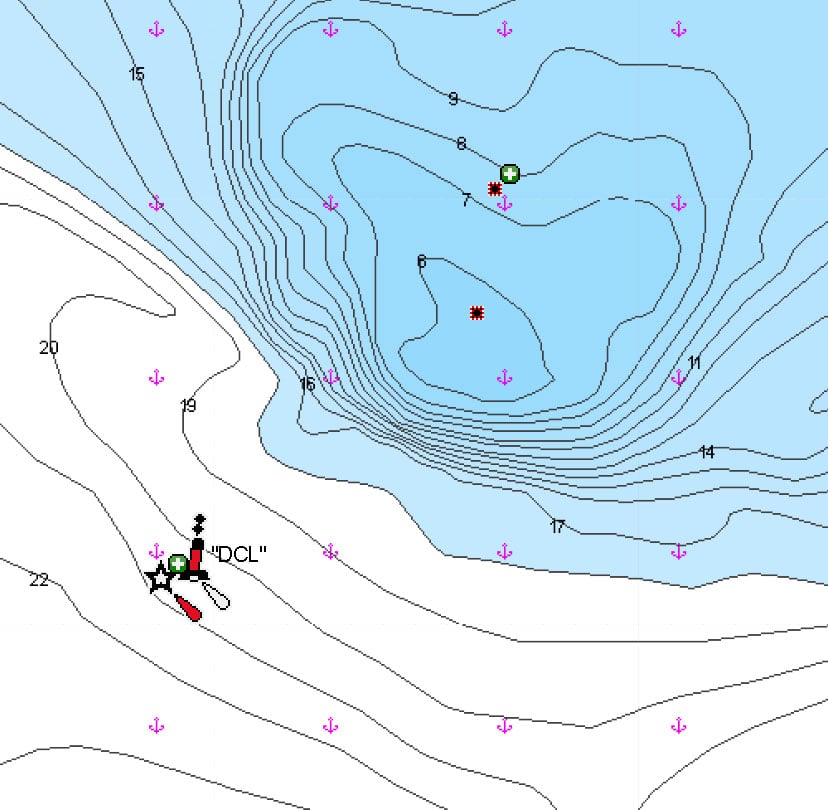
When I called in to check in with Amy at the Sports Port in Hyannis she was quick to bring up Collier’s Ledge (41.35.741N – 70.21.136W). Highlighting the fact that Collier’s is one of the few pieces of rocky structure in that section of Nantucket Sound, making it a magnet for bottom species like scup, sea bass and, of course, tautog. She also told me that this reef is manmade, and has been a topic of debate because the Coast Guard has earmarked it as a hazardous obstacle that they might one day remove, or at least, reduce the size of. So fish it while you can! Sitting in roughly 20 feet of water, this manmade rock pile holds lots of fish throughout the month and is a perfect spot for deploying tog jigs or lighter rigs. If you try this spot, make sure you have a rod rigged and ready for albies, as this stretch of water tends to be a hotbed of albie activity throughout the month as well!
Some might say that the best part of September (and early-October) togging is that – much of the time – you can do it in summer clothes. You don’t need to be bundled up in your Grundens and hidden beneath a wool hat. The weather is fair, the bite is good, there are many opportunities for other species, including albies and heavyweight stripers, and you need to take advantage of this stretch of the fall season while it’s still in play… because we all know what’s waiting on the other side of October. See you out there!
All map images courtesy of the Garmin Boating App.