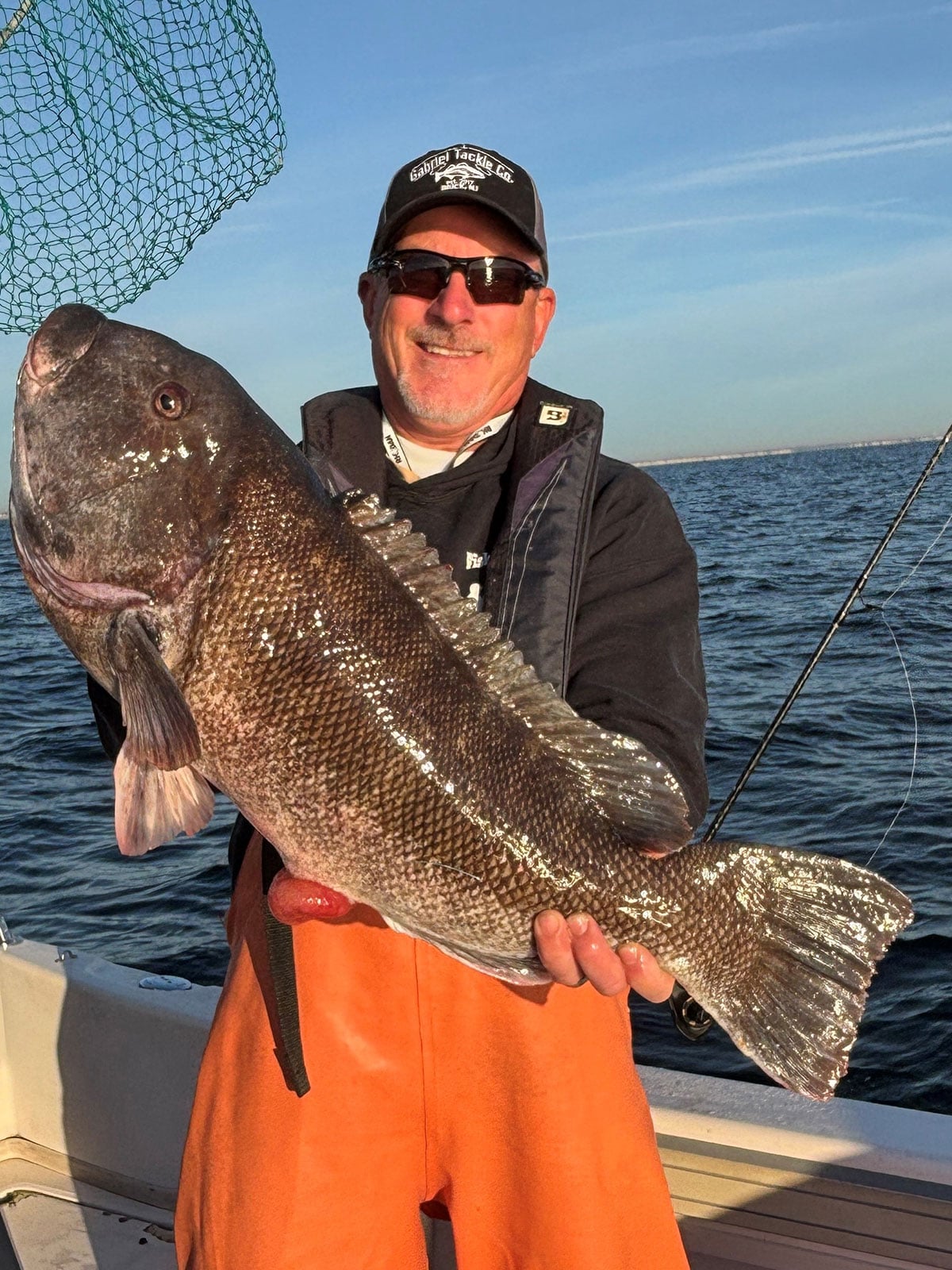
Tips and tactics to up your tautog score.
Welcome aboard, you’ve been invited to join me and my crew on a virtual bottom fishing trip!
Hopefully it’s easier to imagine by explaining things this way. It’s my hope to reach you in a way that you will help you truly grasp all of the factors at play here.
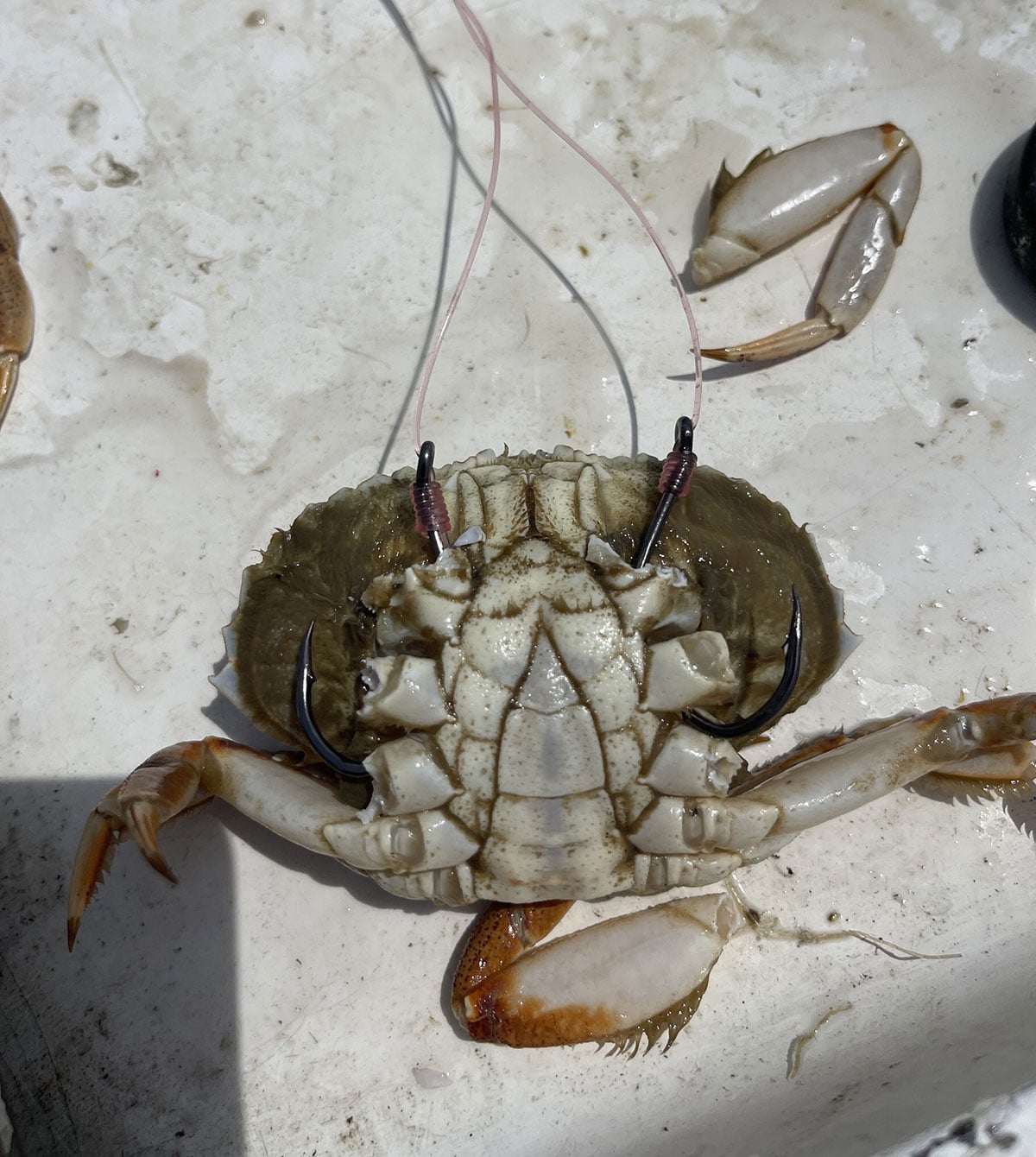
So, our captain runs his boat and has it set up on the spot that he wants to begin fishing. When we arrive on the spot and we get our baits on the bottom, we may not have any bites for the first few minutes. If the fish aren’t hitting your baits the right way, try baiting up with a small, easy to eat piece of crab. Think of a medium green crab. Cut the legs off and cut it in half. Maybe even remove the shell. Very attractive and easy for the fish to get excited over.
As the bites start around the boat, the fish will get worked up; we may have immediate blackfish bites, but we can “build the bite” this way. When the fish are chewing, I will look for ways to keep the small fish away from my bait to focus on the larger fish. While fishing the jig, my favorite is a 1- to 2-ounce jig. Try baiting this with a small whole crab. Cut the legs off on one side on the crab, and Put the hook in a middle leg hole and out through the top of the shell. The crab sits nicely with the hook in perfect position. The legs facing away from the jig move enticingly in an extremely lifelike position.
Very often these fish aren’t keyed in on color, rather the smallest amount of lifelike movement will elicit a whomp, whomp hit!
Current & Tide
The greatest factors at play are the combination of the current, tide or drift. While every day presents a different set of conditions, the effect that those conditions have on your weighted jig or rig as it sits on the bottom can be huge. If the boat is stationary and a strong current or tide is flowing from bow toward the stern, when you use a strong enough weight, you can get your rig directly beneath the boat. If you lighten your weight, your rig will be swept back proportionately.
When your rig or jig is being swept away by the current, you will find yourself getting snagged constantly throughout the day. This creates some odd circumstances depending on where on deck you are fishing. If you are in the rear corner, your bait can scope out and snag up all day long, leaving you to spend your day tying knots. If you are in the front of the deck, your moving rig will be snagging those fishing around you, which often results in you not being invited fishing with this group again. If you are fishing a rig, simply use enough weight so that the current doesn’t drag your bait away from the boat.
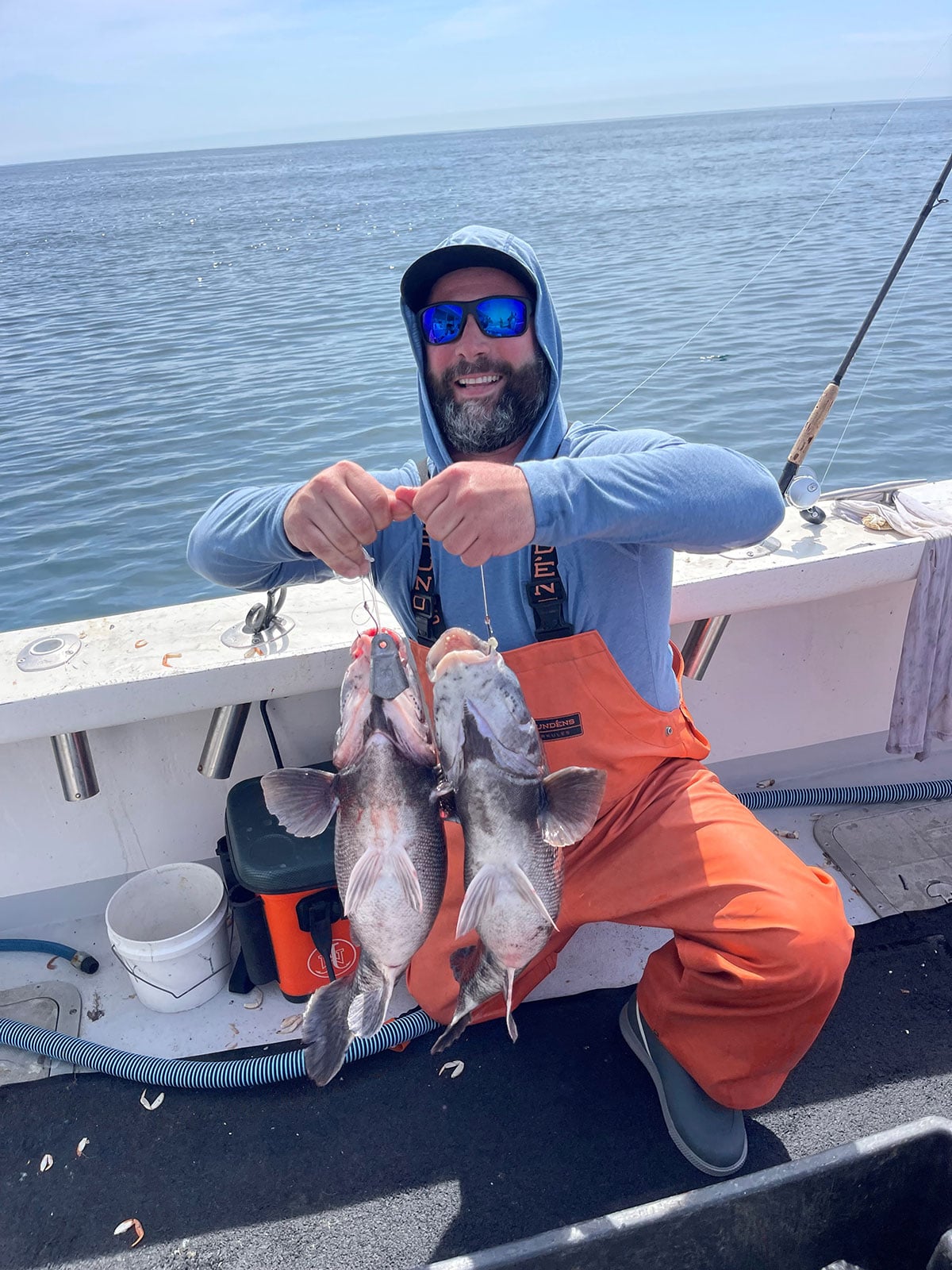
With the current moving from bow to stern, it’s easy to flip your jig up current and let it settle on the bottom; a slow twitch dragging your bait across the bottom will sometimes bring a vicious hit! Again, this works best when moving your bait in the direction of the bottom current. If your jig gets stuck, just be patient. Put a bit of slack in your line and wait for a blackfish to find your bait and pluck your jig right out of that mess! Sometimes I will throw some slack and put the snagged rod in a holder and fish another rod.
The Arsenal
There are so many great jig makers these days that it’s hardly worth mentioning; just be sure to use a high-quality brand with a stout hook. My preferred jig outfit may be a bit unconventional, but it’s what works for me. Either spin or revolving spool gear with 20-pound test braided line; my fluorocarbon or monofilament leader is 40- to 50-pound test. My spinning outfit has a 4000 SaltX reel, and I find the slightly larger handle on the 4k sized reel makes controlling a large fish much easier than if you were using a smaller sized reel. When the bite is hot and heavy, you will quickly appreciate the larger size reel, especially the handle and knob.
| STATE-BY-STATE REGS |
| New Jersey’s tautog (blackfish) bag limit is five fish at 15 inches from November 16 through December 31, at which point it drops to four fish on January 1.
Delaware anglers fish on a 16-inch minimum size limit for tautog, with a four fish bag limit in place all the way through May 15. In New York waters, the NY Bight regulations are four fish at a 16-inch minimum size through December 22, while on Long Island Sound it’s three fish through December 9. |
Rods are like jigs; there are so many good ones. My personal choice is a Century Weapon Junior Mag Taper or a Full Carbon Weapon. I set the drag on “murder” and let the rod and reel do their job. When the conditions are right, fishing the jig can be a deadly offering and will sometimes get more bites than the rig. Depending on depth and the structure we are fishing, there are a lot of nasty, high profile pieces where heavier gear gives me a better chance of landing the fish of a lifetime. My Accurate Ascender 300 filled with 50- or 65-pound braid is a work horse which of a reel; mounted on my Century ProTogger, I believe I’m fishing the best of the best.
My top shot pairs a 20-foot length of 60- or 80-pound monofilament line via an FG knot. My rig gets tied in directly using the Belmar rig. My rigs are either a V Rig, or a single snelled hook, with 60- or 80-pound leader material snelled on a 5/0 Owner Octopus able to get the job done. If my rig isn’t getting eaten the right way I usually let it settle to the bottom and wait a minute. Then I’ll give it a little wiggle. If I get a scratch, and nothing after, I will smack my rod butt or wiggle the tip a bit. If you can move the bait just a tiny bit while not lifting your sinker, you’re doing it right.
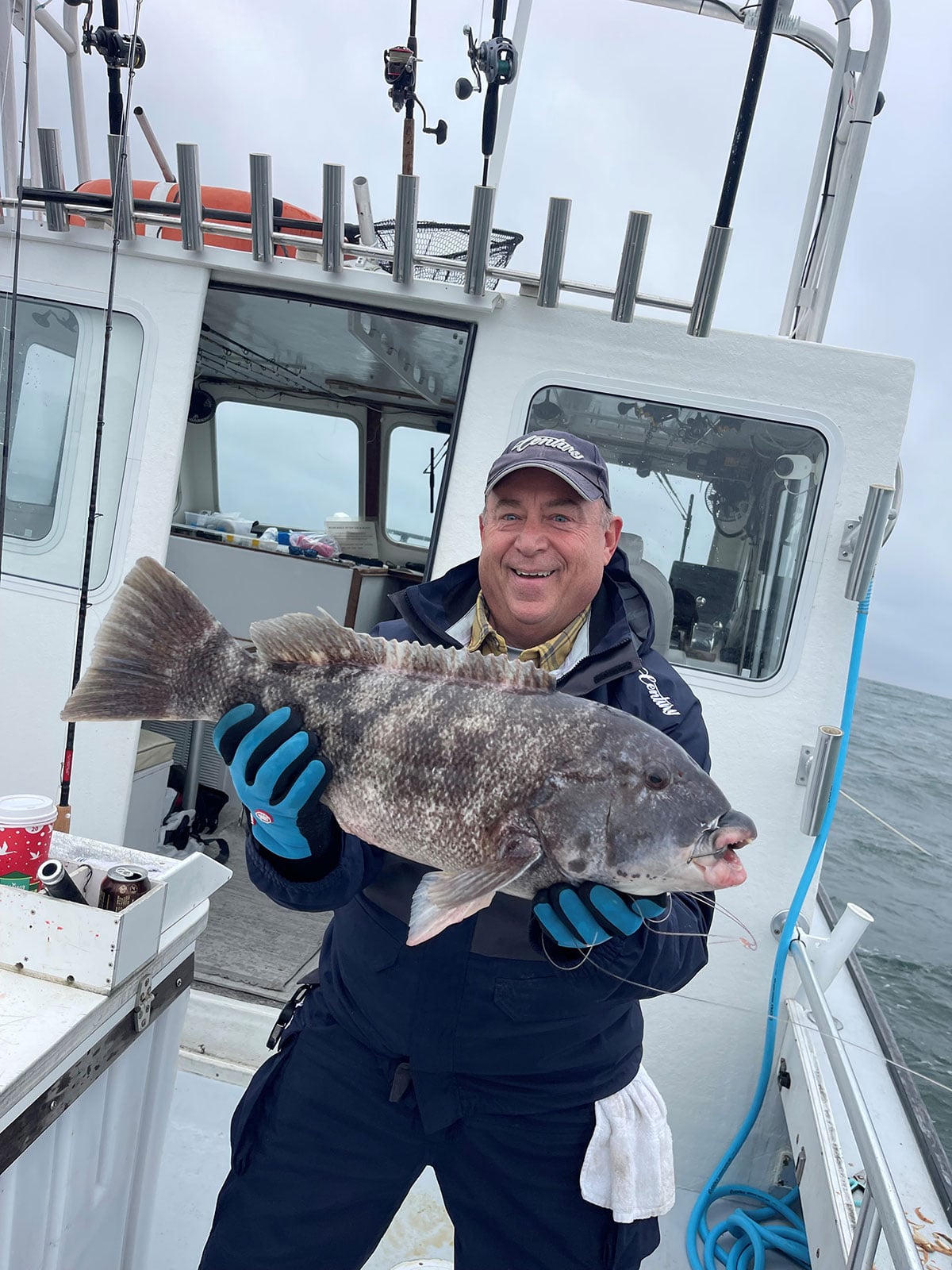
Making an excellent presentation is confirmed by getting bit. Using the proper gear and rigging are confirmed when you actually fight the fish all the way to the deck. After a few pics I love to let the big ones go! Remember, that double digit fish that you just caught, took from 10 to 20 years to grow to this formidable size; if they are healthy after the fight, I let those DD fish go home.
It’s a little like an old friend; we’ll get together next time I pass by. See you then, Big Guy!