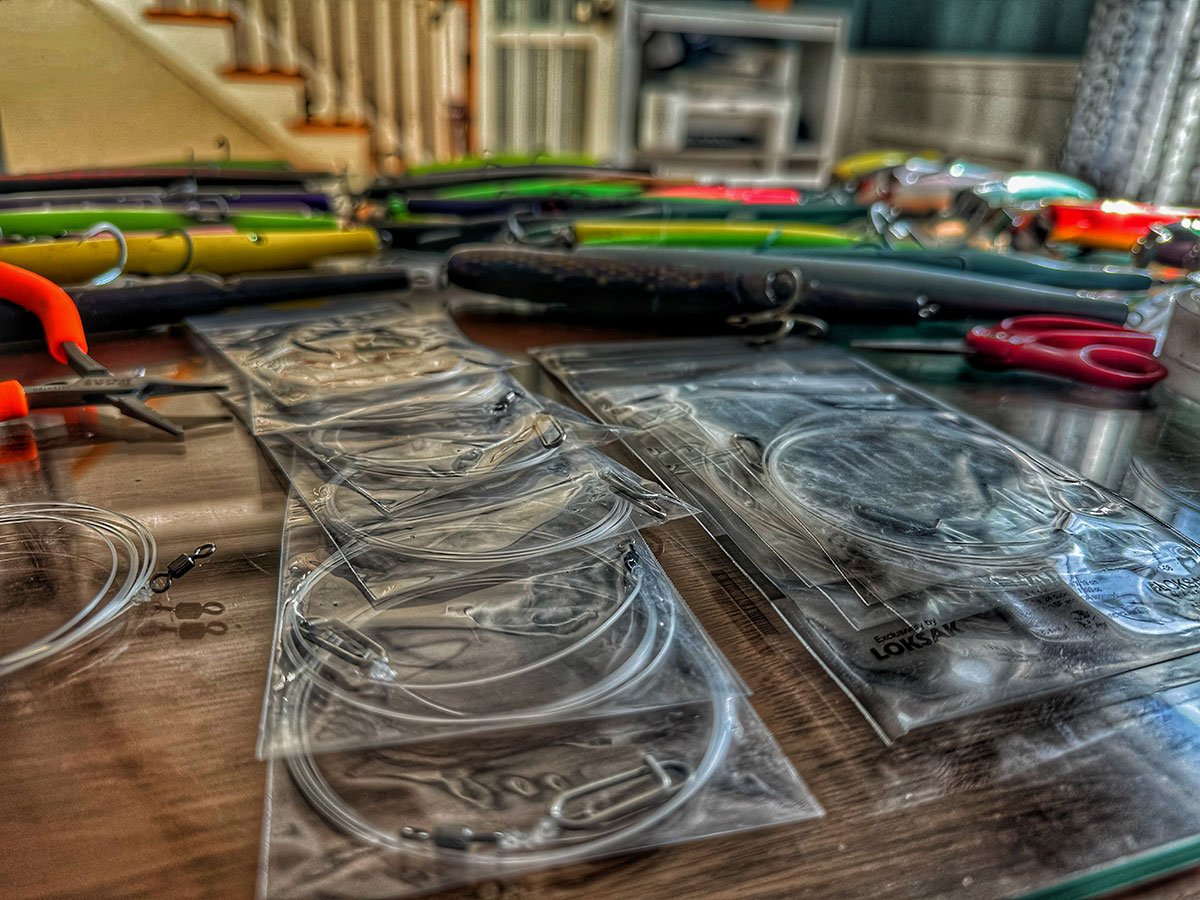
Efficient surfcasting starts with preparation, and ends with the all-important, terminal connection.
Surfcasters who achieve sustained success painstakingly prepare ahead of time, often hours, days, and even weeks before the fruits of their efforts become apparent. Large fish that are caught on any given night are the result of the preparation that was done well in advance. And I am not referring exclusively to the research aspect that also plays into surfcasting, but I am referring more to careful preparation of one’s immediate gear.
As is the case with other pursuits, like working out, or playing a sport, the time you put into improving your craft, matters. However, the time alone has no intrinsic value, nor does it necessarily lead to success. I see people at my gym all the time who have good intentions and genuinely “put the time in,” meaning they are there every day. However, the nuances of how they train, the unique breakdown and quantity of macronutrients they eat outside of the gym, their quality of the sleep is what ultimately moves the needle, or not.
The same goes for surfcasters who are looking to improve or consistently land bigger fish. “Effective fishing time” is a term I use to describe actual valuable time on the water, casting into the strike zone with your offering of choice. Breaking off your line, walking back to the car to retie a leader, ignoring the severely chaffed braid in the last 12 feet of your spool, and dropping your rusted pliers into a wave will undoubtedly decrease your effective fishing time, increase frustration, and will act as a barrier to landing more and bigger fish.
The subject of preparedness in surfcasting is vast, and I have been asked to write a few columns on the subject that will hopefully help you improve your game. For the subject of this particular story, we will focus on your terminal tackle.
The term “terminal tackle” simply refers to the components used to manage the end of your fishing line and how it attaches to the lures that you use. In surfcasting it is common practice to use either a monofilament or fluorocarbon leader attached to your braided line, either directly by tying a knot or with the use of the swivel. I am a firm supporter of the pragmatism and efficiency that results from the use of pre-tied leaders in surfcasting.
Fishing primarily in low-light or fully-dark conditions is common in surfcasting. Casting into dark, rocky areas or jetties with swift currents can wreak havoc on braided line, so the use of a stronger, more abrasion-resistant leader is a must. I prefer a 60-pound test fluorocarbon leader that is 38 to 44 inches in length. I finish my leader on one end with a 125-pound Tactical Anglers clip which allows me to easily snap lures on and off throughout a tide. The other end will be finished with a size 4, 130-pound test Spro swivel. This size allows the swivel to easily pass through the top guide when I accidentally reel in too far without causing damage to the tip of my rod.
Breaking off and getting lures stuck in the rocks or thick bubble weed is inevitable, so having the ability to quickly access and tie on a pre-tied leader is vital to success. I will not enter the water, or leave my house, unless I have at least four or five pre-tied leaders in my bag. I tie up at least a dozen at a time when I am sitting at my desk at home and find it to be a good way to pass the time during the winter months. Each leader is placed in individual, 2- by 3-inch Ziploc baggies and stored in a waterproof bag which is sized perfectly to fit just behind the plug tubes on my belt. Having them in individual bags prevents them from getting tangled on each other when retrieving them.
When I break off, I have plenty of leaders that are easily accessible. I don’t have to leave the water or the rock I am on. I take one out and do a quick Palomar knot to attach my braid to my swivel and I am back to fishing within 20 seconds. Over the years I’ve witnessed other anglers struggling to tie leaders from scratch in dark, add windy conditions and it always takes away from their ability to maximize their time in the surf. Other friends prefer to tie their leader directly to their braid with the use of knots such an FG, Alberto or Double Uni.
If you can accomplish this in the dark with 20 mph winds or while teetering on a slippery rock in less than 30 seconds, go for it. I am not that talented and will continue to use pre-tied leaders with an appropriately sized swivel so that I don’t damage my guides.