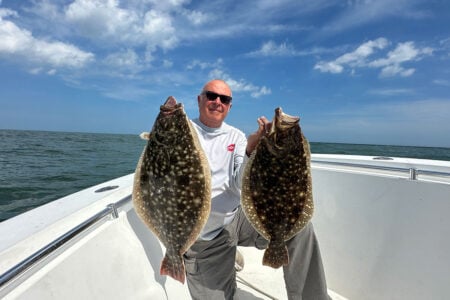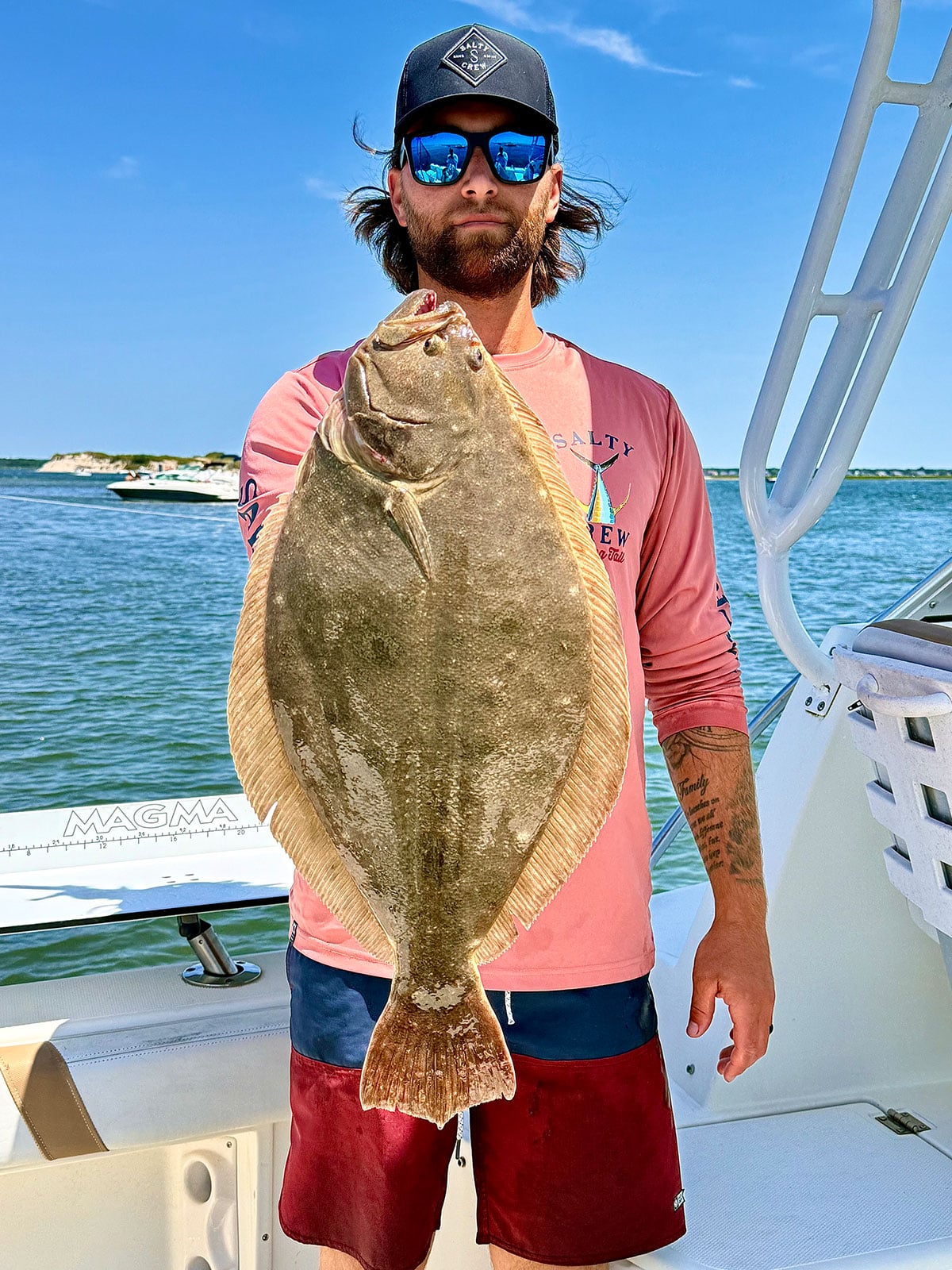
A few small adjustments that add up to bigger fluke in the cooler!
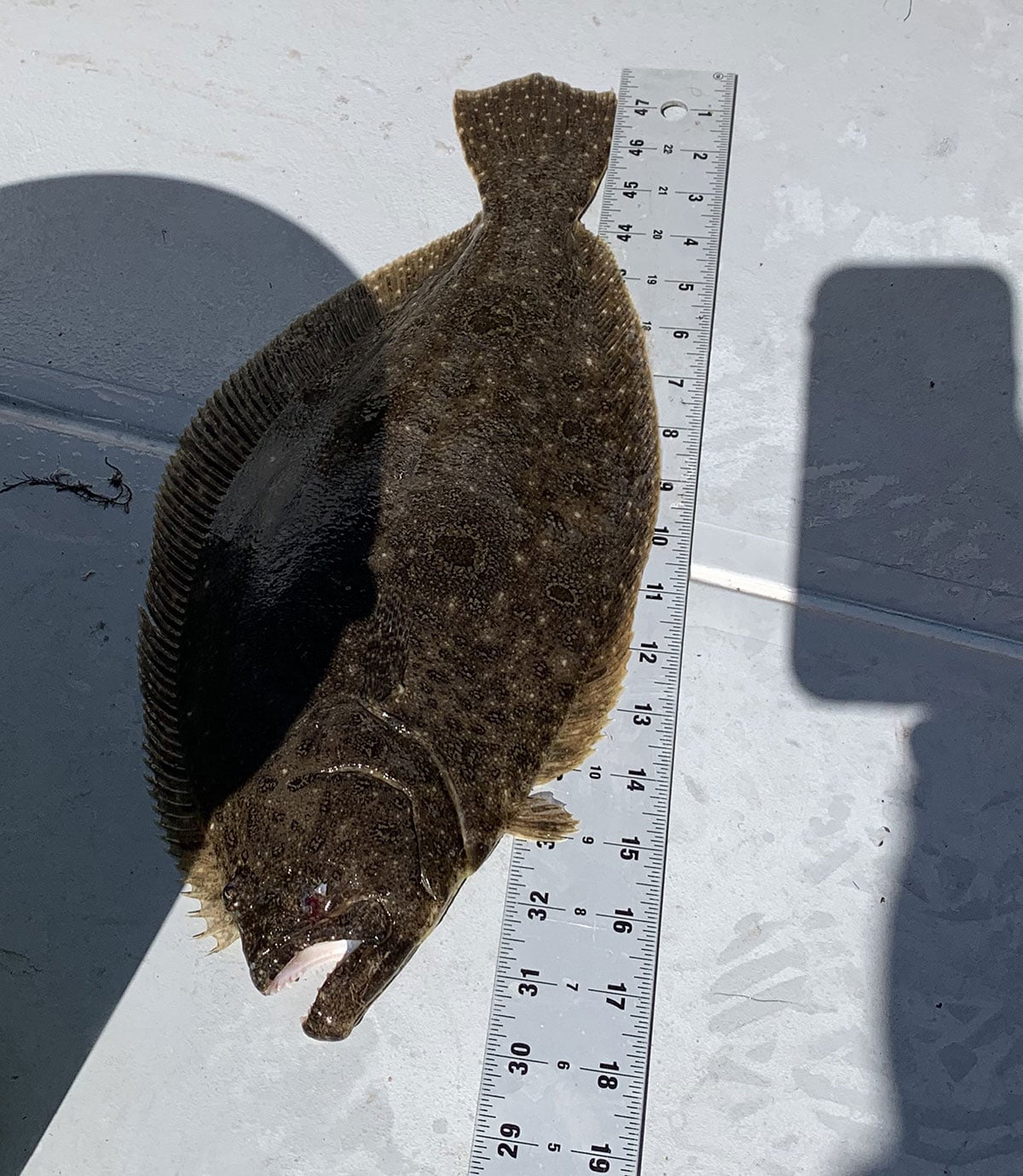
One of the consistent themes I’m hearing around the docks from inshore anglers is that it’s tough to find keeper fluke these days. Times change. Mother Nature changes. Fishing regulations change. Your strategies to catch them effectively might need to change as well. I can remember when the first size limit for fluke was implemented in southern New England at 14 inches. It has now been increased to 19 inches, and like it or not, your approach to consistently catching fluke over 19 inches is going to be different. In particular, you are now primarily looking for adult females.
There’s no question that the pressure on fluke has increased, thanks to tighter regulations on other inshore species (such as cod and stripers) which has resulted in more anglers targeting fluke. There’s also a strong commercial offshore winter fishery that keeps the pressure on these fish year-round, along with constant environmental influences. However, there are still many simple things that you can do to keep scoring in this fishery.
Finding Fluke
The first piece of advice that I would throw out there is to make sure that you are fishing in the correct locations. You could be doing everything else right, but if you are not in a prime location, your results will suffer. The three things that I will look for when it comes to picking a fluke spot are: transition areas, abundant food, and staging areas.
Transition areas are locations where the bottom composition changes, such as sand to rocks. Fluke will prowl and ambush their prey along these edges. Unlike sea bass and many other inshore species, you should focus on the edges of these and not on top of the structure itself. Be prepared to lose some rigs in finding exactly where the edges begin and end, and if you don’t, you’re not doing it right. Other transition areas, like underwater points and drop-offs to deeper water similarly provide fluke with ambush opportunities, usually some tidal flow and an easy means to drop back to the safety of deeper water.
One of the main reasons why tidal flow is important is because this flow carries food (baitfish) through the spot giving the fluke a reason to set up and feed. These might include areas with squid clouds on the screen, rips, the mouths of breachways, channels, etc. In addition, areas where you see a bluefish or striper blitz occur will frequently provide decent fluke fishing below. Fluke will be feeding on much of the same bait, if it’s sand eels or squid, perhaps even getting free meals below as remnants of the attacks above drop to the bottom, it pays to pay attention to the actions of other predators while fluking.
Keeper Mentality
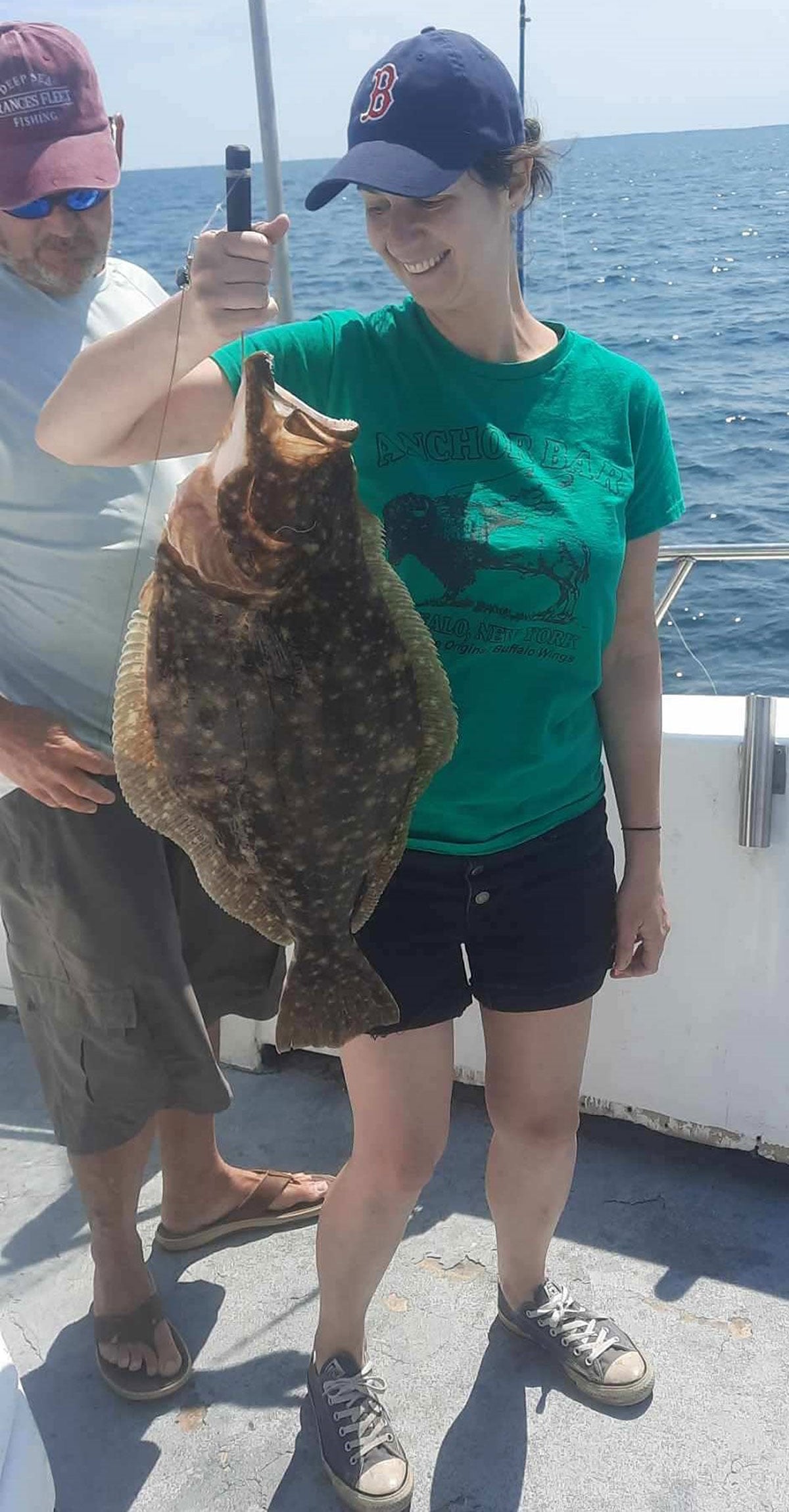
While the female fluke grows larger and will typically come further inshore than the male, you may not always find the big ones with the little ones. The same goes with the sea bass and scup – they can often be caught together and are fun to add to the day’s catch, but if you can’t keep a bait on the bottom because of voracious scup and sea bass, your chances at a keeper fluke go way down. You need to be willing to pass up the fast action on smaller fish and look in areas where the bigger ones are more likely to be – even if that means less action overall.
| SAVE IT FOR LATER |
| “Staging areas” are locations that fish will drop back to near the end of their season to start feeding aggressively and aggregating for their move offshore. Staging areas tend to be in a little deeper water around points or summer locations and will usually have ample food supply. These are key areas to fish near the end of the season. |
If you feel that you’ve covered an area and have not had a lot of success, then don’t hesitate to move on. Small groups or fleets usually gather over well-known spots which can become picked over at times. Don’t be afraid to break away from the crowd and do some prospecting – the anglers that do this are the ones that are usually rewarded. Making a move to an area where there hasn’t been as much fishing pressure is sometimes the key.
After finding some productive locations I would suggest working on nailing down the timing of each spot. Often, location alone will not do it and you will have to hone it down to the proper timing as well. This means you may need multiple variables to come together in order for a spot to produce to its full potential. One of the best ways to figure the timing out is to keep a log of your fishing with notes on weather patterns, tides, moon phases, bait presence, water temps, sea conditions, etc. along with your results.
Patterning Your Spots
While this may seem pretty basic, it will take some time to accumulate enough data to establish a pattern that reveals the timing of your spot. For example, you may see certain wind conditions on certain tide stages that congregate baitfish in a certain location. On the opposite tide or with an opposing wind that simply doesn’t happen. With good notetaking, you will know to avoid that location when the conditions aren’t right.
Make note of what the water conditions are and let them impact your location choice. If there was a recent storm and the water appears “dirty” you may have better luck in other locations that are not as dirty. This may be the time to fish inside of more protected areas like bays or inlets if the water is not as disturbed there. Water clarity is another variable to keep track of in your logbook and to correlate with weather.
Dialing The Drift
Now that you’re fishing prime locations and have begun to iron out the timing, tactics and presentation will take precedence. The first thing to consider is how you adjust to your drift conditions. If you’re drifting too fast, throw a drift sock out to slow it down, stem the tide some with your engine, or adjust your rigs. Adjusting your rigs can include upsizing the weight of the bait to hold the bottom better or switching to something that flows better with the increased movement like a narrower jighead or a spoon.
When the drift slows it’s time to downsize your baits to be the minimal amount to hold bottom. This is one of the few times that I would suggest that smaller is better than bigger. Also, use less hardware in your rig setup (spoons, spinner blades, and terminal tackle). Rigs with more hardware tend to tangle more easily when there is little to no drift, and they create more drag.
Another alternative is to “power drift” with your engine to give you a little more momentum. Lastly, a very slow drift is a prime situation to use a chum pot. The small chum pots on a length of rope bounced just up from the bottom will sometimes help entice fish from further away when they are being finicky. If you happen to have a trolling motor mounted on your boat, then you can use that to counter or add speed to your drift. You can also use trolling motors (when interfaced with your GPS) to make sure that your drift covers specific GPS spots or tracks.
Olfactory Hues
Pay attention and change up the color of your jigs or baits if the fishing is slow. A couple of summers ago I was fishing up in Narragansett Bay rather than my usual south shore spots in Rhode Island Sound. I found that I was having much better success with a red or orange jig in the bay than I was with my typical white or green go-to’s. It finally dawned on me when looking at the bay water and noticing that it was much more churned up (or dirty) than where I usually fished in the sound. Different colors will work in different spots and under different light and/or clarity conditions. If I had not experimented and changed them up from time to time I would never have put this together.
This is something to keep in mind after storms. We all know that after a hard blow the water column gets turned over and the fishing sometimes suffers for a few days as a result. If you’re going to fish these days, up your chances by using brighter colors. I would also recommend adding a rattle to your jig or some type of spinner to your baits to create some vibration or sound in these conditions. Extra scent is another trick that draws attention in dirty water, whether it’s some of the new bottled scents that you can simply squirt on or a big ol’ belly strip from a fresh catch, these tactics give the fish something more than sight to draw them to your offering, which is important when visibility is low.
Trophy Attractors
| SPOON-FED FLASH |
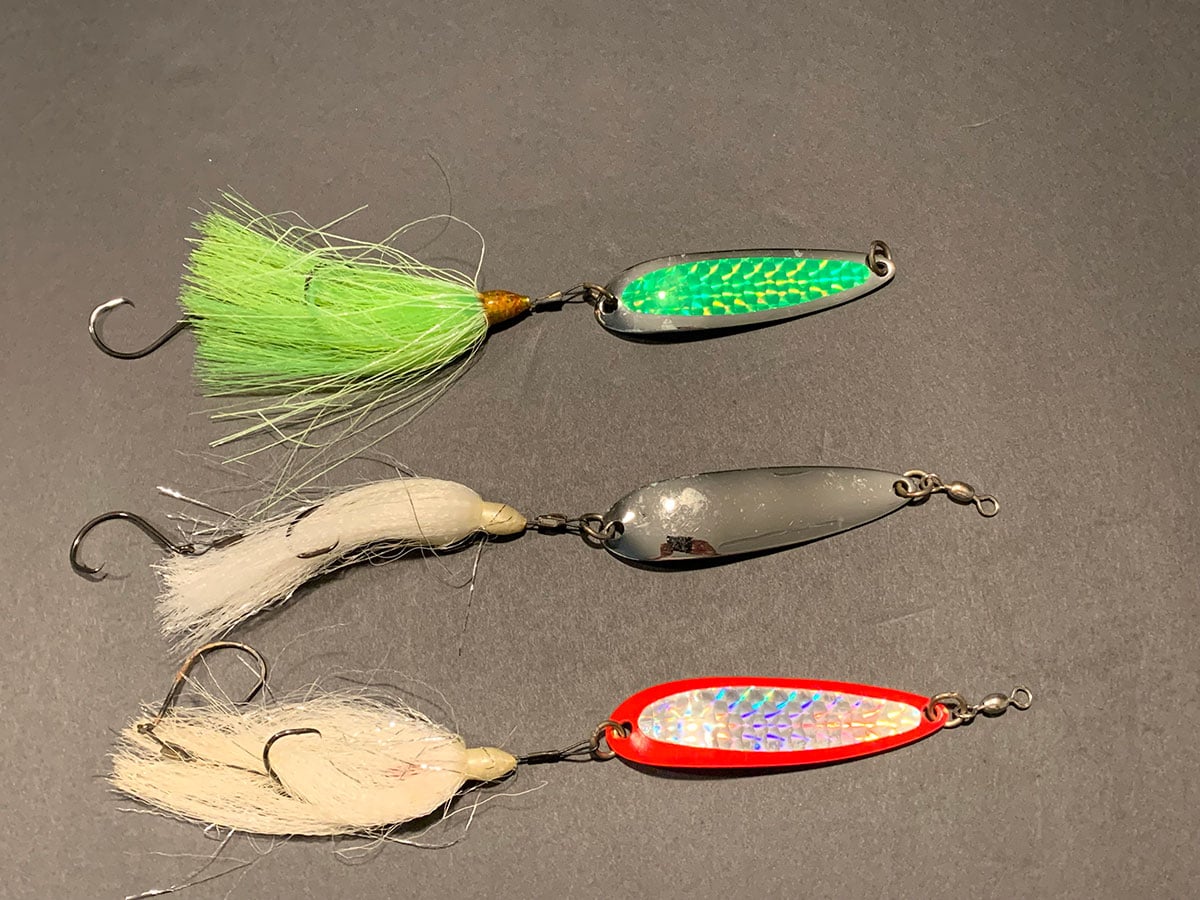
Spoon baits are essentially a spoon with a hook and bait that follows. I build mine out of a 3.5-inch Krocodile spoon with a bucktail slider and a double-hook setup at the end. I fish it as a three-way rig (three-way swivel with one eye attached to the line, one eye to the sinker, and one eye to a 20-inch leader tied to the spoon). Add a healthy strip of squid or live bait to the hooks, and when there’s any kind of decent drift the spoon will flutter seductively. The fluke seem to find this very enticing. Adding those little plastic action discs ahead of your bait will also work to give your bait some added side-to-side movement. |
The adage that “bigger is better” often proves correct here. Yeah, we’ve all caught doormats on little baits at times, and smaller baits definitely do get more bites, but if you are hoping to put together a catch of keepers, you are targeting larger, adult fluke. These larger fluke must believe that your bait is worth the energy to track it down. Bigger baits help with that as bigger baits provide a larger caloric reward. Don’t be afraid to use long strips of squid or bluefish up to a foot in length – adult fluke have large mouths equipped with sharp teeth to help latch on, and they will shy away from a big bait!
Finally, live or fresh bait will immensely increase your chances of finding decent fluke. I’ve seen guys come along with packages of squid that are freeze-burned, with a strange orange hue. They may get some dumb luck once in a while on that stuff, but when fish are finicky, fresh is best. Live mummichogs, snapper blues, or peanut bunker are often available during the season right where you dock – a few minutes of collecting some live bait will also up your score. This is an “old school” method, but it works, and not many take the time to do this anymore. I find the bites are much more committed when fishing live bait and that usually yields a solid hookup.
To some veteran fluke fishermen, these tactics may seem ‘basic’, but I know for a fact that many of today’s anglers just aren’t using them. But keep in mind that paying attention to the little details often adds up to better catches in the long run. Consistently scoring in this game means taking the steps to up your own odds. You may have to settle for a little less action to avoid the smaller fish, or do things differently than you used to, but at the end of the day it’s what’s in the box that matters. And these tactics catch big fluke!