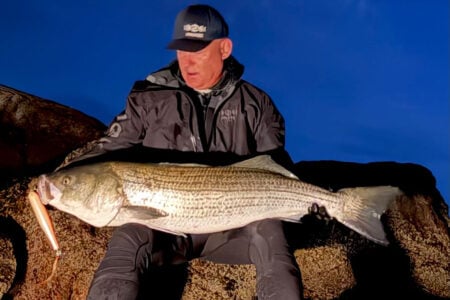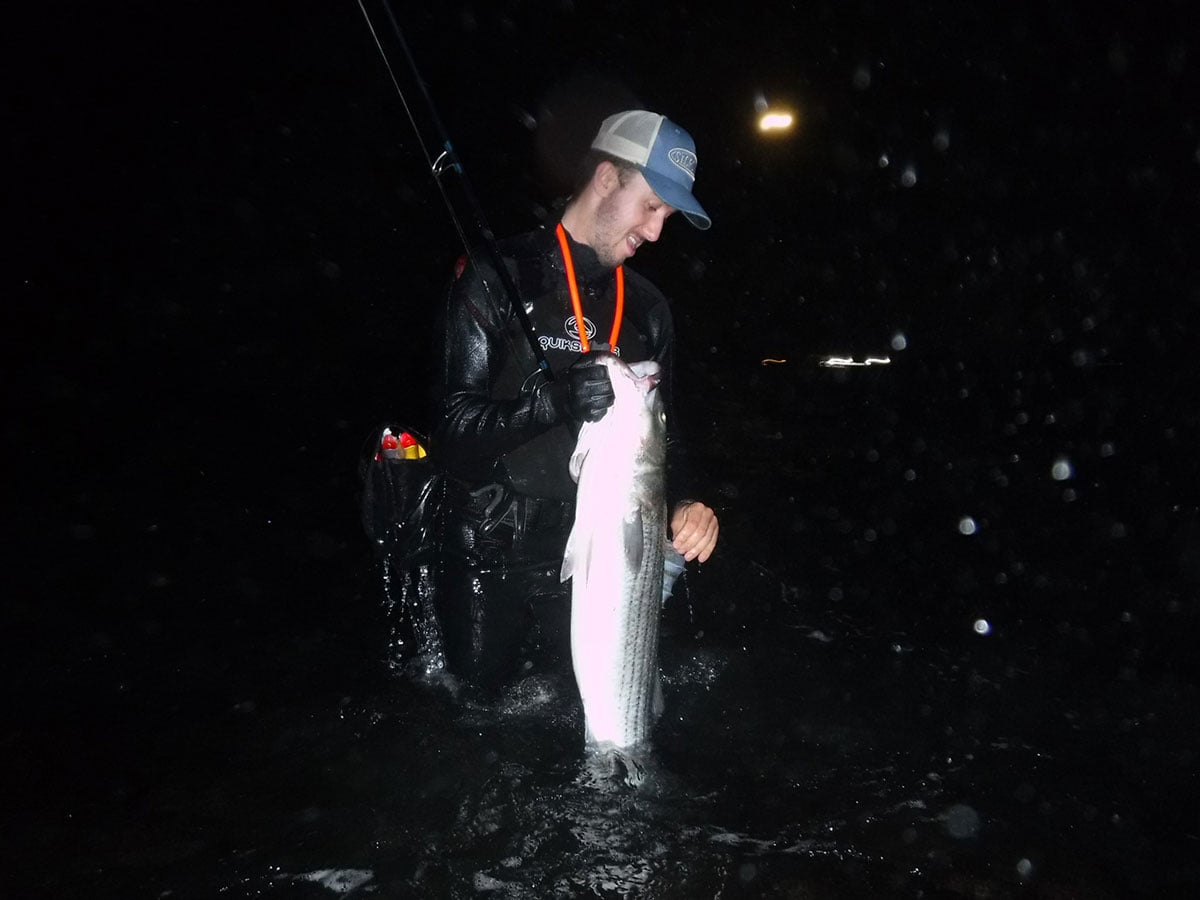
Why Long Island’s best summer striped bass fishing often begins after sunset.
For many Long Island surfcasters, August feels like a month of waiting. Waiting for cooler temperatures. Waiting for the first schools of false albacore to show. Waiting for the fall run to kick into gear. Rods spend more time leaning against garage walls than they do tucked under an angler’s arm, and conversations at local tackle shops inevitably turn to, “Just give it another month.”
But while many fishermen are counting down the days until September, another group is quietly enjoying some of the most rewarding striped bass fishing of the entire season. They simply changed their schedule.
Instead of setting an alarm for sunrise, they’re pouring a cup of coffee after dinner. They’re pulling into the parking lot at Shinnecock Inlet as families are packing up beach chairs. They’re hiking toward the rocks at Montauk under a rising moon or making the walk to Democrat Point well after the crowds have disappeared. While much of Long Island sleeps, they’re casting into moving water under the cover of darkness, knowing August isn’t the end of striper season—it’s simply a different one.
The biggest adjustment anglers have to make this time of year isn’t changing lures or buying new gear. It’s changing the way they think about striped bass.
Why The Night Comes Alive
During the hottest stretch of summer, striped bass become masters of efficiency. As water temperatures climb into the upper 70s, they naturally seek cooler, oxygen-rich water where they can feed without expending unnecessary energy. Add bright sunshine, heavy boat traffic, swimmers, paddleboards and constant shoreline activity, and it’s no surprise daytime fishing often slows dramatically.
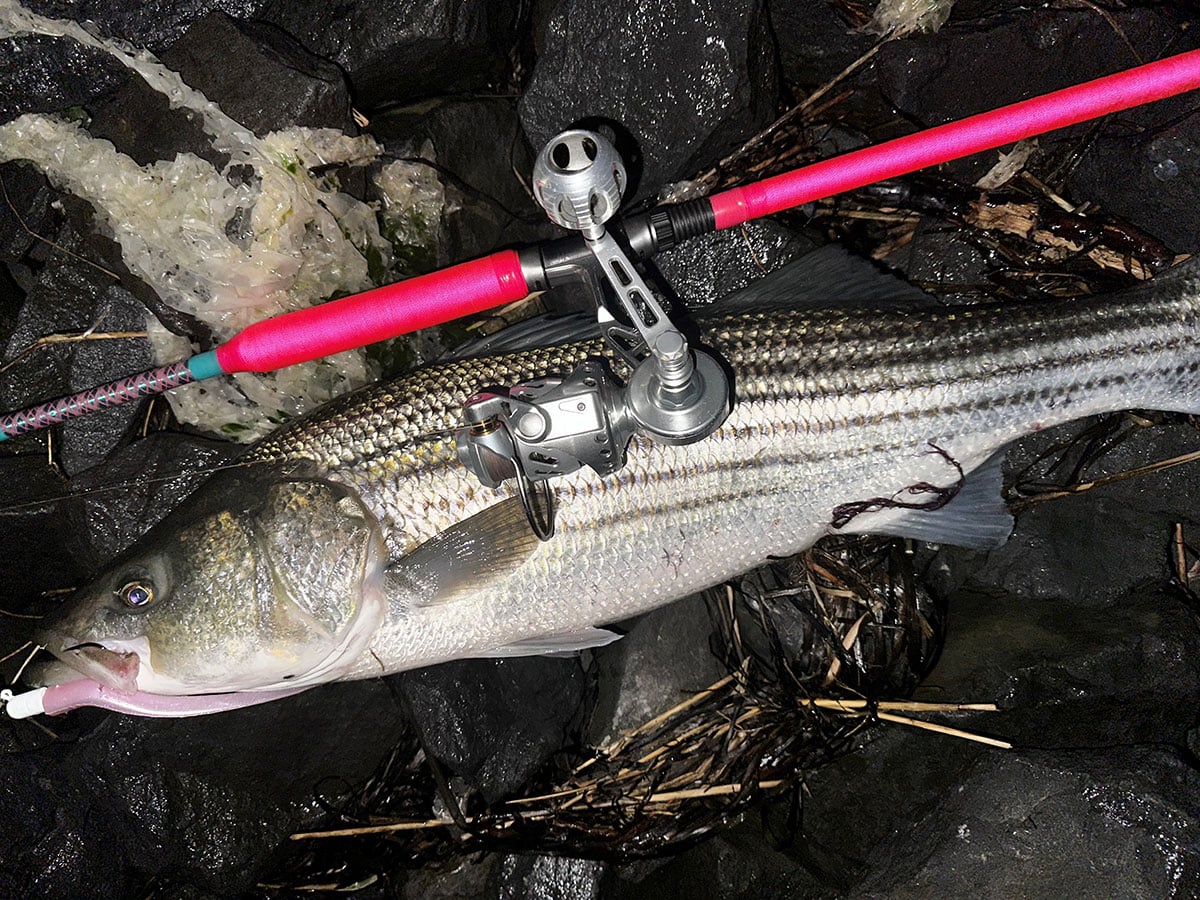
Darkness changes the equation almost immediately. As the sun slips below the horizon, the beaches begin to empty, boat traffic fades and the water settles into a much quieter environment. Baitfish that spent the day scattered across open water begin moving with more confidence, and bass that held deeper throughout the afternoon slide surprisingly shallow to feed. Many anglers are shocked to learn that some of Long Island’s largest summer bass are caught in less than four feet of water. During August, depth isn’t nearly as important as current, oxygen and available forage.
That pattern repeats itself from one end of Long Island to the other. Along Montauk, fish push onto the rocky shoreline after sunset. Around Fire Island and Jones Beach they move onto the bars and into the troughs. At Moriches and Shinnecock they use the sweeping currents around the jetties as feeding lanes. Even on the North Shore, bass patrol shallow boulder fields under the cover of darkness where they’d rarely show themselves during the middle of the day.
Fish The Window, Not The Clock
One of the biggest misconceptions surrounding August surf fishing is that success comes from spending the entire night on the beach. While marathon sessions certainly have their place, most experienced surfcasters know the best action usually comes during relatively short feeding windows.
Sometimes the bite begins during the first hour after sunset. Other nights it coincides with the first push of the incoming tide or the final stage of the outgoing. A moonrise may trigger a brief flurry of activity before things go quiet again, while another evening the action doesn’t begin until the hour before sunrise. The key isn’t fishing from dusk until dawn every trip—it’s learning when your particular stretch of beach consistently comes alive.
Keeping a simple logbook can speed up that learning curve. Record the tide stage, moon phase, wind direction, water conditions and time of each fish. Before long, patterns begin to emerge. Many veteran surfcasters would rather fish two perfectly timed hours than spend eight hours casting through lifeless water. Time on the beach is valuable, but fishing the right window is what consistently puts bass on the sand.
Current Is Everything
If there’s one ingredient that consistently produces striped bass throughout August, it’s current. Moving water delivers oxygen, transports bait and creates natural ambush points where bass can feed while expending very little energy.
Montauk remains the perfect example. Even during the warmest weather, the powerful currents wrapping around the Point continually refresh the water and keep baitfish moving. That’s one reason the area continues producing quality bass well into summer while quieter stretches of shoreline often slow considerably. Anglers working bottle plugs, bucktails, darters or live eels through those rips after dark regularly connect with fish that spend daylight hours well offshore.
The same principle applies across Long Island. Shinnecock and Moriches Inlets flush cool ocean water into the bays every tide cycle. Jones Inlet and Fire Island create similar feeding lanes farther west, while current wrapping around North Shore points and boulder fields provides ideal ambush locations. Rather than chasing reports from one beach to another, focus your efforts on areas where moving water naturally concentrates bait. Bass don’t care about town lines—they care about current.
Follow The Bait
Fortunately, August offers no shortage of forage. Spearing remain abundant along much of the oceanfront while bay anchovies fill the back bays and tidal creeks. Small sand eels continue holding on many beaches, and by the second half of the month the first schools of peanut bunker begin filtering out of the bays. Juvenile mullet also begin appearing along portions of the South Shore, quietly signaling that seasonal changes have already begun.
Learning to recognize those baitfish is every bit as important as recognizing striped bass. Before making your first cast, spend several minutes simply watching the water. Tiny nervous ripples may reveal rain bait. Occasional sprays of baitfish after dark often indicate predators feeding below the surface. A single patch of disturbed water drifting through an inlet may tell you far more than an internet fishing report.
Unlike the dramatic surface blitzes that often define October, August feeds are frequently subtle. There may be no screaming terns or acres of breaking fish. Instead, success often comes from noticing the little things—a swirl in the wash, bait showering once along an outer bar or the faint pop of a bass inhaling a spearing under the cover of darkness.
Slow Down Your Presentation
Many anglers continue throwing oversized bunker-profile plugs throughout August even though much of the available forage measures only a few inches long. Matching the hatch becomes increasingly important this time of year, and downsizing often produces immediate results.
Needlefish, slim-profile swimming plugs, soft plastics and bucktails all excel because they closely imitate the narrow-bodied baitfish bass are feeding on. More importantly, they perform exceptionally well at slower retrieve speeds. Warm-water stripers are generally less interested in chasing a lure racing across the surface than they are intercepting an easy meal drifting naturally with the current.
Resist the temptation to fish too fast. Let your lure swing naturally through the sweep, maintain steady contact and allow the current to do much of the work. Many strikes come at the end of a swing or during a brief pause rather than while aggressively cranking the reel. During August, patience consistently out-fishes speed.
Stay Quiet, Stay Safe
Stealth becomes even more important during the dog days of summer. Water clarity is often better than it will be later in the fall, giving bass every opportunity to inspect both your presentation and your approach. Bright flashlights, loud conversations, slamming truck doors and careless wading can quickly push fish away from an otherwise productive stretch of shoreline.
Many experienced surfcasters prepare all of their tackle before leaving the parking lot. Leaders are tied, clips checked and plugs organized before stepping onto the beach. Once on the water they keep artificial light to an absolute minimum, move deliberately and trust their ears as much as their eyes. A quiet beach often reveals more through sound than sight, whether it’s bait flipping along an outer bar or a bass slashing through a school of spearing just beyond casting range.
Preparation also improves safety. Scout unfamiliar beaches during daylight whenever possible and identify troughs, cuts, rock piles and access points before darkness hides them. Wear proper footwear, especially around the slippery rocks of Montauk or the boulder fields along the North Shore, and always let someone know where you’ll be fishing. Summer thunderstorms, fog and powerful inlet currents can turn a routine trip into a dangerous one in a matter of minutes, and no striped bass is worth taking unnecessary risks.
Embrace The Night Shift
Perhaps the greatest lesson August teaches has nothing to do with tides, current or tackle. It teaches adaptability. The anglers who consistently catch striped bass throughout the hottest month of the year aren’t necessarily better fishermen than everyone else. They’ve simply accepted that the fish have changed their schedule and adjusted their own.
Instead of chasing daytime reports, they study tide charts. Instead of complaining about the heat, they wait for darkness. They understand that moving water, cooler nighttime temperatures and abundant bait can create outstanding opportunities weeks before the first hints of the fall migration arrive. While many anglers write August off as a slow month, those willing to sacrifice a little sleep often discover some of the season’s most memorable fishing.
The next time someone tells you they’re putting the surf gear away until the fall run begins, smile and wish them luck. Then grab your plug bag, wait for the sun to sink below the horizon and head for the beach. Long after the umbrellas have been folded and the parking lots have emptied, Long Island’s striped bass are still feeding.