Beating the summer doldrums the Boston way!
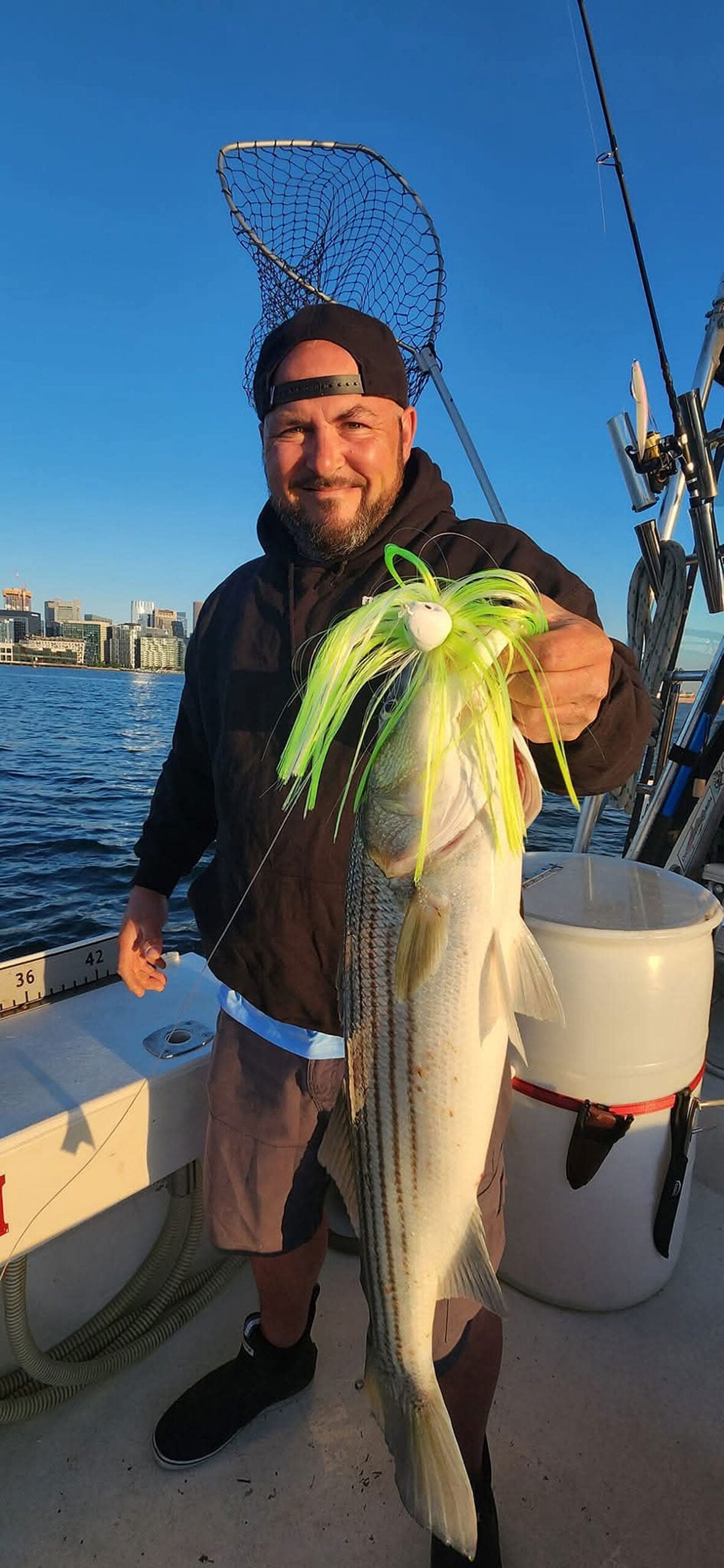
Let me be frank with you, the Boston area holds one of the best striped bass fisheries on the planet. Anglers travel from far and wide to do battle with these powerful “Boston broomtails,” and I feel very fortunate to call one of the true Meccas of striper fishing my home waters. These fish—iconic, hard-fighting, and often trophy-sized—are a passion of mine, as they are for the rest of the crew of the charter boat I work on, Fishbucket Sportfishing; we spend our summers chasing stripers all over Massachusetts Bay and putting big fish on the deck, for our own enjoyment and for clients, as well.
Summer Patterns
During the peak summer months, massive schools of menhaden—better known locally as pogies—flood into Boston Harbor and the surrounding coastline. Striped bass gorge themselves on this abundant forage daily, often feeding with reckless abandon. When the bait is thick, it’s usually a simple task to throw a cast net, load up the livewell, and get right into the action. Having bait so close to home is a major advantage and allows us to get lines in the water quickly and efficiently.
But as any seasoned angler knows, things don’t always go according to plan. There are times when the bait is moving too fast, hanging too deep, too spooky, or simply not cooperating. Add in a stretch of bad weather or a busy schedule that’s kept you off the water, and suddenly you find yourself starting from scratch. It’s in these moments that trolling becomes an essential tool—helping you cover water and locate fish, trolling is a very effective method that can flip a slow day and turn it into a productive one.
When we’re on the hunt, covering ground is the name of the game. Electronics are incredibly helpful for marking fish and bait, but nothing replaces a well-executed trolling spread. A four-rod (or more) setup allows you to probe multiple depths and present a variety of offerings simultaneously—dramatically increasing your chances of finding active fish.
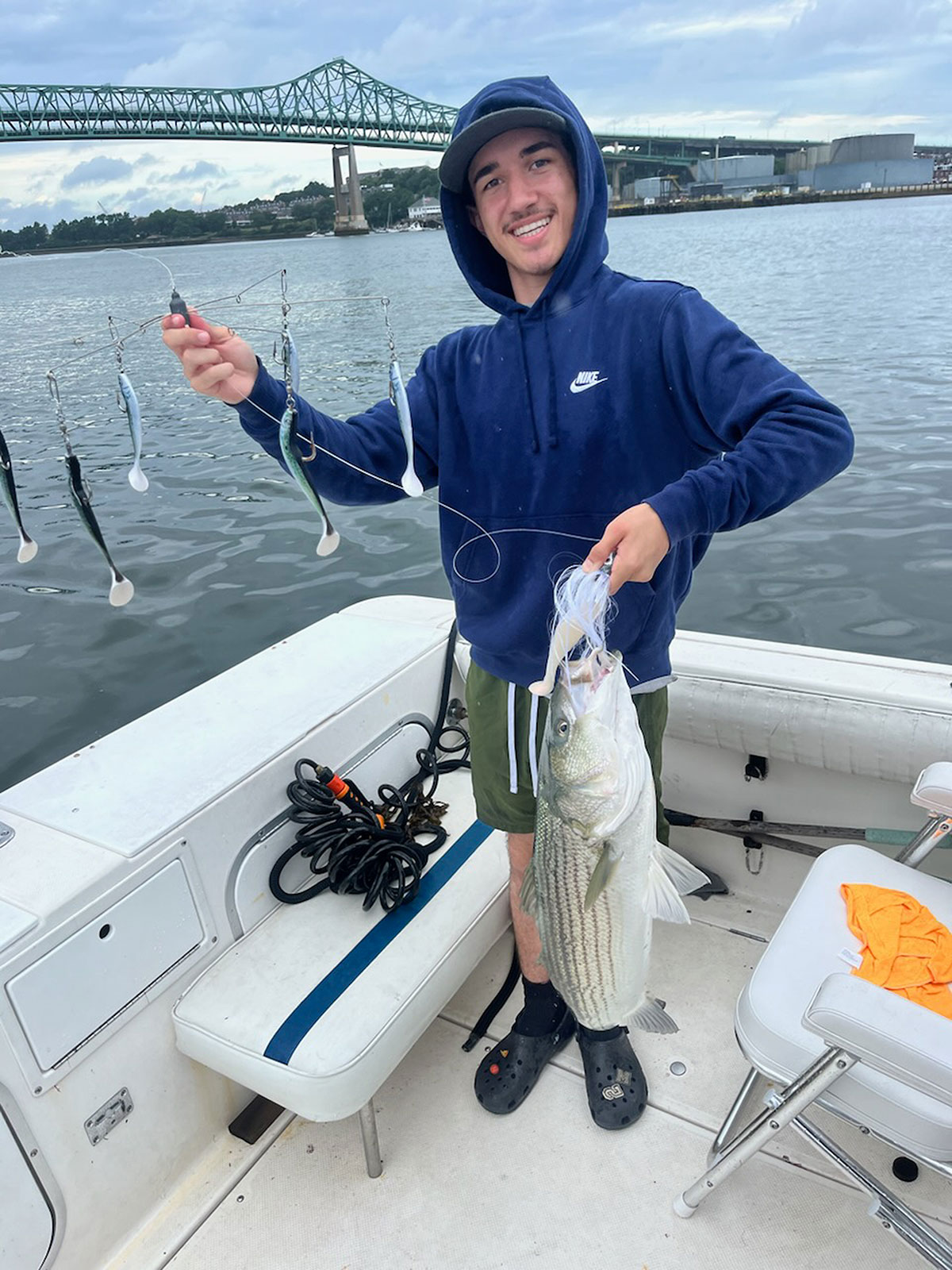
The Strategy
| MASSACHUSETTS BAY? |
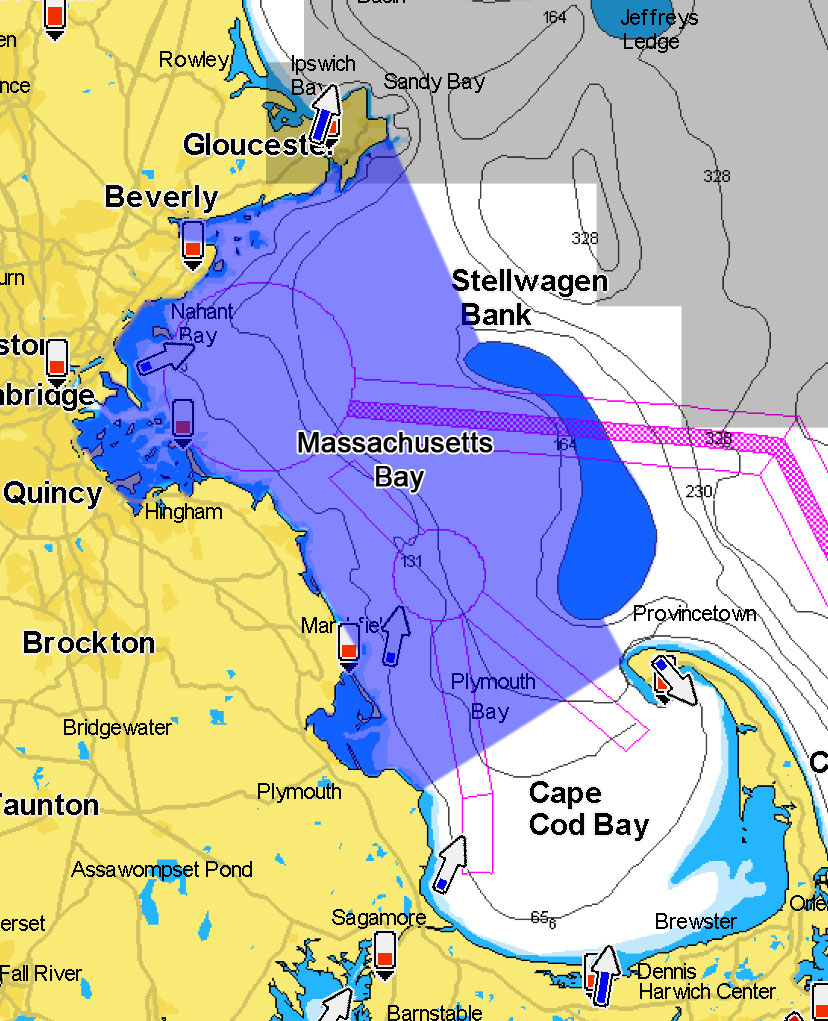
For those who don’t know, Massachusetts Bay comprises nearly the 65 miles of shoreline beginning at the tip of Cape Ann and running south – including Boston Harbor – and then all the way down to the start of Cape Cod. You might be thinking that, at least part of this large swath of water could also be considered Cape Cod Bay, and you’d be correct, there is some overlap between Cape Cod Bay and Massachusetts Bay on some maps. Put another way, Massachusetts Bay is basically the huge cove that starts at the tip of Gloucester and ends on or about Manomet Point in Plymouth. Its eastern boundary kind of depends on who you ask, but many cite an imaginary line between Race Point and Plymouth as the southern limit. With colder summer water and large tides, this area is a magnet for summer stripers and the bite can be crazy! |
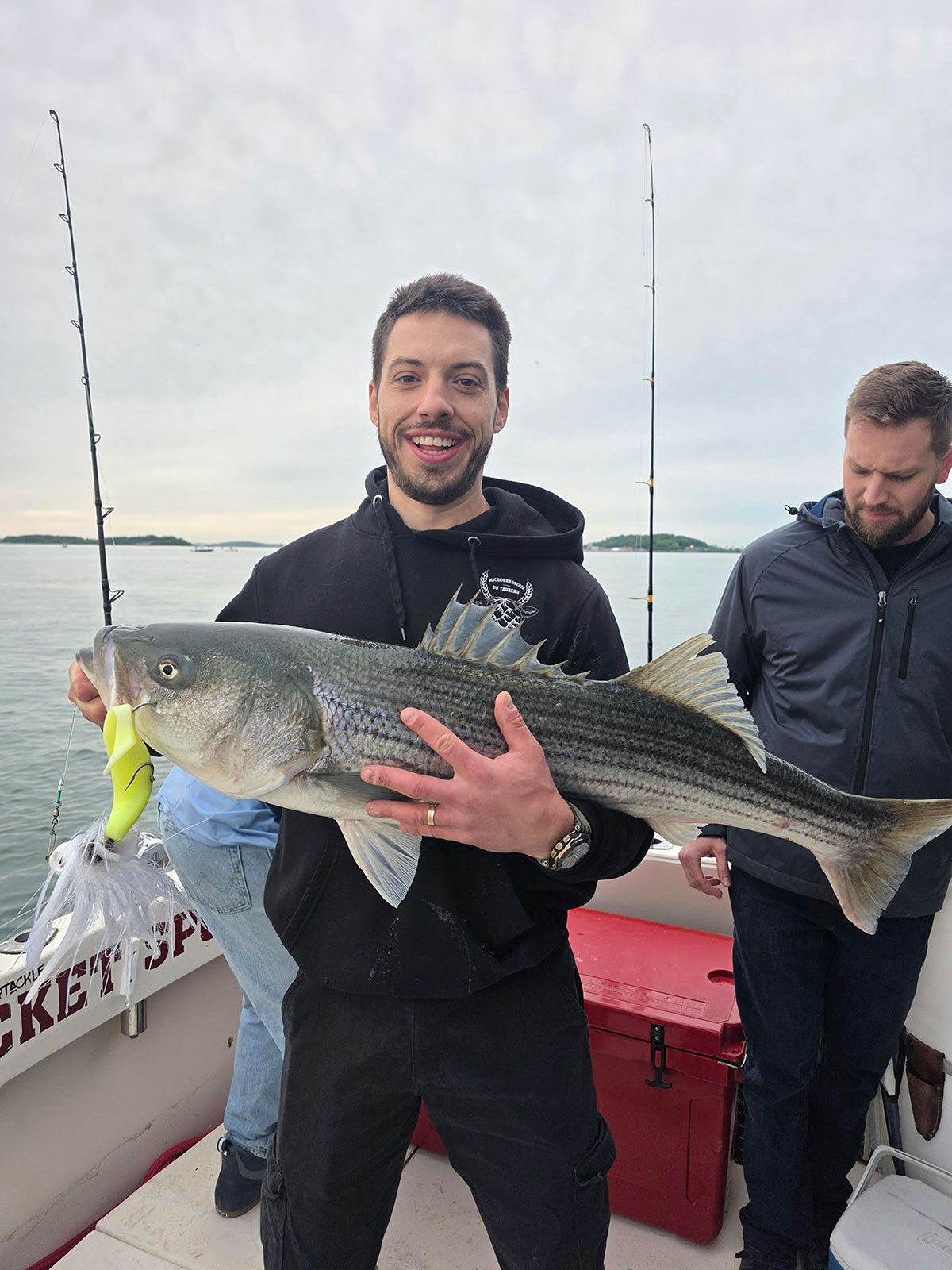
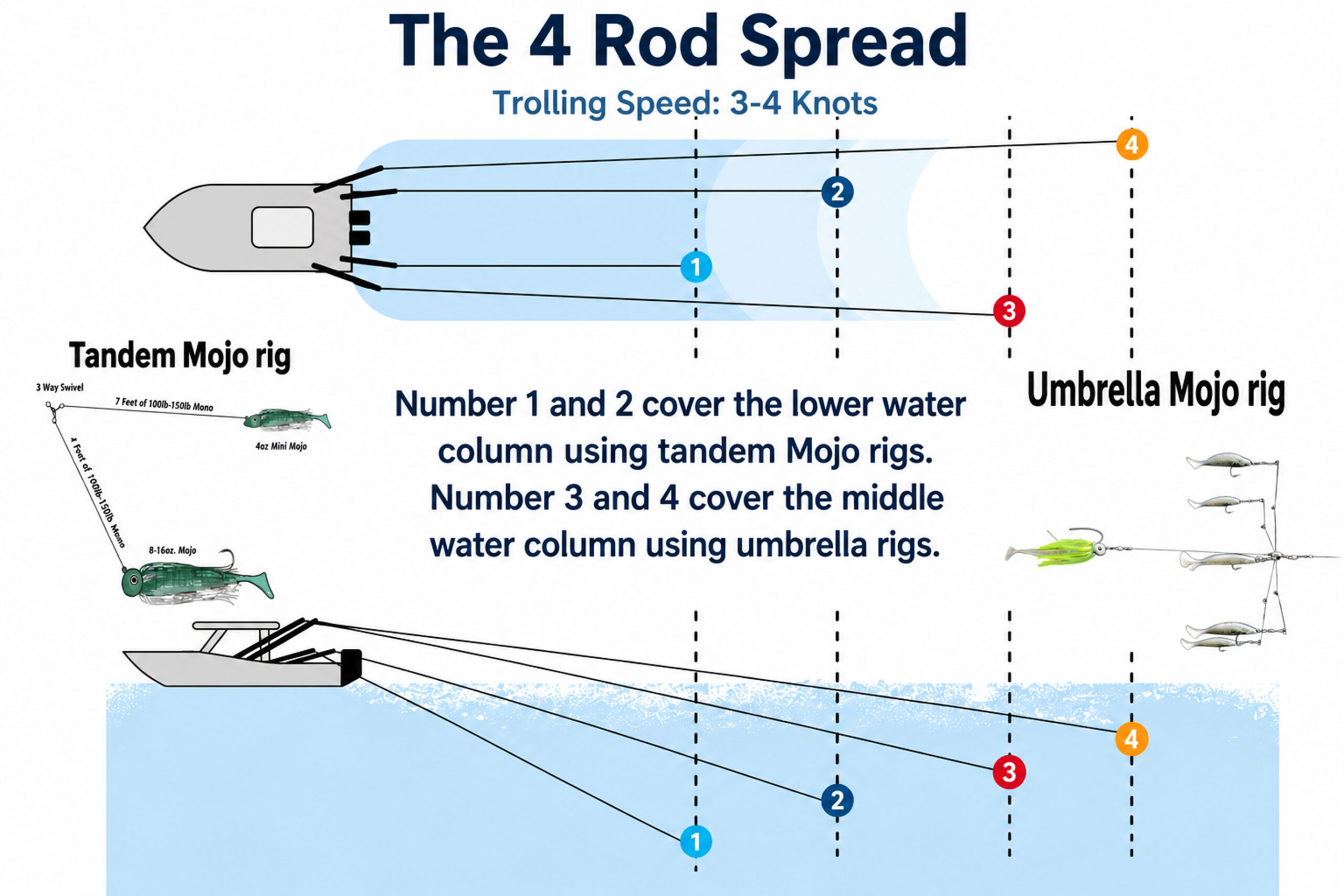
To target the lower portion of the water column, we rely heavily on Dirty Water Tackle’s tandem mojo rigs. These rigs feature two mojos rigged together in tandem, a larger (9-inch) and heavier one on the bottom and a smaller (6-inch) lighter one on top. They are available in different weight combinations to allow you to fish them effectively at different depths and current speeds. Fishing these rigs in tandem like this, allows for two presentations per rod, effectively doubling your presence in the strike zone. We run these rigs close to the bottom at speeds between 3 and 4 knots, keeping them in the path of cruising bass that are hugging contours, following deeper bait schools or hunkered down in structure looking to ambush passing forage. Of course, any mojo rig will work here, but we’re partial to the local flavors! Successful mojo fishing requires constant attention. You should periodically check bottom contact to ensure your rigs are running in the strike zone while avoiding snags and rocky structure. Conditions can change throughout the day, so adjustments may be necessary to maintain the proper depth.
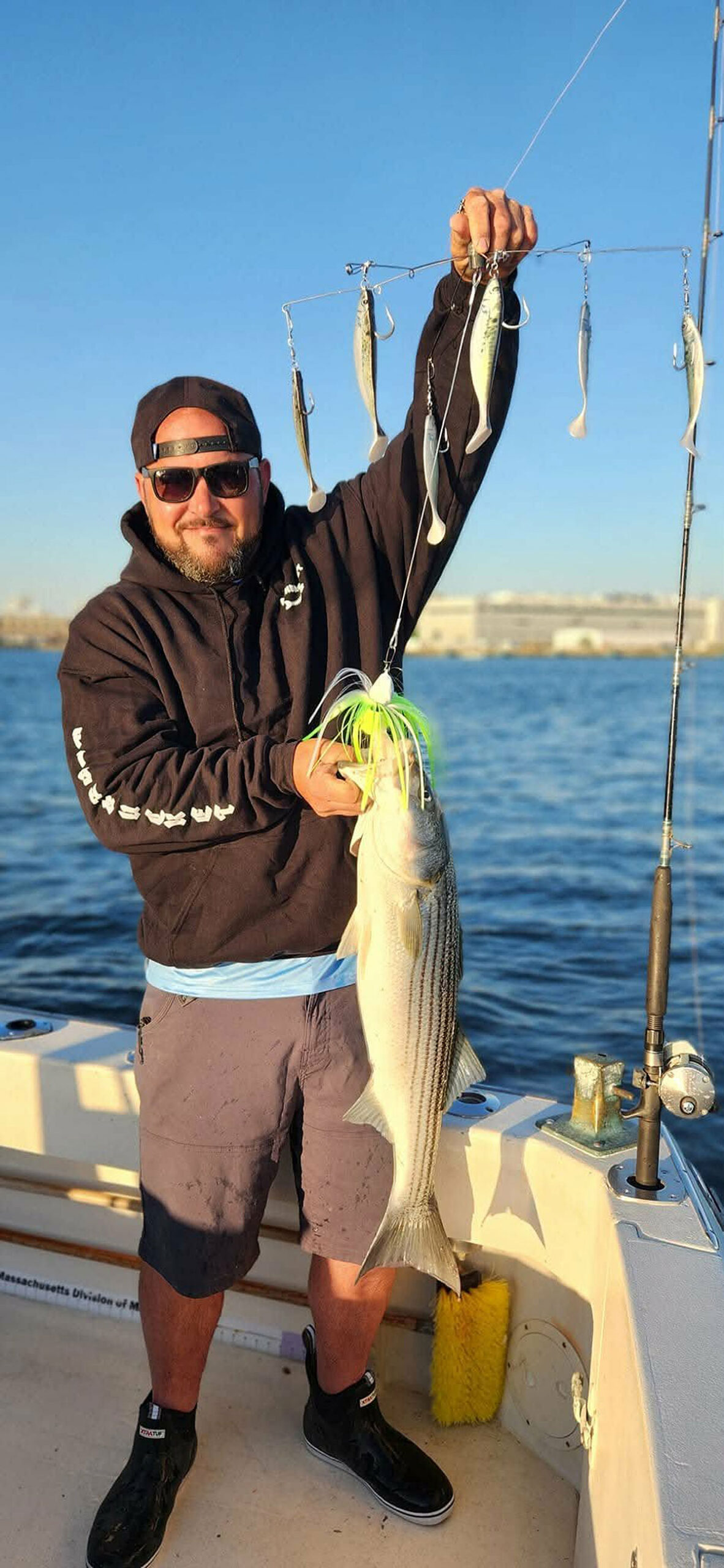
That covers our deep presentation, with that nailed down, our attention shifts to the mid-water column. This is where umbrella rigs, such as those made by Boston Massacre Tackle, really shine. Designed to imitate a tightly packed school of baitfish, these multi-arm rigs create an irresistible illusion of fleeing groups of prey. Rigged with numerous soft plastic shads in natural patterns like mackerel or pogy or simply adorned with solid white or chartreuse, they draw aggressive strikes from bass that are actively feeding higher in the column.
Due to their size and resistance in the water, umbrella rigs require stout gear. We pair them with heavy-duty conventional setups—strong rods and reliable reels spooled with metered braid. The color changes in the line help us precisely control how much line is out, which directly correlates to the depth the rig is running at. Typically, we’ll run five to seven colors, adjusting based on water depth and fish location. For trolling mojo and umbrella rigs, we recommend using a conventional setup.
Our preferred rod is a 7-foot, 20- to 40-pound class acid-wrap composite rod that was specifically built (BY ME) for pulling these heavier trolling rigs. We pair it with a Penn International 12 single-speed reel, which has more than enough power and capacity to handle even our heaviest setups. A quality fiberglass rod matched with a Penn Senator 4/0, Torium 16 or Penn 330GTI reel will also work well for this style of fishing. We strongly prefer braided line as the main line. Metered braid is ideal because it changes color every 10 meters, and it allows you to easily track how much line you have deployed. We typically spool our conventional setups with 60-pound metered braid.
Always Prepared
| ADDING A TOPWATER LURE |
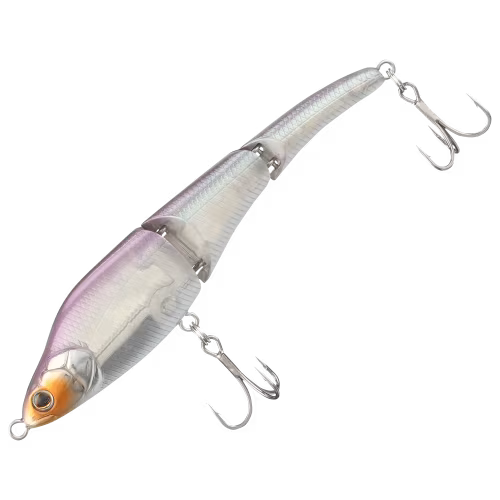
If you’re trolling and notice fish feeding on the surface, don’t be afraid to add a fifth rod to the spread. A single topwater lure, such as a Magic Swimmer or a jointed swimbait, can be extremely effective when bass are actively chasing bait on top. Running a surface presentation allows you to capitalize on surface feeds while your mojo and umbrella rigs continue covering the lower and middle portions of the water column. |
With both mojo rigs working the bottom and umbrella rigs targeting the middle, we’ve effectively blanketed the water column. This approach allows us to locate fish quickly and dial in a productive pattern. We can raise or lower the different components of our spread by dropping them back or reeling up line, to find where the fish are holding. We can also follow contours or troll around structure to see if the bass rea relating to certain areas, depths or types of structure on the day in question.
While trolling baits can help you locate deep-cruising stripers that aren’t showing on the surface. As I mentioned above, the secondary goal of this method (right behind catching fish) is covering water. And when you cover water, good things happen. Maybe the fish aren’t jumping all over the rigs one day, but you covering ground puts you on a school of fish that are blasting pogies or macks without another boat in sight. This is why always stress how important it is to stay ready for anything. Even you’re on the troll, keep a spinning rod rigged with a topwater lure within arm’s reach, with your head on a swivel looking for breaking fish or diving birds. When a fish breaks the surface or an all-our blitz opens up, you’ll be armed and ready to fire! A well-placed cast into the chaos can lead to some of the most exciting strikes of the day.
Trolling isn’t always glamorous. It requires constant attention—adjusting depths, resetting lines, and staying alert. But it’s a proven, highly effective method that consistently puts fish in the boat. When conditions are tough and the fish are on the move, it’s often the difference between a slow day and a successful one. In a fishery as dynamic and rewarding as Boston’s, mastering the troll isn’t just a skill—it’s an art form.