A look at factors and environmental influences on migratory fish species.
If you live in the Northeast, and fish any of our saltwater species, then hopefully you realize that all of our species are migratory in nature as these fish are always moving due to our seasonal changes. Most fish have optimal conditions for breeding, feeding, and positioning, but the world is not ideal, but rather they prefer a “comfortable” range.
Species of fish observe specific cycles in daily movement, feeding, spawning, and migratory movement with the successful ones surviving year after year. These patterns have been occurring over millions of years and are affected by a wide range of factors from, especially for coastal species in the saltwater environment. Each factor influences and contributes to behaviors of particular species and can impact an angler’s success. For instance, a constant southerly wind can shut down ocean fisheries due to drops in water temperature and stirred up bottoms.
Temperature plays a large role in the behavior of many species from mollusks and crustaceans to fish and marine mammals. Water temperatures have a huge impact on our coastal species as they live in the briny aqueous environment which, especially for cold-blooded animals, depend on specific degree ranges to exist. As the mercury begins to slowly climb each year as it has for the last 150 years, migratory changes and altered behaviors are becoming more apparent to coastal fishermen.
Take a look at the bull shark for example, a species which prefers the warmer coastal climes of our southern states. Over the course of the last 50 years, the bull shark has been slowly migrating northward with new ecological areas opening up due in part to fish stocks pushing northward due to temperature changes. The northern parts of Florida used to be the main pupping grounds, but bulls have moved over 500 miles north and now are regulars pupping their offspring in the Pamlico Sound along North Carolina. Although bulls have been visitors to the Chesapeake Bay area over decades, there is increasing evidence of the push further north and pupping occurring in the rich waters of the Chesapeake. Last fall, quite a few large bulls were caught around New Jersey’s Barnegat Inlet, which could be a harbinger of things to come for many of our species.
Other species have shown similar changes in migration, in some southern regions, commercial clam boats are having to fish further and further north as ocean quahogs and surf clam larvae slowly migrated northward in preference of cooler water over the past 20-plus years. The list is endless, so changes are around the corner, if not here already. Regardless of the factor (winds, salinity, temperature, tide, etc.), anglers need to observe and understand the pattern of changes as it will increase our angling opportunities and effectiveness on the water.
Familiar Variations
There are an incredible amount of variables that interconnect predator and prey behaviors within the saltwater environment. Our coastal waterways are much more dynamic than the relatively static systems such as ponds or lakes. Fluctuations or changes in the saltwater arenas vary hour to hour, even minute to minute: tides, temperature, salinity, turbidity, and water velocities are just a few factors that influence bait and predator movement within the system. In addition, daytime and night-time changes, called diel variations, will also impact the movements and behaviors of organisms. Zooplankton will move to different depths during day and night with baitfish feeding on these microscopic foundations of the food web. Predator species can be found close by awaiting unknowingly baitfish which are preoccupied with feeding on the plankton. All of this coordinated biological dance being caused by the rise and fall of the sun.
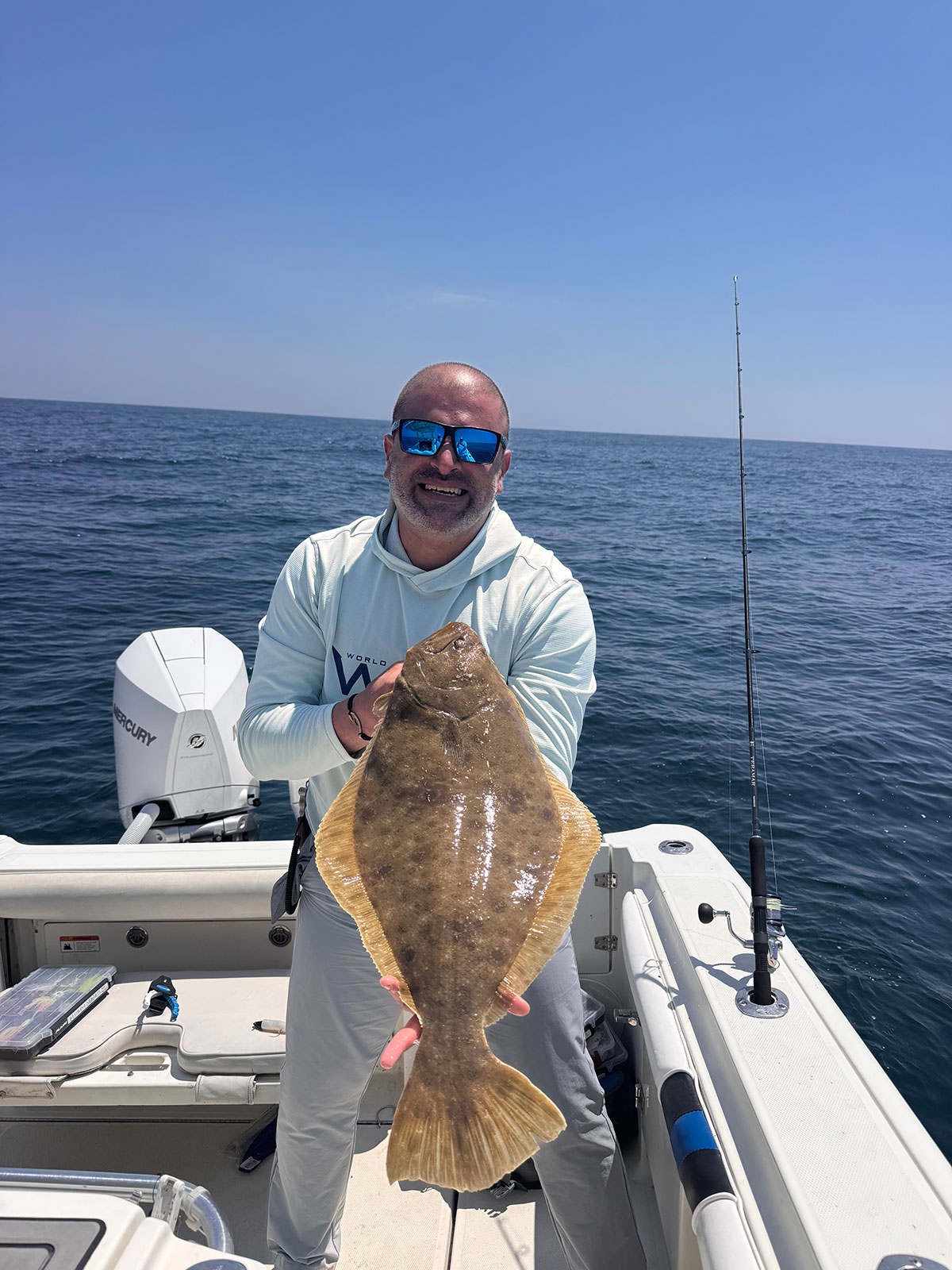
The moon of course also has great influence on our oceans with daily tidal impacts as the moon runs through its phases. The tide has a tremendous impact on the migration and feeding habits of all species in our waters, both vertically (tidal height) and horizontally (tidal current). For example, summer flounder will position themselves facing the direction of the water during the ebb or flood tides, as the current slacks fluke will cease feeding and re-position themselves for the next tide cycle. Stronger currents during a full or new moon will have the fluke’s feeding window shortened and the opposite occurring on the quarter moons.
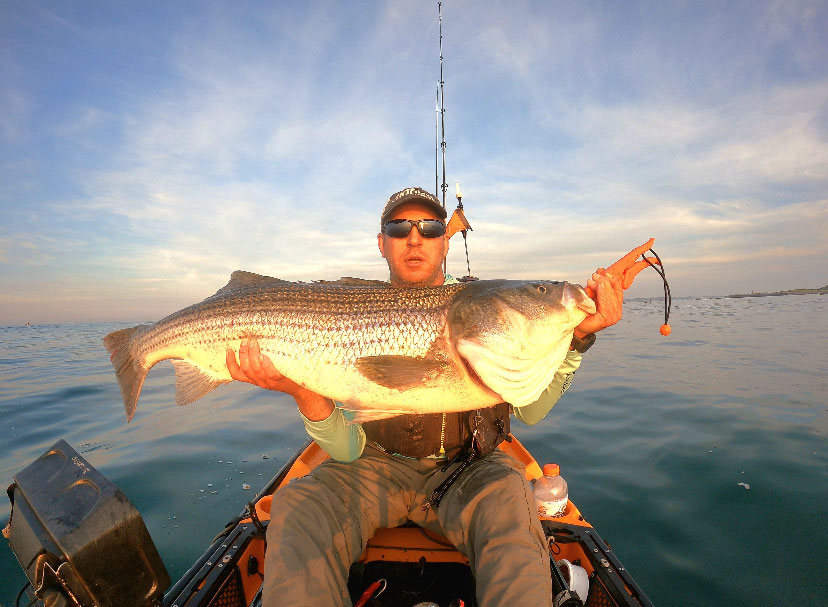
Other species such as, striped bass increase feeding activity during the peak velocity flows of the tide, as baitfish have a higher probability of being caught in the currents. As the current flows decrease in speed, fewer baitfish become available for feeding and striper activity drops off dramatically. On certain moon phases, full and new, currents will be stronger as the moon and sun’s gravity combined will move more water. Stripers may feed in larger windows with the favorable currents, while the quarter moon’s slower currents will have
Winds and temperature changes go hand in hand as these two will also have a powerful impact on feeding behaviors. The interplay of the winds, the earth’s rotation and Coriolis Effect can push or pull water from the surface and below. Pay attention to how different wind directions affect water temperature, where I live, along the Jersey Shore, northeast winds tend to bring in warmer water as the water moves at a 90-degree angle from the direction of the wind. Offshore species and bottom-feeding fluke tend to bite much better in these conditions as anglers should note. And for us, the dreaded south wind does the exact opposite, as it pushes warmer surface waters offshore leading to upwelling events which bring much colder water inshore. The colder bottom temperatures will instantly demolish a good summer fluke bite, but not all is lost. The cold ocean water can lead to increases in summer striped bass activity, and can jumpstart lackadaisical fluke hanging in back bay bath water.
Unfortunately with ocean temperatures slowly rising, longer duration and stronger windy days become more frequent as do the severity of coastal and tropical systems. As anglers, we need to embrace and understand the changes if we want to be better fishermen in the future. And while these rules of thumb may not apply in more northerly sections of the Northeast, there are almost certainly configurations that you’re probably unaware of, that are affecting your results without you realizing why.
Baitfish & Gamefish
Baitfish tend to lead the charge as certain migratory cues will initiate movements and longer treks in search of much needed calories or spawning opportunities. Menhaden, a primary baitfish in the Northeast, has begun to shift its migrational pattern moving farther northward, staying longer, resulting in reduced or broken up movements during the southern migration. In the past 10-plus years, many Northeast anglers have noticed a big change with more and more bunker staying offshore. With the offshore route, striped bass are increasingly found well past the 3-mile federal fisheries line. In fact, it’s not uncommon to find acres of striped bass 15 miles offshore of the Jersey coastline, as the bunker migrate north, these bass go where the food source is best.
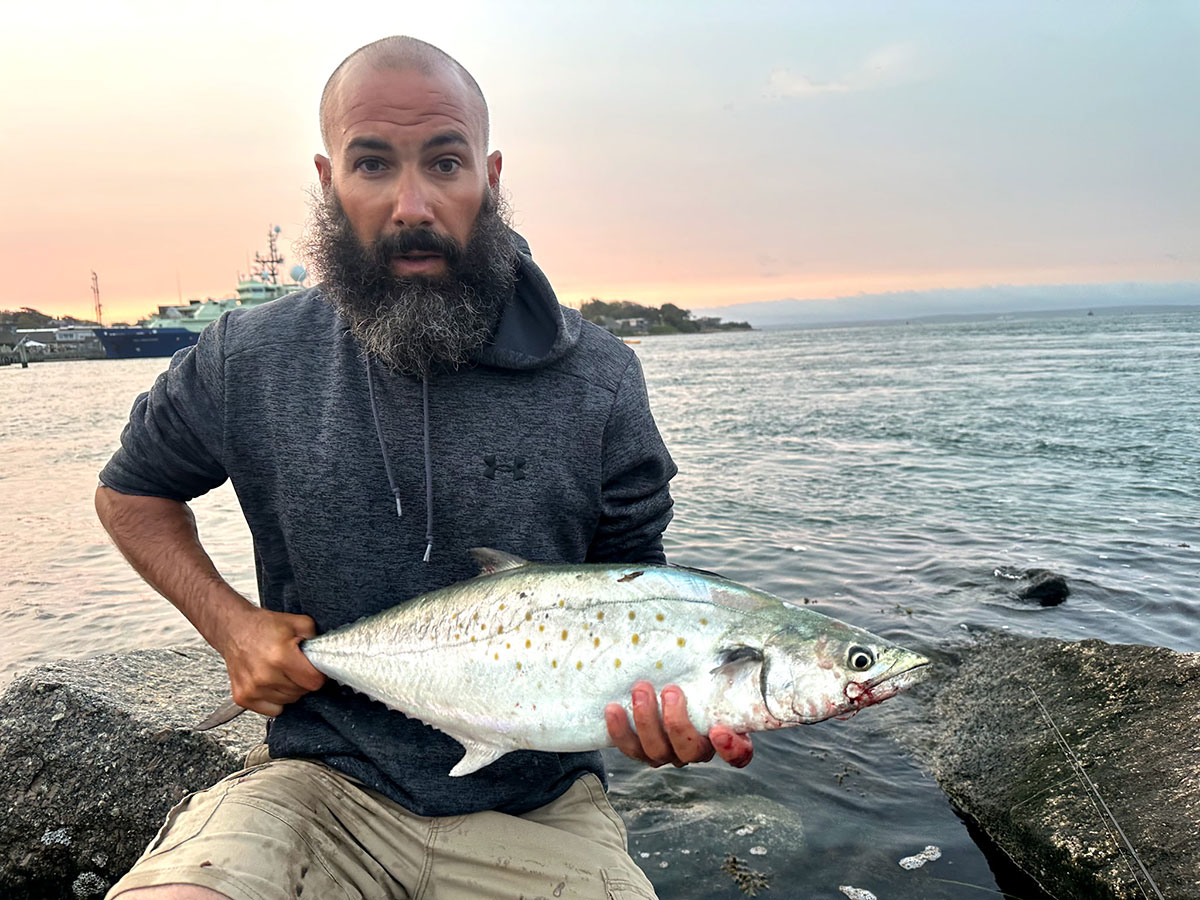
Mullet, another Atlantic Coast baitfish, known for the traditional “mullet” run which surfcasters love has generally occurred in September and October. But the run has also been affected by the changes in climate temperatures as scientists are seeing this fish delay their migration or leave on “freak” cold fronts during the early fall. These fractured runs make it more challenging for gamefish to find and feed on the mullet, which consequently produce fewer angling opportunities, to the south, while the mullet runs in places like Rhode Island are seeing steady increases year after year. While a new southern baitfish, spot, is now making its way north and they have been seen in numbers as far north as Long Island Sound.
But for anglers, the biggest question is “How does this affect our fisheries?” With shifting bait migrations, waters that are warming more quickly (on average) and reaching higher peak temperatures, the timing of migrations are changing and the distances many species will migrate are changing. We can look back at how the influx of spot has affected the summer flounder fishery in New Jersey, or we can note the increasing numbers of tautog in areas north of Cape Cod, where they were, historically rare or even absent, just a decade or two ago.
Many have heard of the old angling adage, “10% of fishermen catch 90% of the fish” which rings true with many anglers. Regardless of type of water, the top fishermen do something grossly different from the fishing masses; they observe, pay attention, adapt, and change their fishing strategies to the changes or patterns which occur within the system. All serious anglers, and those who want to improve, should strive to do this as this will greatly increase the connection rate of the hook to the fish’s mouth.
Remember, observe, adapt and change your fishing strategies on your next piscatorial pursuit – tight lines!