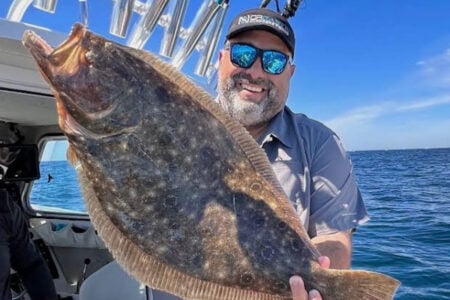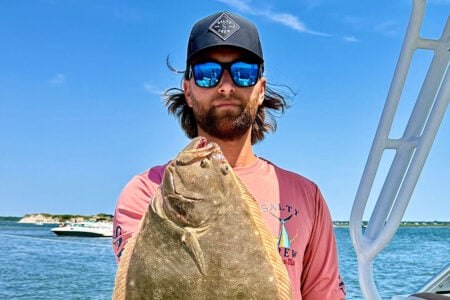
Sometimes you don’t have to stray very far from the surf to score.
Locals and grizzled veterans still call it Top O’ The Mast beach, and it’s where I studied the ways of the surf as a lifeguard during my college summers. The famous restaurant and even the motor lodge are gone now, both victims to multi-million-dollar McMansions. But the beach and surf thankfully remain.
That’s where I learned how to fluke fish on the far side of the surf from our 16-foot Sea Bright skiff, a lifesaving boat built by the legendary Charles Hankins of Lavallette.
The heavy lapstrake wooden hull sliced through challenging ocean waves as our two-man crew used 10-foot oaken oars to beat out the next wave, until we were past the dangerous whitewater zone. That’s when we’d break out our ancient, salt-crusted tackle to drift for fluke after swimming hours. Most times we drifted off the Northern Natural Area of Island Beach State Park (IBSP), as we were the last beach before that preserved area. And we would most always hook up, just off the surf, and most times we boated just enough fish for dinner that night.
The Northern Natural Area still provides good summer flounder fishing, although most anglers nowadays do their casting from shore.

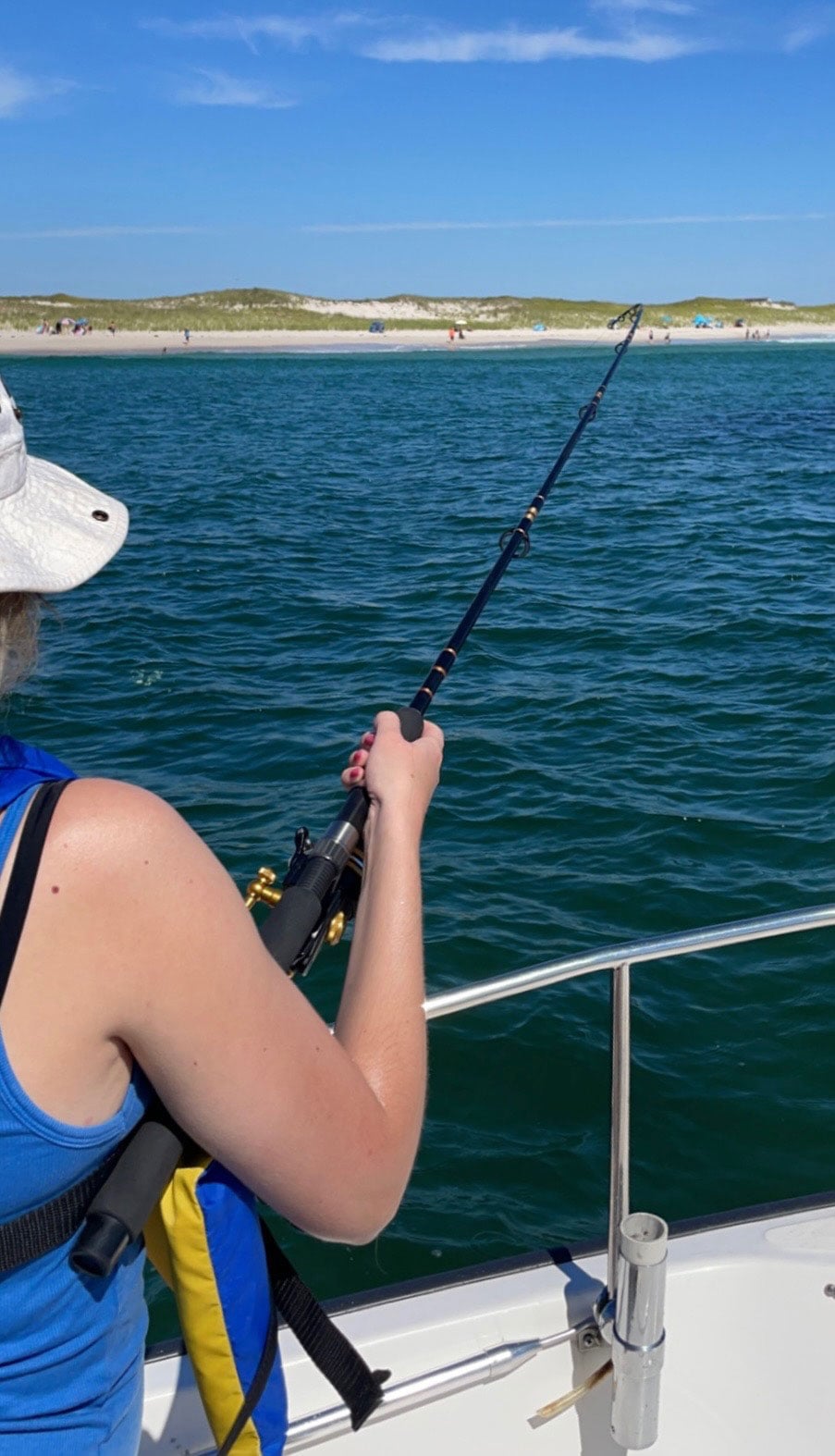
Littoral Drift
It’s been more than a decade since New Jersey instituted a special IBSP regulation fluke, namely a 16-inch size limit for two fish daily, with shore-fishing only stipulation. And it’s evolved into a fabulous summertime fishery for the surf angler. Good thing, as summer is a traditionally a low-key time of year for surf fishing at IBSP.
Scientists describe littoral drift as the process where waves, currents and tides transport sediments – including morsels of bait – along the coast. Good surf anglers capitalize on the littoral drift phenomenon, scouting for structure along the surf line. A hole that holds enough water, even at an ebbing tide, deposits and traps bait right into the maws of hungry fluke.
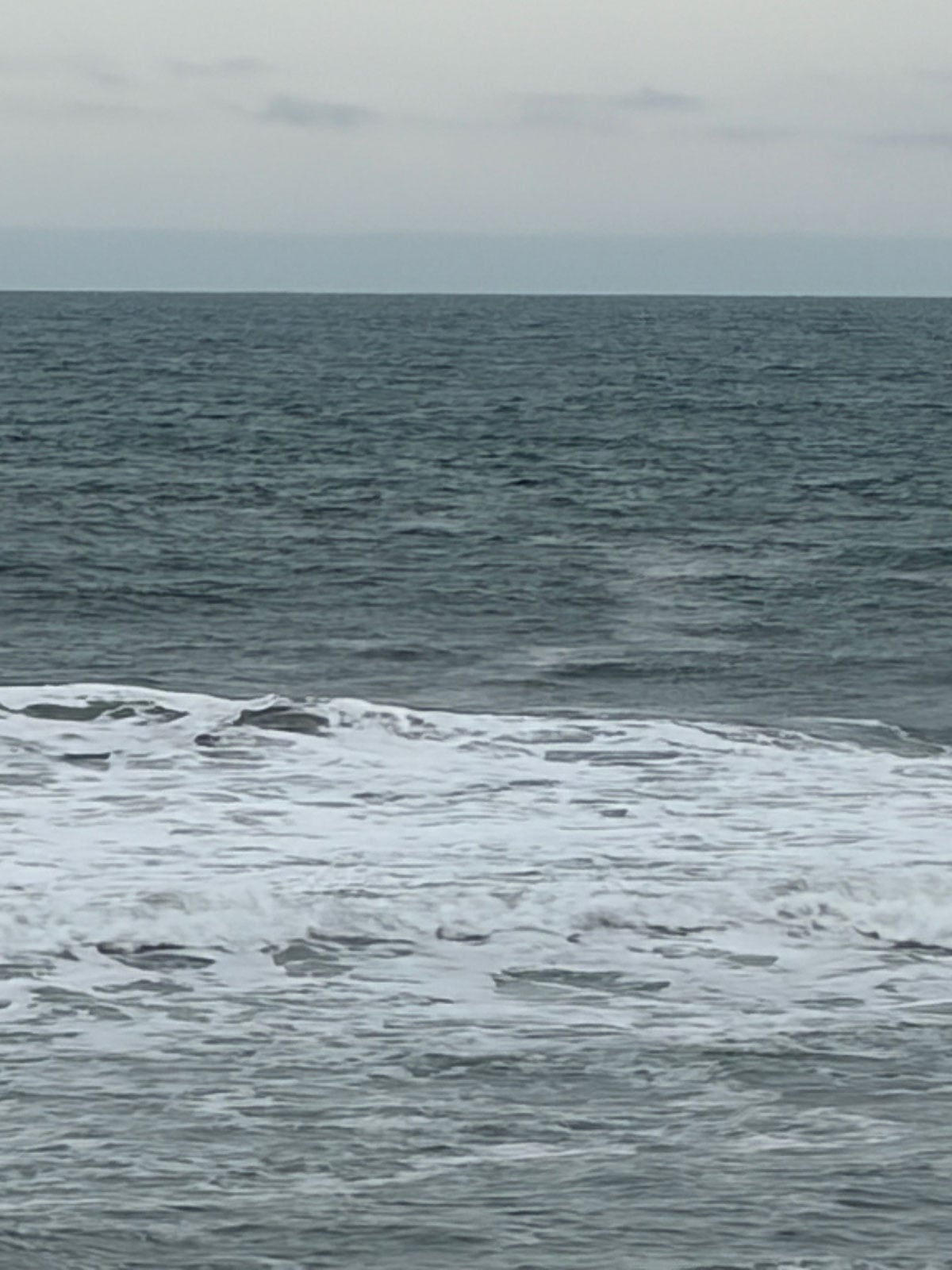
If anglers find a rip current, even better. The “Beware of Rip Currents” signs on swimming beaches, featuring a diagram with water flushing seaward between two sandbars, explain rips clearly. Surf fishermen have learned to key in on those hotspots, as all that moving water flushes baitfish, crabs, worms and other feed offshore. That’s where fluke wait for their dinner. That’s where sharp surf fishermen cast their Gulp and bucktails.
My buddies and I have been pretty successful in seeking out and fishing rip currents in this burgeoning shore-bound fluke fishery. Rips are pure surf fishing magic. A few years ago, I put two-and-two together, remembering my rookie surf boat fluking days and the phenomenon of rip currents. How many summer flounder are staging on the far side of the rip, feasting on all that bait washing away from shore? Wouldn’t my bait look more attractive to a hungry fluke if it was naturally tumbling through the rip with all of those other morsels?
I put my theory to the test, and it’s become a littoral, and literal, success story. When summer flounder move to inshore waters in the springtime, not all of them immediately scoot to the warm back bays. A good number stage on the warmer surf line. Surf anglers have proven this in past seasons by scoring keeper fish at Island Beach and LBI, right after the opening bell of the summer flounder season. And when flounder start moving out of bays and inlets in the glorious days of summer, not all of them head to the reefs or inshore lumps. Plenty enough linger or take up residence in the surf line or just beyond.
And why not? If water temperatures are to their liking, (always a prime consideration), and there’s enough sloughs, holes and structure to keep them comfortable, and plenty of foodstuffs are available, why would they leave food to find food?
Surfside Success
On those fair days when the weather is good, you might not have all day to run several miles offshore. High fuel prices may have you think twice about grinding it out and back to that reef beyond the horizon. In my neck of the coast, a strong northwest wind is perfect for tucking in close to an ocean beach, in the lee of the wind, for nice drift conditions. All good reasons to give far side surf fluking a try on your boat.
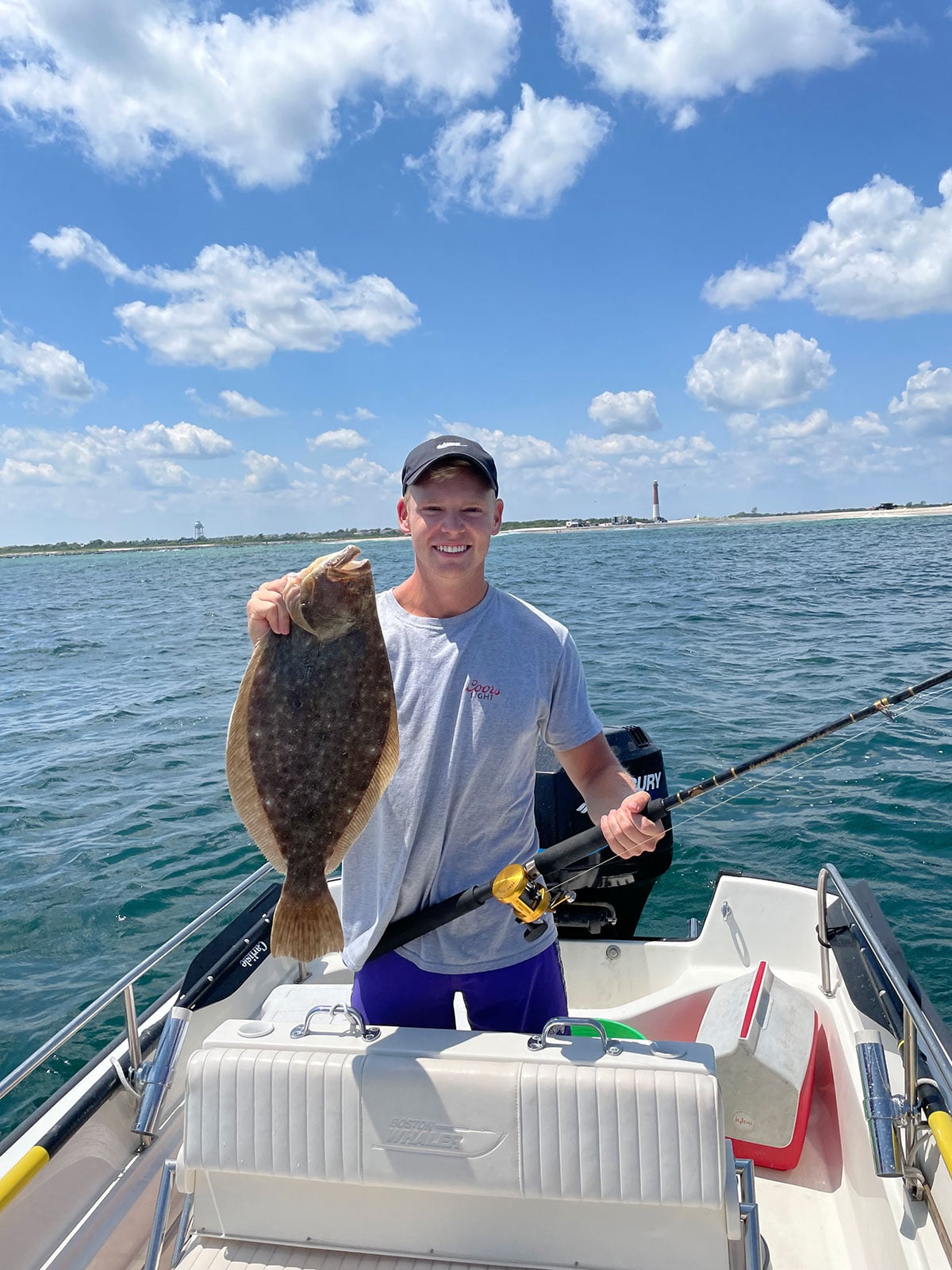
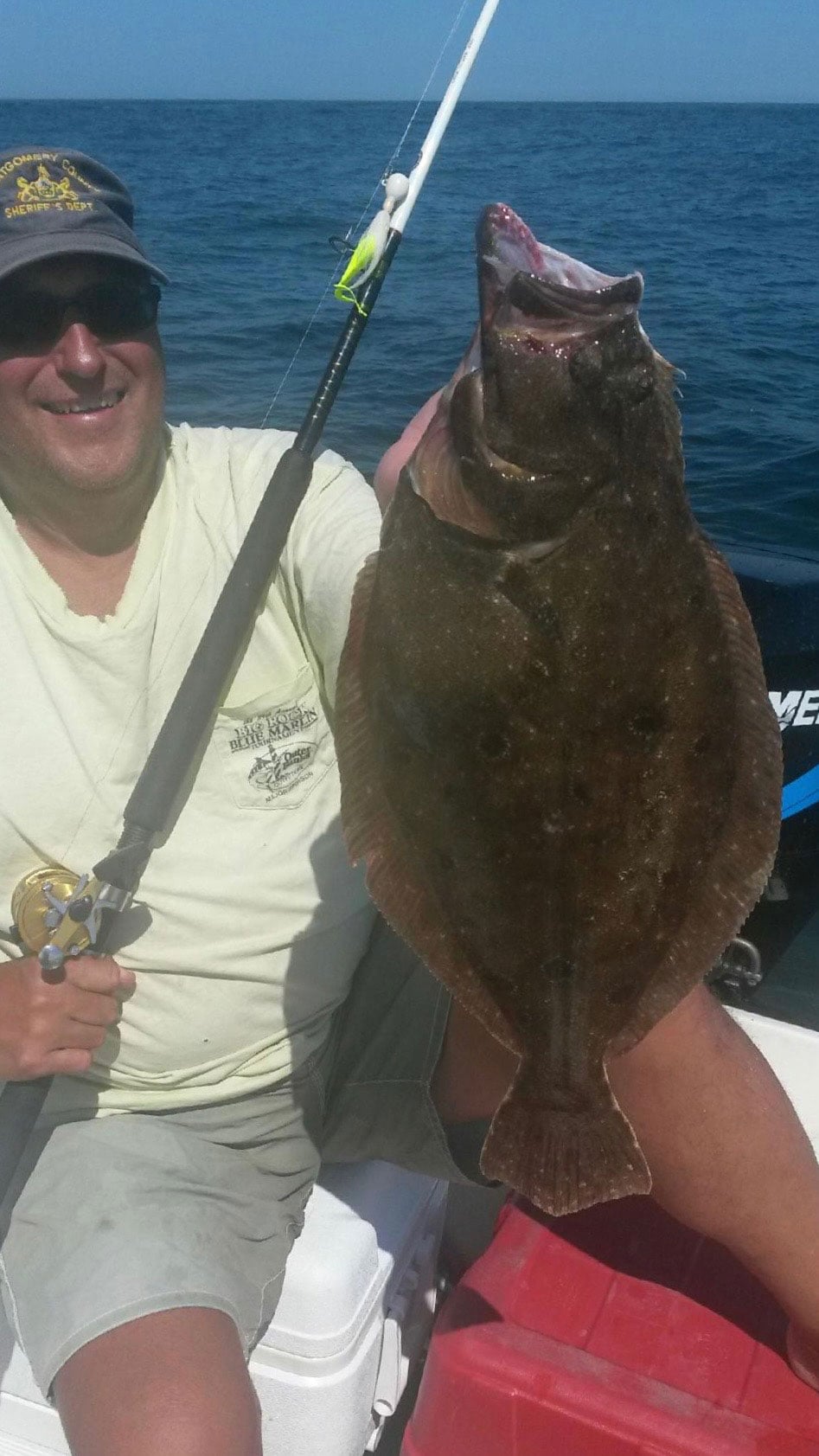
One sun-dappled day last July, our three-man crew did exceptionally well on throwback and keeper fluke off Island Beach, just beyond the surf line. Conditions were excellent: fair weather, a light offshore breeze, high, outgoing water, wind and current matching our drift. Calm seas, at least close to shore. The kind of trip you dream about on long winter nights. Even the water was Bahamas-clear, and we could see the sandy bottom 10 to 12 feet below. And we were in the open ocean!
We always mix-up our presentations, just to find out what the fluke like that particular day. Between strip baits, live killies and Gulp, I forget what the winning combination was on that trip. Most importantly, I remember the wind and weather, and that’s the key to successful far side fluking. Conditions have to be just right to venture to the correct side of breaking waves, especially in a small craft. Safety alone is the reason you must keep your wits about you. Catching fish is a bonus.
Once on the fishing grounds, I access where the waves are breaking, and stay a healthy distance outside. Never get so cocky, I tell myself, to get too close to breaking waves. Even on high tides, when there’s consistent, obvious shore break, I’m always obsessively checking the rollers behind me for a rogue wave. Not because I’m scared; I just wouldn’t like the inconvenience of a flipped boat! My 17-foot Whaler has a lot of heart, but I don’t want to test its capabilities against 3 or 4 feet of angry white water.
When Weather’s Fine
The fun part about fluking on the far side of the surf is searching for the correct structure, figuring out where the summer flatties are holding. We’ll always look toward the beach as we motor up the coast, searching for telltale signs of a rip current. Look for a trail of bubbles or busy water that looks out of place. Sometimes you can see the rip forming its own little river off the beach, plain as a Depression soup line. Other times, you just need to work off a hunch. Observe and evaluate. Study your fishfinder. Note where the bottom drops off, even if it’s only a couple of feet. You’re looking for the ledge that marine biologists call the littoral drop-off.
We’ll find out soon enough after we plunk down our baits if we’re on the receiving end of a rip or not, depending on our drift. And we always, always, want our drift to lead offshore, not inshore, when fluking just beyond the surf line. We’ll often drift from just beyond the surf line out to 30 or 40 feet of water, which give us a nice long stretch to bounce our bucktails. Depending on water temps, bottom contours, and whims of the fishing gods, fluke could be anywhere in the littoral drop-off.
Even if you don’t luck into a rip current, you’re still drifting over prime fluking real estate if you start from beyond the surf break and end up a half-mile off the beach. You’ll be traversing that littoral drop-off structure, where a 15-foot lump turns into a 17-foot hole. In the flat-as-a-desert underwater terrain of the Central and South Jersey Coast, that two-foot difference can turn a sandwich-eating drift into “get the net” action.
Applying the far-side-of-the-surf strategy is like Forrest Gump’s box of chocolates: you never know what you’re going to get. When you’re fluke fishing the littoral drop-off, you’re also crossing the underwater highway of seasonal visitors, like bluefish, bonito, Spanish mackerel and other pelagics. They’re following summer baitfish, like rainfish, bunker or spearing, which are also cruising down that same littoral underseas highway.
So many times, when I’m surf fishing, I see birds working their way up or down the beach, just out casting range, beyond the breaking waves. I know they’re above bait, and probably gamefish, traveling that littoral highway. That’s when I think, dang, I should be in my boat now!
The fishing life lesson I’ve learned when drifting for fluke on the littoral drop-off is to always keep a couple/few spinning shotgun rigs handy. We load them with slender metals like Deadly Dicks, fuller profile metals like Hopkins spoons, and our old reliable 3/4-ounce white bucktails. And a couple of small poppers, just for some surface fun. I’m always up for opportunistic catches!
Fair-weather days of July and August are tailor made for surf fluking on the far side of the breakers. Just remember, safety first, be aware of sea conditions, and always aim for an offshore drift. As the Mungo Jerry’s In The Summertime song goes, “When the weather’s fine, we go fishing or go swimming in the sea…”
While I’ve been known to cool off by jumping overboard into the sea, fishing for those far side surf fluke has always been my first choice on those sultry days. This time of year, fluke could be anywhere from back bays to inshore artificial reefs, inlets to offshore humps and lumps. But don’t overlook a trip to the far side of the surf in the summertime, when the weather’s fine.