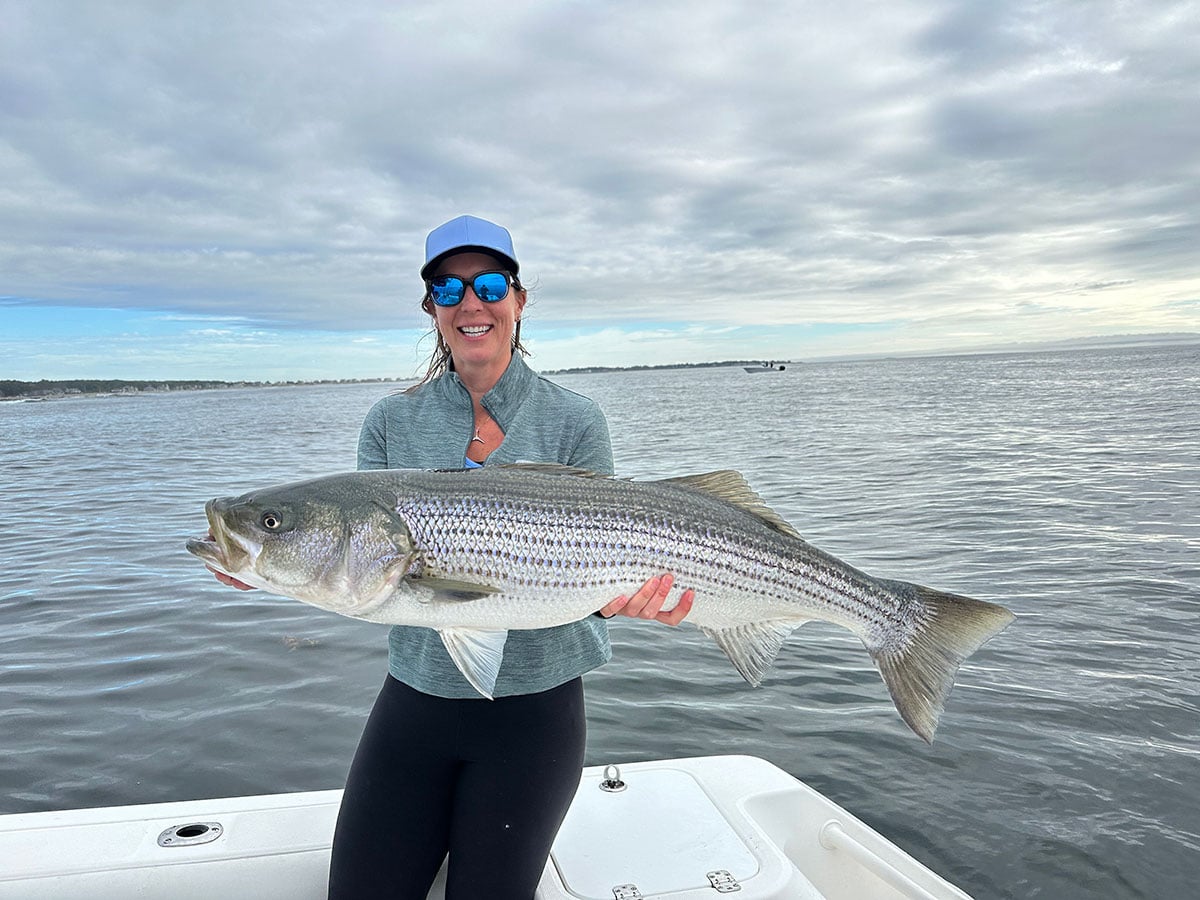
Maine offers world-class summer striper fishing without the crowds that great fishing often attracts.
The first few weeks in May mark the start of the striper fishing season in the Pine Tree State. Similar to other New England states it starts slowly, usually in the coastal rivers with school sized fish. First in the Piscataqua and York Rivers which are the southernmost rivers in Maine. Then up to the Ogunquit, Mousam, Kennebunk and the granddaddy of the Maine river fishery, The Saco River.
As we cross into June, the water temperature in the estuaries reach into mid-60s while the ocean temperatures hang closer to the 50-degree mark. Once the ocean temperature hits about 55 degrees, everything changes. Huge schools of sand eels, pogies and mackerel move in along the southern Maine coastline and settle in. That’s when the mother lode of migrating stripers swim into the inshore waters of the Maine coastline to the delight of saltwater anglers targeting striped bass. You will find anglers fishing along the first 45-mile stretch of the southern Maine coast from the shores of rivers and beaches, aboard kayaks, canoes, and, of course, powerboats.
Maine Methodology
Live or fresh-dead bait is how a lot of the people fishing up here catch their stripers, it’s a reliable producer that requires minimal rigging. All that’s needed is your favorite fishing rod, strung with either braid or mono and your terminal gear consists of 30- to 40-pound test fluorocarbon leaders depending on the size of fish and a circle hook. Anglers can either slow troll, drift or anchor and let the live bait swim free until it’s inhaled by a striper. Or cut their fresh bait and drift chunks in the current, or even pin them to the bottom with a sinker.
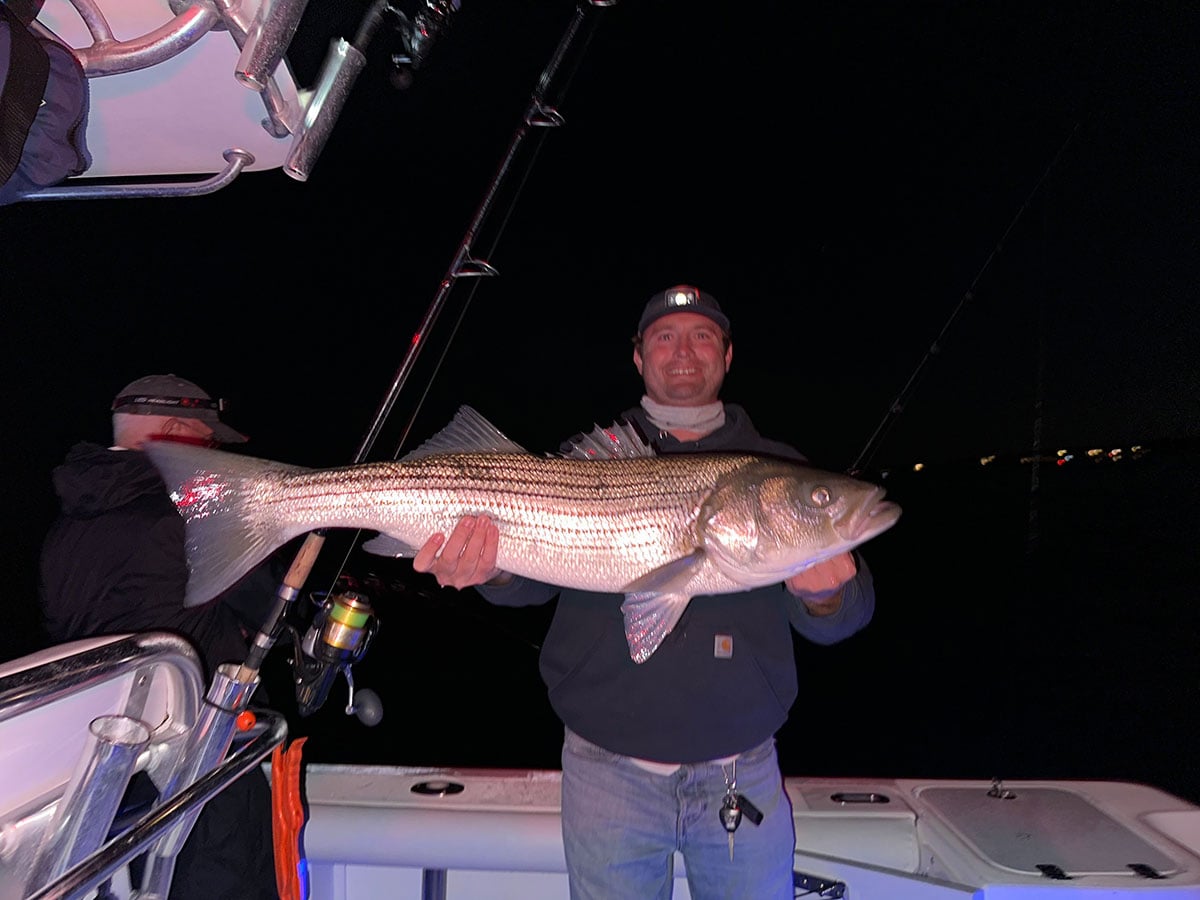
Different geographic areas of New England have their own preferred local fishing methods. A lot of that has to do with the types of baitfish that are available to the predators. The Maine coast has played host to a huge biomass of mackerel ever since I moved to the area in 1990. They are usually plentiful, relatively easy to locate and catch, and they make great bait – either live or chunked – from a boat for daytime striper fishing. During this earlier segment of the season when the water is still in the mid-50-degree range, the fish are very hungry and aggressive. As the season progresses and the sea temperature approaches 70 degrees, they seem to become finickier and dead baits tend to hold an edge over live baits. During the night, live eels are always the trick.
Every year is different, as it is for many species, so no one can say with certainty what is in store for 2026, but everyone is filled with anticipation. There was definitely a shortage of smaller school sized fish in 2025 and an abundance of jumbos. And don’t get me wrong, there are plenty of anglers throwing plugs and plastics in these areas and catching fish, but it does seem like live and fresh bait catches the biggest ones each year.
River Running
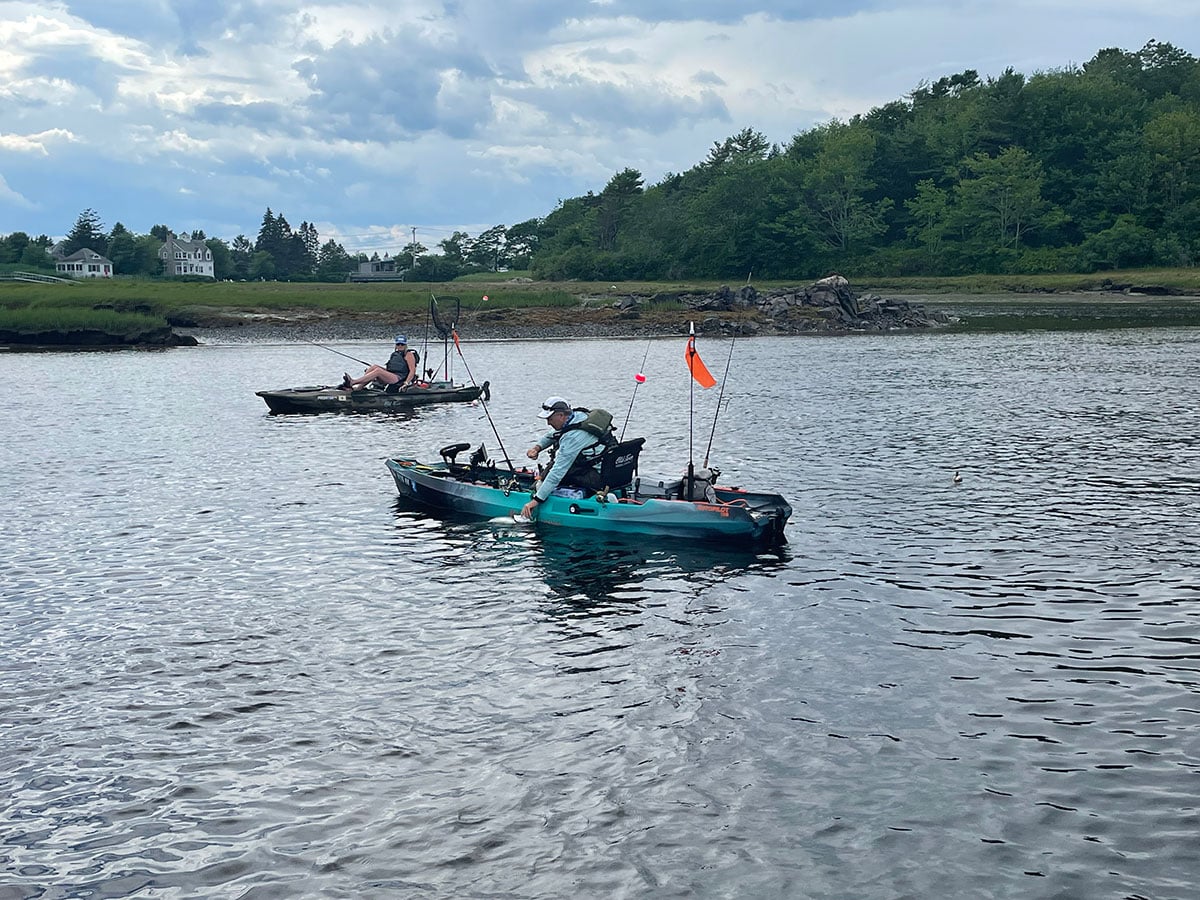
There are few places on the East Coast where striper fishermen will find a large stretch of coastline that includes five rivers teeming with stripers nestled in between miles upon miles of pristine, unexplored sandy white beaches interrupted by rocky outcroppings and ledges. Southern Maine is such a place. It is a very unique area, with much to offer today’s striper fishermen. If you like to troll the rivers in a tin boat or kayak, you will delight the Saco’s 5-1/2 miles of winding striper country. If you prefer casting bucktails from a bridge, you may find that the Ogunquit River is more your cup of tea. The banks of the Webhannet or Kennebunk Rivers are great spots for fly fishing. Those who enjoy slinging eels or casting plugs into the frothy surf, will enjoy the mouth of the Mousam River and Parson’s Beach. Boat fishermen who enjoy drifting live bait for jumbo stripers have the entire southern Maine coastline, from York Beach to Higgins Beach in Scarborough, to explore.
Traveling north, once you cross the Piscataqua River, which marks the border between New Hampshire and Maine, the first river you will encounter is the York. It is approximately 6 miles North on I-95. This gem is better known for the size of, rather than its numbers of fish. The mouth of the river and harbor offer a great opportunity for boat fishermen who enjoy drifting live bait. The local secret here is jigging harbor pollock at the mouth of the river and then drifting them live from the river’s mouth on an incoming tide through the harbor. Many jumbo-sized bass have been caught here using this method. Live bunker and mackerel, or chunks of natural bait also work well. If you prefer fishing the evening tides you might fare better using live eels. In 2025, Short Sands and Longs Sands beachfronts were red hot most of the summer, especially for night fishermen casting live eels.
The next river heading North on Route 1 Is the Ogunquit River. The fishery here is off the Green Bridge located on Beach Street, which will be on the right-hand side heading north on Route 1. The pool just above the bridge, casting off the bridge itself or fishing right at the mouth of the river are good places to concentrate your efforts. The Ogunquit is tidal for a very short section. There are a lot of big fish caught from the beach right at the mouth of the river, but there typically aren’t many big fish inside the river itself. Casting bucktail jigs, small poppers or tins are consistent producers of school-size fish here. The rocky shoreline between Perkins Cove all the way to Moody Beach have been very productive for the last several years. Boat fishermen either drift or slow-troll live mackerel with great results
Further North
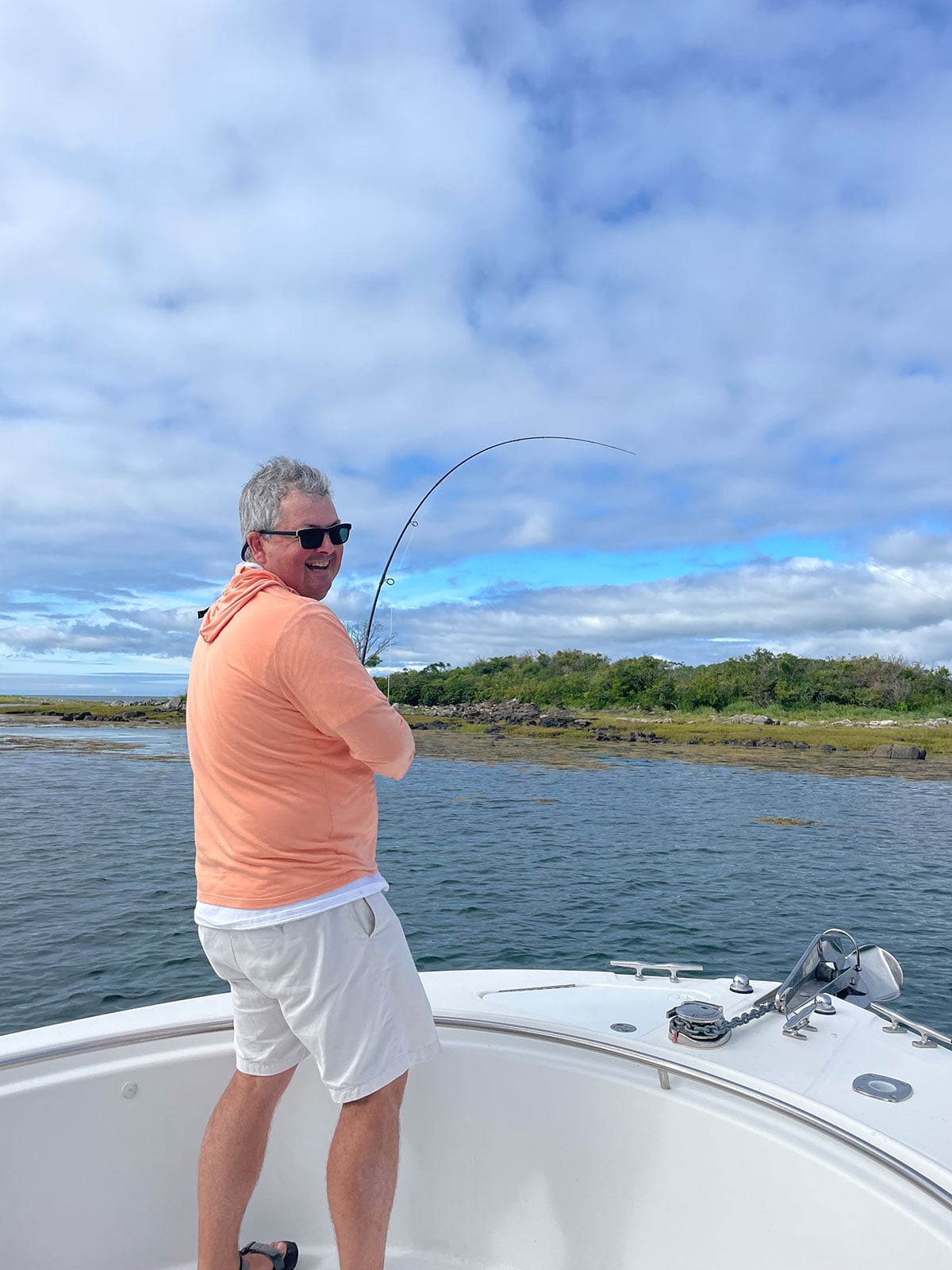
The first major river in the state is the Mousam. From land it is accessed from either Parsons Beach at the mouth, from the Route 9 Bridal Path that is just east of the boat launch, adjacent to a small power plant, or from Brown Street just past the railroad bridge. You will find all sizes of bass at the mouth of the Mousam around the first full moon in June, which usually corresponds with the arrival of the first mackerel along the beaches and rivers. You can find school stripers anywhere along this river all the way up to the bridge. The Mousam runs through a protected salt marsh, which makes fly fishing here very productive. Parson’s Beach is also a very good spot along the sandy beachfront.
The next river heading north is the Kennebunk. This can be a difficult river, not because of its lack of fish, but rather because the amount of boat traffic. The mouth of the river and its banks host a striped bass population from early May right through October. If you can negotiate the river on a slow traffic day, the mouth of the river just inside the breakwater is a good spot for either casting lures, drifting with live or dead bait or trolling a tube and worm from a small boat. The rocky shoreline between Kennebunkport and Cape Porpoise that runs along Ocean Avenue is also a very productive stretch for boat fishermen with the local knowledge to navigate through the rockpiles and shoals. It also is a very popular for sightseeing as President Bush’s summer residence at Walker’s Point is located here.
The Big One
Another jaunt to the north brings us to the Saco River, which offers the greatest variety to the striper fisherman. Early May signals the beginning of the fishery in the Saco, the first arrivals are always schoolies. The first place these fish show up, strangely enough, is five miles up the river in the center of the Biddeford/Saco town line. These early fish are caught trolling the tube and worm, casting bucktail jigs sweetened with pork rind, and casting small poppers or tin jigs. With the larger keeper size bass arriving at or around the full moon in June, the fishing builds.
The Saco is well-known for the numbers of fish anglers can catch here during the summer months, but it’s not just the sheer numbers, as many 50-pound (and larger) stripers are pulled out of this river every year. The big fish are generally caught using chunks of natural bait, live bunker or mackerel, with eels being the preferred nocturnal bait. Plug-casters will find plenty of water to fish along the river’s length.
The Saco is a very interesting river in that it has a lot of deep, fast-moving water, while also featuring many shallow flats and bays, which make it great for casting. The length of the river from its mouth to the town of Saco is approximately 5-1/2 miles and its entire length is prime striper country. The tide runs about 8 feet in the river, and the outgoing tide runs very hard. School fish are available at all stages of the tide. The only thing that tends to put the fish down is the boat traffic. There are a number of great spots to fish on the Saco that are accessible from both sides of the river. The west side of the river is accessed off of Route 9 in Biddeford, and the east side of the river is accessed off of Route 9 in Saco. The Biddeford Pool beachfront to the west of the Saco River and the Old Orchard Beach shoreline have also been consistent areas for both surfcasters and boat fishermen seeking striped bass.
These five rivers, and the adjacent connecting shorelines, offer exceptional fishing opportunities. Nowhere along this stretch of coastline will you encounter the elbow-to-elbow fishing seen in places like the Cape Cod Canal nor will you find dozens of drifting boats fishing on top of each other. And no matter what the situation, you can always find a place to fish; if it’s blowing 30 and rough out front, you can move deeper into one of these rivers or harbors to fish sheltered waters. If the weather really takes a nasty turn, you will be sure to find a section of protected beach, or a deserted riverbank to satisfy your fishing pleasure and the chances are high that you’ll be catching stripers before you know it!