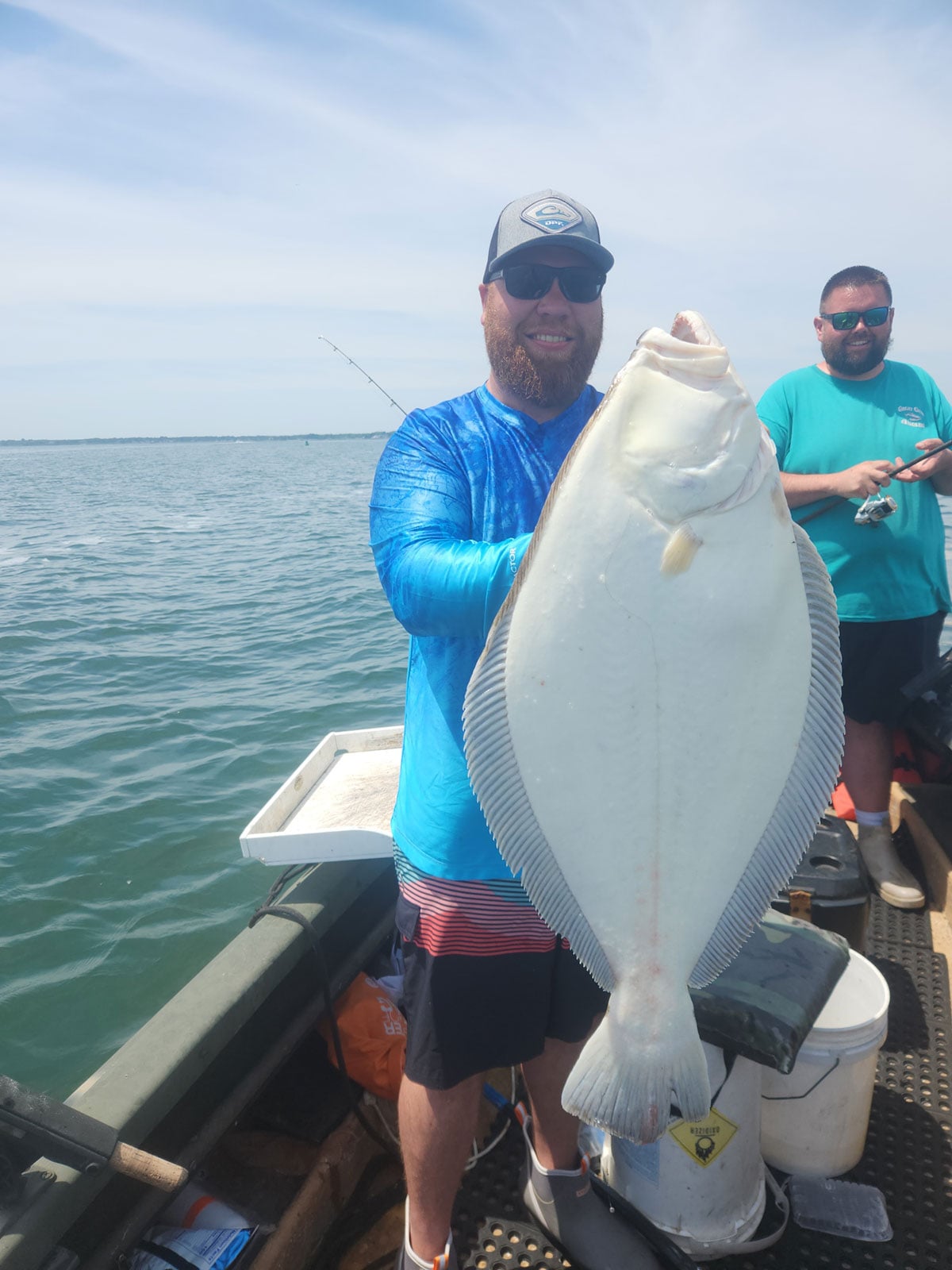
How light tackle, subtle presentations, and understanding Narrows Bay’s shallow-water structure can lead to outstanding fluke fishing close to shore.
The weather forecasters were spot on, predicting strong northeast winds of 25 to 35 knots accompanied by persistent rain and a bone-chilling air temperature of just 42 degrees — unusual for early June. Most fair-weather anglers would have turned off their alarms and stayed in bed, but my longtime friend, Capt. Paul Nilsson of “Just One Bite Charters,” and I saw opportunity instead. We weren’t drawn by a love for discomfort, but rather by the chance to fish the first twelve hours of a low-pressure system, especially a classic nor’easter, which often delivers exceptional fishing. Besides, that’s exactly what thermal underwear and Grundéns foul weather gear are made for.
Later that morning, I met Paul at his boat docked in one of the canals inside Narrows Bay, just west of Moriches Bay. We exchanged a glance, recognizing the adventure ahead, as the wind had already increased to a howling 40 knots. Undeterred, we set out into Narrows Bay for our first drift just south of the new Cranberry Dock in eight feet of clear water.
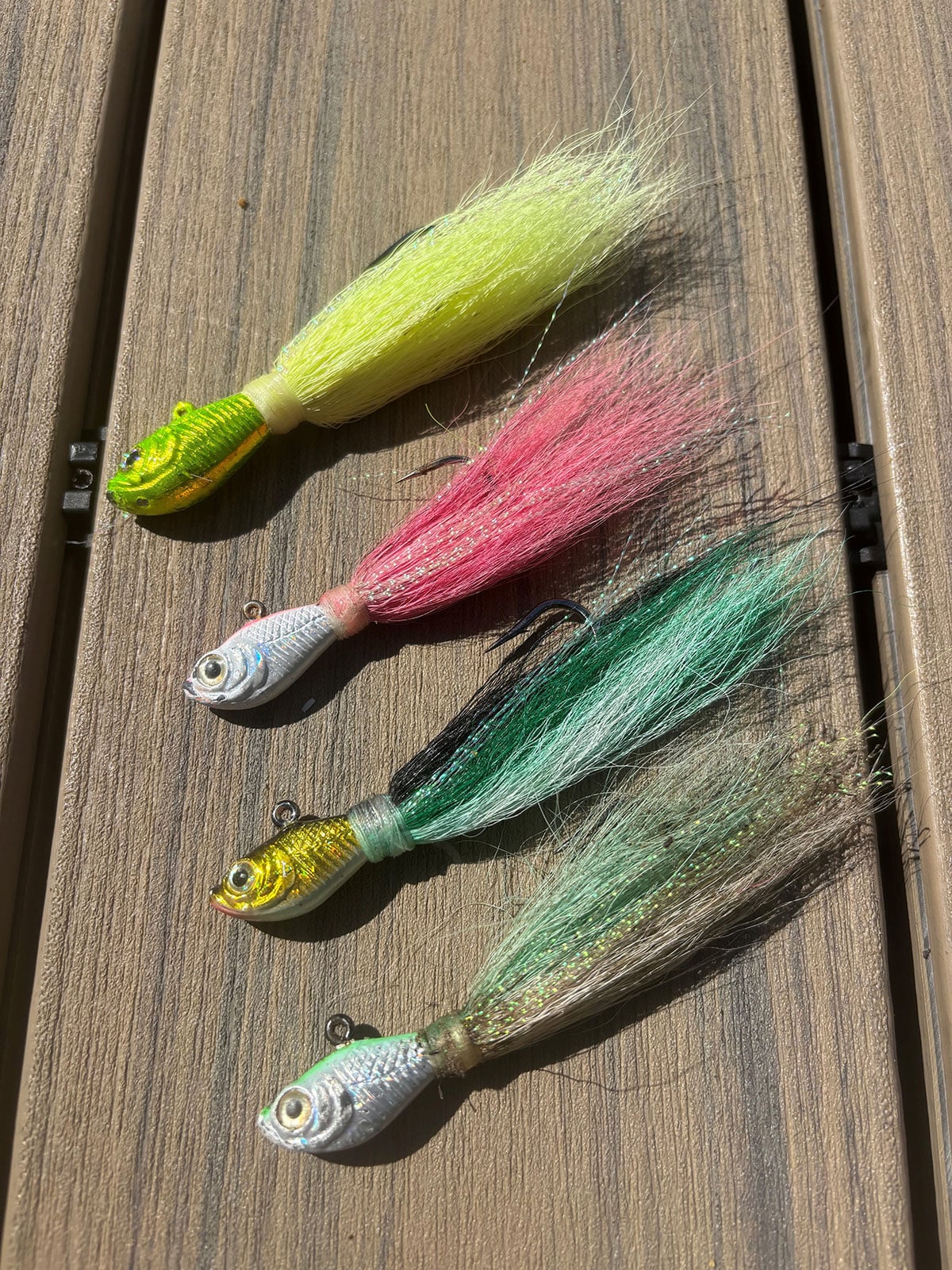
Paul’s setup included a pink 3/8-ounce Spro Prime Bucktail with a gold teaser tied 2 feet above it. I used a 3/8-ounce glow-colored Spro Prime Bucktail with a chartreuse Spro teaser positioned two feet above the main lure. For bait, Paul chose fresh spearing while I opted for a 4-inch white Berkley Gulp.
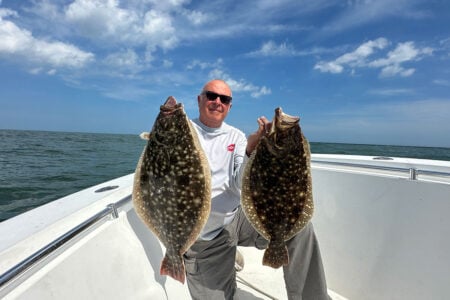
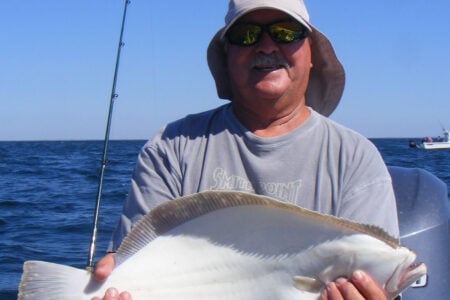
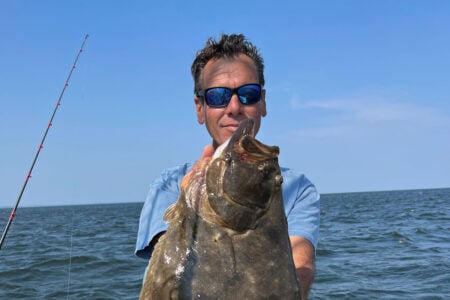
Within 5 minutes we reached our destination, and only moments later Paul landed the first keeper of the day. The bite was excellent that morning, producing plenty of keepers and shorts from the same stretch of water. We soon forgot about the brutal weather and focused entirely on the steady action until Paul’s rod dipped twice, a sure sign of something special. Moments later I slid the net under a beautiful 8-pound fluke.
By the end of the day we were drenched, cold, and exhausted, but we had easily achieved our limit of keepers while releasing numerous borderline fish. It was one of those unforgettable trips — all taking place within the protected waters of Narrows Bay.
Welcome To Narrows Bay
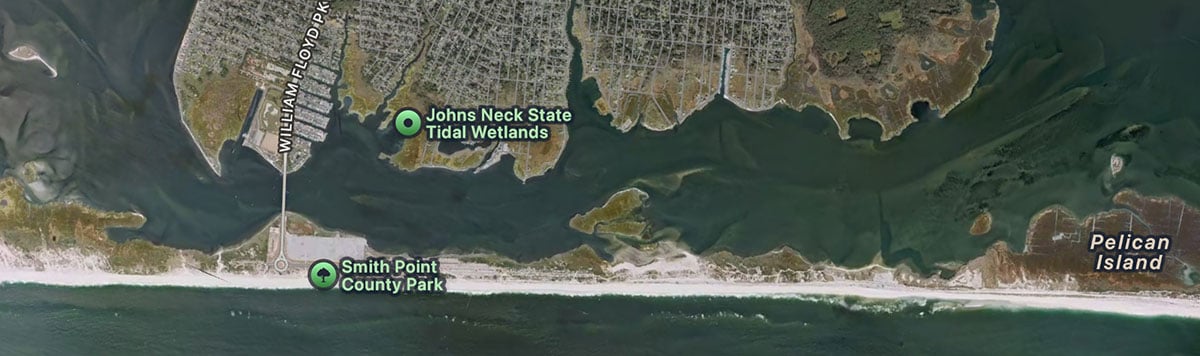
Narrows Bay is part of the Moriches Bay estuary, stretching from Forge Point near Buoy 11 along the Forge River west toward the Smith Point Bridge. The east side of the bridge marks the end of Narrows Bay, while the west side transitions into Bellport Bay.
Water depth and bottom contour vary considerably throughout the system. Tidal currents are moderate, with incoming tides pushing from Moriches Bay while outgoing tides flow west from Bellport Bay. Although Bellport Bay doesn’t receive much recognition, it experienced a major revival after Superstorm Sandy opened a channel along its southeast edge in 2012. That opening allowed stagnant water to flush out, revitalizing the bay with striped bass, bluefish, weakfish, fluke, blowfish, porgies, and other bottom dwellers.
Shorebound Opportunities Await
Smith Point State Park provides excellent shore access with a large parking lot and miles of productive shoreline. Surfcasters regularly fish both sides of the bridge, but nearly the entire shoreline can produce during a good fluke run.
Anglers willing to walk along the beachfront near the campgrounds will find some of the deepest water in the system, dropping into 20 to 30-foot depths. These areas can be especially productive during June for fluke, striped bass, and weakfish.
For anglers who prefer not to wade, the John Fritz Pier extends roughly 150 feet into Narrows Bay and provides consistent action for bluefish, striped bass, and fluke early in the season. Additional productive shoreline spots include the renovated Cranberry Dock on the north side and the south end of Riviera Drive in Mastic Beach.
One of the biggest advantages to fishing Narrows Bay is accessibility. There are countless places to park close to productive water, allowing anglers to quickly jump into the action when fluke begin feeding aggressively along the shoreline.
Bottom Contour Is Easy To Map
Examine any respectable nautical chart of Narrows Bay and you’ll notice the main channel running from Buoy 11 inside Moriches Bay west toward Buoy 1 near Smith Point Bridge. Much of the channel averages 6 to 8 feet deep and is bordered by shallow flats and sandbars.
At high tide, many mid-sized boats can cross the southern bars and access deeper depressions that reach 15 feet or more. These softer muddy areas consistently hold quality fluke despite lacking the classic sandy bottom many anglers prefer.
The best areas are often located along edges, drop-offs, and eelgrass beds surrounding Forge Point and extending from Buoy 8 west toward Buoy 3. These grass beds hold massive amounts of spearing throughout spring and summer, attracting fluke that wait along sandy fringes for bait to wash free during outgoing tides.
A steady drift speed of roughly 1.5 to 1.7 knots is ideal, although anything between 1 and 2 knots can still produce with slight tackle adjustments. The key is maintaining movement throughout the drift and staying in contact with the bottom.
It’s A Spro’s World
After talking with several friends and spending considerable time experimenting, I became convinced that Spro tackle was perfectly suited for shallow-water fluking in Narrows Bay. Last season I added a pair of Spro Fluker spinning rods along with Spro Vortex-E 3000 GR reels loaded with 12-pound Gouken fluorocarbon line. The ultra-thin diameter line allows excellent sensitivity and helps smaller bucktails stay near bottom even during faster drifts.
The lure of choice is the Spro Prime Bucktail in sizes ranging from 1/4 ounce to 1 ounce. Since much of the fishing takes place in only 6 to 8 feet of water, a 3/8-ounce bucktail is usually perfect. Even when fishing the deeper 20 to 30-foot stretches near the campground area, lighter bucktails often outperform heavier offerings.
| WHY LOW PRESSURE CAN FIRE UP FLUKE |
|
I’ve always appreciated the Prime Bucktail’s unique head design and eyelet placement, which create a natural gliding action while jigging. Combined with durable Gamakatsu hooks and a wide selection of productive colors, it’s become my go-to presentation.
White and glow remain my favorites, although pink excels when squid are abundant while spearing blue shines when rainbait is present. Other productive colors include chartreuse, crazy chartreuse, and sand eel patterns.
For teasers, the Spro Bucktail Teaser in glow, white, or chartreuse is tough to beat. I generally position the teaser 18 to 24 inches above the main bucktail using a dropper loop.
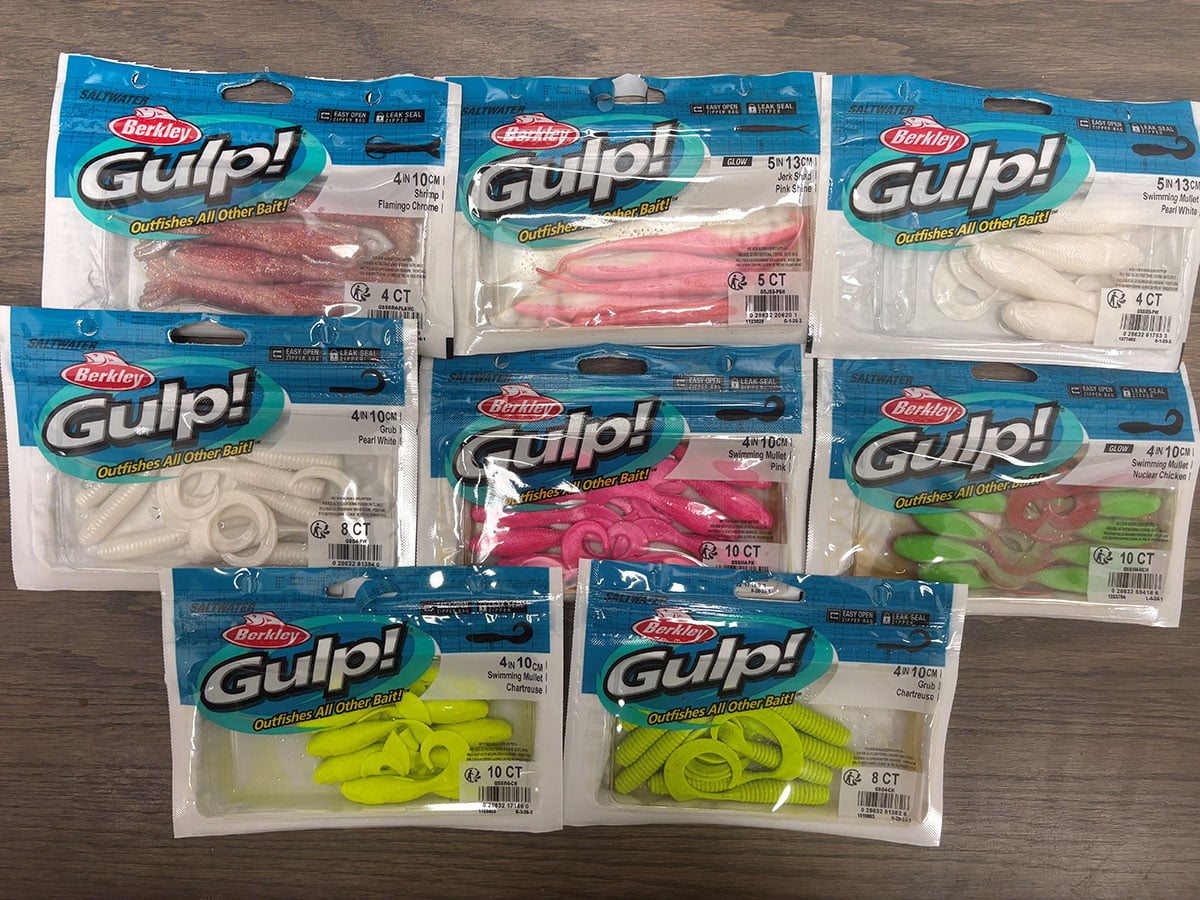
When it comes to soft plastics, the Spro Eel Double Tail in Super Glow, Pearl White, and Pink has produced fluke to 8 pounds in Narrows Bay. The forked tails flutter naturally and often trigger aggressive strikes from fish that might otherwise ignore a presentation.
Tips From An Old Salt
It’s amazing — I’ve been fluke fishing for more than 57 years, yet I still feel like I’ve barely scratched the surface when it comes to truly understanding these fish. One lesson stands above the rest: patience. Anglers fishing shallow water often mistake the hardest hits for quality fish, only to reel up another short fluke. Meanwhile, larger fish frequently deliver subtle taps and hesitant pickups.
The old “big bait equals big fish” theory may work offshore, but in 6 to 8 feet of water it often does more harm than good. Dragging oversized bucktails tipped with giant baits across shallow sandbars rarely fools experienced doormats. Big fluke didn’t get large by attacking everything they see. Instead, successful shallow-water fluking relies on realistic presentations and proper boat control. Fishing lighter bucktails whenever possible is critical because they move more naturally with the current and allow anglers to maintain steady bottom contact without overpowering the presentation. Drift speed matters more than most anglers realize, and keeping the boat moving at a controlled pace is often the difference between a slow pick and a limit catch.
| TOP SHORE SPOTS IN NARROWS BAY |
|
I’ve also found that the best areas are often located around grass edges, sandy drop-offs, and spearing beds, especially during outgoing tides when bait is forced off the flats and into open water. These are prime ambush points where larger fluke position themselves waiting for an easy meal.
Another mistake many anglers make is overworking the lure. Large fluke are cautious predators, and subtle movements usually outperform aggressive jigging in shallow water. Often the biggest fish will only deliver the lightest taps or soft pressure before fully committing.
That’s where patience becomes so important. Many anglers immediately reel up and recast after feeling a subtle bump, but experienced fluke fishermen know better. If a fish continues following or nudging the bait, keep the presentation in the strike zone and work it naturally. Sometimes it takes several attempts before a quality fluke finally decides to eat.
There you have it. This summer, give Narrows Bay a serious look. Don’t let anyone convince you that only shorts live inside Moriches and Narrows Bay. The keepers are there — you simply need to fish a little smarter to find them.