Onboard solutions to improving your offshore quiver.
Anyone who has experienced a tuna trolling blitz or the madness of sight casting at surface-feeding tuna will tell you – no boat can ever have enough rodholders!
If you’re looking to control your own destiny by adding to your vessel’s onboard rodholders, allow me offer a few solutions along a trio of paths, specifically permanent, semi-permanent and transitional, so let’s jump right into it to find out more.
Permanent
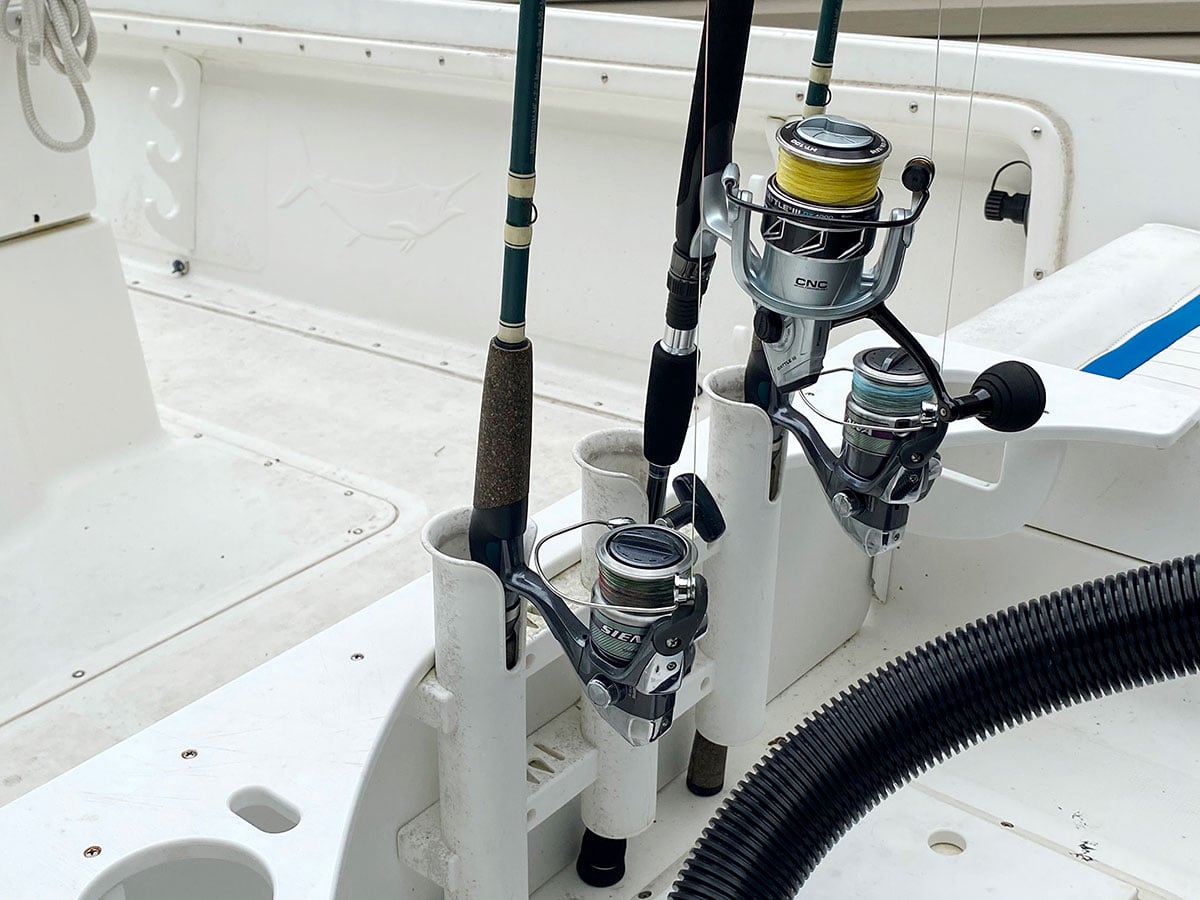
Like the name implies, once you install these types of rodholders on your boat, they become a permanent part of the landscape. Flush-mount gunwale units are the most common “permanent” rodholder additions and are available in various tube lengths (8, 9 and 12 inches) and slant angles (0, 15 and 30 degrees), while being constructed from a variety of materials (chrome over brass, stainless steel, plastic or aluminum), with either an open bottom (allowing rainwater or sea spray to drain through) or a sealed bottom that typically features a quarter-inch drain plug to direct water out of the bilge and onto the cockpit sole or overboard. Popular names in the flush-mount gunwale rodholder game include Perko, Lee’s, C. E. Smith, Rupp, Attwood, Blackfin, Sea Dog and others.
While the majority of flush-mount gunwale rodholders are equipped with either factory welded or through-bolted pins that match up with your rod’s metal or rubber gimbal notch, some of the more heavy duty units from Lee’s and Smith offer “swivel pin” bottoms that allow giant tuna hunters to keep a bent butt rod in the rodholder when fighting the fish, with the swivel mechanism allowing anglers to turn the rod tip to follow the direction of the fight. Most factory fish boats come with two flush-mount rodholders per side, and in my experience as a small boat charter captain I believe that coastal anglers need a minimum of three rodholders per side to handle drifting, chunking and trolling routines, even a few additional mounts up in the bow if there’s space.
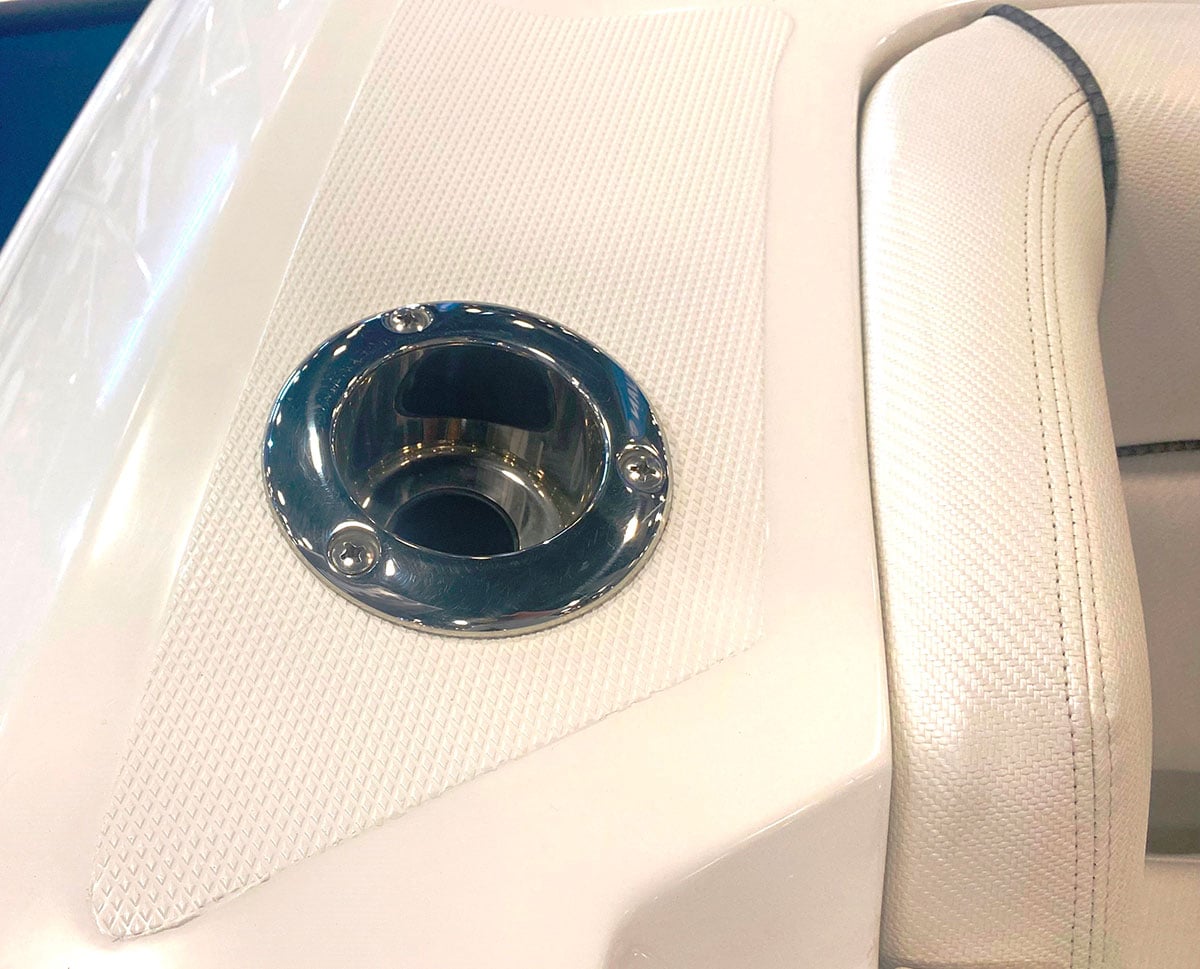
One of the most intriguing of the next-gen gunwale mount rodholders for when gunwale space is at a premium is the dual purpose rodholder/cupholder style. This type has an upper opening that’s large enough to accommodate a standard-sized 12- to 16-ounce aluminum can. But this unique design continues to impress with a standard rodholder tube that protrudes down from the center of the upper bottom, which holds either a jigging or trolling rod securely in place with a cross pin insert at the bottom end of the tube. These are offered by a variety of specialty manufacturers like Tigress, White Cap, Mate (West Marine) and others and are available from a variety of distributors like Boat Outfitters, Tigress, Overton’s, West Marine, or your local marine supply store. These are a bit pricier than the standard flush-mount rodholders, ranging from $100 to $160 per unit depending on the quality level and whether it’s equipped with a bottom drain plug.
This brings us to the next form of permanent rodholder, the ubiquitous vertical rack, which adorn the consoles, aft transom bulkheads and fishbox sides of many a sportfisher. Vertical rod racks come in myriad forms ranging from inexpensive polymer, to more-sturdy starboard/seaboard, to anodized aluminum and stainless steel. You can get a cheap three-rod poly rack for under $15, or you can procure a sturdy six to eight rod aluminum or stainless custom vertical rack for $800 or more; the choices are very personal to your boat based on available space. Horizontal racks installed on the side or front of your console are very useful and typically stow rods away from the dangerous action in the cockpit. Racks mounted on the transom are great for stowing rods when travelling to and from the fishing grounds, but they’re typically “in harm’s way” when working an active fish to boatside. Whatever vertical rack you choose, be sure to through-bolt it through something sturdy like a fiberglass bulkhead and use oversized washers on the back side for added strength and durability (see Install Tips).
Yet another form of permanent rod storage is horizontal under-gunwale rod racks. Historically manufactured from teak, they’ve evolved to where most are now constructed from polymer or “marine lumber”. Installed under the gunwales these racks are most effective when recessed into the hollow area under the covering boards where they are less likely to cause conflict in the cockpit. Manufacturers include Lee’s, Taco, Boat Outfitters, Sea Dog and many others. Bungee cords on either end are a welcome addition and prevent your rods, gaffs, tagging sticks and boat brushes from bouncing on the cockpit sole when underway in rough seas.
Semi-Permanent
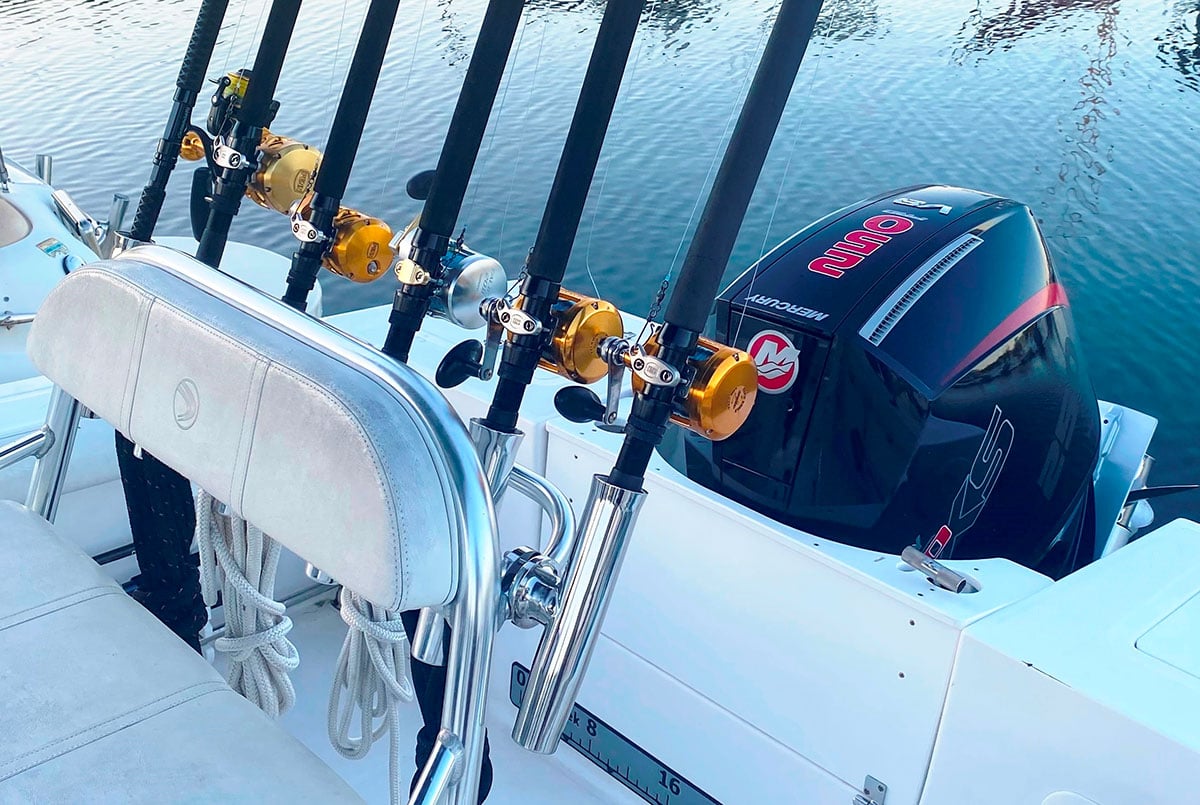
I’ll define semi-permanent rodholders as those “transitional” types that you can clamp on to something sturdy like a bow rail or tower leg, but which can also be easily removed if you decide to redecorate or sell your boat. Clamp-on rodholders are offered by a number of manufacturers including Lee’s, C.E. Smith, Taco Metals, Attwood, Perko, Amarine and others. They are designed and sized to clamp on to either the vertical tower legs of your hardtop or T-top, or the horizontal support braces. Other models attach to your boat’s bow rail or side rails.
It’s critical that you accurately measure the diameter of where you intend to mount them to get the right sized rodholder to insure a good fit. When using these various types of clamp-on units whether drifting, trolling or underway, it’s always a good idea to employ a safety line on your rod/reel combo to prevent a wicked strike, rogue wave or rough seas from causing it to get unceremoniously launched into the sea. I have lost a few outfits like this over the years and it’s always a major bummer, no matter how many fish you catch.
I have employed clamp-on rodholders on my boats’ leaning post rocket launchers and forward bow rails with great success over the years and there’s typically a size and shape that will meet both your budget and performance expectations.
Portable
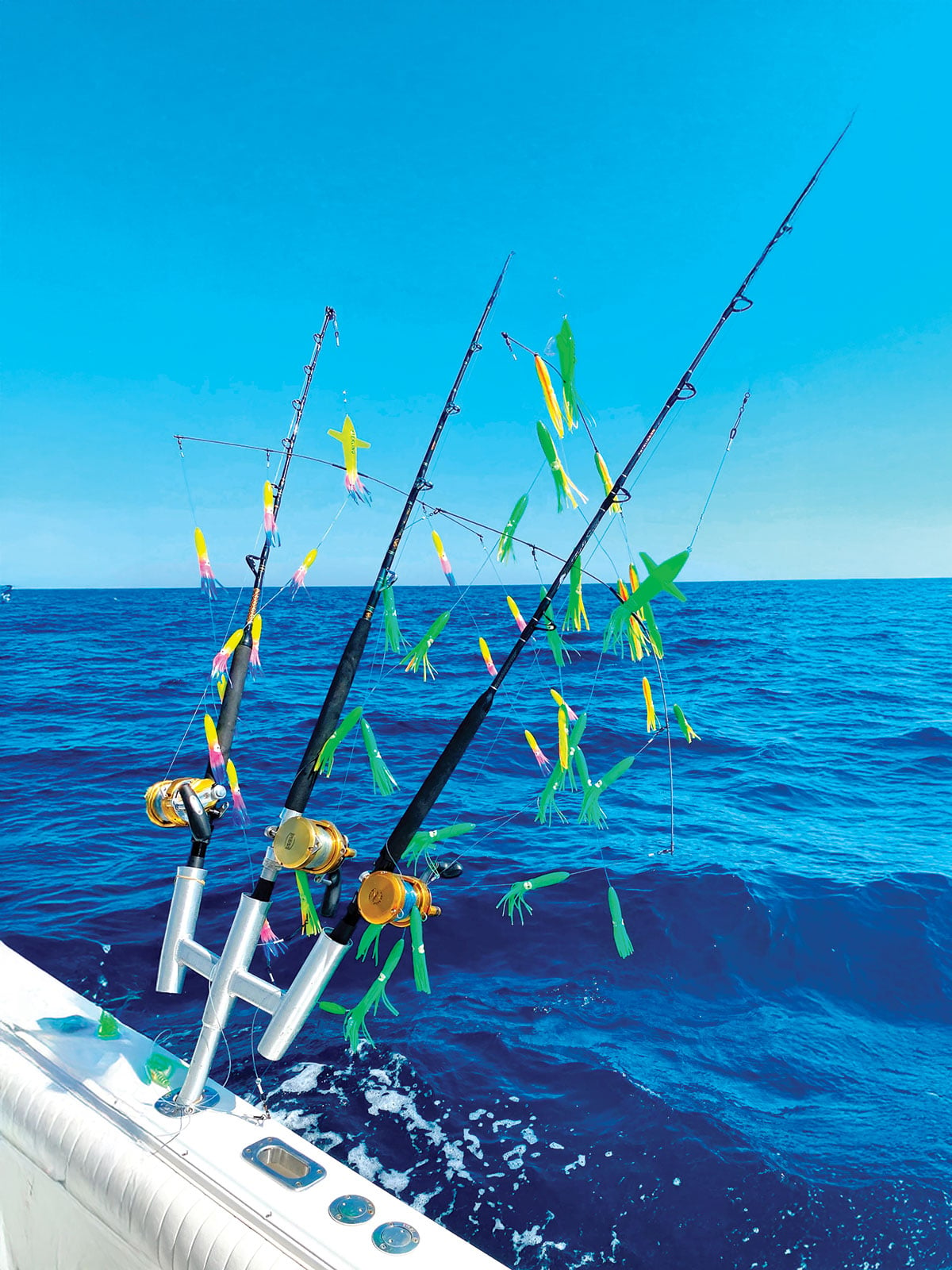
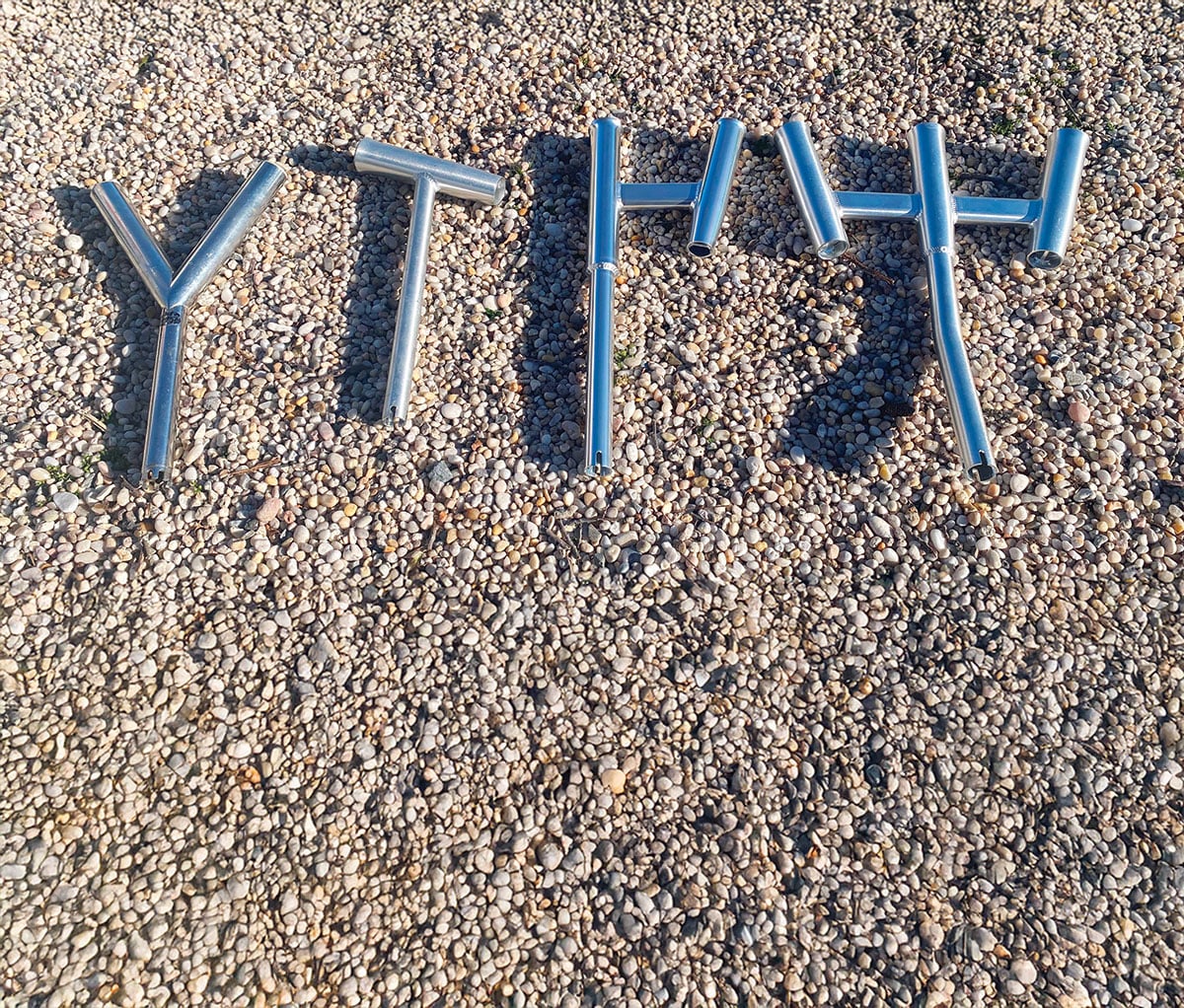
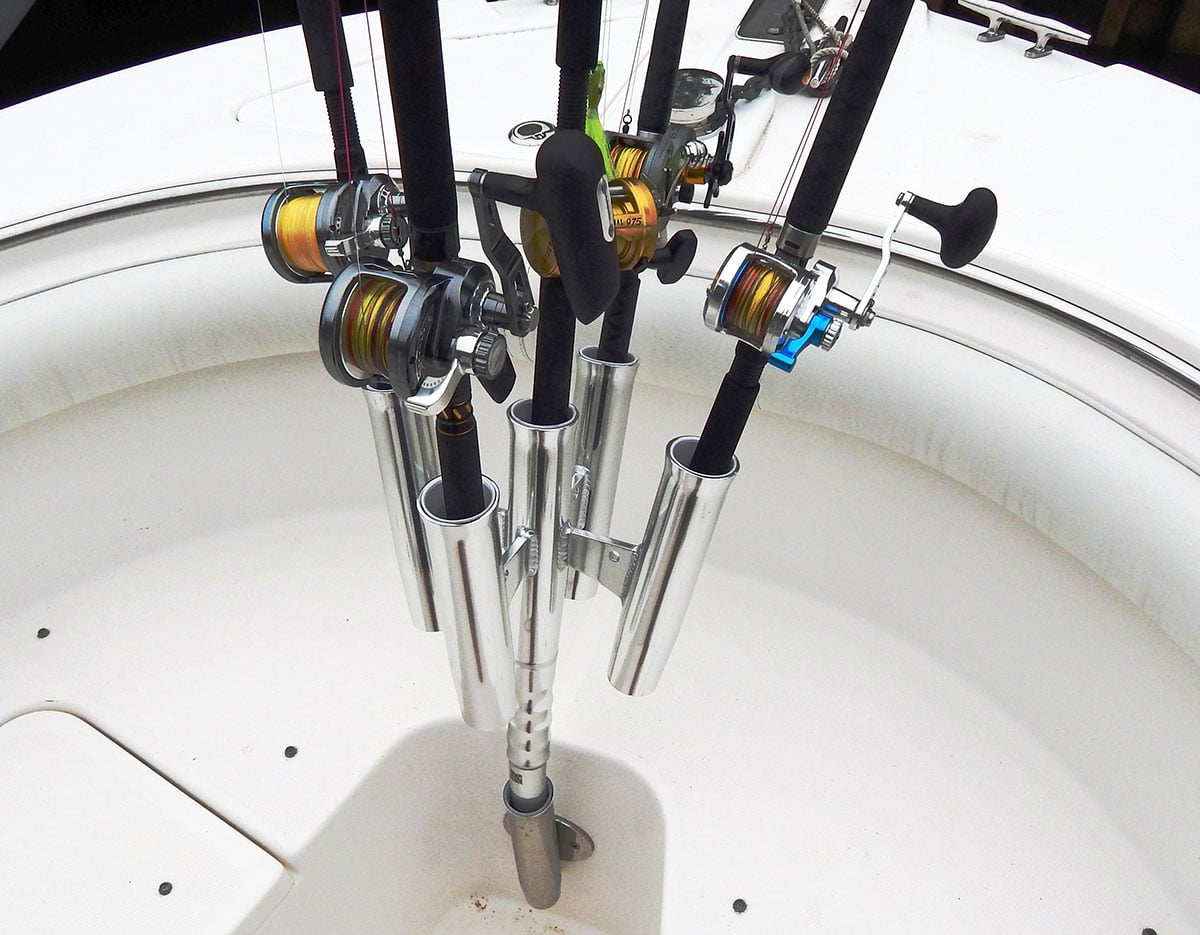
Taco Metals manufactures a plethora of portable and extremely ergonomic fishing rod holders. Taco’s three-rod Kite Fishing Rod Cluster and five-rod Olympic Rod Cluster are the gold standard for adding functional and portable rod storage. The three-rod trident is the perfect tool when shark drifting or tuna chunking, showing its unequaled versatility by turning one stationary rodholder into three, allowing you to fish multiple rods at various angles. It works equally well plugging into 0-, 15- and 30-degree flush-mount gunwale rodholders. When it’s time to get the trolling rods out of a crazed cockpit during a hot bite, the five-rod Olympic Cluster really struts its stuff by racking your rods in an organized fashion away from the action. Both of these man-portable rodholders are easily deployed when needed or stowed neatly out of sight when underway.
Competitive rodholder manufacturers like Tigress, Boat Outfitters and others also make their version of the three-rod trident, a staple accessory tool for decades for south Florida anglers. One of my favorites is the Tigress two-rod (half trident) unit originally designed for south Florida sailfish crews when employing kites to spread and space live baits downwind; it works equally well up north when trying to get the rod angles and positions “just right” when trolling, chunking or stowing gear away. Yet another old favorite is my trusty SoLo Marine “Y” rodholder that has been part of many a fishing frenzy over the decades. What I like about this unique design is that it offers a total of eight positions that users can angle the twin rodholder tubes, plus it’s manufactured from 316 grade stainless steel for the ultimate in durability. Most of the competitive portable rodholder versions feature four positions – north, south, east and west – that you can angle the rodholder arrangement.
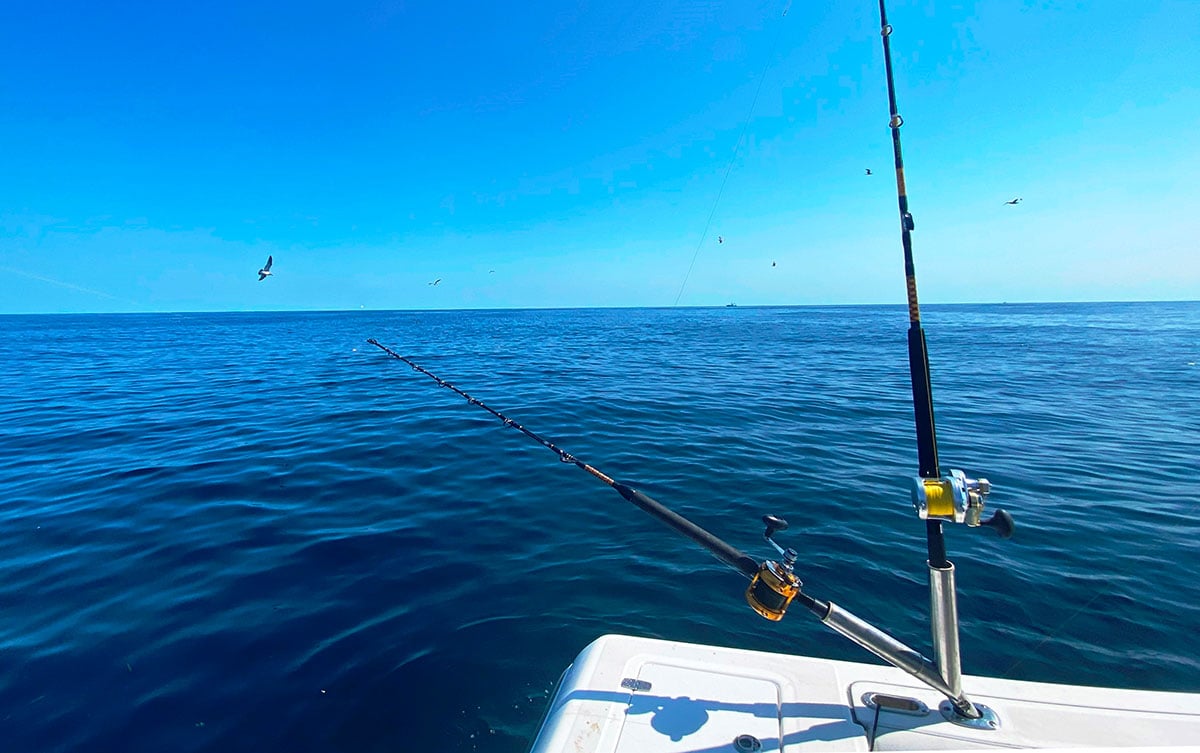
One of the most pervasive, affordable and useful portable rodholder accessories is the rod rigger, also known in some circles as an outrodder. This design allows operators to get the benefits of outriggers, spreading lures and baits in the boat’s wake, without the cost or hassle of investing in a set of outriggers, which can set you back anywhere from $2,000 or more, depending on the size and style of your boat. One original I’ve been using since the late 1990s is the Rod Rigger produced by Reliable Gaff. Owner Jerry Schnur and his son Bruce hit the nail right on the head with this design, manufactured from anodized aluminum, with an clear poly inner tube insert to prevent scratching the rod butt when in use, while also allowing for a smooth transition when it was time to pull a rod out of the holder under the strain of a hard fighting fish.
The original Rod Rigger also featured a removable/replaceable stainless steel pin to match up with your rod’s gimbal butt for a secure fit. This Reliable Rod Rigger was equipped with a 6-foot length of sturdy quarter-inch line which wrapped under the 90-degree section that was welded onto the main tube and inserted into your boat’s rodholder. A polymer plastic clip attached to your trolling reel’s lug nuts or bottom clamp to keep things secure when a fish struck your rod.
With Reliable Gaff long gone, other companies like Boat Outfitters and Taco make a version of this tool that I still use to this day, giving me the ability to troll anywhere from six to eight rods on my 228 EdgeWater CC without tangles. One of the benefits that this design offers over the usual flush-mount rodholder is that the rod’s tip is placed horizontally much closer to the ocean’s surface, thereby keeping lures and baits swimming more naturally without the dreaded hops and skips that other vertical rodholders seem to impart into the trolling pattern because their tips are 6 feet or more above the waves.
“Evolutionary Tinkering”
I have been a practitioner of “growing” my various boats’ rodholders over the decades and my two current rides have been no exception to this evolutionary tinkering. When I purchased a 1999 EdgeWater 185 CC back in 2016 for my two sons Chris and Marc and their families, it came equipped with only two rodholders in the gunwale boards (one on each side), which drained their contents right into the bilge area, a big no-no even for an unsinkable boat like this EdgeWater. Although the leaning post had a four-rod rocket launcher, two of the spaces were allotted to the removable backrest’s tower legs, plus there were a trio of starboard horizontal rod racks set under each gunwale, for a total of 10 working rodholders (four vertical and six horizontal).
| INSTALL TIPS |
| When adding rodholders to your ride, follow the old adage to measure twice and cut once. Thru-bolt these whenever possible with backing plates or large fender washers, even if you have to cut a small pie hatch opening to access the back side of the liner or deck to make a solid connection.
If rodholders are going to drain on the cockpit sole, the open bottom style will work great. If these are going to dump their watery contents into the bilge area, be sure to get the closed bottom type that’s equipped with a quarter-inch drain plug so you can divert any spray or washdown water from entering down below. – J. Raguso |
Suffice to say, if we were to bring more than three or four spinning rods on this boat, along with a few conventional outfits, the boat’s standard rodholder package is not enough to do the job. I solved the problem by adding two Amarine vertical clamp-on rodholders to each of the seat back support’s tower legs, removed the open bottomed gunwale-mount rodholders and replaced them with Perko capped units to minimize any water egress into the bilge area. I then installed a second set of vertical clamp-on rodholders (Blackfin/West Marine) that fit on the aft section of the bow rails port and starboard. I also added a Berkley three-rod polymer vertical rod rack to the back side of the EdgeWater’s removable transom well board, which brought my total up to 11 vertical rodholders to go along with the aforementioned six-pack of horizontal racks. The change was dramatic and I can easily carry 10 outfits onboard, with added space to get them out of the way when fighting a fish.
Without boring you with too much minutia, I performed a similar transformation on my 2006 EdgeWater 228 CC, going from the standard 18 rodholders (four verticals each in the gunwales, leaning post rocket launcher and the T-Top rocket launcher and six horizontal racks under the covering boards) to adding one 0-degree EdgeWater flush-mount rodholder amidships in each gunwale, two additional clamp-on Amarine units to the outsides of the leaning post rocket launcher, two clamp-on vertical Amarine rodholders on the back side of my low-profile bow rails port and starboard, plus another Thru-bolted solo rodholder forward on the anchor locker bulkhead.
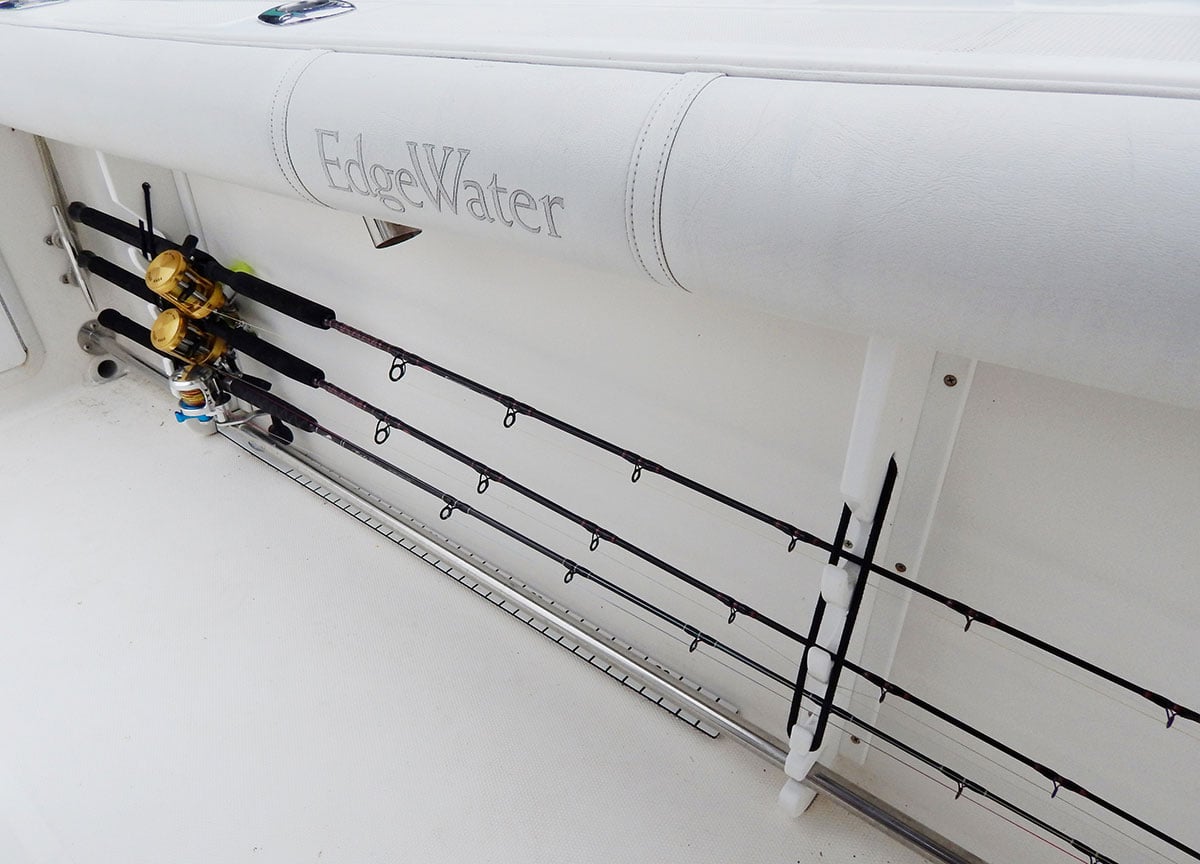
My total count for this EdgeWater is now 25 vertical rodholders and the six under-gunwale racks, and ye still I wish it had more!