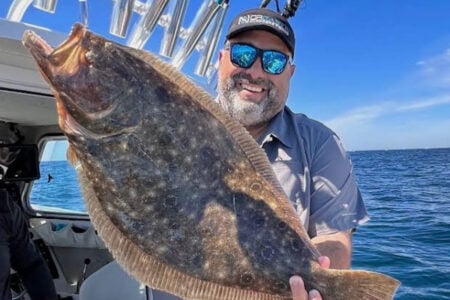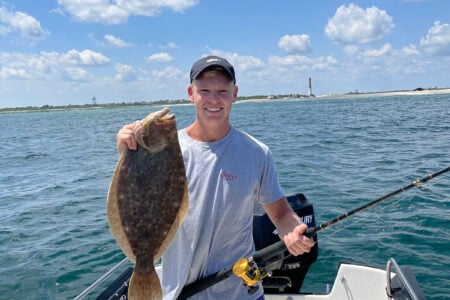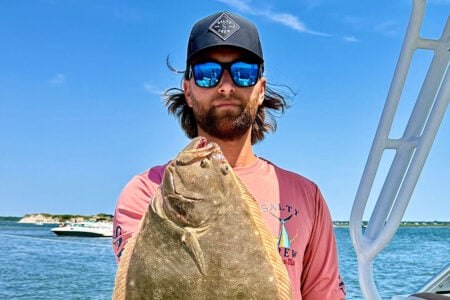
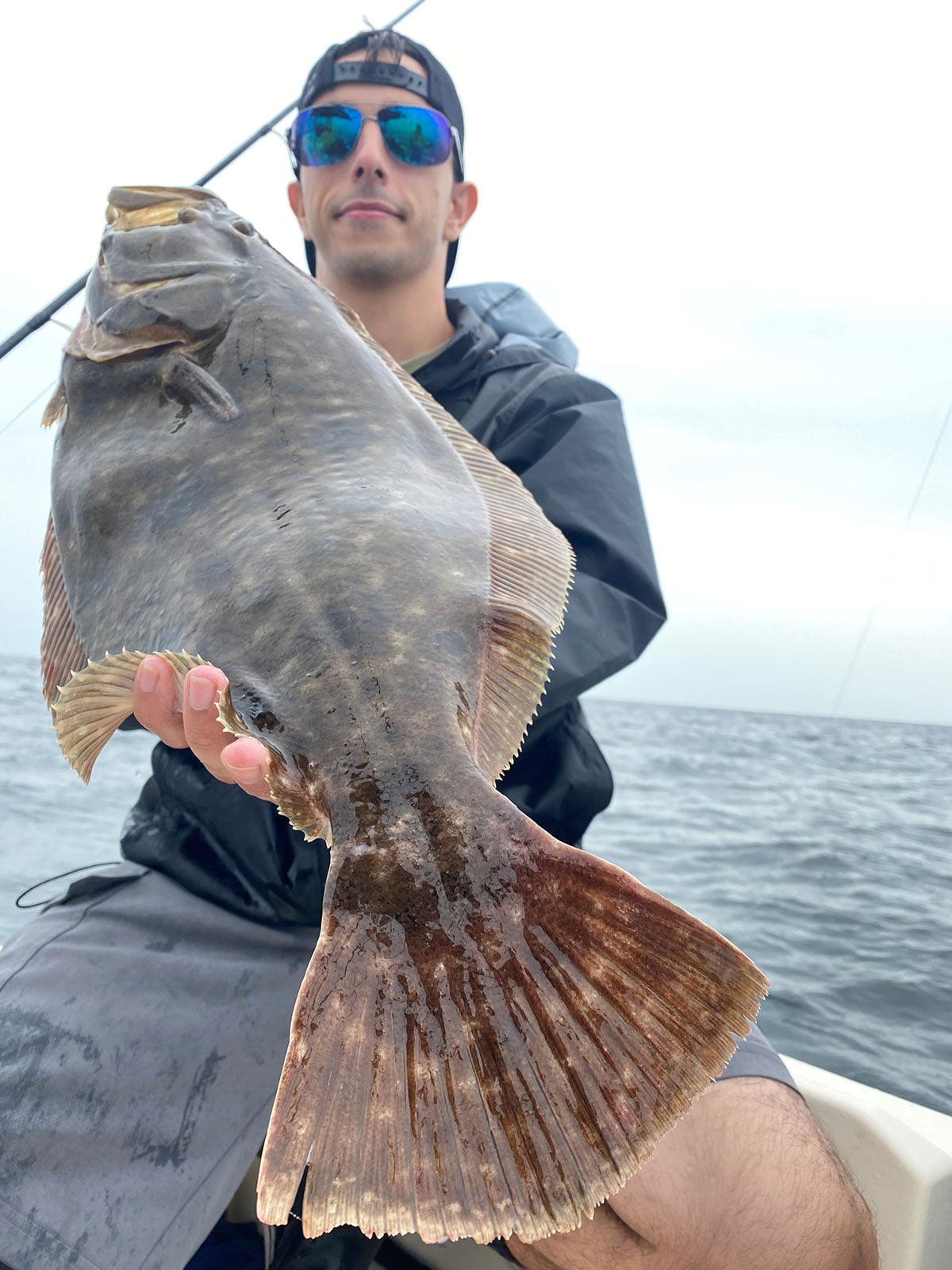
Discover why the Cartwright Grounds south of Montauk remain one of the Northeast’s premier destinations for trophy fluke.
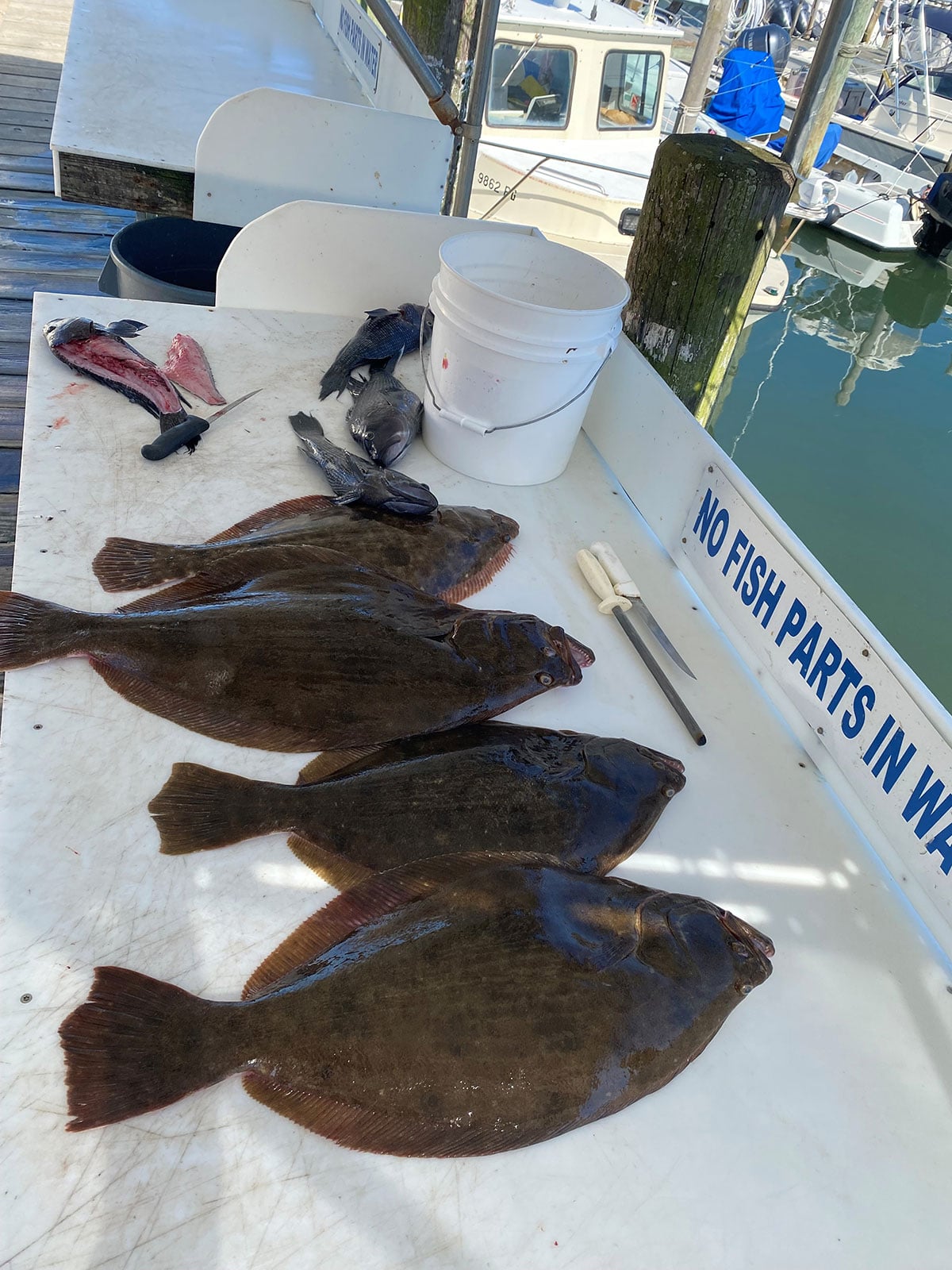
As July approaches, I begin preparing my tackle in anticipation of the exceptional fluke fishing that takes place south of Montauk Point each summer. The bite typically kicks into high gear in July and lasts well into September. When conditions permit, I depart Moriches Inlet and make the long run to my favorite destination, the Cartwright Grounds. More often than not, the trip is rewarded with a boat limit of keeper fluke, monster ling and jumbo sea bass.
The Cartwright Grounds are especially inviting because of the area’s vast size and the abundance of life that inhabits the area. For trailer boaters, several marinas offer affordable launching options that put you much closer to the action. If you prefer an easier route, numerous party and charter boats make the run daily and will take you right to the grounds. Whatever your preference, don’t miss the opportunity to put some true quality fluke in the box while enjoying a bycatch of jumbo sea bass and red hake.
Plenty Of Room For All To Enjoy
The Cartwright Grounds (N 40.58.580, W 71.47.03944), located approximately six miles south of Montauk Point, encompass a seven-mile radius of rocky bottom in 80 to 100 feet of water. This area is heavily relied upon by Montauk’s party and charter boat fleet throughout the summer fluke season because of both the quantity and quality of fish available.
Because the bottom consists of rugged, rocky terrain, commercial draggers generally avoid the area to prevent damage to their nets. As a result, the Cartwright Grounds serve as a safe haven for numerous species that gravitate to the structure-rich bottom. The list includes double-digit fluke, jumbo sea bass exceeding 5 pounds, porgies to 3 pounds and red hake the length of your arm. Best of all, they’re all excellent table fare and in season during the summer months.
Sandy Fringes For Fluke
While many species inhabit the rocks themselves, fluke typically prefer the sandy fringes surrounding the structure. Drifting along the sandy pockets, cuts and depressions between boulders and rock piles is where you’ll find the majority of the fluke waiting to ambush prey.
Being close to structure is important; being directly on top of it is not. Fluke often roam within a quarter-mile of the rocks in search of food. For that reason, a quality fishfinder is paramount when targeting larger fish. Watch your screen carefully for concentrations of bait near the bottom. When you locate a significant amount of bait, mark the location and establish a drift pattern that repeatedly takes you through the area. Continue working the zone until you find the concentration of fish you’re after.
Other Alternatives & Possibilities
Fortunately, the Cartwright Grounds are not the only offshore area holding big fluke. The key to finding quality fish is locating bait. Wherever baitfish are present near the bottom, there’s a good chance fluke won’t be far away.
Breaklines and drop-offs are often productive because they naturally concentrate bait. Generally speaking, depths between 65 and 100 feet are ideal. Rocky Hill, the Radar Tower off Amagansett and the North Grounds east of Montauk Point near the windmills are all proven late-summer and early-fall fluke destinations.
If you encounter lobster pot buoys during your travels, don’t overlook them. Lobstermen place their traps around rocky bottom, and those same areas often attract large fluke.
Accurate Drifting Is Relevant
Drifting is one of the most important elements of successful fluke fishing. A drift speed of 1 to 1-1/2 knots is ideal in deeper water, allowing fluke to aggressively pursue baits while minimizing encounters with skates and dogfish.
When the drift slows below a half-knot, skates can become a nuisance. One solution is power drifting, periodically shifting in and out of gear to maintain a speed of approximately 1 to 1-1/2 knots.
Conversely, a drift exceeding 2 knots is often too fast. It requires additional weight to maintain bottom contact and frequently results in short strikes, especially in water deeper than 60 feet. A sea anchor can be invaluable under these conditions. Acting as a drogue, it slows the boat, reduces the amount of lead required and allows your rig to remain in the strike zone longer.
In many situations, a sea anchor can reduce the amount of weight needed from 8 ounces or more down to 4 to 6 ounces. The result is improved sensitivity and a more enjoyable fight with quality fish.
Conventional Times
Since you’ll be fishing in depths approaching 100 feet, where current can exceed 3 knots during the new and full moon phases, tackle selection is critical. Conventional outfits rated for 20- to 40-pound line are ideally suited for the task.
You’ll want a setup light enough to fish comfortably all day, yet powerful enough to handle the brutal head shakes of a true doormat fluke near rough bottom.
One outfit I frequently rely on is a Spro 6-1/2-foot MH Musketeer Jigging Rod paired with a Daiwa Sea Gate SGT30H star-drag reel. The Musketeer’s United States-specific actions, Toray graphite blank and Fuji components provide excellent sensitivity and control, while the spiral-wrapped guides help prevent line wrap around the rod tip.
The Sea Gate’s smooth drag system is critical during those final moments when a trophy fluke comes within sight of the net. Completing the outfit is Spro’s Saltwater Series 30-pound 8X braid, one of the smoothest, strongest and most sensitive braided lines I’ve used.
Regardless of your setup, an 8- to 10-foot fluorocarbon shock leader in the 30-pound class is highly recommended. Connected via an Albright knot, it provides abrasion resistance and can help fool line-shy doormats.
The Terminal End
Today’s fluke anglers have more rig, jig and bait options than ever before. The choices can be overwhelming, but understanding which presentations work best under specific conditions is the key to success.
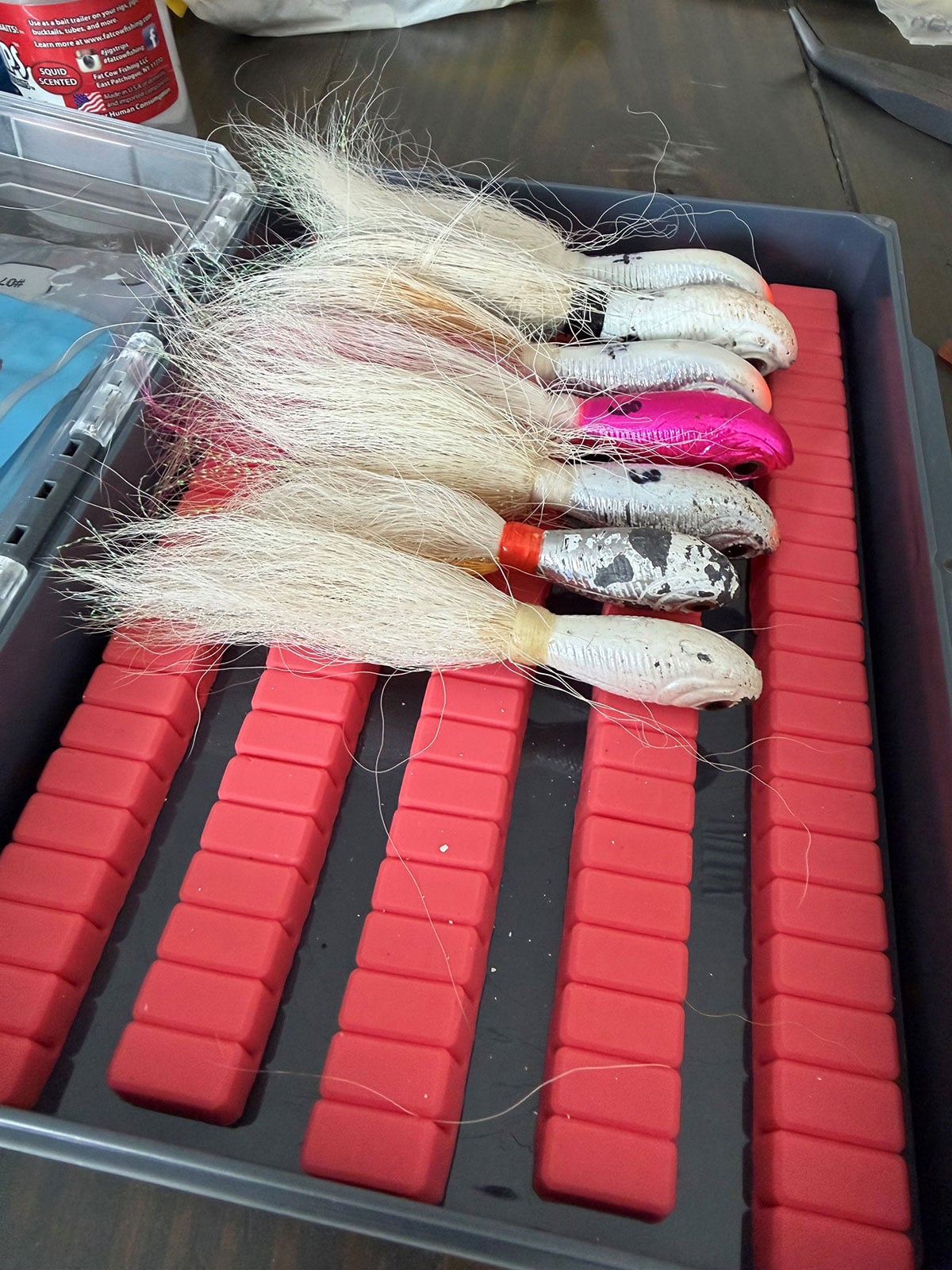
Double-digit fluke are still caught on simple hook-and-sinker rigs baited with squid strips and spearing. However, bucktails continue to be one of the most effective and enjoyable methods for targeting big fish.
Bucktails ranging from 2 to 8 ounces have accounted for many of my largest fluke over the years. The Spro Prime Bucktail Jig remains a staple in my arsenal. Its unique head design and eyelet placement create a natural gliding action while maintaining a horizontal profile that fluke find difficult to resist.
The Prime Bucktail is equipped with ultra-sharp Gamakatsu hooks and is available in a variety of productive colors. While white and glow remain perennial favorites, Spearing Blue has proven especially effective in the deep blue waters offshore.
For trailers, I recommend 6-inch Berkley Gulp Swimming Mullets in Nuclear Chicken or Chartreuse. Anglers who prefer natural baits can rely on the classics—spearing and squid strips—but fresh-cut sea robin and mackerel strips are often deadly. In fact, big fluke seem to have a particular fondness for fresh sea robin and mackerel.
Play It Cool
The cunning nature of trophy fluke is one of the reasons they survive long enough to reach impressive sizes. Like many predators, older fish often become more cautious and less aggressive.
If you miss a strike, resist the urge to immediately swing again or crank up the rig to inspect your bait. Instead, keep your offering in the water. Large fluke will often follow a bait for an extended period before committing. Give them a minute or two to make up their minds. More often than not, patience pays off.
The Weather Is Paramount
July, August and September can offer some of the finest boating weather of the year. Modern boats and electronics make offshore day trips more accessible than ever for anglers launching from Montauk or making the run from home ports farther west.
However, these months can also be among the most dangerous. Tropical systems and hurricanes often begin influencing the region by late August and September. While offshore conditions may initially appear manageable, long-period swells can quickly turn South Shore inlets into hazardous obstacles.
Always wait for favorable marine forecasts before making the run. If conditions are questionable, consider hopping aboard one of Montauk’s many party or charter boats. Professional captains make their living assessing weather and sea conditions and will make the safest decision possible.
Every fluke angler dreams of landing that once-in-a-lifetime doormat. If the weather cooperates, history will once again repeat itself this summer. The window of opportunity is limited, but there are monster fluke waiting throughout the Cartwright Grounds and the surrounding offshore areas.
Best of all, there’s a Dream Boat waiting for one lucky angler. It just might have your name on it—but only if you’re a subscriber to The Fisherman. If you’re not already signed up, there’s still time. Just make sure your subscription is active before you catch that trophy fish. Good luck, and happy fishing.