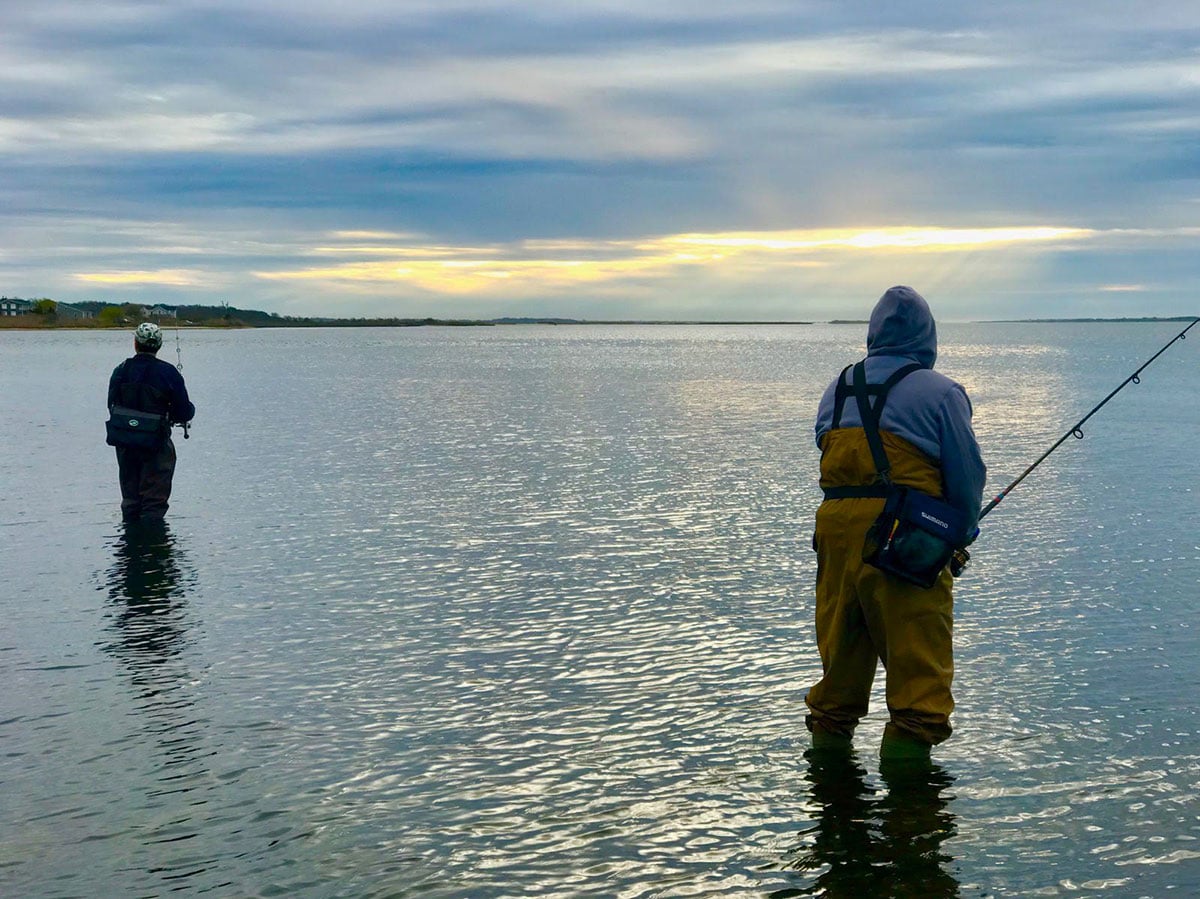
Scale down your tackle and target back-bay stripers as Long Island’s early spring bite begins.
Spring on Long Island is a magical time. It is an awakening—a sort of rebirth and a very welcome transformation for all lifeforms that takes place every year. Migratory birds and fish return to their springtime haunts as the waters slowly warm. The days grow longer, and the air fills with the fragrances of the earth’s renewal. With it comes the hopeful promise of a fruitful fishing season ahead for those of us in search of fish.
As spring takes hold, anglers along the coast are lured out by the siren call of nature. But unlike the fictional tale of Odysseus and his crew—who could have met their demise from the sirens in Homer’s famous poem The Odyssey—fishermen along our coast are safely drawn in by the calls of ospreys, terns, and red-winged blackbirds, all harbingers of good times to come.
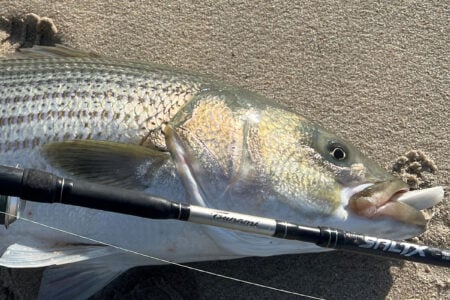
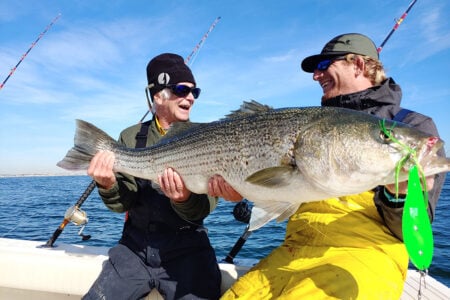
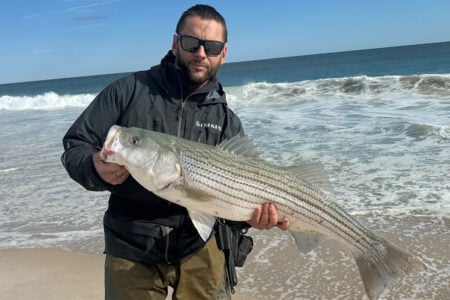
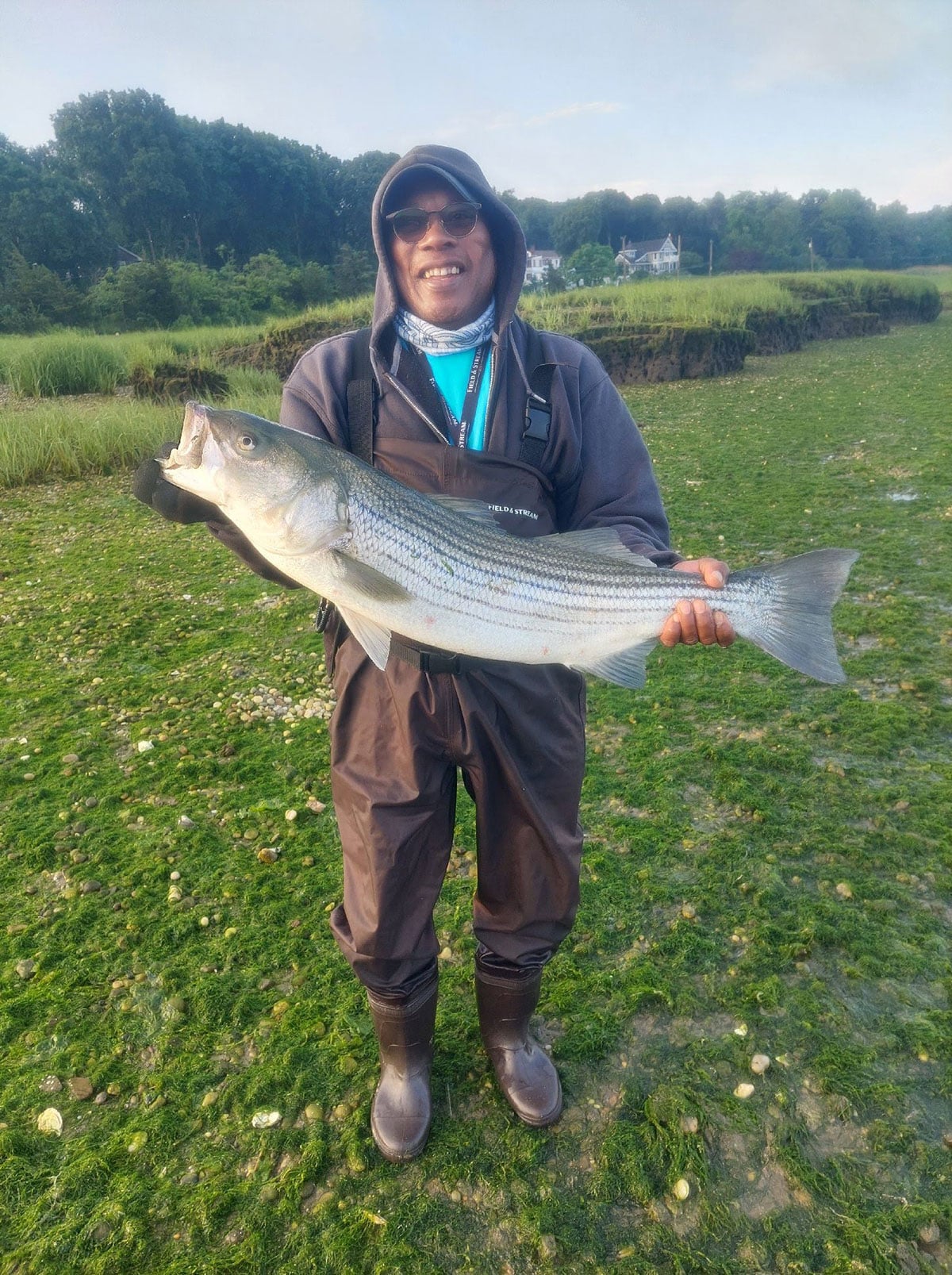
It also marks the long-awaited arrival of striped bass, bringing us out once again to meet one of our most cherished gamefish and absorb the gifts of spring. That first bass of the new season, regardless of size, is always a moment for gratitude and reflection as we enjoy what nature has to offer—the solitude, the salt air, the sunrises, and everything else that feeds the soul in such a fast-paced, stressful world.
It’s a fact that striped bass on Long Island can be caught throughout the winter months by anglers searching for resident populations that remain in back bays and river systems. Personally, I prefer to spend that time chasing trout and white perch on the non-sub-freezing days (which haven’t been many this past winter) or getting gear prepared for the early spring striper run. I usually kick things into high gear as the calendar turns to April.
Downsizing For Early Season Success
The opportunities to connect with striped bass in April and early May on Long Island are nearly boundless. Aside from miles of oceanfront beaches, we are truly blessed with a myriad of picturesque bays, inlets, harbors, rivers, and even canals. A quick look at a satellite map reveals the vast number of fishable areas available from one end of the island to the other, all capable of producing action.
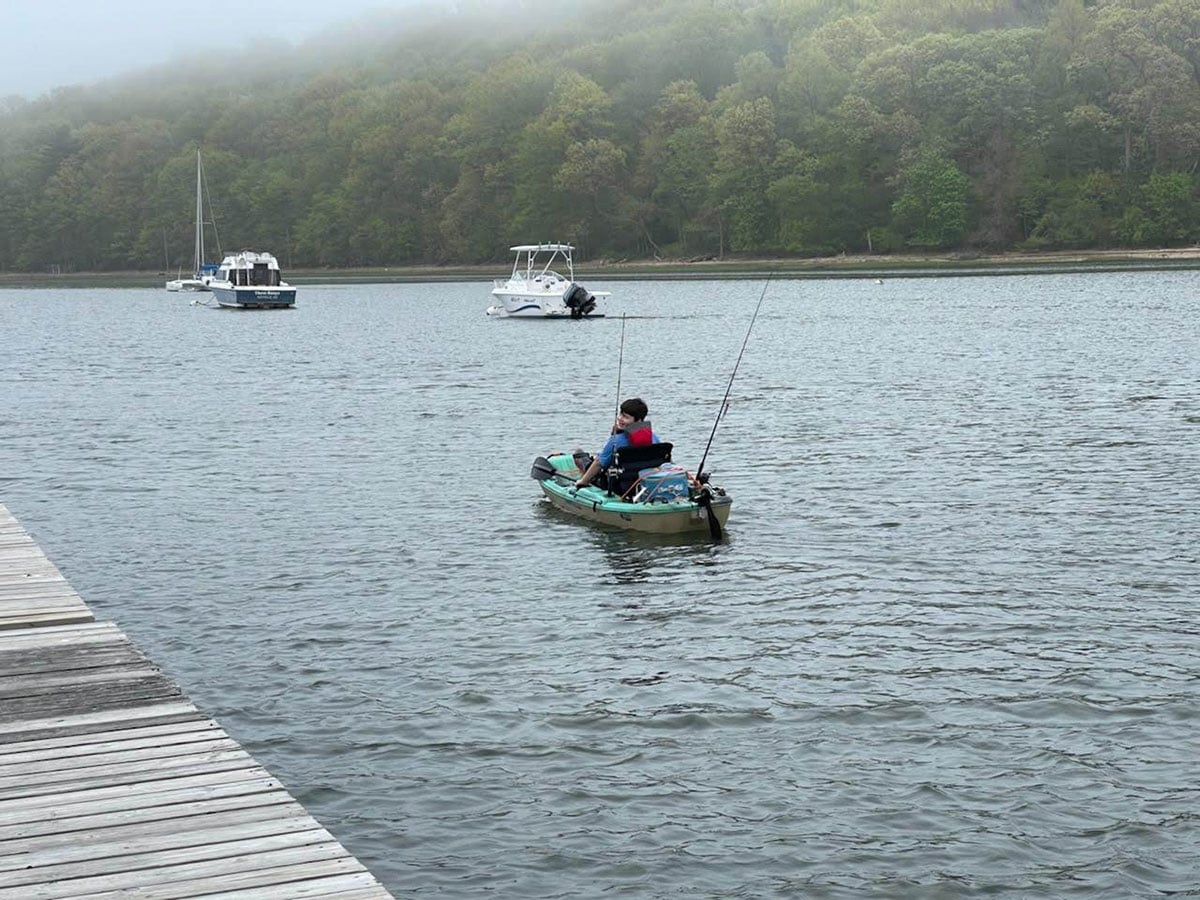
These backwater regions are tailor-made for the light-tackle enthusiast, whether fishing from shore or kayak—which is mainly the category I fall into. One of my favorite ways to heighten the early-season experience is to scale down the tackle selection to lighter outfits and smaller offerings.
With lighter tackle, anglers can present a wide variety of lures that match the forage available to hungry springtime bass. The added bonus is a fun-filled fight, even with modest-sized fish.
The term ‘light tackle’ can apply to many different fishing scenarios. What is considered light for one type of fishing can vary greatly depending on the species and method. Light-tackle tuna fishing, for instance, is vastly different from scaling down for striped bass—but the goal is the same.
When targeting stripers in back bays during early spring, rods in the 7 to 7-1/2-foot range with a light to medium-power rating work well. Pair them with 10 to 15-pound braided line and a 20-pound leader. This setup can handle most situations when presenting small minnow plugs, soft plastics, bucktails, and surface plugs in the 1/4- to 1-1/2-ounce range.
With most fish this time of year hovering around the slot size or smaller, this tackle brings out the best in them while still providing enough backbone to handle larger fish should they appear.
Matching The Spring Menu
Early spring forage varies widely, so it’s wise to cover a few possibilities while keeping things simple. I try to avoid weighing myself down with a large bag of lures when fishing from the beach or kayak.
As the water warms, baitfish such as bunker, spearing, sand eels, grass shrimp, mummichogs (killifish), and alewives all appear on the menu. Keep in mind that striped bass are opportunistic feeders and will also devour crabs, juvenile flounder, and marine worms.
With the table set for predator and prey, I pack lures that imitate available forage while allowing me to cover the water column effectively.
Soft Plastics
First off, I always include a selection of soft plastic lures in various profiles. Thinner styles imitate slender baitfish like spearing and sand eels, while wider bodies represent larger prey. With the enormous variety of soft plastics available today, light-tackle anglers have endless choices. Soft-bodied shad baits from companies like Storm, Tsunami, and NLBN are excellent imitations of wider baitfish.
When imitating slender prey, thinner-profile baits are the better choice. Tsunami holographic sand eels with built-in weight and Berkley PowerBait jerk shads rigged on a lead head are great examples. Other thin-profile choices, such as smaller Slug-Go’s and Al Gag’s Whip-It Eels, can also be highly effective.
Soft plastics provide tremendous versatility and take up very little space in your bag.
Hard Minnow Plugs
The second category in my early-season arsenal is a handful of hard-body minnow plugs. The 7/8-ounce, 5-1/8-inch Daiwa SP Minnow and Yo-Zuri Mag Darters in the 4- to 5-inch range (weighing 5/8 to 1 ounce) always find a place in my bag. These plugs have proven themselves year after year.
Other solid options include Bombers, Cotton Cordell, and Rebel minnow plugs. Rebel also makes a walk-the-dog surface plug called the Jumpin’ Minnow, which can be very effective when fish are willing to strike topwater presentations.
Bucktails, Metals, and Topwater
To round out my early-season lineup, I carry a small metal-lip swimmer, a few 1/4 to 1/2-ounce bucktails with pork rind trailers, and a couple of small Polaris-style poppers for daylight outings.
This modest selection is all I need to effectively handle most early-season back-bay scenarios. Traveling light allows me to move freely along the shoreline or fish comfortably from my kayak while still being prepared for most situations that arise.
Areas To Target
The entire north and south shores of Long Island are fair game for this style of fishing. Bays, rivers, canals, and harbors are all excellent early-season striped bass habitat. Whether walking the shoreline or fishing from a kayak, light-tackle enthusiasts have endless opportunities.
On the western North Shore, popular areas such as Little Neck Bay, Cold Spring Harbor, Huntington Harbor, the Nissequogue River, and Stony Brook Harbor are excellent places to begin prospecting. Moving farther east, Port Jefferson Harbor and Mount Sinai Harbor can produce excellent results, as can the north and south sides of the Peconic River and bay system.
The South Shore also offers tremendous opportunities. From the legendary waters of Jamaica Bay in the west through South Oyster Bay and into Great South Bay, anglers will find a potpourri of rivers, creeks, channels, and bridges on both the mainland and barrier island sides.
Continuing east brings you to Moriches Bay and Shinnecock Bay—both top-tier early-season producers. From there, anglers can explore the bay sides of the South Fork all the way to Montauk.
As you can see, there is no shortage of areas to choose from. The most important factor is becoming familiar with the intricacies of your local waters. Time spent exploring spots will eventually reveal their secrets.
Finding Productive Structure
In the early weeks of spring, one key factor is warmer water. Dark-colored mud flats absorb heat during the day, creating slightly warmer conditions that attract feeding bass.
Creek outflows from marshes are also excellent spots to target, particularly on a dropping tide when warmer water drains into surrounding bays.
| EXPANDING YOUR RANGE BY KAYAK |
| Using a kayak can greatly expand your fishing range. Kayaks allow anglers to reach shoreline areas otherwise inaccessible and to work channel edges that cannot be reached from land.
Many of the areas mentioned above offer convenient kayak launch sites, making it easy to access prime early-season waters. Just remember that water temperatures remain cold in early spring, so dress accordingly and prioritize safety. |
Bridges, docks, undercut banks, rocky areas, rips, and shellfish beds all provide structure that attracts both predator and prey. Find these ingredients and you will eventually find bass—both day and night.
On a final note, recent striped bass spawning data has been below average. To help conserve this precious resource, I highly recommend crimping the barbs on your hooks and using single hooks whenever possible.
Spring ranks high on my list of favorite times for light-tackle back-bay striper fishing. If you’ve never tried it, give it a shot. Take in the peaceful surroundings that fill your senses—until the sound of a peeling drag brings you back from your meditative state.