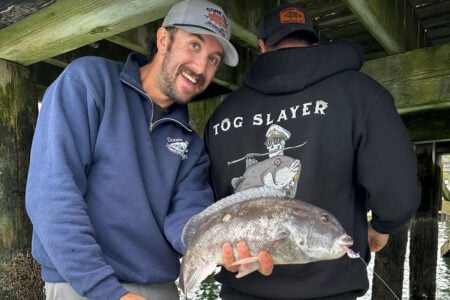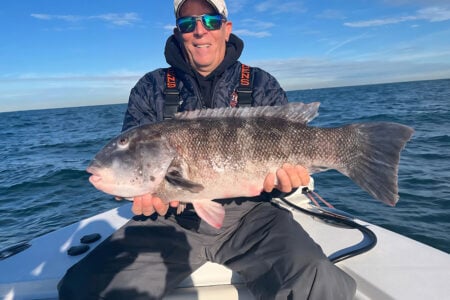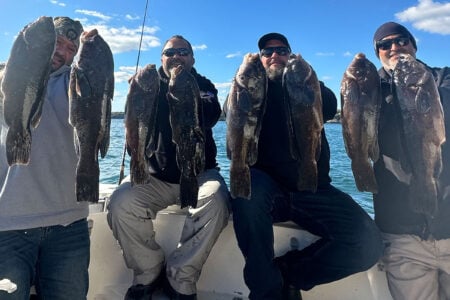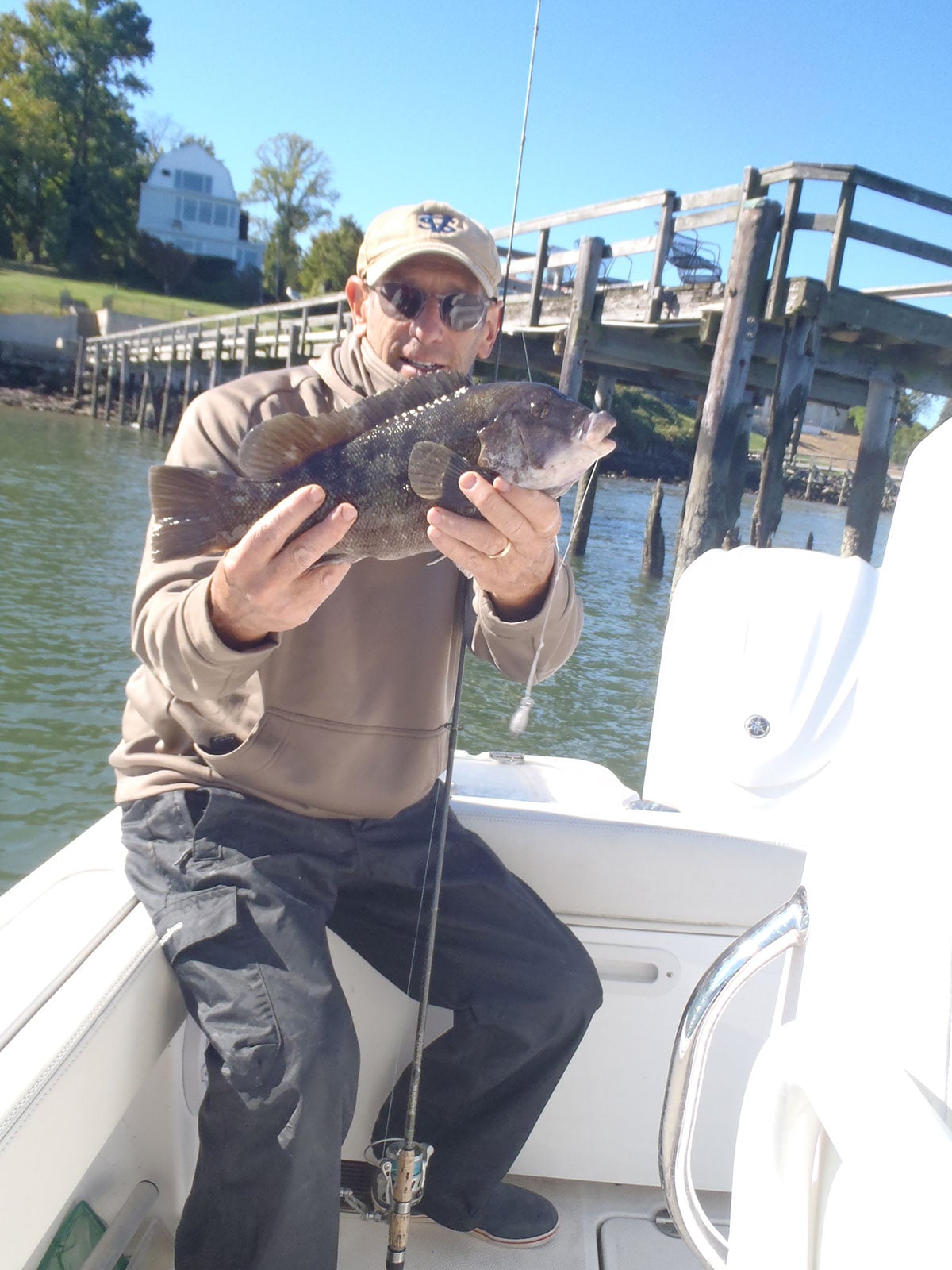
Shallow docks, pilings and submerged wood can offer excellent blackfish action when rough fall weather keeps you off the open Sound.
There’s little doubt that if you want to consistently catch large blackfish, deep water is the place to be. However, the rolling, heaving ocean and heavy structure aren’t my thing. We prefer light freshwater tackle for blackfishing—not the heavy-power, heavy-action rods competition bass anglers use to leverage largemouth bass out of weeds. Think panfish, and you’re closer to our gear. We get the most from light tackle by gravitating toward spots with gentle tides in less than 35 feet of water.
Most of our local spots sit smack dab in Long Island Sound, so weather sometimes keeps us off them. Wind against tide can ruin a trip, and autumn cold fronts regularly bring strong southwest winds ahead of them and northwest winds afterward.
Thankfully, the western Sound has points, islands and coves that offer protection. In Smithtown Bay, for example, we can tuck close to Crane’s Neck on an easterly wind. Similar fallback options exist off Manhasset and Little Neck bays. Those spots become important when wind foils Rich Lazar’s plans to cross the Sound to the New Rochelle rock piles. One day, when a predicted 5- to 8-mph wind became 20 to 30, Rich needed another plan.
An Ace Up His Sleeve
The day started just fine. The water was flat at the dock in Manhasset Bay, and we figured we’d easily make it across the Sound. We powered into mid-Sound, but the farther we went, the stronger the wind became and the more the waves built.
Rich throttled back. “This isn’t going to work. At this velocity, the wind will wrap around the islands and push against the tide no matter where we set up.”
I knew he was right. The boat would swing constantly, making it difficult to stay in contact with the bottom or set a hook into wary blackfish. Double-anchoring was possible, but difficult in that wind.
“What now?” I asked.
“We can tuck into a cove on my side of the Sound,” Rich said. “We’ll fish several spots with old docks, gravel and waterlogged wood on the bottom.”
Not Paradise
The cove wasn’t perfect, but it protected us from the worst of the wind. We anchored near a large dock with old pilings and cast toward the structure while Rich worked other parts of the dock.
“Try to get under the dock a little,” he said. “You may lose a rig or two, but there are usually more fish under there.”
I looked at the depth recorder: 5 feet. I did as I was told, but I wasn’t optimistic. Frankly, when I saw the setup, I figured the day was doomed. I was close to suggesting we head into Manhasset Bay and look for stripers, but I knew Rich wasn’t interested.
In spite of my negativity, it didn’t take long before I got a solid hit. Taken by surprise, I set the hook too soon and missed. I reset my crab and cast again. Within seconds, I had another bite. This time I controlled myself and sank the hook into a nice blackfish. It wasn’t a keeper, but it was only an eighth of an inch short.
Suddenly, I was excited about the spot. Unfortunately, workmen removing floating platforms needed the area, so we had to move. Deflated, I looked to Rich for guidance.
“No problem. There are a few other docks along the shoreline,” he said, “and I’ve caught fish at all of them.”
The next spot didn’t inspire much confidence either. The dock was smaller, with fewer pilings, and the water was only 4 feet deep. Rich said gravel and mussels covered the bottom near the end.
Because we were casting away from the boat rather than fishing straight up and down, the boat’s swinging had less effect on our ability to sense bites and set hooks.
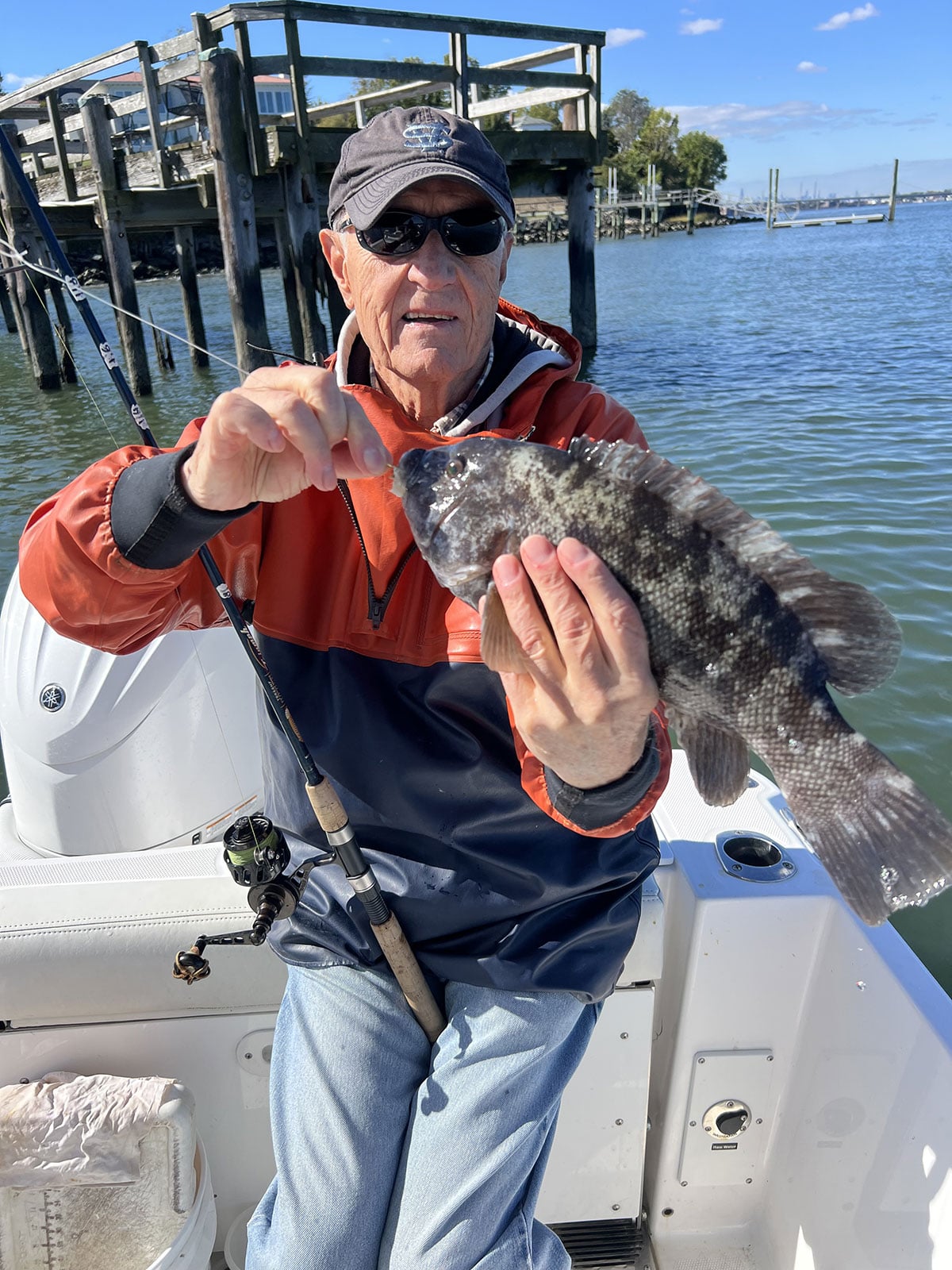
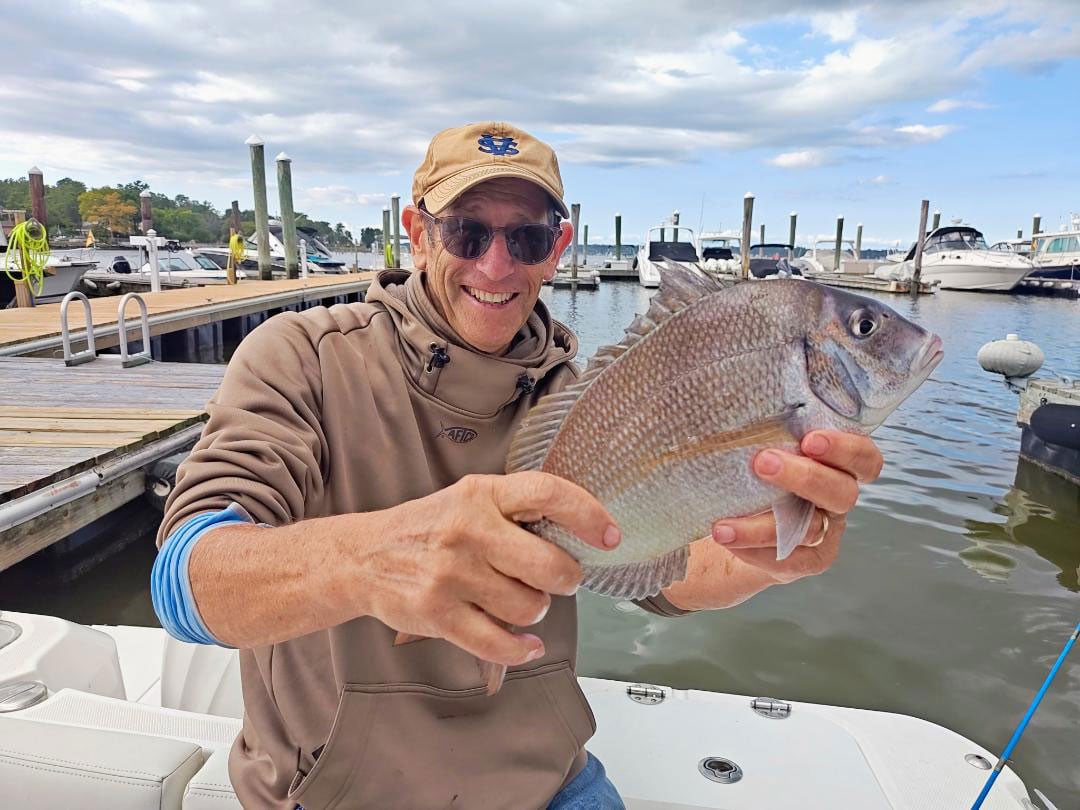
Again, it didn’t take long. Rich bent his rod into a good blackfish, and I followed with one of my own. I was surprised at how long the action lasted and shocked at how many blackfish could occupy such a limited piece of structure. A few monster porgies joined the party, too. One fought so hard that Rich proclaimed, “Oh boy, this is a keeper.”
Another surprise was the size of the blackfish. In only 4 feet of water, we caught no small ones.
Techniques
I knew that Matt Broderick loves to fish wood around Long Island. On a trip with us a couple of years ago, he suggested trying docks inside Manhasset Bay. Rich had explored some inside spots without success but had caught fish around older docks outside.
Necessity can force anglers to look at familiar water differently. In my surf fishing, I like several fallback spots for unexpected weather. These shallow docks offered the same kind of option from the boat.
Watch The Wood
The wood may attract blackfish because it holds shellfish spat, worms, grass shrimp, small fish and crabs, but we weren’t fishing smooth, open bottom. Shallow or not, this was still structure.
Rich kept encouraging me to cast farther under the dock, but I resisted because I knew any hooked blackfish could make a beeline for a piling and cut me off. I had to be just as vigilant here as I would be over a Sound rock pile.
When fishing straight up and down over a rock pile or reef, one key to landing a blackfish is to strike hard and lift smartly, gaining enough distance from the bottom to keep the fish out of debris. Around a dock, the challenge is slightly different. You must pull the fish away from structure sideways while also keeping it from diving into junk along the bottom.
Light tackle makes the fight fun, but once the hook is set, pressure must be applied immediately to steer the fish away from pilings and debris.
On Your Toes
Blackfishing requires an angler to stay alert. If we get too casual, we’ll miss bites, fail to feel others and usually lose bait. Each autumn, I’m surprised by how many hits I never feel while daydreaming. I’ve also been pulled out of my reverie when a fish makes a quick run into structure. By the time I realize what happened, the rig is buried in debris.
We’ve all lost rigs and fish in rocks, wrecks and other structure. When forced to fish sideways from the boat, the problem can be even worse. Extra focus is required. Both of us were fooled by fish a few times that day, but fortunately we coaxed most of them free and lost only one rig.
Deal With Stuck Fish
Here’s a suggestion when a blackfish buries you in structure: Don’t keep pulling. Instead, stop and feel for movement below. A fish buried in debris will use its gills and wag its tail, creating small movements that are easy to detect with braided line. When you feel that movement, provide some slack, wait and watch your line.
It can take a while, but with patience, many fish will eventually leave the structure. When the fish swims out, the line may suddenly bounce or begin to move. That’s your chance to come tight again and resume the fight. Rich would often rather break off and retie, but I enjoy the challenge of trying to outlast the fish.
Keep Moving
Eventually, the bite died well before the end of the tide. Perhaps we hooked, lost or caught most of the willing fish on that small piece of structure. After all, a single shallow dock can’t hold the numbers of blackfish found on larger reefs and deep-water rock piles.
Thankfully, the shoreline of this cove, along with many others in the western Sound, features old docks, shallow mussel beds, gravel patches and scattered rock clusters. Instead of waiting for one small spot to reload, anglers can sustain the action by moving from dock to dock until they find another group of hungry fish.
When weather ruins the primary plan, each protected piece of structure becomes another opportunity.
In The Old Days
Years ago, before potting changed blackfishing from reliable to spotty, we regularly caught tog around nearshore structure in both spring and fall. Those experiences demonstrated that deep water isn’t necessary to catch quality blackfish.
Today, spring blackfishing can be more difficult in Long Island Sound because the season ends April 30, often before many fish have moved tight to shore. In fall, however, shallow structure can again become an important option.
There also seem to be more blackfish on the north side of the Sound than along Long Island, which is why many anglers venture toward Connecticut and Westchester. That may change as the population rebuilds.
We Do Have Blackfish
That doesn’t mean anglers should ignore the Long Island side. In Smithtown Bay, we catch plenty of blackfish on rocky humps and reef structure, and wrecks and reefs off Oyster Bay and Eaton’s Neck should also offer opportunities.
Rich and I still prefer New Rochelle when nature allows, but this experience proved there’s more opportunity than meets the eye on our side of the “pond.”
Don’t Overlook The Harbors
Don’t overlook North Shore harbors where old docks, piling clusters, piers and sunken wood sit over gravel or shell-covered bottoms. They can provide a productive retreat when autumn wind would otherwise keep you tied to the dock.
Most harbors have at least a few rocky areas or pieces of old wood structure worth investigating. Some may look too shallow, too small or too ordinary to hold fish, but that’s exactly what I thought when Rich anchored us in 5 feet of water.
The blackfish season is short, and autumn weather can eliminate plenty of otherwise good fishing days. Having a list of protected fallback spots can save a trip. Old docks and shallow wood may not look like classic tog habitat, but when the wind is howling across the Sound, those overlooked pieces of structure might be more productive than you think.