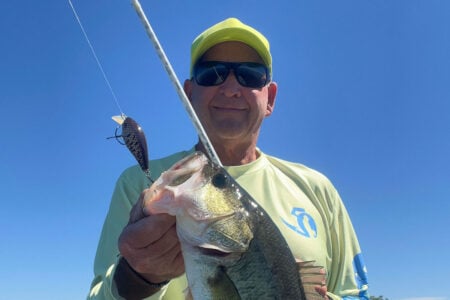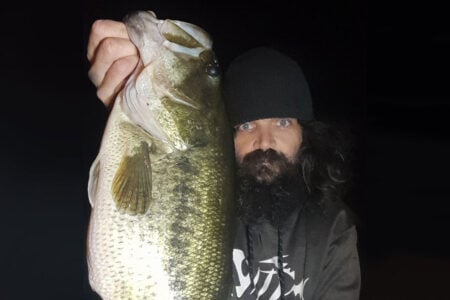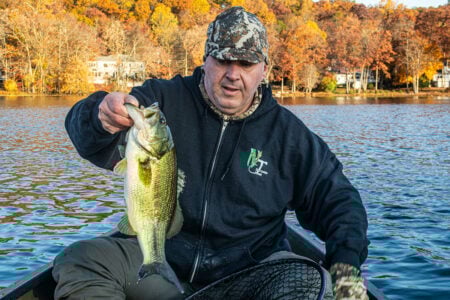
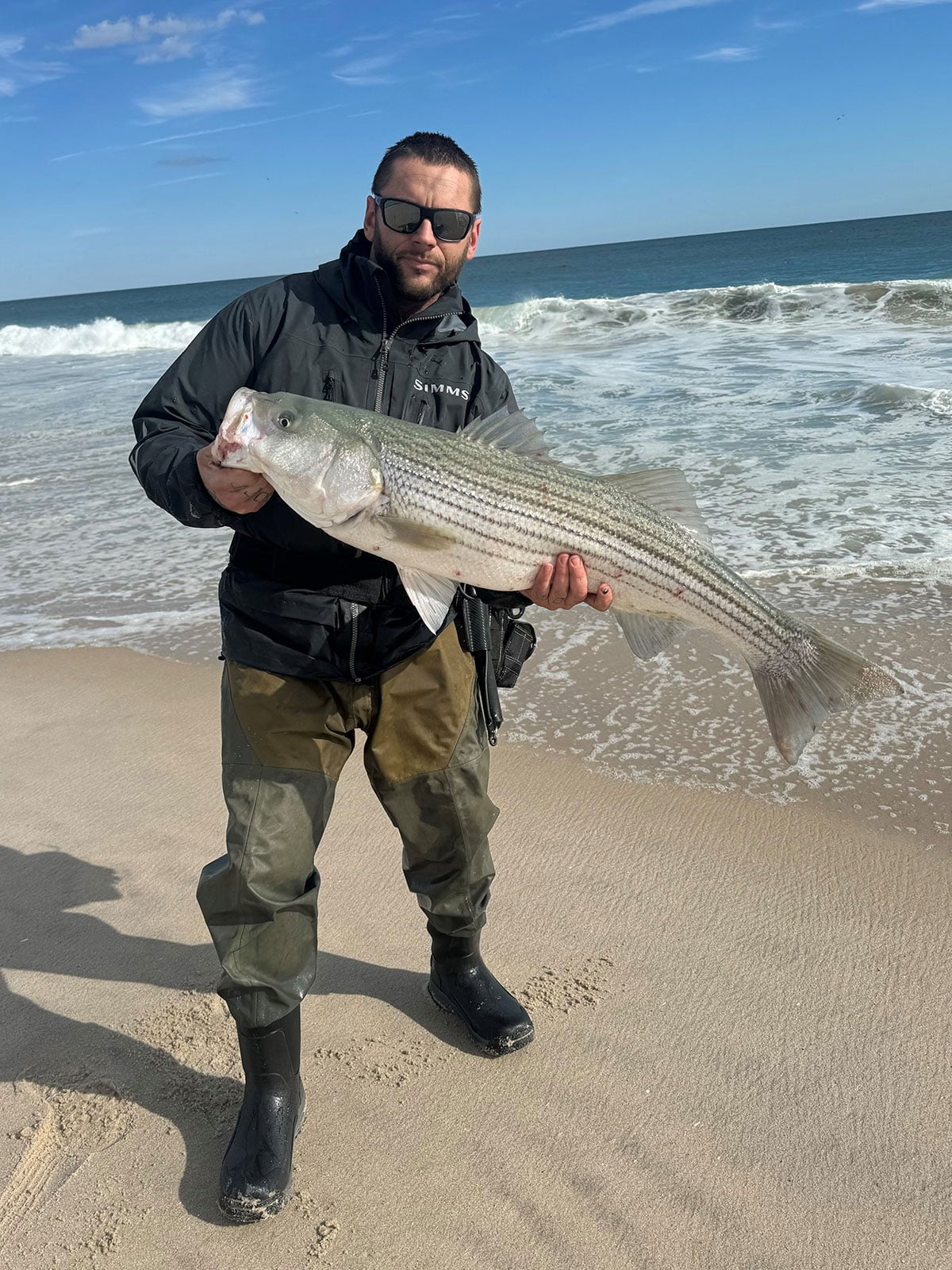
October offers anglers a unique chance to complete a three-bass trifecta by targeting black sea bass, largemouth bass and striped bass from shore.
Like most folks, I enjoy the sunny days of summer spent fishing and enjoying the outdoors. But truth be told, I have a large soft spot in my heart for both the spring and fall months. Those two seasons allow me to maximize my time on the water during peak periods of fish activity and capitalize on the diversity of fishing opportunities that become available.
I especially enjoy the chance to target three local species of bass during October: striped bass, black sea bass, and in freshwater, the largemouth bass. This unique aspect of fall fishing can be accomplished from both boat and shore, but to achieve this “bassy” objective, I often find myself gravitating toward land-based fishing. Although there is greater flexibility when the deck of a boat is beneath your feet, there is a very special sense of fulfillment when this trifecta is achieved through wandering and wading.
Fall Flavors
October is a time filled with spooky visions of Halloween, harvests and all things pumpkin spice. But to anglers, it can also be a month of incredible fishing abundance. A number of years ago, I wandered down to the beach with a light-action surf rod and reel and a hip pack filled with soft plastics, bucktails and epoxy jigs. My objective was to target striped bass that typically patrol a trough running parallel to the beach. I tied on a small, peanut-bunker-sized soft plastic and began working the area.
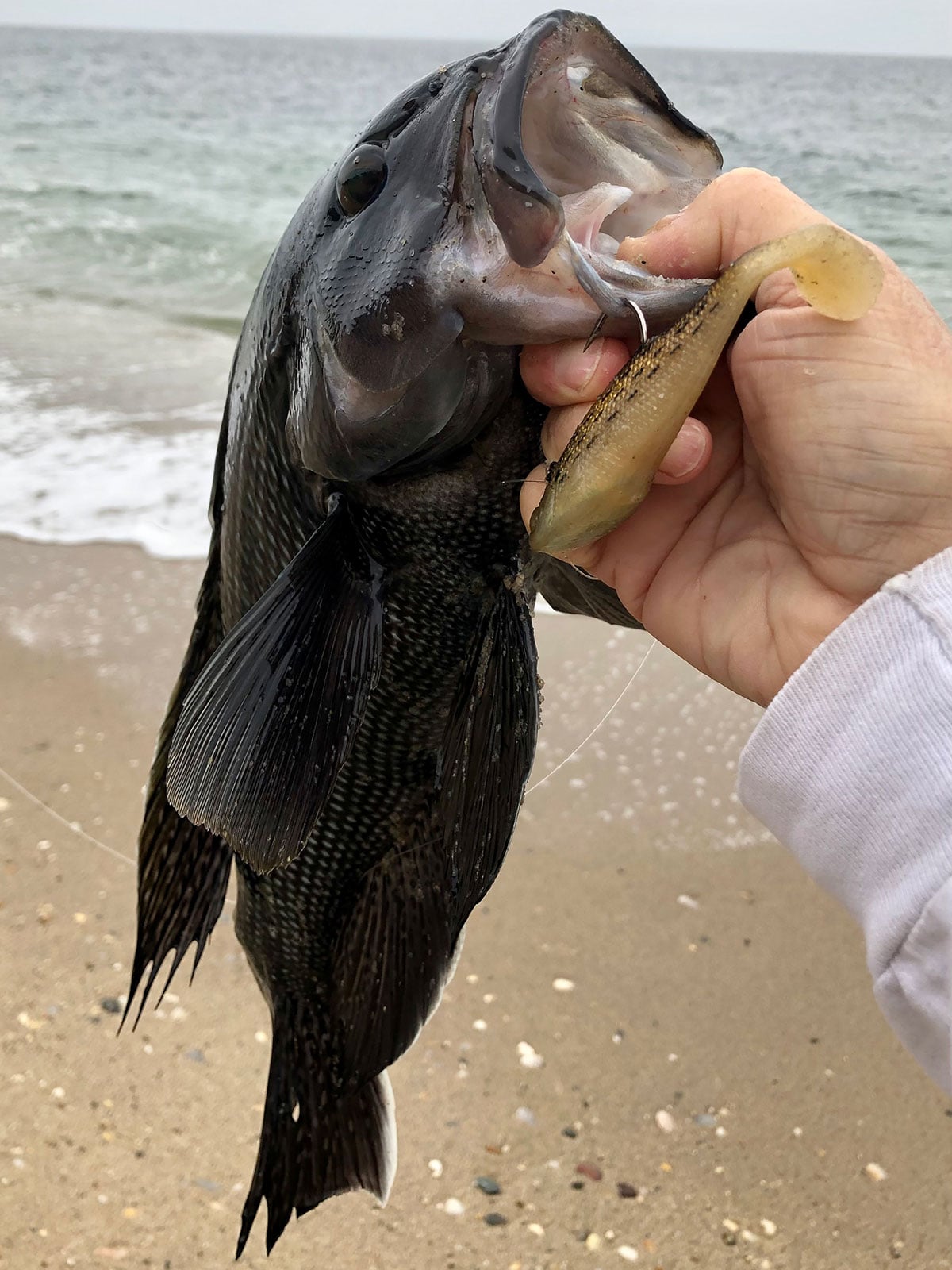
It didn’t take long for the first strike. The fish fought like a small striped bass, but to my surprise, it wasn’t. A legal-size black sea bass had eaten the artificial, and several more soon followed.

Sea Bass From The Sand
The most interesting part of that outing was how close the sea bass were holding to the beach. They were no farther offshore than a long cast with a 9-foot spinning rod. The area sat just beyond the trough and was cluttered with small to moderate-sized boulders.
Add cool water temperatures and an abundance of small baitfish, and the stage was set for what became several days of excellent beach fishing for black sea bass. Although Long Island Sound was, and still is, filled with countless smaller sea bass, the fish inhabiting this particular area were mostly quality specimens.
Most avid saltwater anglers have witnessed the tremendous expansion of black sea bass throughout the Northeast, and that population growth has created more opportunities to target this prized species. While sea bass are normally associated with reefs, wrecks and deeper rocky structure, October can occasionally put quality fish surprisingly close to shore.
Largemouths In The Fall
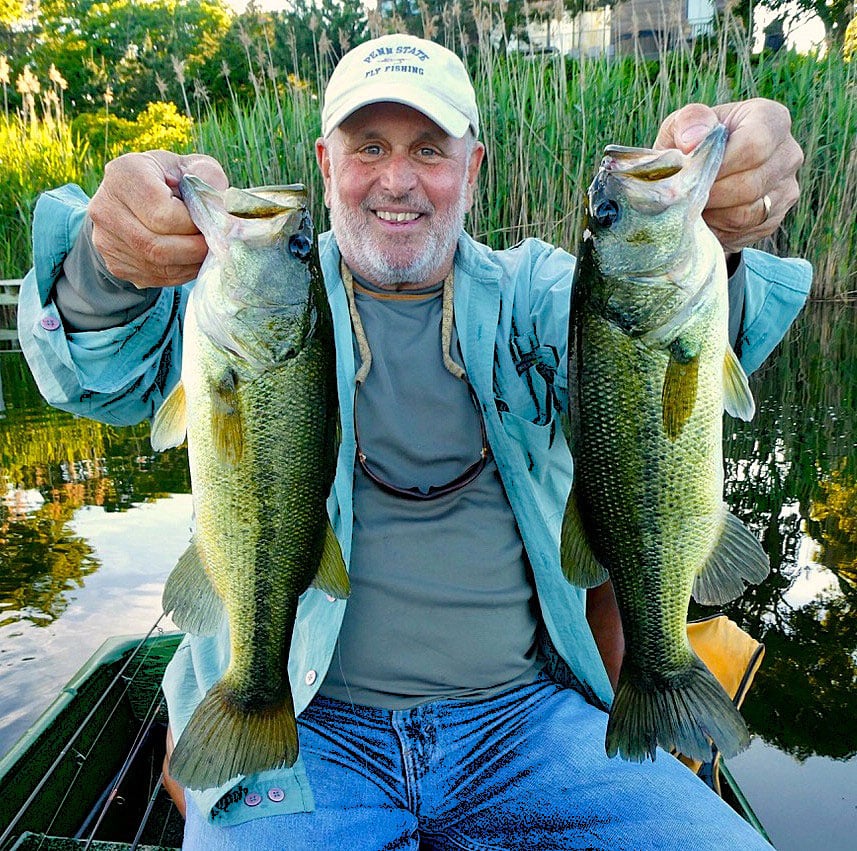
As enjoyable as those October days chasing black sea bass were, there were also excellent opportunities to target Long Island largemouth bass. September can sometimes present a number of challenges, but I have found that conditions tend to settle and become more predictable during October.
Lakes and ponds, depending on their size and depth, can experience a seasonal “turnover” that affects feeding behavior and movement patterns. In basic terms, this phenomenon involves changes throughout the water column as warm surface water, cooler deeper water and the thermocline begin to mix. These effects are typically more pronounced in larger, deeper lakes than in smaller ponds, but even modest bodies of water can experience changes.
Once water temperatures stabilize and largemouth bass adjust, the fishing can improve dramatically. October is a prime time to take advantage of that transition.
Back To The Shallows
As water temperatures cool into the comfort zone of both bass and baitfish, they often move toward shallower water much like they do during spring. Changes in weather, daylight duration and the angle of the sun all signal that colder conditions are coming.
Largemouth bass respond by feeding heavily, creating excellent opportunities for anglers working from shore. I have a tendency to throw an assortment of soft plastics when bass move tight to the bank, with plastic stick baits being especially effective during this period. Spinnerbaits, chatterbaits, swim jigs and suspending jerkbaits are also productive options.
And if everything else fails, it is hard to beat a Senko-style bait rigged wacky. During this stage of the season, bass are constantly moving, so a stretch of shoreline that fails to produce on one pass may light up later in the day. Thoroughly fish promising areas and present baits from different angles and at varying retrieve speeds. I’ve caught countless bass simply by changing the direction of my cast toward a visible piece of structure. Be deliberate and be patient.
Striper Season
The final member of the Pumpkin Spice Trifecta, but by no means the least important, is the striped bass. October in the Northeast remains one of the best periods of the season to target stripers.
Weather patterns, bait concentrations and migration timing have changed over the years, influencing where and when striped bass gather, but October can still be as good as it gets. I can recall numerous fall days in Montauk when bass blitzes were so prolific and mesmerizing that I occasionally found myself watching the spectacle instead of casting.
While some of that spectacular schoolie-bass surface activity has diminished in recent years, it is still difficult to beat the potential of a great October day. As the migration progresses, bass move along the South Shore of Long Island toward the West End, through the New York Bight and eventually into New Jersey waters.
North Shore Opportunities
Long Island anglers should not overlook the North Shore either. Peak fall bass activity can occur from the central North Shore through the North Fork and out toward Orient Point, the Race and surrounding beaches.
In fact, some of the better fall striper fishing in recent years has occurred along the North Shore rather than the South Shore. The past decade has also seen noticeable differences between the spring and fall runs, with spring sometimes producing better quality, quantity and duration of striped bass activity in certain North Shore areas.
That said, patient and persistent anglers can still find bass throughout the fall migration. The key is locating concentrations of bait. Find the food and there is a good chance striped bass will not be far away.
Match The Hatch
Key forage species during October typically include peanut bunker, sand eels, spearing and small baitfish such as bay anchovies. Artificial lures that imitate those prey items can all produce excellent results.
Matching lure size and profile to the predominant bait is often more important than carrying every lure in the tackle shop. Small soft plastics, bucktails, epoxy jigs, tins and swimming plugs can cover a wide range of situations from beach to bay.
While adult menhaden have sometimes been less prevalent in certain areas, recent seasons have also seen large striped bass respond well to oversized glide baits and swimbaits. If the opportunity presents itself, don’t hesitate to throw something larger. Sometimes a big profile is exactly what a quality striper wants.
The October Trifecta
As a final thought, my health always seems better in October, primarily because it is such a great time to get outdoors and enjoy some of the finest fishing of the year. Whether you are casting to black sea bass from a rocky beach, walking the bank of a freshwater pond for largemouths or chasing migrating stripers along the coast, October offers a remarkable variety of opportunities.
Best of all, with a little planning and persistence, an angler can experience all three in the same month and complete the Trifecta. Be safe and enjoy!