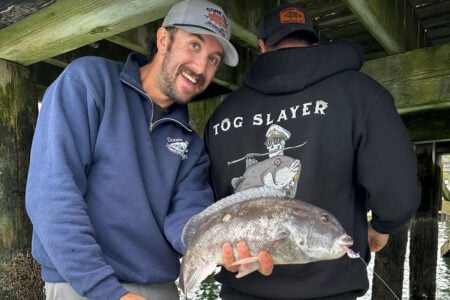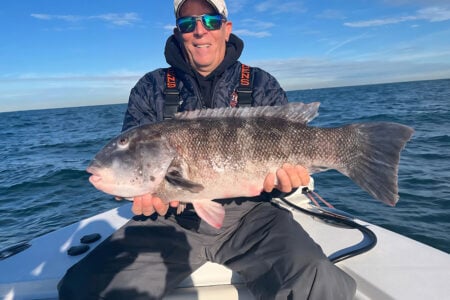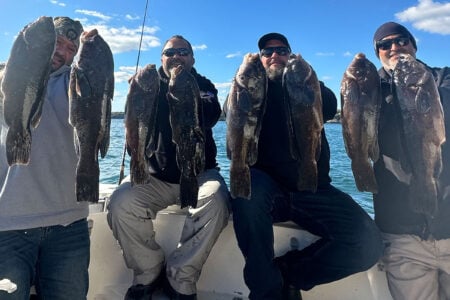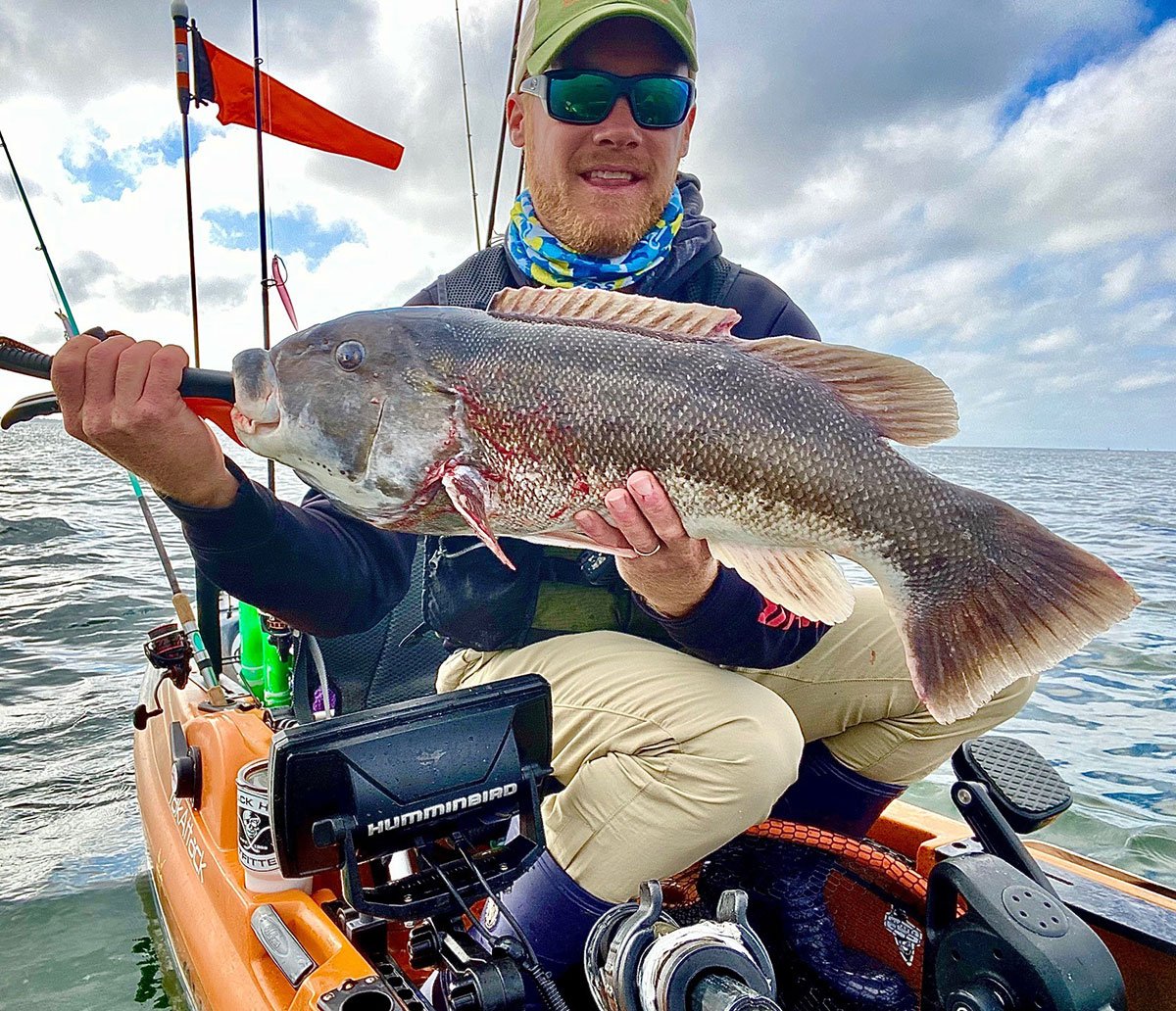
Connecticut’s highly-anticipated fall tog season opens October 10!
At the tackle shop, September is always quieter than I think it should be. In large part that’s because of school starting up in late August, which triggers the feeling in many folks that the summer is over, and time becomes harder to come by. September offers some insane fishing, with stripers, bluefish, porgy, fluke, sea bass, albies, bonito, and Spanish mackerel available in Long Island Sound. It seems like both the fish and the anglers go into a short period of transition, which allows us at the shop, to catch our breath. But not for long!
Believe The Hype
Because, around late-September, just as those fall blitzes really get going and our funny fish filter in heavily, the foot traffic at the shop increases. Slowly at first – a jig here, some leader there. Then all at once, as if a silent alarm has been tripped, October 1st hits and it feels like summer all over again. But not because of striped bass or bluefish, and not because of albies or bonito, either. Because on October 10th, the Connecticut fall tautog season opens. And that’s when things get fun.
Our neighbors in Rhode Island get all of September to target tog, which may feel a bit frustrating. But, as both an albie freak and a tog lover, I like that we wait until October. It means the fish can get settled, the water temps can drop, and, when that starting gun goes off at midnight on October 10th, we hit the ground running with some of the best tog fishing in New England right here in our back yard.
For a fish that wasn’t really that sought after only a decade ago, tog have developed a cult following, and at Black Hall Outfitters in Westbrook, where I work, as it is at many New England shops, the fall tautog season sends a tsunami of sales and even more so a wave of fun, accessible fishing which is enjoyed by both hardcore and novice anglers. Tog are our last fish of the year, before boats are pulled and rods are hung up until spring.
Running a tackle shop during tog season is an absolute blast. Sounds fill the shop: the scraping crackle of crabs sliding into buckets, the scanner logging jigs which anglers hope will pull in their next keeper, chatter about hot rocks and reefs. The business-like hum of anglers gearing up for tog is broken only by the albie guys, who come in half-running, half-walking, making a beeline for the epoxy jigs and grabbing handfuls of the colors which have been deemed ‘hot’ by those lucky enough to land one that day. It’s a really fun vibe overall, and one I look forward to all year.

Spots, Large & Small
When the tog season kicks off, which this year is on a Friday, most will head for the large, well-known rock piles and reefs, and that’s a great early strategy. Big structure brings in a lot of life, and when water temps are still tapering down those bigger reefs are great places to get your first keeper tog crunches. You’ll have company on those big reefs, but one of the beauties of tog season is that boats can anchor up 10 to 15 yards from each other without issue since everyone is dropping straight down. Togging feels a lot more social than the other types of fishing we do here in the Northeast. As the season goes on, don’t hesitate to check smaller, less prominent features. You’ll often be surprised at how many fish a few rocks can hold and those smaller spots see a lot less pressure.
There’s a camaraderie in tog fishing that you understandably don’t always find during the hot striper months. Fishing real estate is ample, space required is minimal, and whether you’re alone in the middle of nowhere or in the middle of what looks like a raft-up party, the fishing can be absolutely electric. Tog “spots” can be as large as a school bus or as small as a crevice. You’ll find giants in current-heavy areas and in slow-moving water. The double-digit white chinners spend time around the shorts. And, while it rings true in all types of fishing, it is especially true in tog fishing – hooksets are free! Tog are not line shy, nor are they deterred by our eager swinging of the rod. It’s the kind of fishing that naturally breeds a lot of smack talking, a lot of smiles, and, what we all want, a lot of fish hitting the deck.
Tog Rods
There are as many nuances to catching big tog as there are fishermen who target them. Sometimes you get lucky, a statement I can confirm firsthand, as my first and only double-digit tog was 23.2 pounds! But, luck aside, there are certainly right and wrong ways to target tog, beginning with your gear. For starters, you’ll want to get a rod and reel combo that has both sensitivity and strength. I like a 7-foot heavy or medium-heavy rod and a 4000-size spinning reel. Typically, your rod should have enough sensitivity in the tip to, not only, feel a bite, but hopefully differentiate between the picky nibbles of an inquisitive porgy and the thumping crunch of a big blackfish. If you’re newer to blackfishing, give it some time and you’ll quickly be able to pick up on the subtleties of a keeper blackfish bite versus other species pecking away at your crab.
A few great tog rods for blackfishing that we sell at the shop are the Jigging World Hybrid, Jigging World Night Ranger, Daiwa Harrier, Tsunami SaltX, Tsunami Forged, Shimano Trevala B, and Daiwa Outrage. Some anglers who often fish deeper (40 to 60 feet) may value more backbone to hang heavier lead on their rigs, whereas if you spend the bulk of your time togging in shallower water (30 feet and under), you may value more sensitivity as you’ll be throwing lighter jigs. Each of those rod families has plenty of variation in both price and style, so you’re bound to find one that fits your preferences.

…And Reels
For reels, you’ll want to worry less about line capacity and more about drag and cranking power. Average sized blackfish can be caught on pretty much any style of spinning reel, maybe they’ll pull some drag, maybe not. Pound for pound, most will agree that tog are the hardest fighting fish we target in Connecticut waters. Their fight is what makes them so appealing! Even novices can have a blast battling 2- to 4-pound tog all day long. But, for those wanting to stay prepared for bigger fish, a reel with a strong drag is absolutely essential. Larger tog will bury your rod tip under the water before you even know what’s going on, and they can dig straight down with insane power.
In tandem with the backbone of your rod, the reel must put out enough drag to slow down bigger blackfish before they chafe you off in the rocks. Some great options on the spinning side are the brand new Tsunami Evict II (particularly the low gear ratio models), the Daiwa BGMQ, the Shimano Stradic, and the Tsunami SaltX II. On the conventional side, consider the Shimano Torium 14 or 16, the Daiwa Saltist, the Avet SX, the Daiwa Lexa, and the Shimano Tranx, these are all great options. And of course these reels can do double-duty on other species, as well.
For line, most opt for a 30- to 40-pound braid. It’s strong but thin and should serve you well. Any heavier and you risk scoping out or losing sensitivity. For leader, there is a ton of variation in what anglers like. Tog are not line shy, but that doesn’t mean it doesn’t help to use a light but strong leader. I sell plenty of blackfish leader in strengths from 30-pound test all the way up to 80, but my personal preference is 40. If I’m fishing a really gnarly spot and break off a couple times, I’ll go up to 50. I also prefer a 4- to 5-foot leader, as that gives you some wiggle room in terms of chafing if you hook up next to a large boulder. If the tog runs into or around the back of a large rock, a long fluoro or mono leader can absorb the chafing and protect your braid.

Bait & Boulders
Bait for blackfish is very straightforward – you need crabs. The most commonly available are green crabs, but Asian crabs, spider crabs, and white leggers are also excellent when available. If you ask seasoned veteran black fishermen how they prepare their crabs, you’ll get many different answers. The most common way to prepare them for bait is to cut their legs and claws off and cut them long ways down the middle. Then, hook your jig or rig hook through one leg socket and out the other and you’re good! Now, some will scorn me for saying to cut the legs off, and some will say to pull the top of the shell off, and some will say to leave the crab whole all together, and some will say leave the crab whole but crack the top of the shell and trim just the claws off… you can see where we’re going here. There are a lot of ways to prepare a crab for tog bait. Experiment with different methods and see what works best for you!
Once you’re rigged up, find some rocks. You can check large piles, jetties, small piles, anything rocky is worth looking at, especially if there is current running along the rocks. If you’re fishing a jetty, try looking at the dry part of the jetty and finding places where it looks like the jetty has crumbled from weather and waves. Whatever crumbled off, fell into the water, and likely created some nice tog habitat. Early in the day, fishing tight to structure can be better, but over the day as the sun warms surrounding rocks, don’t hesitate to throw your jig or rig a bit further off of the structure. I often find larger tog like to roam a bit wider than smaller ones.
| PROPER SHOPPING |
| Because there’s so much variation in the rod and reel combos you can use for blackfish, I strongly recommend hitting your local shop to put a few combos together and get a feel for what you think will best fit your needs. Or feel free to come down to see me at BHO Westbrook where we pride ourselves on taking the time to walk our customers through all the options, ensuring that they get exactly what they need. That’s the beauty of buying at a tackle shop, you’re going to be working with passionate anglers who don’t just ‘talk the talk’ they actually walk the walk. When it comes to tog, we can fit any budget and put you out the door with a combo that you’ll be confident in. |
And now you’re prepped! The Connecticut tog season is short, but sweet. We’ve got from October 10th to November 28th, with three keepers per angler allowed at 16 inches or larger. If you have yet to join in the tog mayhem, give it a shot! It really is as simple as a rod and reel, a bucket of crabs, some jigs, and a decent pair of scissors.
If you’re unsure, confused, or want some really juicy tips and intel, come visit us at Black Hall Outfitters in Westbrook. The tog season provides one last opportunity to make some memories before winter, and it can be some of the most electric, exciting, and enjoyable fishing of the season. I look forward to it every year because you never know what your next drop will bring. So get out there, give it shot, and bend a rod on these bulldogs of the boulders.