Spotlighting 16 Sound reef sites and how to approach them.
When it comes to hot outdoor temperatures, there’s no doubt that August is the most brutal month of the summer season. While the August sun does a fine job of cooking and wearing us down as humans, it has a similar effect on many of the resident fish that spend their time in Long Island’s inshore waters. This holds especially true for Long Island’s lakes and ponds, as well as Long Island Sound, where the best bite often comes after the sun goes down.
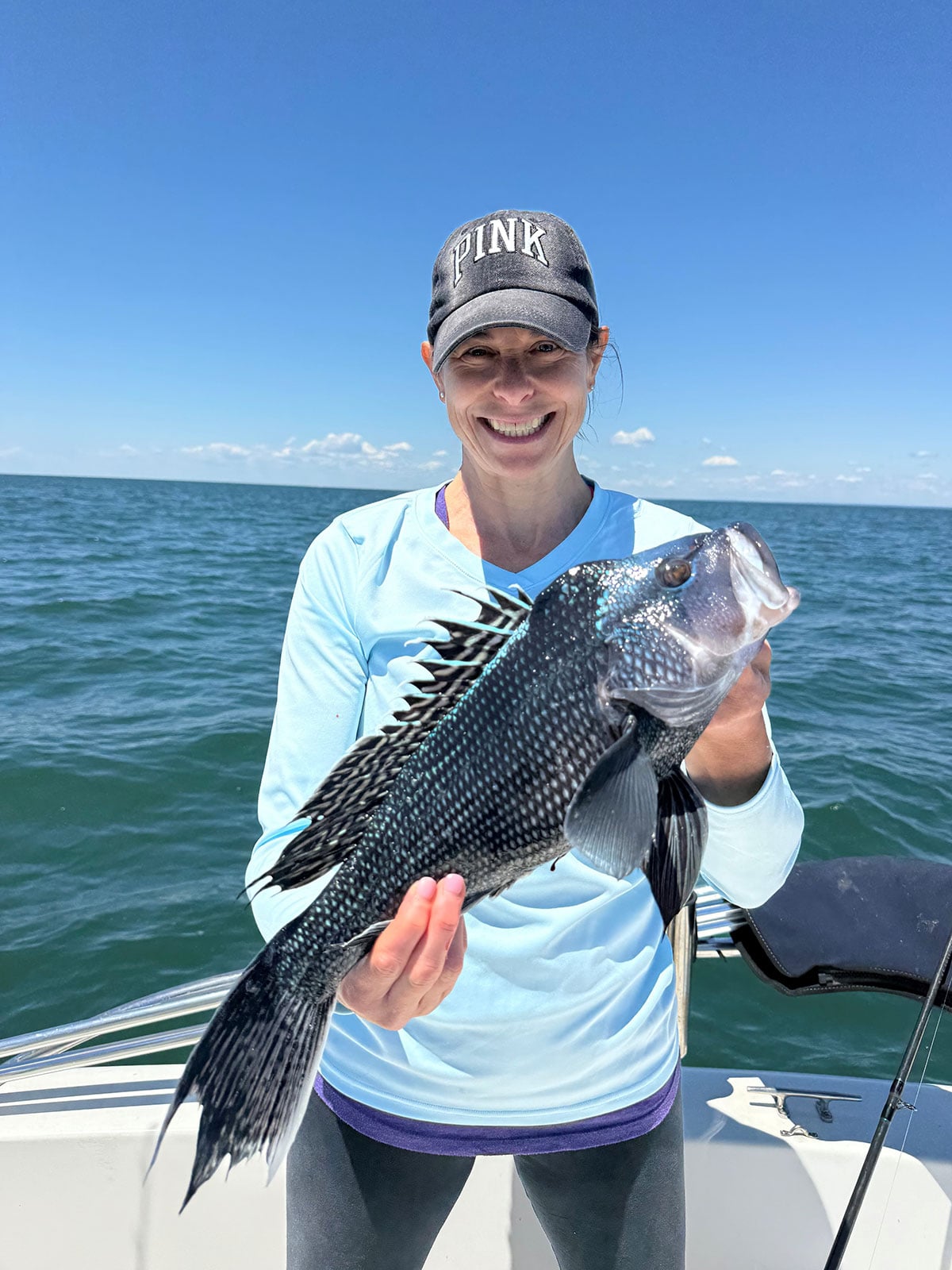
Fortunately, we’re blessed with air conditioners and fans to help beat the heat, while fish seek relief in cooler, deeper water. Although much of Long Island Sound consists of silted, flat bottom, there are countless underwater vacation resorts—better known as natural reefs—that attract tasty bottom dwellers such as black sea bass, porgies, croakers, spot, and, in recent years, weakfish. From summer through fall, these species spend their days feasting on the myriad of encrusting barnacles and shellfish that keep them well fed until the cold northwest winds of late fall force their migration toward the warmer waters along the Continental Shelf.
A Natural Staple
Currently, New York State manages 16 artificial reefs within its marine district, but of those 16 reefs scattered around Long Island, only two are located in Long Island Sound. At first glance, that may not seem fair. However, what many anglers fail to realize is that, aside from a few oyster and scallop beds planted off Long Island’s South Shore, there are very few natural reefs to speak of. In contrast, natural reefs are a major feature of Long Island Sound, particularly along the Connecticut and Rhode Island shorelines.
Unlike artificial reefs, which consist primarily of barges, retired ships, concrete pipe, sections of the old Tappan Zee Bridge, and concrete reef balls, natural reefs are made up of rock piles and ledges ranging from boulders just a few feet across to massive formations standing 30 feet high. In addition, Long Island Sound is lined with natural oyster reefs.
These oyster reefs are a cornerstone of Long Island Sound’s ecology, improving water quality by filtering sediments and excess nutrients. They also serve as underwater oases that provide food and shelter for bottom dwellers, gamefish, baitfish, and juvenile fish seeking refuge from predators.
Homes Built To Last An Eternity
Natural reefs enhance the marine environment by creating biologically diverse habitat that provides both food and shelter for a wide range of marine organisms. Their surfaces become covered with algae, mussels, barnacles, sponges, anemones, hydroids, temperate corals, and countless other encrusting organisms.
Many fish and crustaceans—including black sea bass, tautog, porgies, fluke, lobsters, Jonah crabs, and numerous shellfish—are attracted to these reefs for protection and feeding opportunities. Natural reefs also serve as important spawning habitat for many species.
Beyond benefiting marine life, these underwater structures provide exceptional recreational opportunities for both saltwater anglers and scuba divers.
Living A Rocky Life
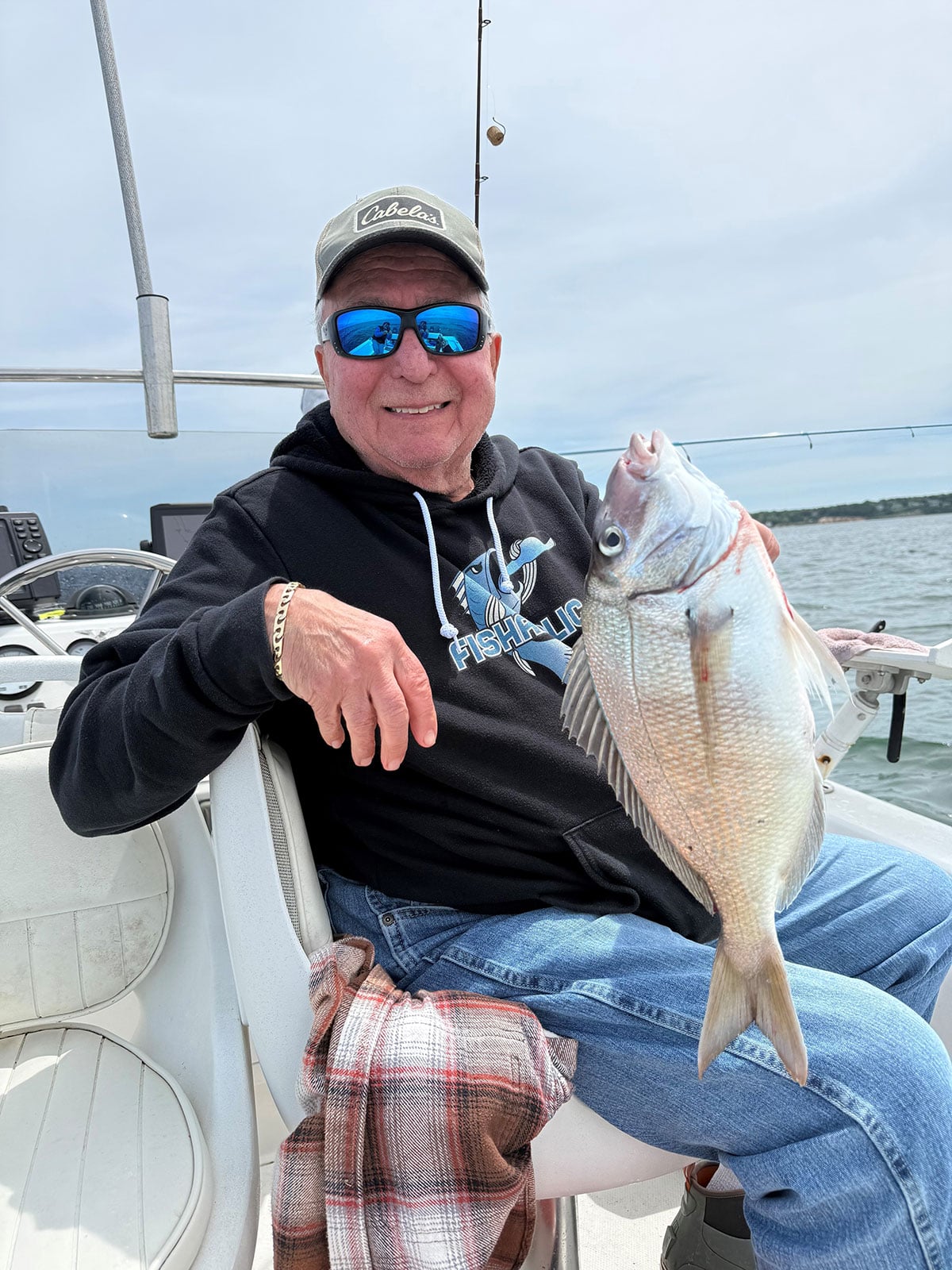
Black sea bass, porgies, croakers, and spot have always been, and likely always will be, structure-oriented species. Rocks and oyster reefs are where you’ll find the majority of these bottom fish throughout the summer and fall.
One perfect example is the Middle Grounds, which consists primarily of rocky bottom in 15 to 60 feet of water east and north of Stratford Lighthouse. The best action generally occurs from mid-July through mid-November, particularly in the 55- to 60-foot depths. Numerous rocky ledges create outstanding opportunities for mixed-bag fishing, especially during a flood tide along the eastern ledge.
Black sea bass and porgies often emerge from their rocky hideouts on an incoming tide to feed on crustaceans, crabs, and mollusks. The incoming tide typically provides the best fishing at the Middle Grounds and nearby oyster reefs because it delivers cooler water from Block Island Sound. During the fall, the process reverses as warmer water from the western Sound moves through on the outgoing tide. Regardless of the tide, if there’s a moderate current moving across the natural and artificial reefs, instant action is often the result. Few bottom fish can resist an easy meal drifting right in front of them. The key is anchoring over prime real estate.
Setting Up On Prime Real Estate
Having the proper anchor and equipment is paramount when fishing over natural oyster reefs. While anchoring may not be as demanding as it is over an artificial reef, your gear can still make or break your day.
The first place to start is with a quality navigation chart of the area you intend to fish. Captain Segull Sportfishing Charts for the western and eastern Sound are excellent choices, offering not only accurate charting but also marked hotspots that can easily be transferred into your GPS. A quality bottom recorder is equally important because it paints a detailed picture of the structure below.
Once you’ve located a promising piece of bottom, mark it with the MOB function on your GPS, shift into neutral, and observe the direction of the drift before setting the anchor. Be sure to use at least 10 feet of chain attached to the anchor along with roughly 300 feet of anchor line. Carrying a second anchor can save the day if the first becomes lodged in the rocks. Try not to set directly on top of the structure, or you may never retrieve it. If you’re uncomfortable using a Danforth anchor, a bendable grappling anchor can be a better option since it can often be pulled free under power. Regardless of which anchor you choose, always use at least 10 feet of chain to help it set properly. Finally, an anchor ball makes retrieving both the chain and anchor much easier and is well worth having aboard.
Tackle That Suits
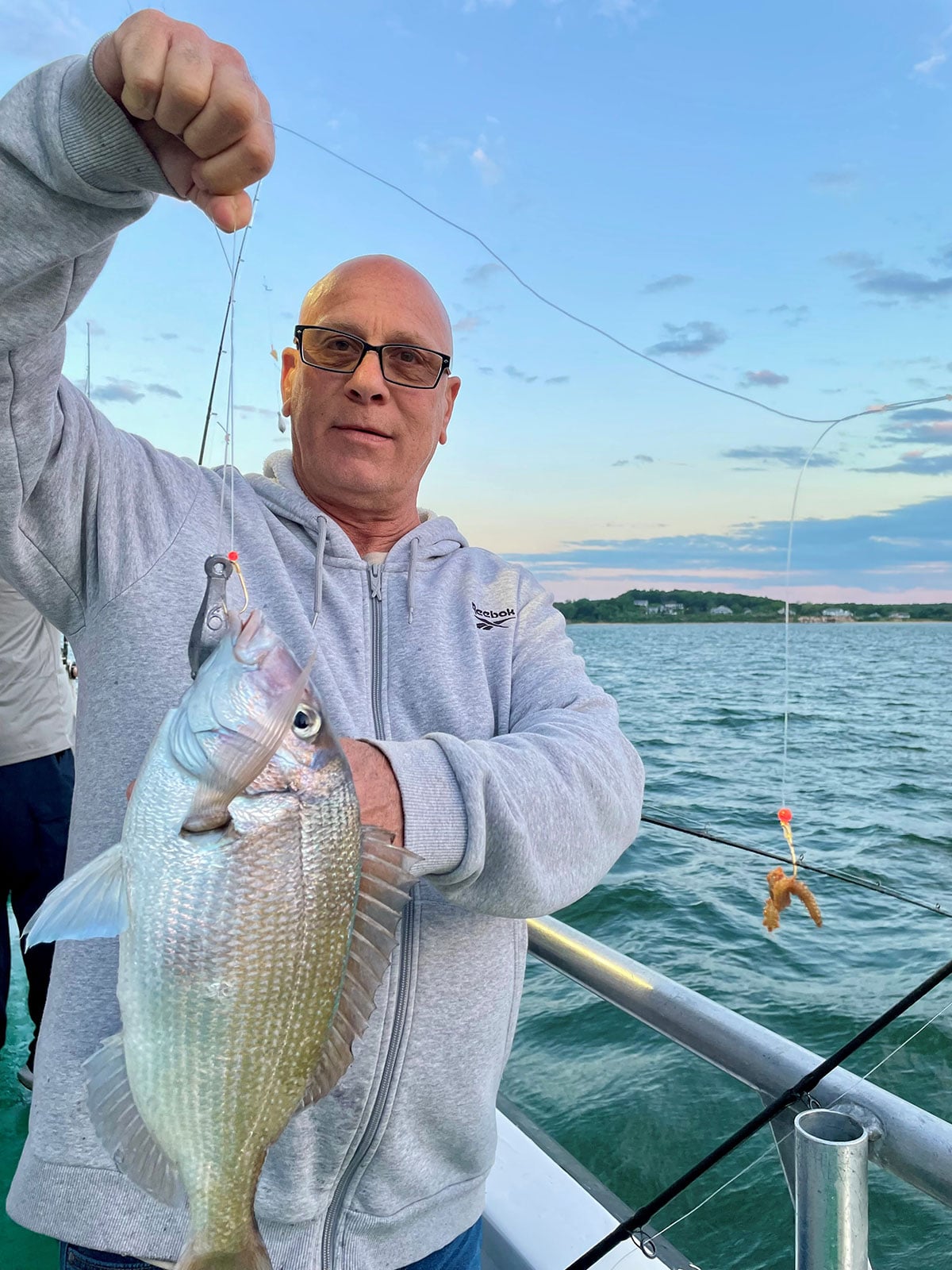
When fishing reefs—or any type of structure—you’ll achieve the best results with rods featuring fast tips for sensitivity and powerful butt sections capable of lifting hard-fighting fish away from the rocks. Conventional outfits in the 15- to 25-pound class paired with 7-foot rods and 3/0 reels spooled with 30-pound braid are ideal for the task.
When fishing braid, I strongly recommend using an 8-foot fluorocarbon shock leader in the 30- to 40-pound class connected with a Blood Knot. The heavier fluorocarbon stands up far better to the razor-sharp barnacles and oyster shells covering Long Island Sound’s reefs. Lighter leaders are quickly frayed—or cut off altogether—by the abrasive structure.
Bottom rigs are simple and effective, consisting of two 1/0 to 3/0 Gamakatsu Octopus hooks tied on dropper loops above the sinker. Gamakatsu’s Bait Saver hooks are an even better option for holding clam baits securely, although threading heavier leader through the eye can sometimes be challenging. Bank sinkers ranging from 2 to 20 ounces round out the rig, with weight selection depending on current strength. One to four ounces generally works in the western Sound, two to eight ounces handles the mid-Sound, while four to 20 ounces may be necessary in the stronger currents of the eastern Sound. Bring plenty of extra sinkers and fluorocarbon because donating terminal tackle to Davey Jones’ locker is simply part of fishing rocky bottom.
Diamonds: An Angler’s Best Friend
| LONG ISLAND SOUND NATURAL REEFS |
| The Green Ledge (N 41 02 6 /W 73 25 5)
The Stratford (Middle Ground) Shoal (N 41 03 06/ W 73 06 01) Six Mile Reef (N 41.2110/W 72.4812) Smithtown Reef ( N 40.55.975 / W 73.11.170) Branford Reef (N 41.13.30/W 72.48.40) Browns Reef (N 41.13.76/W 72.46.24) Townshend Reef (N 41.12.59/W 72.51.75) Anchor/Cable Reef (N 41.00.64/W 73.23.70) Obstruction Buoy (N 40.58.69/W 73.24.57) Buoy 11 B (N 40.00.57/W 73.23.78) Mamaroneck Reef (N 40.55.52/W 73.38.60) The Brush Pile (N 40.58.20/W 73.2376) Georges Reef (N41.04.56/W 73.19.75) Lordship Reef (N 41.07.85/W 73.07.57) Hatchett Reef (N 41.15.98/W 72.16.00) |
Fishing fresh clams will undoubtedly catch just about every bottom fish inhabiting Long Island Sound’s natural reefs. However, if jumbo porgies and humpback sea bass are your primary targets, diamond jigs deserve serious consideration. Depending on where you’re fishing, jig sizes ranging from 1 to 12 ounces can be extremely productive.
There are two proven ways to fish a diamond jig. The first is to let the jig hit bottom, engage the reel, crank three or four turns, and repeat the process until a fish strikes. The second—and my preferred method—is to allow the jig to hit bottom before working it with steady three- to four-foot lifts while maintaining contact throughout the retrieve. It’s simple, efficient, and highly effective.
If you choose to jig, use a double fluorocarbon shock leader in the 40- to 60-pound class, as repeated contact with the rocks will quickly fray lighter leaders. Inspect your leader after every retrieve and replace it whenever signs of abrasion appear. For added attraction, tip the jig with a 4-inch chartreuse Gulp! Swimming Mullet. In my experience, the added scent and taste often convince both sea bass and porgies to crush the jig.
In closing, Long Island Sound’s natural reefs, artificial reef structures, and living shoreline installations form an incredible network of marine habitat that enhances biodiversity, improves water quality, and provides healthy habitat for countless bottom-dwelling species. More importantly for anglers, these reefs will continue to offer outstanding recreational fishing opportunities for years to come.