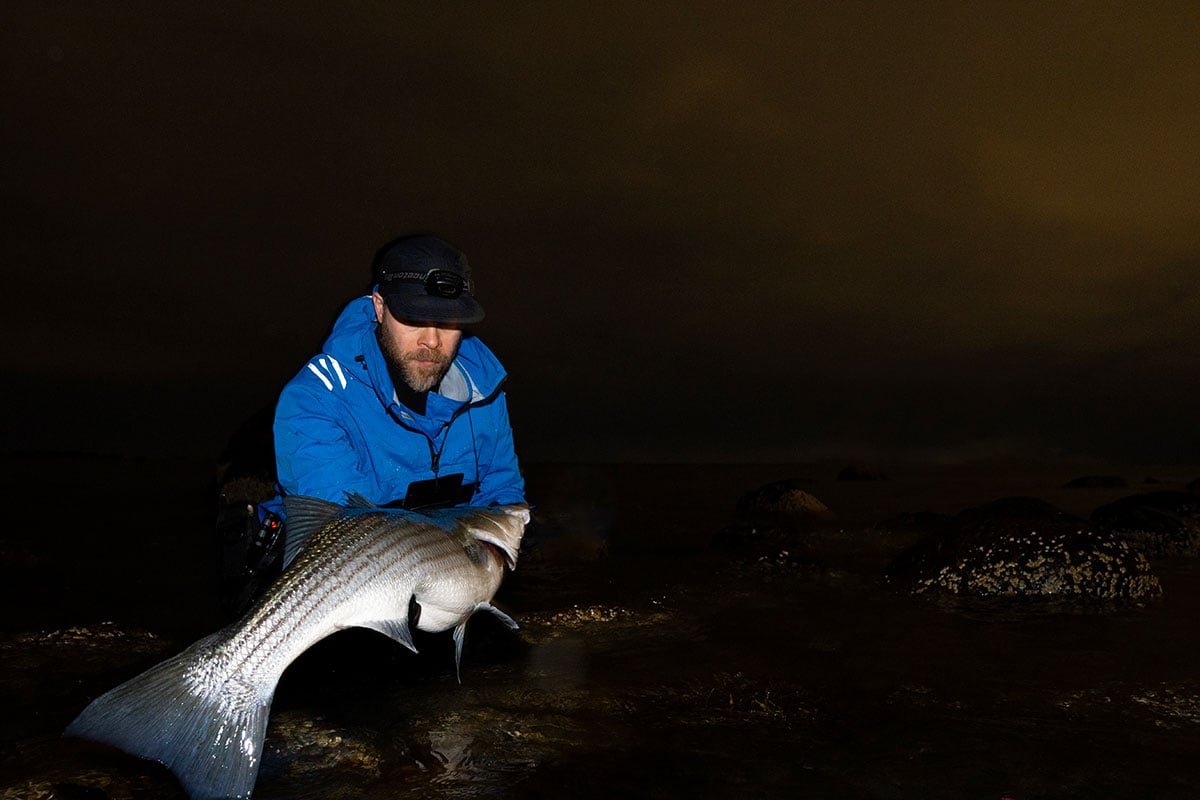
Are too many surfcasters overlooking single-piece gliders?
The profound, zealot-like obsession that has exploded around jointed gliders in the striper world is incredible. I am not here to refute anything about them: anglers are clearly crushing fish on them, and willing to pay what it takes to make that happen. However, what perplexes me is the fact that when I query these casters about other gliders they use, half the time they don’t even understand the question. The response is often, “what do you mean ‘other gliders’?”
Gliders are a big category, and I’ve been using and writing about them for 11 years. There are numerous commercially-available options (many for less than $20) and there’s a lot of builders producing them affordably now, too. So, if your mind has been blown by the rise of the resin, jointed glider: then you are just at the first step in your glider journey, not the end!
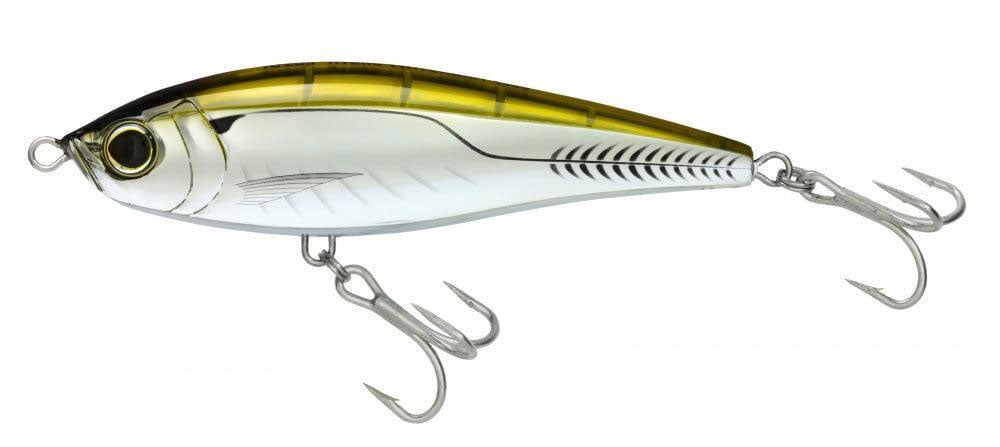 For the sake of brevity, in my (obsessed) opinion there are really only two types of gliders: jerkbait-style and swimming-style. Within these categories are subtypes; for example, under the jerk-bait style, you might have hard body, soft body, jointed, tubular vs flat, etc. And these plugs may vary in their action, sink rate, stability, size, and shape. The same is true of swimming style gliders; they vary even more broadly in function and form factor. When choosing between the two or within the two categories, you must always consider what you’re looking for, for your specific spot, before you buy the plug; not buy it and figure it out after. What are you trying to accomplish with the glider? That should singularly drive the purchase.
There is a firm delineation for me between jerkbait and swimming style. The jerkbait plugs are designed around the idea of fishing them like a sub-surface spook. That is their primary intended action, and the plug is crafted around it. They may also swim on a straight retrieve (many do), but they are first and foremost designed to “walk the dog” and hang in the water column on the pause. This action naturally precipitates a slower, level sinking plug, that design gives it the classic action.
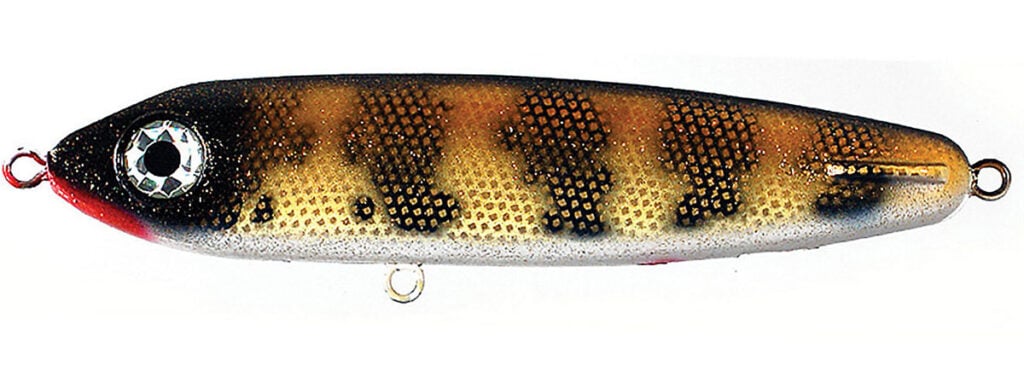
Swimming gliders, on the other hand, are designed around an S-shaped swim first, and possibly walk-the-dog second (sometimes absent entirely). Swimming gliders have a lot of action built in on a straight retrieve, while the jerkbait style relies on the angler to “put in the work.” That isn’t to say that swimming style gliders can’t be decent “180-degree” plugs (that they turn hard from side to side), but those designed to sub-surface walk the dog inevitably do it much better. Flip that script for how they swim on a straight retrieve.
If you’re having a blast with the jointed gliders (which, for what it’s worth, I classify in the “swimming” category), I encourage you to stop for a second, take a breath, and look around. There are other gliders that are also amazing and you are missing out on if you aren’t using them. I could write a book about the different ways they can be implemented, but I’ll just give a few of my favorite suggestions.
To be blunt, any time you want to trick pressured, fussy, or “holding pattern” fish, a jerkbait style glider should be high in your rotation, it’s often the first thing out of my bag. The deadly “hang” and hard back-and-forth action are second to none, some outperform surface spooks. Jerkbait-style can also be outrageously good during the day around bunker. I’ve had days that fish were reluctant to hit a Doc, that crushed a Savage Gear Freestyler worked loose and sloppy just under the surface. This same plug has also done well for me fished almost like a bucktail in the middle of the night: cast up current, let it drift in front of you, adding twitches to make it dart as it slides along. Another favorite is working a slow-sink jerkbait style – like the ERC Hellhound or Bitten Tackle Magnum Warlock – into an area that holds fish and starting very slow then working it faster and more aggressively as it gets close to the “zone.” It is as if the bait is panicking to the predators being there, a very natural presentation.
 Swimming style gliders can vary widely, but some of the ones I like best are super versatile because they sink a little faster and are very stable in the current. The Westin Swim SW, YoZuri 3D Twitch bait, and Tsunami TidalPro Twitch bait can be fished in almost infinite ways. You can swing them like a bucktail or needlefish, pull them through the current like a darter, burn them on the surface like a stickbait, and even walk them like a subsurface spook (albeit with limitations, and no hang since they sink faster).
The bucktail and needlefish often get put on a pedestal for being able to do “anything,” but I would argue (furiously and adamantly) that compact, moderately sinking swimming-style gliders are their equal. They can reach the outer bar, can be counted down in a breachway, ripped at the surface through a blitz, slow-rolled at night through the boulders, and do just about anything in between. I cannot overstate how versatile they are.