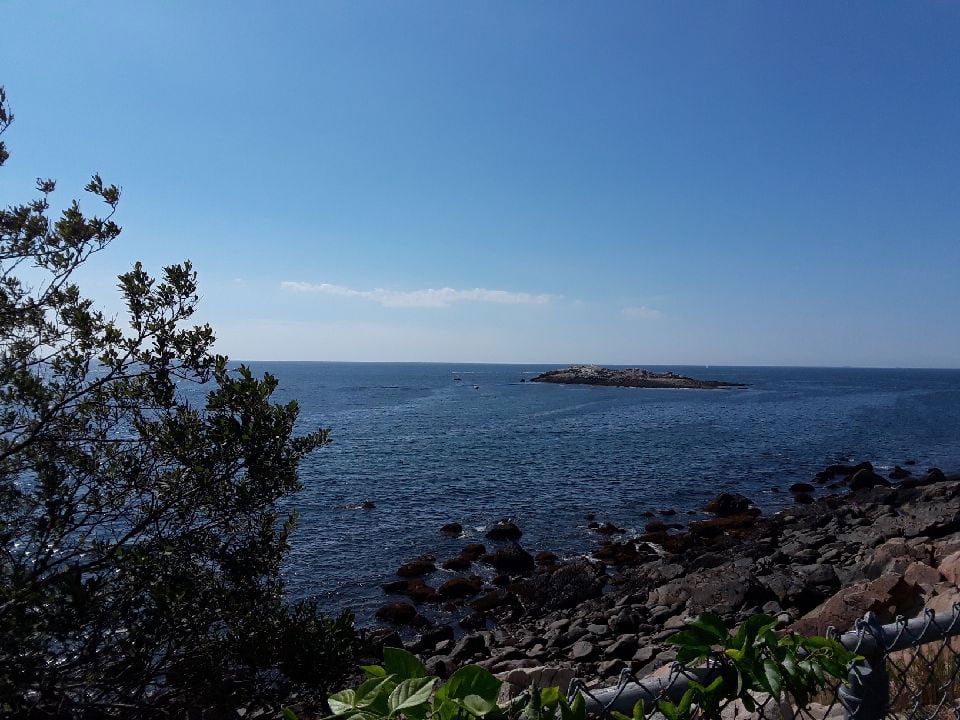
Blackfish live by the structure, and knowing where to find that structure from shallow fall boulder fields to deep winter wrecks is the key to consistent success.
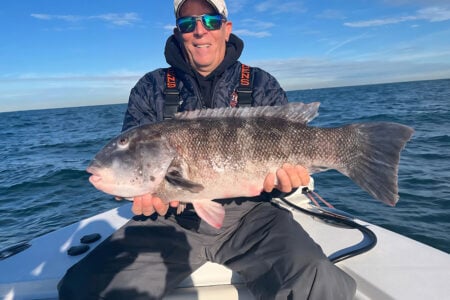
The jig settled onto the rocky bottom with a fresh piece of juicy green crab attached. Waiting for the telltale taps of a blackfish didn’t take long, as one of the bulldogs quickly moved in to investigate. After a few raps, the fish committed to the jig, and it was time for me to do the same and set the hook.
The powerful tog bolted away, heading straight for trouble. Since I was using 10-pound-test braid on light spinning tackle, caution was key, but keeping the fish out of the rocks was the only way I was going to beat this brute. I made some headway and managed to get the fish clear of the bottom, but the battle was far from over. The tog had other plans and made another blistering dive for safety. This happened two more times before, with a little luck, we finally guided the husky fish into the net. That was when I finally stopped shaking.
It happened on an October trip with Capt. Tony Vernola of Monkfish Fishing Charters out of Centerport, Long Island. He brought us across to the Connecticut side of Long Island Sound, where we worked shallow boulder fields with light-tackle jigs. Capt. Tony specializes in this type of fishing and is dialed in to this extremely enjoyable way of hunting tog. It adds a level of excitement and nervousness that is difficult to describe unless you experience it yourself.
Built For Structure
In my younger years living in Babylon, I did a lot of togging around the Sore Thumb, Oak Beach and the rocks along the backside of Robert Moses State Park. From shore, I did well using standard sinker-and-hook rigs around the numerous rock groins that dot the area. I didn’t know much about the light-tackle jigging game back then, but the goal was the same: locate blackfish in the places they call home.
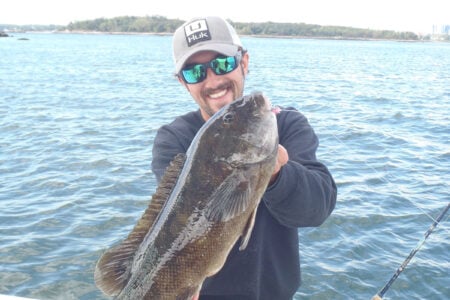
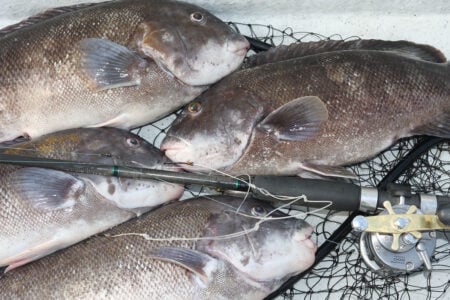
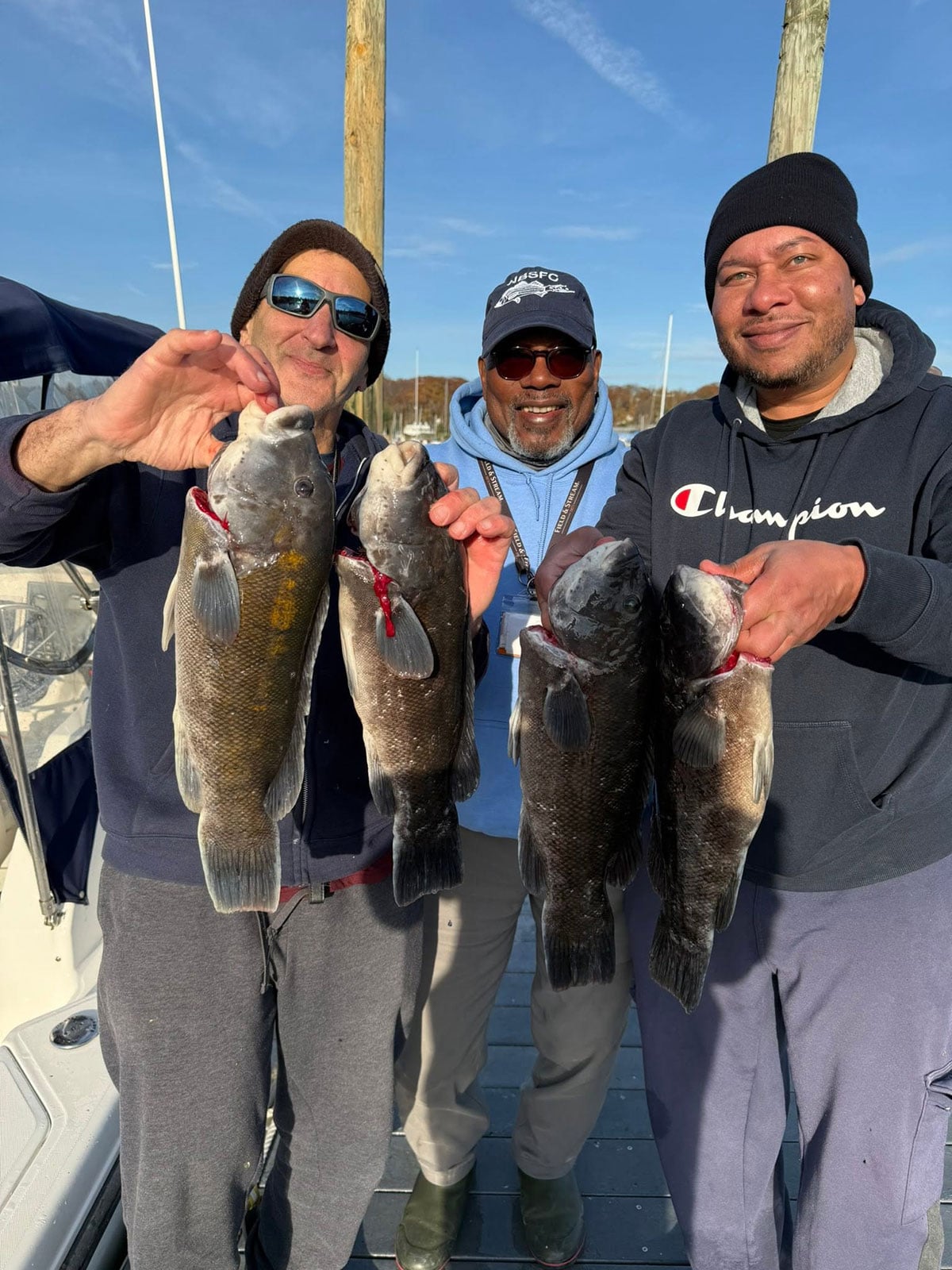
Blackfish, or tautog, spend much of their lives around hard structure. Rock ledges, rubble fields, shell beds, bridges, wrecks, wood pilings, docks and artificial reefs can all provide habitat. They are well-equipped to thrive in these natural and man-made environments. Their tough, leathery skin allows them to navigate tight spaces between rocks, barnacle-encrusted pilings and crevices with little consequence. They are also armed with powerful teeth capable of crushing crabs, mussels and many of the other shellfish they encounter.
Where you find blackfish often changes with the season. In spring, they can move into relatively shallow water around estuaries and nearshore rocky areas. During summer, many fish shift deeper in search of cooler water. When fall arrives, tog again move toward shallow structure to feed heavily before gradually sliding deeper as water temperatures drop. By winter, many have moved to deep offshore structure.
Shallow-Water Togging
With fall approaching, shallow water can be the place to concentrate your efforts if you want to go head-to-head with what I like to call the “bulldog brutes of the boulders”. Tog can be found around inlet jetties, rocky beaches and points, making shore casting productive during the right periods. Piers, bridges and docks are also excellent areas to investigate because blackfish can take up residence around pilings and bulkheads covered with mussels and other crustaceans. If hard structure is present, it is worth taking a closer look.
From a boat, anchoring over rocky terrain, shallow wrecks and artificial reefs can put you directly over fish. Some reefs are extremely sticky and will claim tackle and even anchors, but that’s often exactly where your quarry lives. Losing a little tackle is part of the game. A wreck anchor can help in particularly nasty structure, while a boat equipped with Spot-Lock can provide an even more convenient way to hold position. Smithtown Reef in Long Island Sound is one example of an area capable of holding some impressive blackfish if you put in the time.
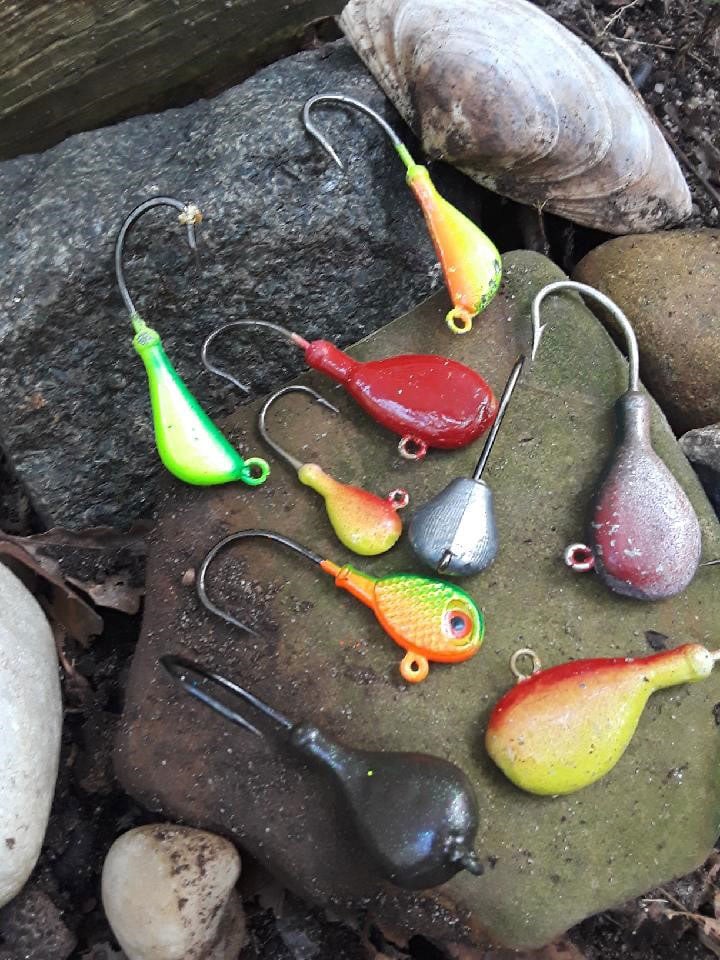
Make the trip across the Sound to the Connecticut shoreline and you’ll find what can seem like endless blackfish habitat. Miles of rocky, rubble-filled shallows line the coast, creating prime territory for light-tackle jigging. A 7-foot spinning outfit spooled with 10- to 15-pound braid, matched with a 20- to 30-pound fluorocarbon leader and a blackfish jig in the 1/2- to 3/4-ounce range, can provide some unforgettable battles. Where current is minimal, light jigs are easy to fish. In stronger current, increase jig weight only enough to maintain contact with the bottom.
Jigging The Bite
Tip the jig with a fresh piece of green crab or a couple of Asian crabs and let the fun begin. White-legger and hermit crabs are also excellent baits when you can get them. Once you learn when to set the hook on a chewing tog, your hookup rate can improve dramatically.
I’ve found that leaving a slight bow in the line while the jig is resting on the bottom, rather than keeping the line tight to the jig, can sometimes help. It allows the tog to pick up the crab without immediately feeling resistance, which may prevent a larger, wiser fish from dropping the offering before you have a chance to set the hook.
Another good tip from Capt. Tony is not to rush away from a spot simply because you’re catching small fish. Blackfish are curious creatures, and larger fish may pick up on the commotion, move in and bully the smaller fish away. This is part of what anglers refer to as “building a bite.” The jig-and-crab method can also be used from shore along jetty walls, docks, rocky beaches and areas adjacent to bridges.
Winning The Fight
Getting a hooked tog away from structure is crucial, especially when using light tackle. Give one of these fish an opportunity and it will immediately try to bury you in the rocks, pilings or whatever other cover is nearby. Apply controlled pressure and do your best to move the fish away from the bottom before it gains the advantage.
If a fish does make it into a snag, don’t immediately break it off. One trick is to set the rod down and give the line some slack. After several minutes, the fish may become comfortable enough to move out of its hiding place, giving you another chance to come tight and land it.
Light-tackle jigging makes every part of the fight more exciting. The initial hookset, the first dive toward structure and the uncertainty of whether the fish will make it back to safety all add to the experience. It is a much different sensation from fishing heavier conventional tackle, and once you experience it, the method can become addictive.
Deep-Water Prospecting
As fall progresses and water temperatures work their way down toward the 50-degree mark, blackfish begin shifting toward deeper water. Wrecks, ledges, reefs and other bottom structure become increasingly important. Fish can be targeted with more traditional blackfish rigs, although jigs will continue to work when current and depth allow.
Moon tides can play a major role in determining how much weight is necessary to hold bottom, and staying in contact with the structure is critical. Beefier tackle is usually in order as the fish move deeper, so this is where you may want to leave the lighter “noodle sticks” at home. Precise anchoring is also essential because being only a short distance away from a wreck or rocky piece can mean missing the concentration of fish entirely.
If the bite slows, try cracking the shells of your crabs to release more scent into the water. This can help stimulate strikes and is a useful technique regardless of the depth you are fishing. For late-season blackfish anglers, New Jersey waters can also offer opportunities into the winter, with some true trophy fish coming from deeper wrecks and reef structure.
Winter Behavior
During winter, blackfish migrate toward deep-water structure, sometimes in depths exceeding 100 feet. Their metabolism slows considerably as water temperatures decline, and they become much less active than they were during the fall feeding period.
| A NOTE ON GROWTH |
| Tautog are exceptionally slow-growing fish, and truly large specimens can be decades old. That makes a trophy blackfish a special catch and one that deserves some consideration before it automatically goes into the cooler. Many anglers who enjoy targeting blackfish now choose to release larger fish, especially those reaching double-digit weights. These are the fish that have survived countless seasons around wrecks, reefs, boulders and pilings, and releasing one gives it the opportunity to continue contributing to the fishery. |
The fish may still feed, but bites can become subtle and patience becomes even more important. Anglers who continue pursuing them during the colder months must slow down, pay close attention to the slightest signs of activity and be prepared to fish heavier tackle in deeper water.
Winter fishing is a much different game from the shallow-water jig bite of early fall, but the habitat remains the common denominator. Find the right structure and you have taken the first major step toward finding the fish.
Whether you are working a half-ounce jig through a shallow Connecticut boulder field, dropping a traditional rig onto a deep wreck or casting toward a jetty from shore, the key remains the same: Find the habitat, fish it effectively and be ready when one of those bulldogs decides to eat.