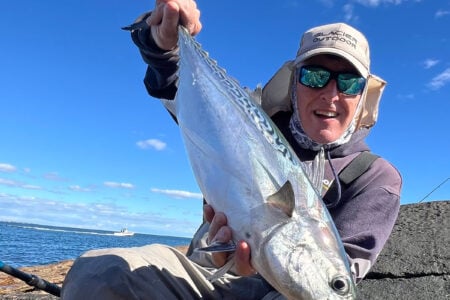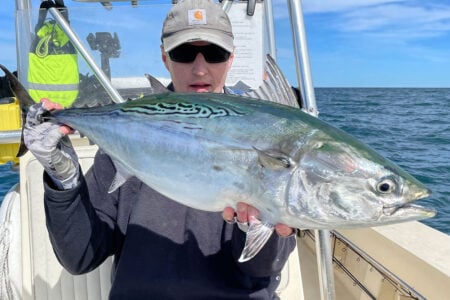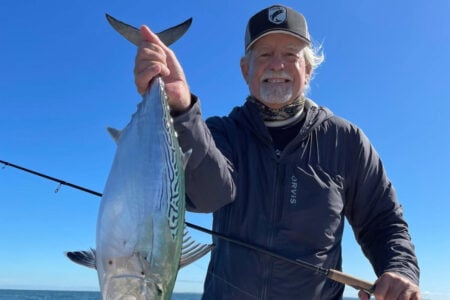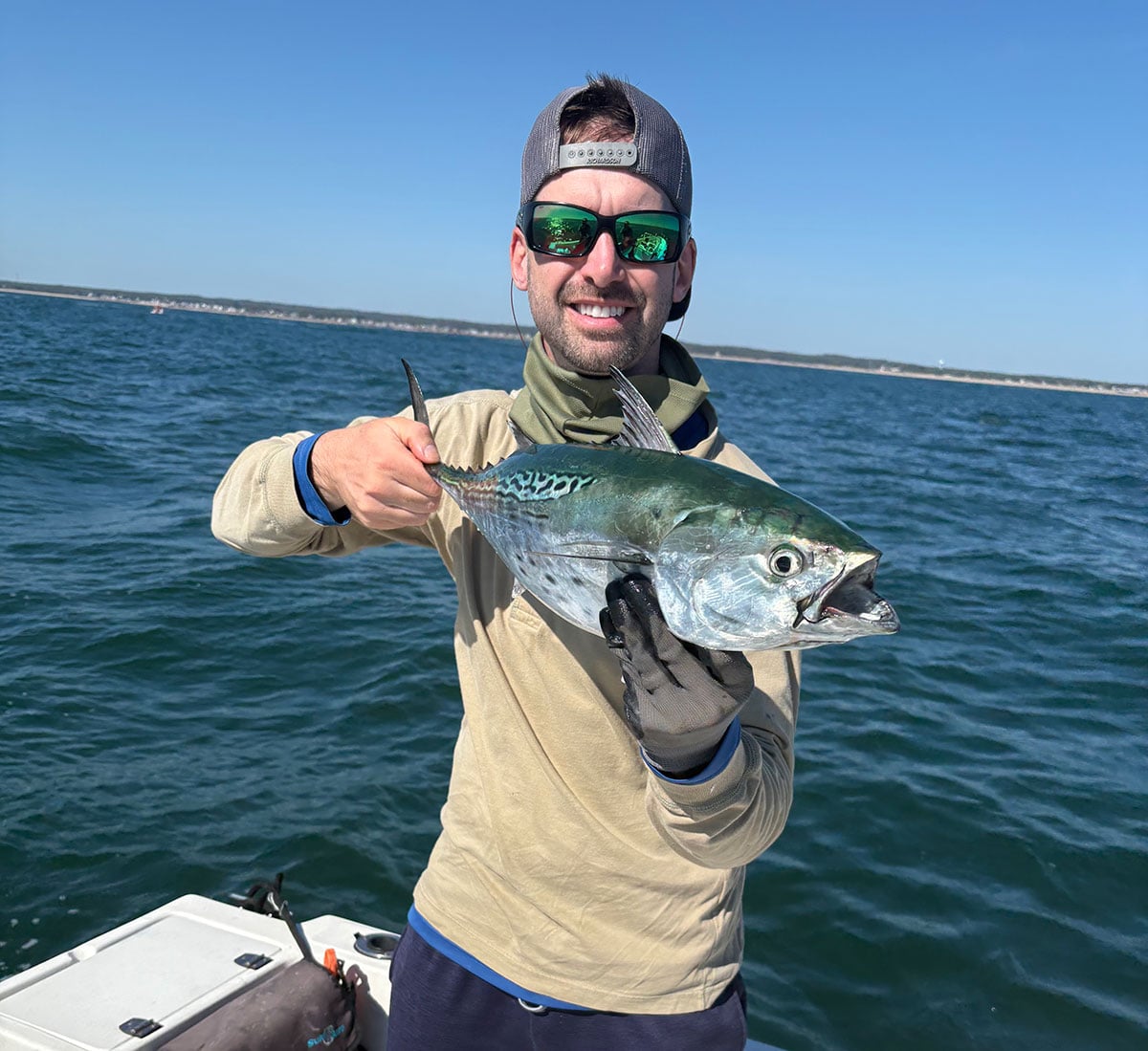
Each style has its advantages and produces its own unique strain of albie fever!
They are called by many names, including little tunny, false albacore, hardtails, speedsters, bonita – these are just a few of the aliases for the dynamic euthynnus alletteratus. Here in the Northeast, we primarily refer to them as “albies.”
For inshore fishing junkies like me, the arrival of albies is the most eagerly anticipated of all. They account for a lot of sick days and depleted PTO banks. Anglers literally drop everything for these small tunoids. Why is this? Drag-peeling, rod-bending, mind-numbing runs, never-say die battles; darting left, darting right, swimming straight at you, it’s utter mayhem; and it’s exactly my kind of party. They’re tremendously powerful, capable of swimming up to 40 mph — double the speed of a striped bass – and they have a devoted following on shore, boat and kayak!
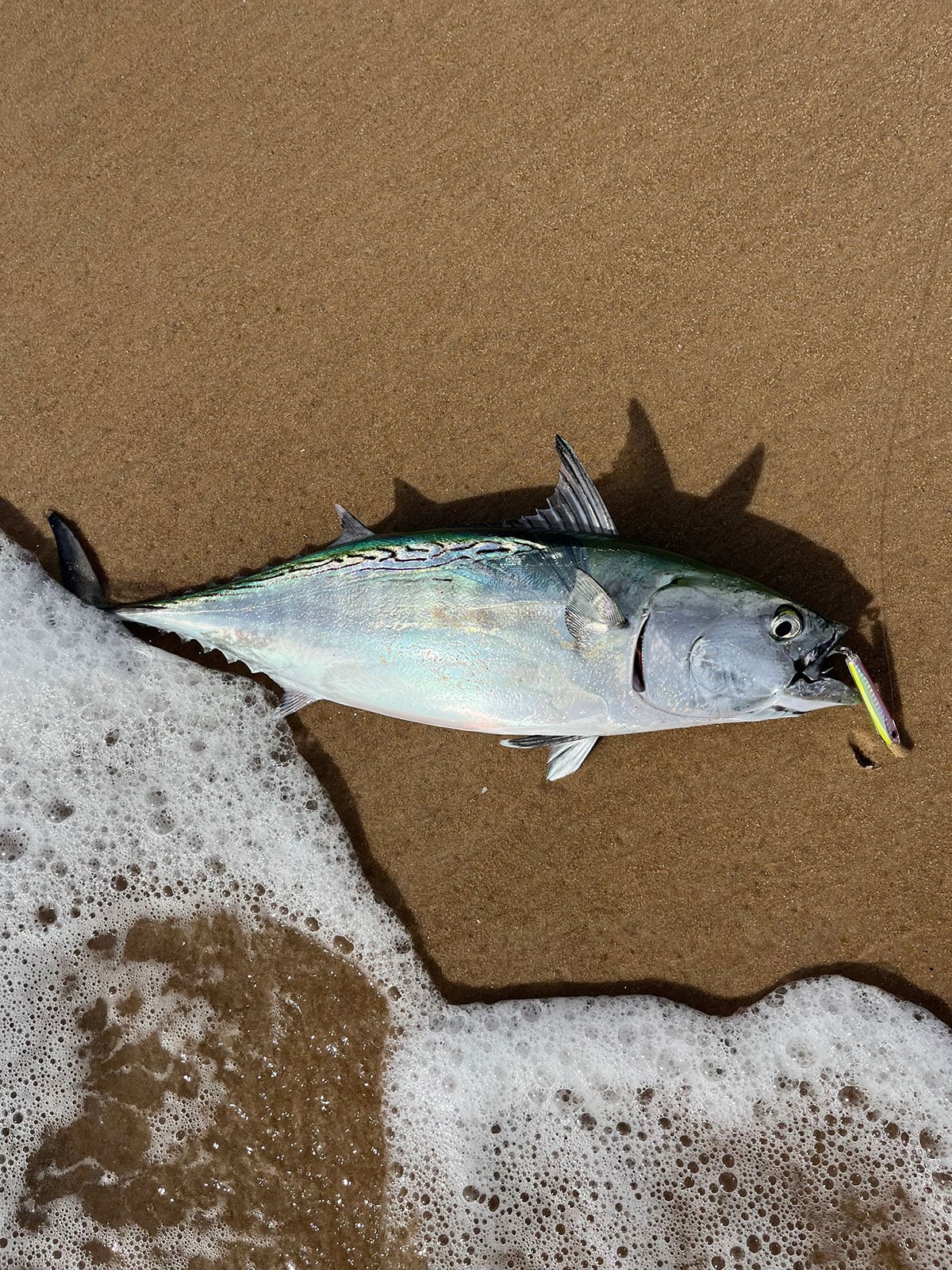
In addition to being turbo-charged for the ultimate light-tackle battle, they are some of the most beautiful fish we have an opportunity to catch in New England. Shiny silver and bright shades of green, with black vermiculations, dark spots, and an iridescent finish, everything about their look screams offshore, or tropical. And how could I forget that tall mast of a retractable dorsal fin?
Enough fanboying— let’s get into catching them.
Gearing Up
I’m willing to bet you’ve heard the stories of anglers catching albies using 11-foot surf rods, 50-pound test line, and a 40-pound rated leader. Yes, it’s possible. However, that’s not a high-percentage play. When targeting hardtails, you want all the odds in your favor. This means “matching the hatch,” engaging the lightest line and leader you can get away with, and using the correct primary tackle. You’ll want to exploit every advantage within your control – and that starts with choosing the gear that maximizes your chances of getting bit.
Considering I cut my teeth chasing hardtails from the surf, that’s where we’ll start. With safety top of mind, you’ll want to invest in a pair of Korkers or similar cleated footwear, especially if you plan to rock hop. For rod and reel selection, think along the lines of backwater striped bass gear. An 8- to 9-foot surf rod with moderate-fast to fast action is a good place to start. It should be rated within the constraints of half to 4 ounces. This variance is condition based, with wind, surf, and current being the most impactful. For example, on a calm day you may get away with a 7-foot medium rod. On a sporty day, you may need a 10-foot medium-heavy that can cut a 2.5-ounce jig through the howling gale. Personally, I favor my 9-foot ODM D.N.A rated half to 3.5 ounces for most scenarios. When glassy conditions warrant it, I’ll scale down to my 7-foot, 6-inch Tsunami Forged.
For reel selection, I like a 4000 or 5000 size spooled with 20-pound braided line. However, you could certainly get away with 30. Shimano Stradic, Daiwa Saltist, Daiwa BG, and Penn Clash are all reels that I’ve found to be up for the task of taming an Albie. If you’ve got the bankroll—a Van Staal VR50 or a Shimano Stella 4000 will most definitely get the job done. The most important factor here is a nice smooth drag that can accommodate long runs.
Rod and reel for the boat/kayak are going to differ significantly from the surf. You can use virtually the same for both, so we’ll group them together. Look for a 7- to 8-foot, medium-heavy rod with a fast to moderate-fast action, rated to throw half to 2 ounces. I outfit a Tsunami Carbon Shield 7-foot medium-heavy, which I love—it’s got great sensitivity, slings what I need it to, and has just enough power to handle a toad of an albie. St. Croix, G-Loomis, and Jigging World also offer effective rods for the boat/kayak. When selecting a reel, I believe a 3000 size spooled with 15- to 20-pound braided line is best. I fish both a Shimano Stradic and a Daiwa Saltist MQ, both of which offer extremely smooth drags.
Last but certainly not least, is utilizing the correct leader. I’m a firm believer in fluorocarbon leader material. I like to use anything rated from 15 to 25 pound. I lean more toward the 25 when fishing from shore, if I can get away with it. The abrasion resistance helps when scraping against those jagged rocks and allows for easier landing in a tenuous spot. Your boat/kayak leader style is going to be the same as described for shore fishing, yet you’ll want to lean more toward the 15- or 20-pound grade. I’m not as concerned with abrasion resistance when in the open water. Remember— you want every advantage. This may seem excessive, but I’ve seen days when 20 got bit and 25 were ignored.
Shore Hunting
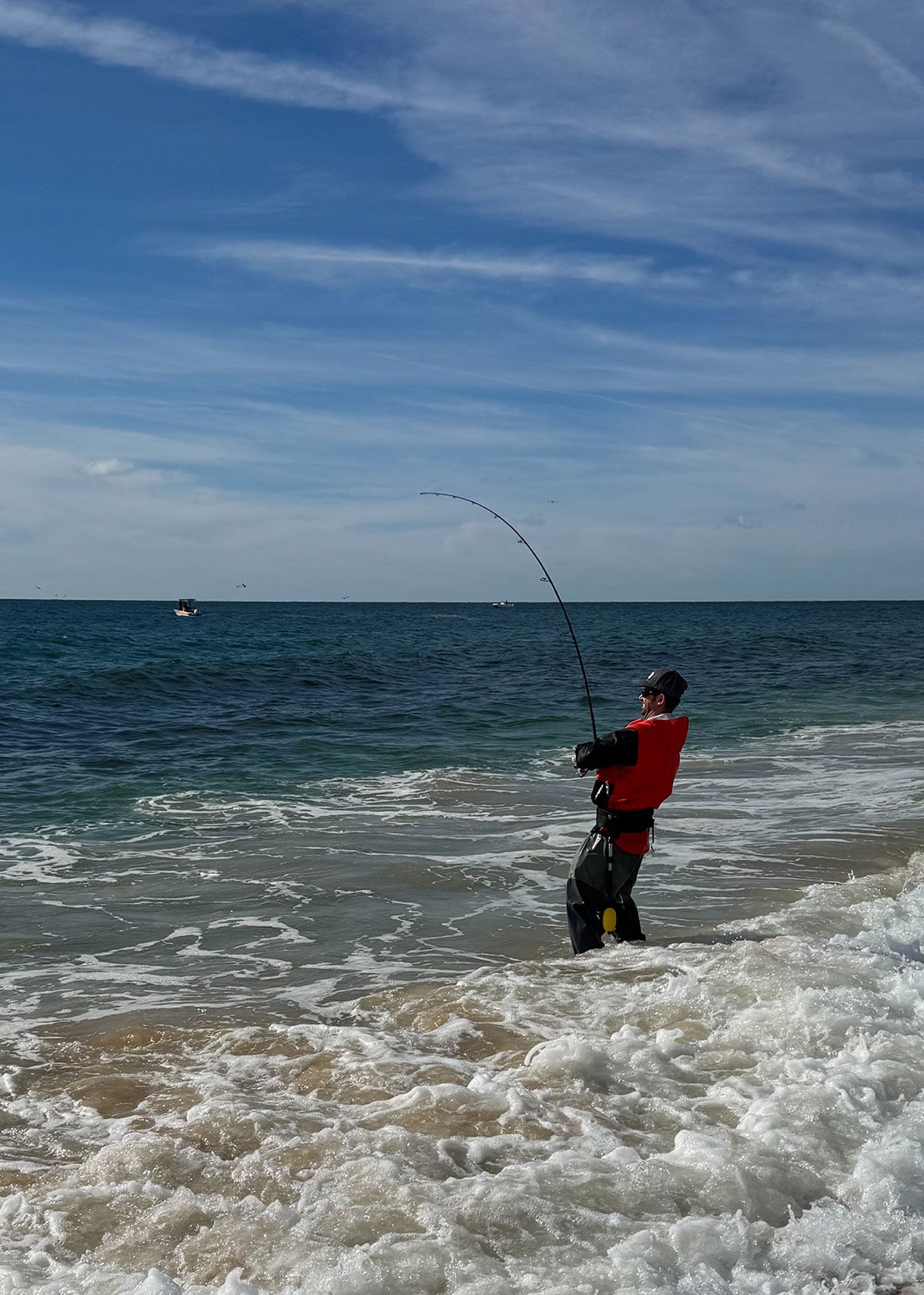
Let’s start with some of the most effective ways to chase these fish from shore. Albies love steep, rugged shorelines with deep drop offs, as well as long jetties bordering inlets. It’s areas like this where you’ll want to focus your time and attention.
My absolute favorite lures to chuck from shore are epoxy style jigs and metals. I group these in the same category, even though they’re slightly different in appearance. They cast a mile, hold well in strong current, and are a dead ringer for the small to medium sized baitfish little tunny love. Some examples are the Hogy Epoxy Jig, Game-On EXO Jig, the Shimano Current Sniper, and the OG albie slayer, the Deadly Dick.
There are two ways I primarily fish these baits. One is cast out and retrieved very quickly, either across the top of the water or mid-water column. This is an extremely effective method and the most popular of the two. Don’t be afraid to literally burn it; you can’t out-reel these fish: they swim 40 mph, remember? You’ll never forget the first time one explodes on your fast-moving jig. The strike can be so vicious that I’ve heard it described as the fish “committing suicide” on your lure.
Another productive approach is letting the jig or metal sink all the way to the bottom, then working it back up, and letting it sink again for the first quarter of your retrieve. You’ll be surprised at how many hits you get when trying this.
Albies From A Boat
Emotions can run high on the albie grounds, so try to keep etiquette at the forefront when you’re out there. Be courteous to the other boats in the area. Avoid pulling directly alongside someone who is actively casting or retrieving. Don’t blast up to a boiling blitz, “waking” everyone nearby and pushing the fish down in the process. If we’re respectful to each other, we’ll all catch more fish!
I want to emphasize how a calm, area-focused approach is paramount to success when fishing for albies in the boat. Try to avoid the constant run-and-gun approach that many boaters default to. You’re going to find more success and burn a lot less gas if you turn the motor off and work your lures in an area where you know there are active fish. Don’t be surprised when the fish start rage feeding right alongside your drifting boat: patience is the name of the game. If your vessel is equipped with sonar, use that to locate bait schools. Albies can be tricky to detect on standard sonar, but the bait they feed on typically shows up clearly. I’ve hooked many of these fish blind casting around a school of silversides, bay anchovies, or squid.
In addition to the jigs mentioned previously, one lure I always keep in my bag is the aptly dubbed Albie Snax. It’s intensely popular among hardtail enthusiasts for good reason. I prefer the pearl white color (amber, bubblegum, and yellow-pearl are also productive) rigged with a 3/0 to 5/0 Owner Beast hook, it doesn’t have to be the Beast, a BKK Titanrider or any other sharp swimbait equipped with a screw lock will do. Snax tend to be most effective when albies are feeding on larger baits. They can also be used to entice a reaction bite. I like to use a slow retrieve and twitch it every few cranks of the reel. This seems to trigger those reaction strikes, particularly directly following a twitch. You can burn them across the surface as well, which yields epic strikes.
From The Yak
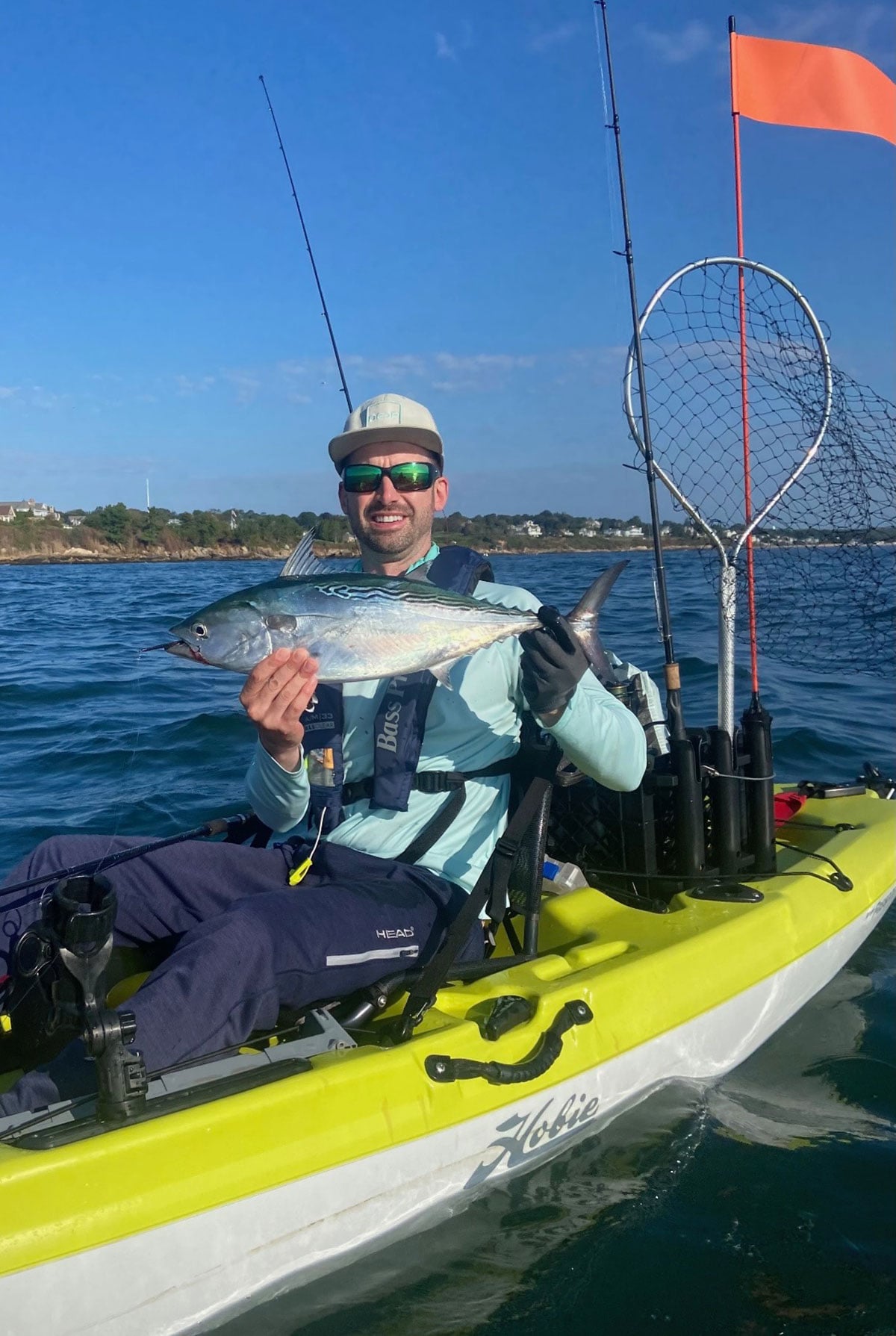
The most immersive approach when chasing “Al” has be in a kayak. You can stealthily creep up to frothing feeds or slowly move along the jagged rocky shorelines they frequent. Just a couple of quick safety tips; always wear your life vest, no matter what. I use a Bass Pro auto/manual inflatable that leaves plenty of room for casting, paddling, or leaning over to land a fish. Always have a high-visibility flag on your yak, especially when ocean kayaking. Even on a clear day, kayaks can be difficult to see from a fast-moving watercraft. I’ve seen some dangerous near misses out there that left my heart in my stomach.
In a kayak, you’re able to quietly sneak up to raging blitzes and get tight before the fish even sense you’re there. The Hobie Outback, Old Town PDL 120, or a Pelican Catch are a few of the many fishing kayaks that albie chasers prefer. These models happen to be pedal kayaks, strong emphasis on the “pedal” versions. I made the mistake of purchasing, and attempting to kayak fish, with a paddle-driven model on my first go round. I promise you a paddle yak is far less than ideal for albies. I strongly suggest investing in a pedal or motorized kayak for this type of fishing. You’ll want something 10 to 12 feet in length with enough width to provide stability. Look for kayaks that are specifically designed for ocean fishing, because albies are typically found “out front” versus in the backwaters or estuaries.
Considering we already covered the ways to fish Snax and jigs from a watercraft, let’s dive into fishing straight tail baits. When the albies are ultra-picky you’ll want to call in the straight tail. Some examples are Zoom Flukes, Z-Man Jerk Shads, or my personal favorite; the Ron-Z. Like the Snax, I prefer white or pink coloration. I will typically rig these with a small jighead from a quarter- to a half-ounce I like the Ron-Z or Berkley Fusion jig heads for rigging. I’ve had most of my success casting the bait out and retrieving straight back with a medium speed, throwing a pause or twitch in here and there. Make sure you’re allowing the bait to sink for a few seconds before retrieving it, otherwise you’ll be skipping it across the top.
| GETTIN’ JIGGY |
| Another great tactic to apply from the boat or yak is jigging your metal or resin-style jigs in an area where bait and/or feeding albies (or bonito) are present. Drop your jig to the bottom and jig it vertically while drifting. Hardtails cruising around the bottom will crush a jigged metal. No Albie bite? No problem—you might just pull up a knot-head black sea bass, a dinner-plate scup, or even a triggerfish. Not a bad consolation prize! |
Whether you’re pursuing albies from shore, boat, or kayak, the excitement—and the frustration—are unmatched. When that 8-plus pounder explodes on your epoxy, your rod doubles over and 50 yards of line peel off your reel in seconds, you’ll instantly understand why so many New England anglers drop everything to pursue them. On tough days when you throw into foaming feeds for 6 hours straight without a sniff, you’ll immediately wonder why so many anglers drop everything to pursue these fish!
The highs are high, and the lows are low but frankly, I wouldn’t have it any other way.