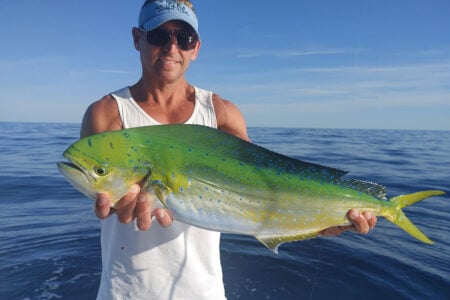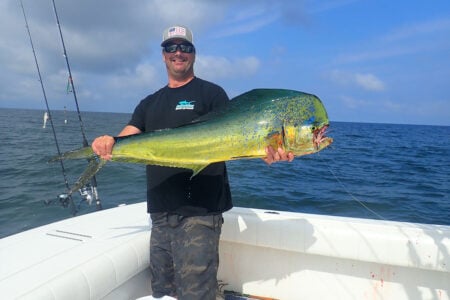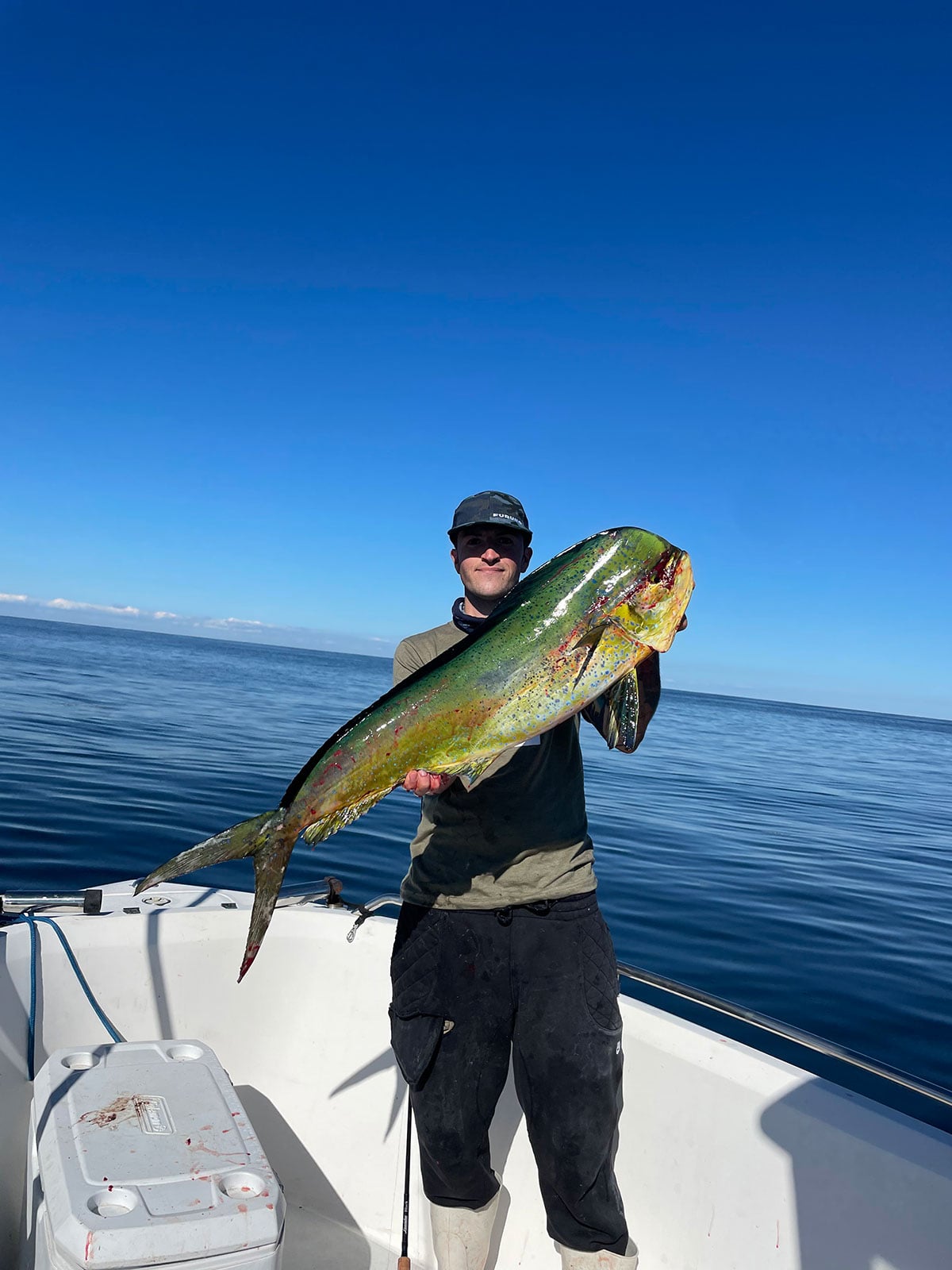
Turn a slow offshore run into a fluorescent success with mahi-mahi!
If you’re new to the offshore game, let me just tell you that it’s only a matter of time before you get skunked on a tuna trip; it happens to all of us. You wake up at three in the morning, load up the boat, steam 30 or 40 miles out past the horizon in the pitch black, and spend the next 8 hours burning fuel, staring at a barren radar screen, and praying for a single mark on the sounder. We have all been there. The ocean can feel like a vast, empty desert when the tuna play hard to get. It is a humbling experience. Fortunately, by packing some lighter gear and with a little bit of foresight, you can turn an otherwise disappointing day into a big win by shifting your focus to mahi.
These fast-growing, hard-fighting, and great-tasting fish are surprisingly abundant in the offshore waters of southern New England throughout the summer. Best of all, they often frequent the same areas where we target tuna. When the tuna bite hits a midday lull or fails to materialize entirely, transitioning to a dedicated mahi hunt can save your fuel budget and put some amazing fillets into the cooler.
Float Planning
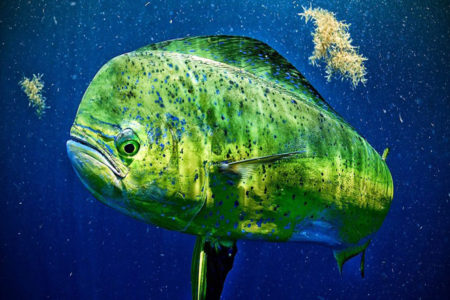
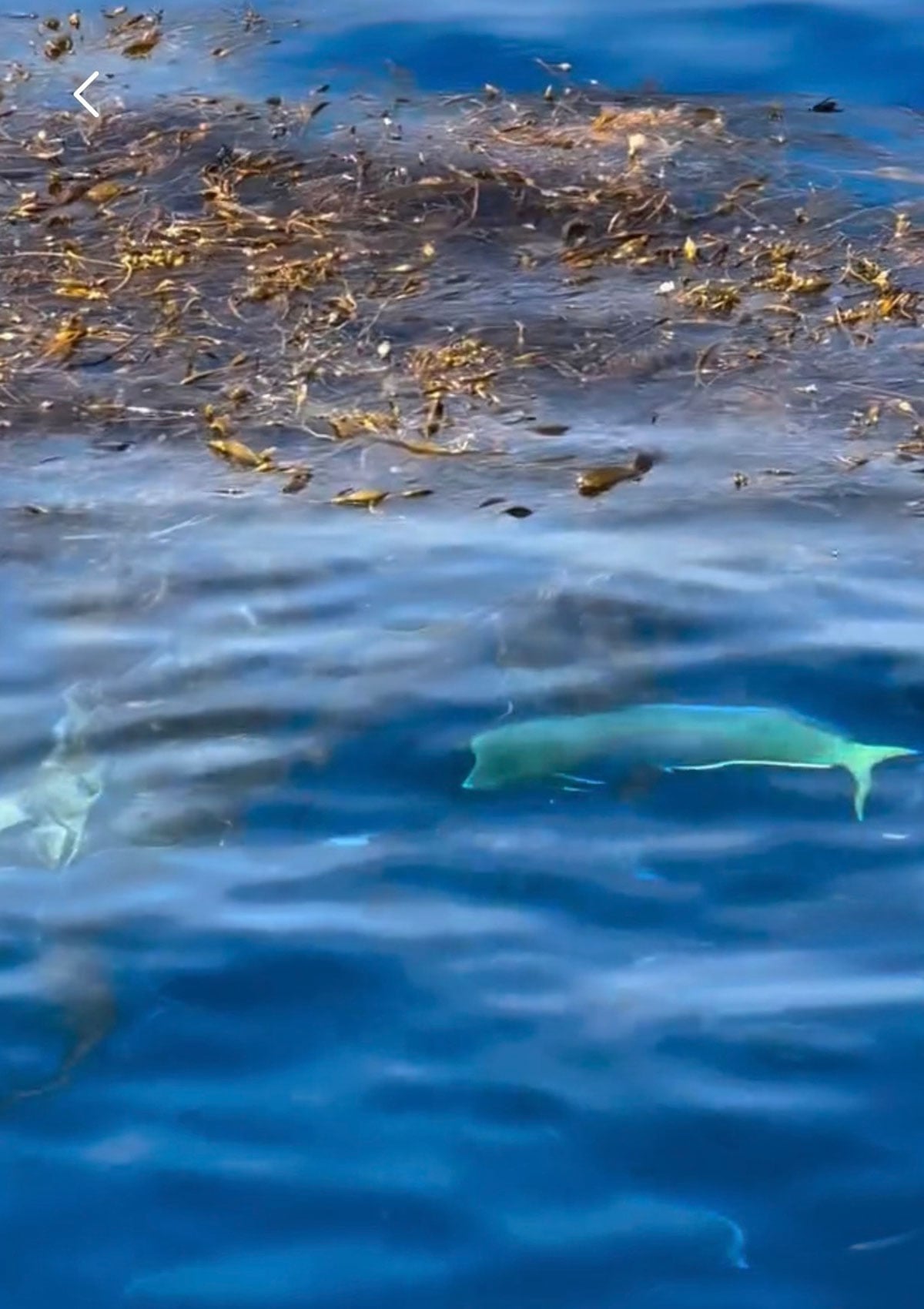
The key to finding mahi in our local waters is floating structure. Because the open ocean offers very little cover, mahi-mahi will seek out anything drifting on the surface. Commercial lobster pot buoys, high-flyers, drifting timber, pallets, sargassum weed lines, or literally any other piece of floating debris can attract them. Mahi use these floating objects for shade, protection, and because they act as a natural gathering point for the micro-ecosystems of small baitfish that seek shelter in the open ocean. They are highly social, schooling fish, so they are rarely alone when they find a good piece of debris.
When you find a productive piece of structure, don’t be surprised if it holds a dozen or even dozens of fish. It’s easily one of the most visually exciting offshore fisheries we have because a single successful stop can instantly turn your day around. After hours of staring at a lifeless ocean, a shift in tactic may find you looking down into crystal-clear blue water watching brilliant neon flashes darting wildly around your boat.
Pack Simple
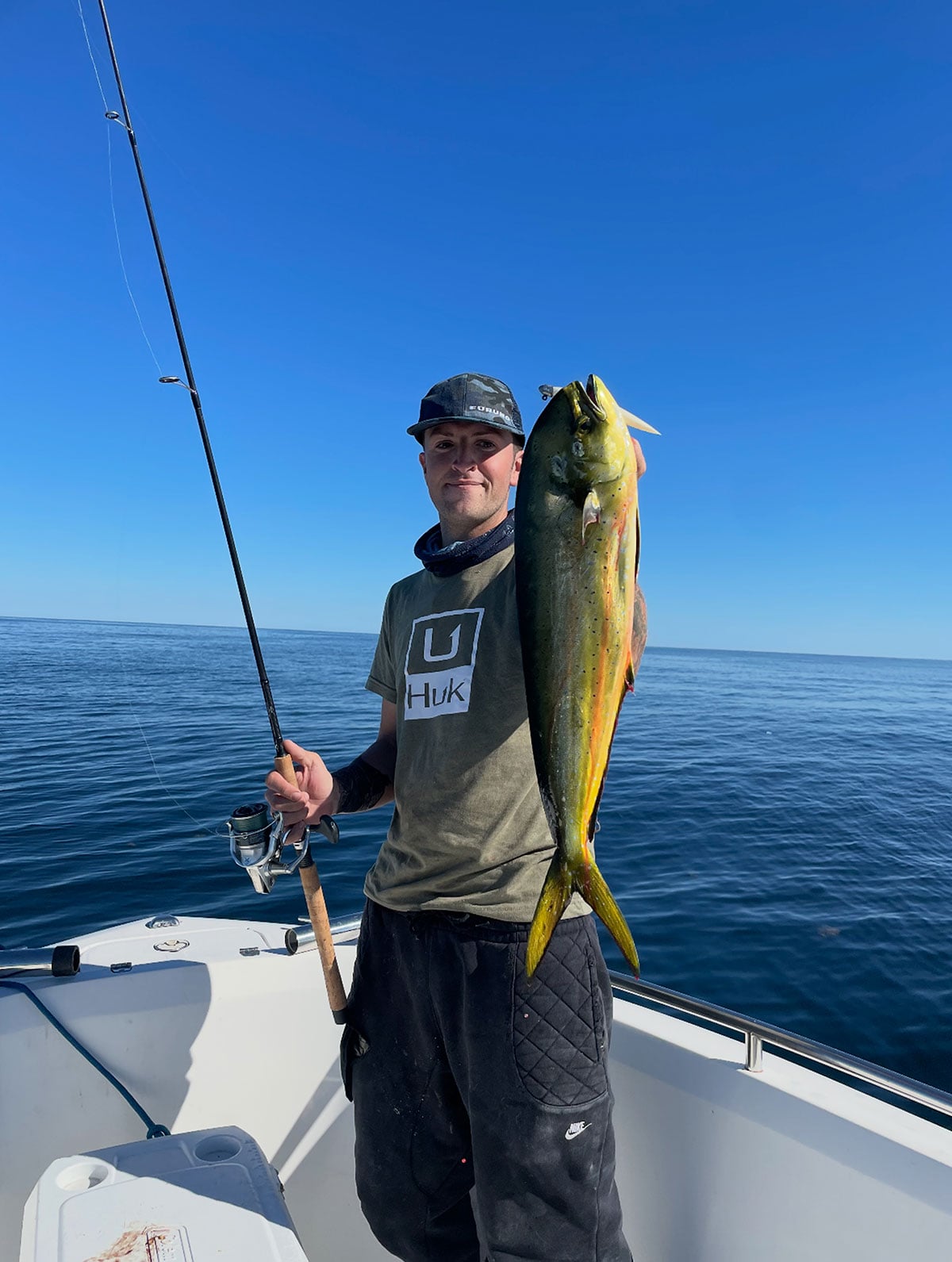
To make this transition seamless, I like to keep my gear incredibly simple and accessible. When you are fishing from a 23-foot center console, like I am, storage space is always at a premium. You just don’t have the luxury of carrying 10 different specialized rods to cover every species in the ocean, so every outfit left on the deck needs to be versatile.
My go-to outfit for this style of fishing is a 7-foot, 7-inch medium-heavy action Tsunami Forged spinning rod paired up with a 4000-size Penn Battle DX reel. In my opinion, this combination hits the sweet spot for open-water versatility. The extra length of the rod helps when you need to make longer casts to a skittish school of fish. At the same time, the medium-heavy power gives you more than enough backbone if a larger fish shows up and decides to take you on a tour of your own boat!
I spool this reel with 20-pound braided line, which is more than capable of handling nearly every mahi you will realistically encounter in our local waters. The thin diameter of the braid drastically improves your casting distance with light lures, cuts through the offshore wind, and offers increased sensitivity so you’ll feel every bump and nip when a mahi shows interest.
For leaders, I carry several small spools of fluorocarbon and build out several options ranging from 20- to 40-pound test. Most of the fish I encounter during the peak of the summer average between 20 and 25 inches, some even smaller. These are your classic “chicken” mahi, which are lightning-fast and incredibly aggressive. However much larger specimens are certainly not out of the question, especially as the water temperatures peak. You always want to adjust your leader size based on the size of the fish you are seeing and the current water clarity. If the fish are acting line-shy in the bright midday sun, drop down to the 20-pound fluoro. If they are completely fired up and there are bigger fish in the mix, bump it up to 40 to increase your chances of landing a big one.
Tackle & Technique
A small tackle box is all you need to keep tucked away in the console to be fully prepared. Some of my favorite, most reliable mahi producers include Hogy Epoxy Jigs, Hogy Slow Tails, slender paddletails, Albie Snax, standard bucktail jigs, and even small surface poppers. These lures have consistently produced fish for me over the past few seasons, because they accurately mimic the baitfish the mahi prey upon. The most important thing is that your lures have strong, high-quality hooks. When you are fishing offshore, you never know what you might run into. A lure meant for a 3-pound mahi could be inhaled by a 30-pound yellowfin or a massive bluefish, and weak hooks will straighten out in a heartbeat.
In addition to the artificials, I always keep a selection of 1/0 to 3/0 heavy-duty circle hooks on board, along with a small bait box of squid or fresh-cut bait such as butterfish, mackerel, or bunker. There are days when the sun is high, and it’s dead calm, that the fish will turn their noses up at anything artificial. When they refuse to chase a fast-moving jig, sending a natural, unweighted chunk of bait drifting through the water column almost always gets the job done.
When you spot a promising piece of floating structure, your approach dictates your success. Avoid the rookie mistake of driving the boat directly on top of the structure or idling up too fast. The shadow of the hull and the sudden imposition of the engine noise can spook them, causing the mahi to dive deep where they will become much harder to catch. I have found that positioning the boat upwind and drifting parallel to the floating structure allows for significantly more fishing time, a natural lure presentation, and less likelihood that you will spook the school.
Trade Tricks
One trick that has worked incredibly well for me over the years is tossing a handful of small bait chunks into the water before making your first cast. This minimal amount of chum acts as an appetizer, getting the school fired up and competitive. Once they get a taste of real food, they become more brazen, increasing the chances that they will attack artificial lures, and virtually guaranteeing that they will attack baited hooks.
Once you connect with your first fish, the real chaos begins, but you need to remain calm. Do not rush to bring that first hooked mahi into the boat. Instead, leave the fish in the water just below the surface on a short line, keeping it right alongside the gunwale. The rest of the pack will almost always stay tightly bunched up with the hooked fish, giving everyone else on deck the opportunity to cast to the school and hook multiple fish in quick succession before the school loses interest or drifts away.
A slow tuna bite does not have to mean wasted fuel and a somber ride back to the dock. By carrying a couple light spinning outfits, a handful of proven lures and a bag of fresh bait, you will always be ready to capitalize on floating weedlines or debris and the brightly-colored fish that hide beneath them. More often than not, those beautiful, hard-charging mahi-mahi will turn a disappointing trip into one you will remember for all the right reasons, additionally mahi can provide the perfect, colorful bonus to an already banner trip out in “the deep”.