New and exotic species are showing up in New England waters and adding an element of surprise to our late-summer fishery.
With summertime water temps increasing, seemingly every year, New England anglers are finding themselves repeatedly surprised by the new and exotic species that are showing up in local waters. The abundance of baitfish we count on each summer and fall to draw in our more common species like striped bass, bluefish, fluke and false albacore, are also catching the eye of southern species and adding an element of surprise to our local fisheries. In 2026 we’re seeing species that would be thought impossible if it were 1996.
Personally, I tend to spend my time working the inshore waters along the coast, rarely venturing into depths that exceed 70 feet. For a long time, these close-to-home grounds were as predictable as the changing of the tides. Yet, with each passing year, I seem to catch some unlikely species that have forced me to rethink this “predictable fishery” I thought I knew so well. I don’t typically target these unusual species; instead, they simply materialize as an unexpected bonus or a head-scratching mystery.
Solvable Mysteries
Once in a while, I’ll haul something up that completely stumps me—a creature I simply can’t identify on the spot. Luckily, I have a built-in lifeline for these exact moments: my son, Tommy, happens to be a marine biologist for the Rhode Island Department of Environmental Management (RI DEM). Whenever a mystery fish grabs my lure, I just shoot him a quick picture from my phone and get a positive ID within minutes.
For other anglers who might not have a state biologist on speed dial, you’ll have to rely on Google. Or, if you prefer a classic, tangible reference guide on the boat, books like American Nature Guides: Saltwater Fish by C. Richard Robins and The Saltwater Fish Identifier by Al Ristori are indispensable resources. Both of them feature fantastic, detailed illustrations that make field identification a breeze.
Years of Anomaly
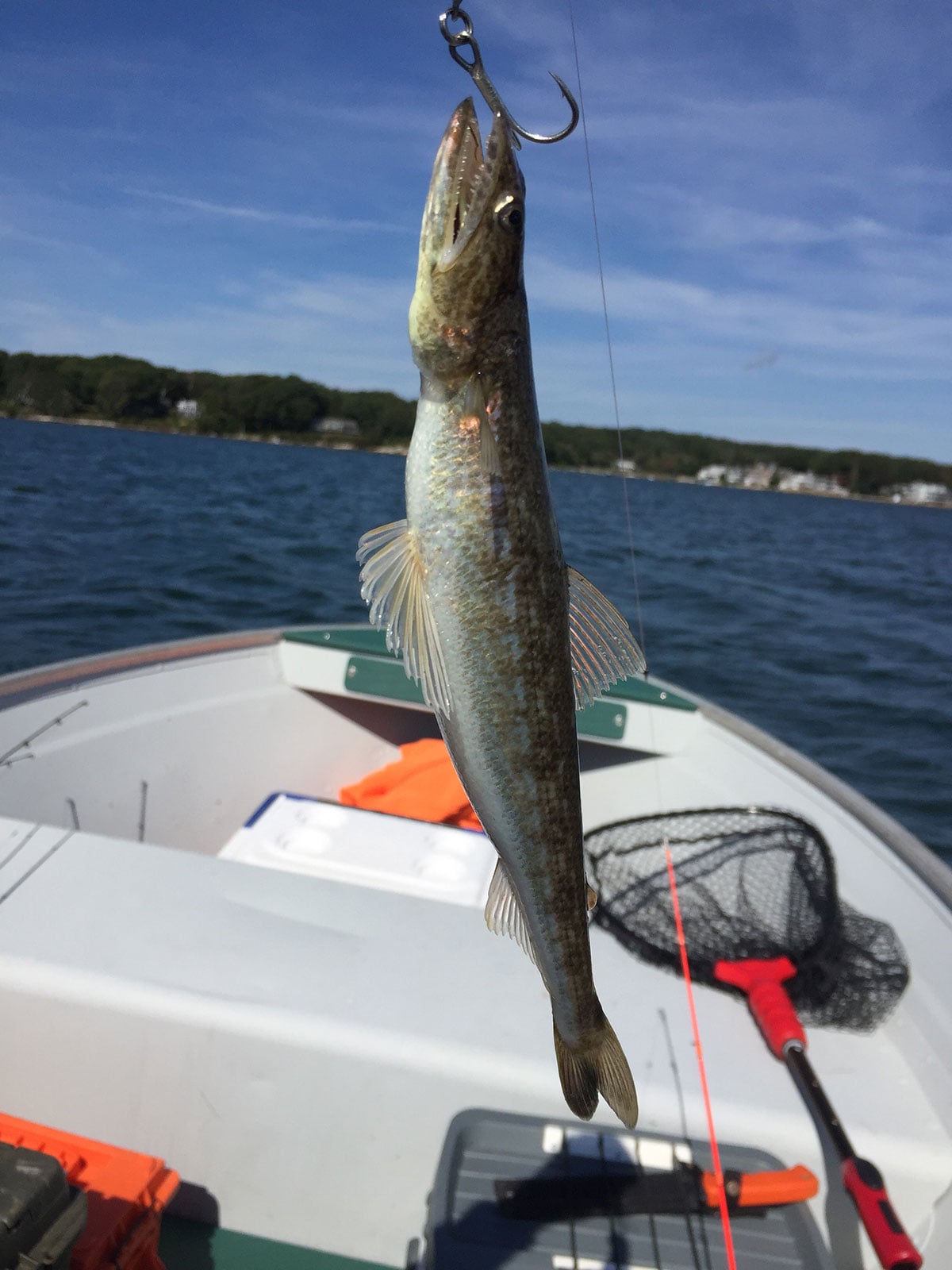
Over the years, I’ve crossed paths with a wide array of these eccentric species. My encounters usually take place while I am fishing the southern beaches along the Rhode Island shoreline or exploring the rich, bait-filled salt ponds that line our coast. Some years ago, we experienced a massive, unprecedented influx of lizardfish (Synodus lucioceps). The first time I landed one, I stared at it in disbelief. It was an immediate “what the heck” moment, as it looked entirely alien compared to anything I’d ever pulled out of the local surf. Its teeth were amazingly sharp, and definitely meant business!
That summer, it seemed like people were catching them all along the Rhody coastline. I caught quite a few of them inside Quonnie Pond by bouncing a micro slow-pitch jig along the bottom while targeting fluke and scup. But, that was the only year I remember catching lizardfish or hearing about lizardfish in local waters, proving just how fleeting and erratic these southern invasions can be.
Another year brought a noticeable wave of northern pufferfish (Sphoeroides maculatus). Suddenly, there were reports of them popping up all around Narragansett Bay. Puffers are cute little buggers, sporting a cartoonish and expressive face that becomes outright hilarious when they swell up with air like a tiny, spiked balloon. Anglers can rest easy handling them, too—these spikey ones are not the poisonous variety you have to worry about. But, just to be safe, familiarize yourself with the smooth puffer which are dangerous to handle and occasionally show up along our coast.
Two for the Table
Another catch that has become more frequent in recent years is the northern kingfish (Menticirrhus saxatilis). They’re striking to look at with their silvery sides adorned with camo-like patches of bronze and brown, and they put a decent fight on light tackle, too. I’ve heard many claims that they are one of the best-tasting fish in the ocean. However, I can’t personally confirm that rumor; I’ve released all of the kings I’ve caught, so I’ve never actually eaten one.
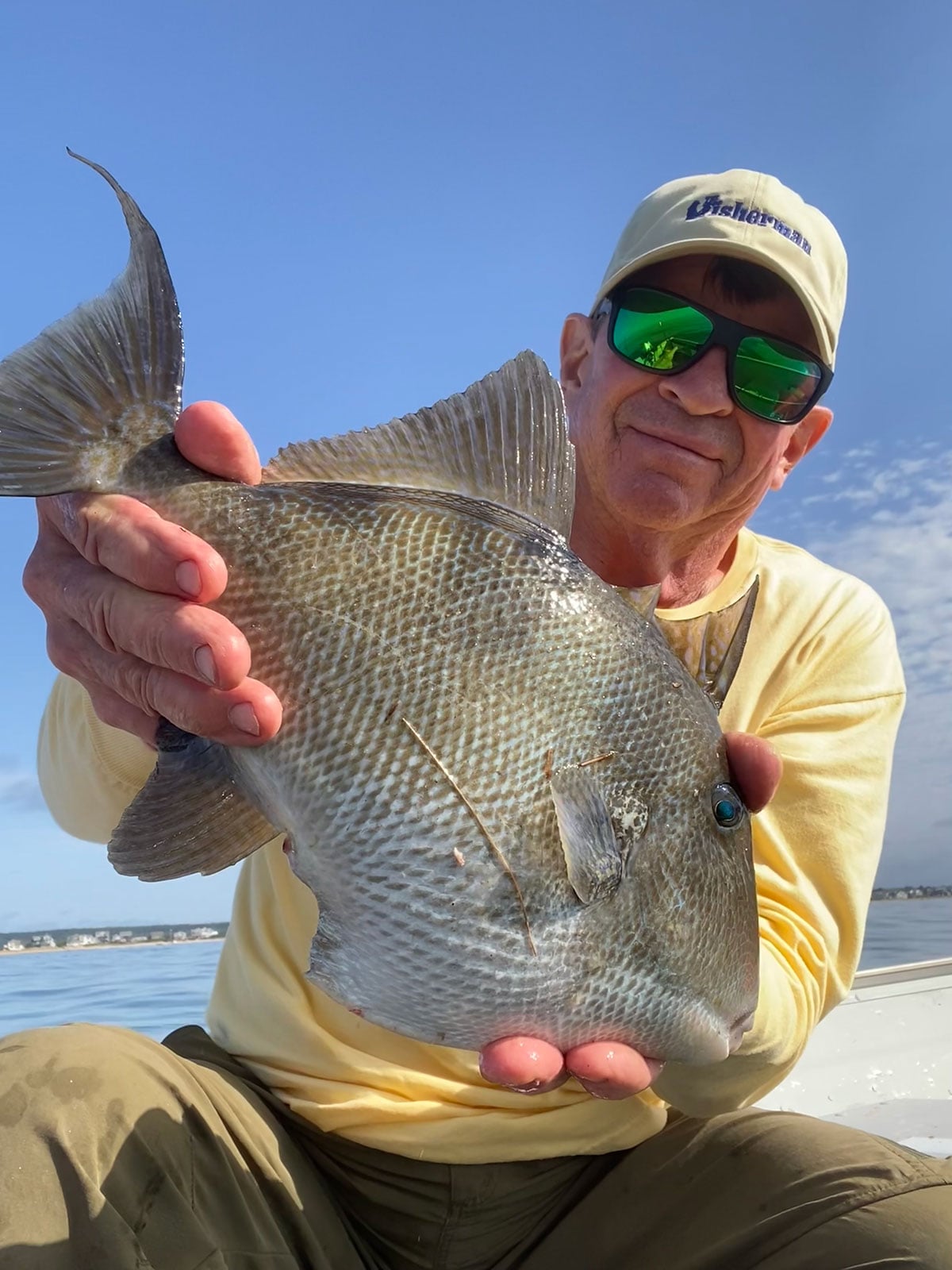
I have no problem admitting that one of my absolute favorite, hard-fighting, and truly delicious summertime visitors is the gray triggerfish (balistes capriscus). My very first experience with them happened entirely by accident back when I held a recreational lobster license. I hauled up one of my pots from the bottom, and inside, I found a lone lobster sharing the space with a strange, compressed fish. Once again, I stared at it thinking, “what the heck is this thing?!” Not recognizing the species and having no clue what to do with it, I simply released it back into the sea. But when I went to pick up the prize lobster, I realized it had been completely hollowed out and eaten from the bottom up by those powerful, beak-like teeth! After seeing what it did to my lobster, I regretted letting it go! But I have since learned my lesson.
I have caught them on slow-pitch jigs while targeting black sea bass and scup. Once I found out they offer phenomenal, sweet, white meat, I kept one for the table. Trying to fillet a triggerfish, however, is an entirely different story. Their skin is like heavy-duty leather, and it wasn’t easy on my knives; I actually had to jump on YouTube to watch some southern experts demonstrate the proper technique to break them down.
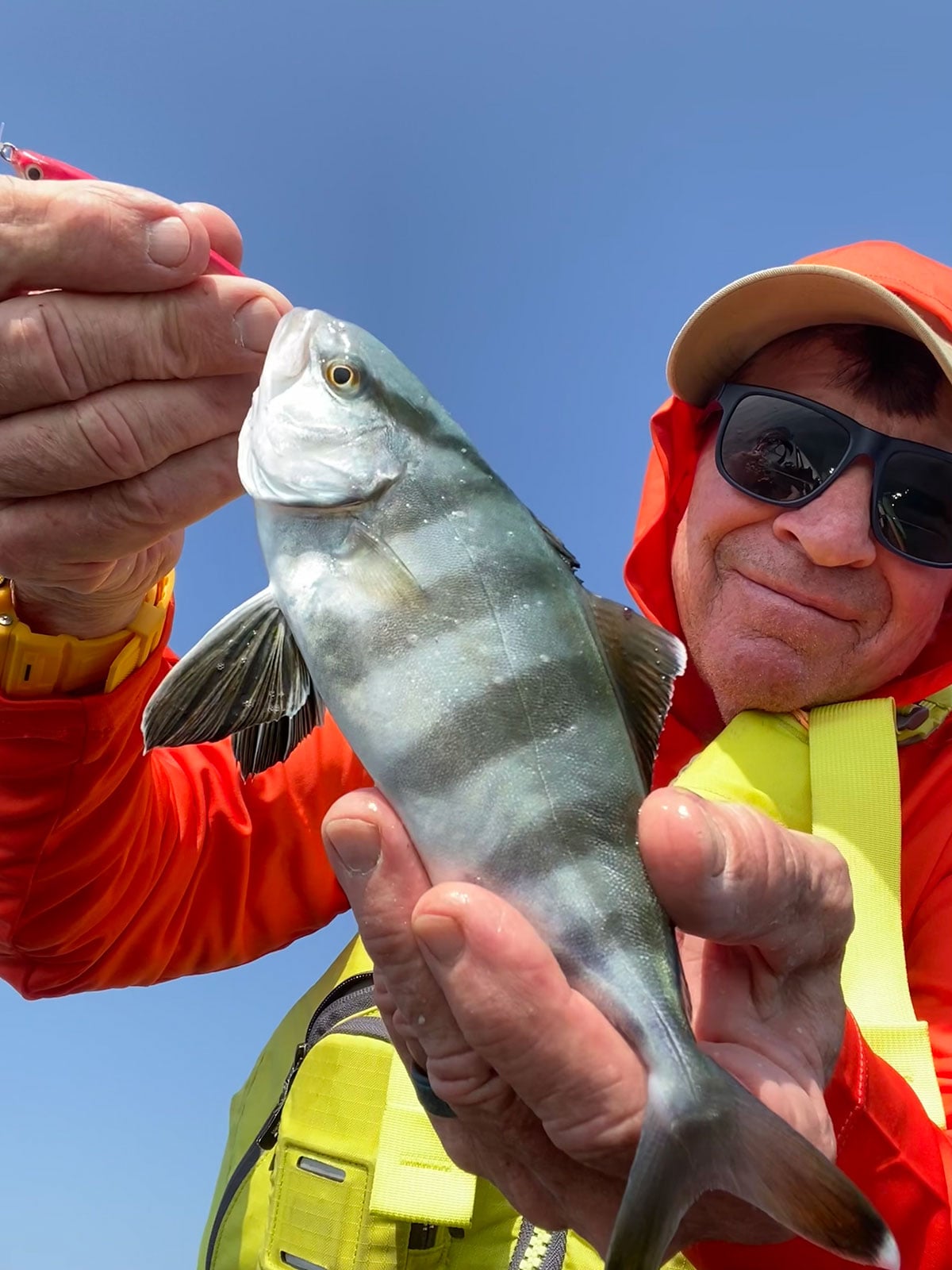
Of course, there is a whole handful of other unusual species roaming our waters that local sport fishermen are becoming increasingly familiar with, such as banded rudderfish, spot and various types of snapper. These are typically one-off catches that are often explained away as fish caught up in the Gulf Stream that follow and eddy of warm water inshore.
Big Stuff
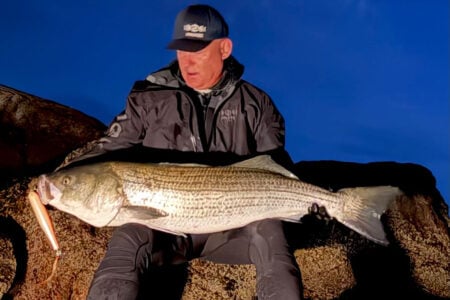
But it isn’t just the small stuff moving up the coast. While I personally haven’t caught a brown shark yet, they are undeniably becoming a much more common sight in our shallow, inshore waters. You only had to look at Facebook last season to see the proof, with endless local posts showing photos of heavy striped bass bitten completely in half right at the boat by apex predators hanging out in the surf zone.
We’ve also seen a slow increase in other large gamefish moving steadily northward. The highly-publicized catches of tarpon, two from the Cape, two from Rhode Island and one from Martha’s Vineyard over the past handful of seasons. A redfish taken from a Buzzards Bay estuary last summer. More cobia are showing in southern New England waters as well, with at least one landed from the surf in Newport, RI five or so years ago and two Northeast state records falling over the last decade. The cobia in particular have forced local anglers to be prepared with live eels, live bunker or black swimming plugs or paddletails in the event that they come upon one of these brown bombers shadowing a bunker school.
Prepped & Ready
If you want to target these unique species, your approach will depend on which species you hope to catch. For example, there are many highly effective ways to catch triggerfish, including artificials like micro slow-pitch jigs and small epoxy baits. These lures are typically fished vertically after finding marks on your fishfinder that you believe could be triggers. However, I consistently catch far more of them by utilizing natural baits on small, strong hooks. Offerings like fresh squid strips, live Asian shore crabs, and Berkley Gulp are top producers.
Bait is also the best choice if you want to target northern kingfish, which feed almost exclusively along the bottom. Fish rigs similar to those you’d use for scup baited with clams or squid to catch them. On the flipside, if you’re looking for Atlantic mackerel and banded rudderfish, you want to work through the middle of the water column using fast, erratic motions with slow-pitch jigs and light epoxy lures.
You’ll never go wrong with small and simple, tried and true presentations, such as the simple bucktail or your soft plastic of choice threaded onto a light leadhead. These offerings replicate a wide variety of baitfish species and put you in the running for pretty much everything listed in this article, you might catch a striper on your first drift and triggerfish on your second. Or, you might score a keeper fluke on one drop and a toothy lizardfish on the other. Basically, if you want to have a shot a variety of species, you need to use lures and baits that appeal to a wide selection of predatory species, in sizes that all of them can eat.
| TRULY FUNNY FISH |
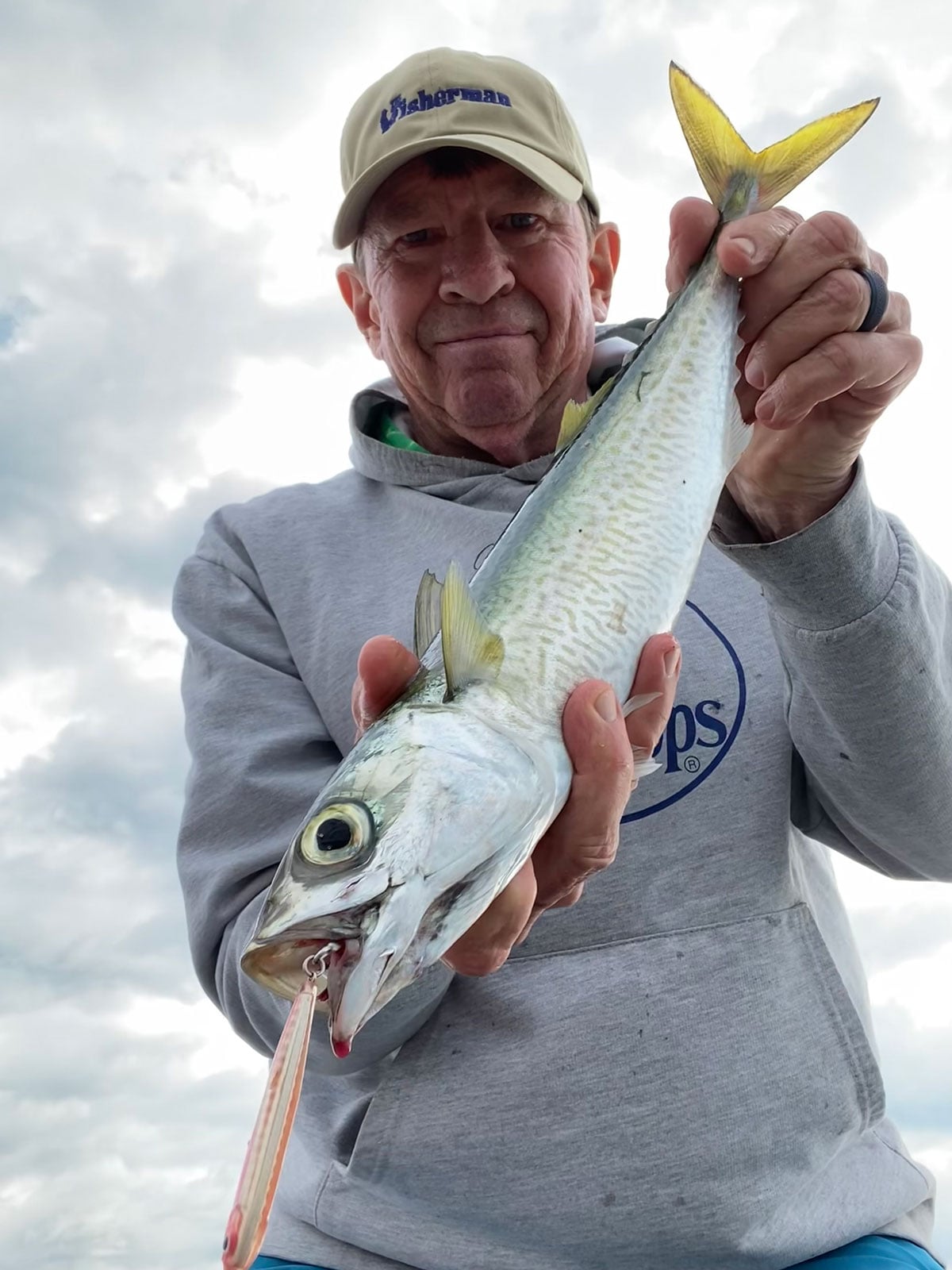
| A great example of an exotic species becoming a reliable visitor is the false albacore. Just a few decades ago, these fish were considered a rare treat in New England, fast-forward to today, and albies are “big business” for tackle shops, charter captains and tackle makers and there are devoted anglers that drive all over the region to chase the latest intel. For those skipping tins and epoxies for albies, other exotics that might take a tin include Spanish mackerel, bonito, frigate mackerel, chub mackerel or even the rare-but-possible chicken mahi, you just never know! |
For me, the real joy of this changing fishery comes down to using light tackle on these fast, spirited invaders from the south. In my standard summer arsenal, I always bring dedicated slow-pitch casting rigs paired with high-quality 3000 to 4000 series spinning reels. I match these with responsive and sensitive 6-1/2- to 7-1/2-foot rods that are crisp enough to cast light weights but still have enough backbone to handle a heavier fish. I prefer running stealthy, thin leaders of 15- to 20-pound fluorocarbon tied directly to a main line of 15-pound braided line, like PowerPro Slick, to maximize my casting distance and for its no-stretch sensitivity
If you ask me, as anglers, we need to make the best of the changing environment. Rather than wishing for the predictable patterns of the past, we should embrace the novelty. Get out there, keep an open mind, and just enjoy these beautiful, fascinating, and hard-fighting exotics we are lucky enough to have a shot at from late-summer through the fall.